DNB COLLEGE

Drum & Bass Ableton Live 12 Tutorials

LESSON DETAIL

Sub Pressure Ableton Live 12 drop guide for rewind-worthy drops for jungle oldskool DnB vibes (Beginner)

An AI-generated beginner Ableton lesson focused on Sub Pressure Ableton Live 12 drop guide for rewind-worthy drops for jungle oldskool DnB vibes in the Atmospheres area of drum and bass production.

Back to lessons
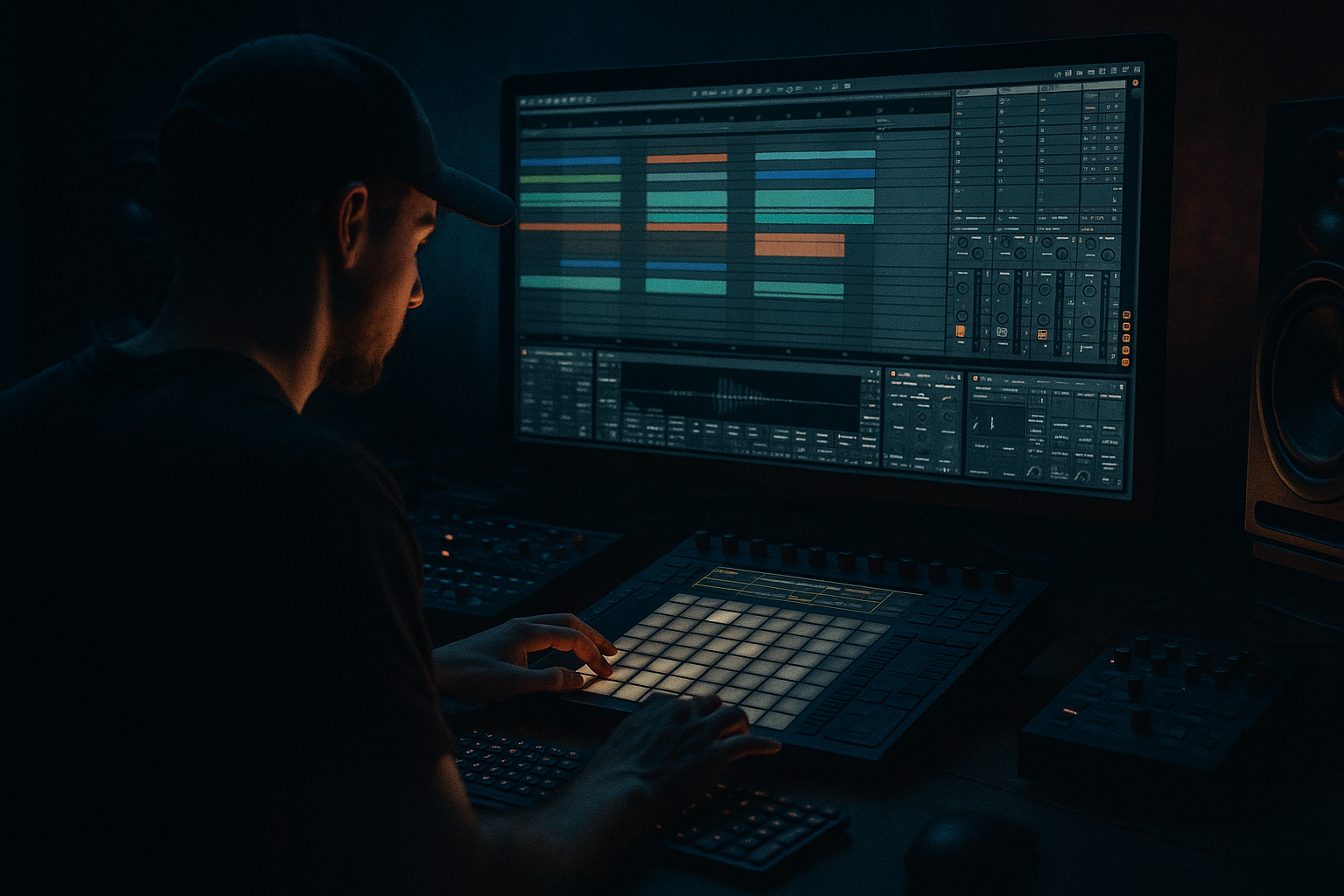
Sub Pressure Ableton Live 12 drop guide for rewind-worthy drops for jungle oldskool DnB vibes (Beginner) cover image

Narrated lesson audio

The voice track includes the tutorial plus extra teacher commentary.

Open audio file

Main tutorial

Sub Pressure in Ableton Live 12: Drop Guide for Rewind-Worthy Jungle / Oldskool DnB Vibes 🥁🔊

1. Lesson overview

In this lesson, you’ll learn how to build a sub-pressure drop in Ableton Live 12 that feels like it belongs in jungle, oldskool drum & bass, and rolling bass music. The goal is not just “a loud sub,” but a drop with weight, tension, and movement that makes the kick and snare hit harder and gives the listener that “rewind that!” reaction.

For beginner producers, the key idea is this:

  • The sub should be simple
  • The drums should create the energy
  • The arrangement should create impact
  • The mids and atmospheres should leave space for the low end
  • In DnB, especially jungle-style drops, the atmosphere often acts like a pressure chamber around the bassline. You want dark pads, eerie textures, short FX, and controlled silence before the drop, so when the bass and drums arrive, they feel huge.

    You’ll use:

  • Ableton stock devices
  • MIDI programming
  • drum layering
  • simple sub design
  • automation
  • mix checks for low end
  • ---

    2. What you will build

    By the end of this tutorial, you’ll have a short 8-bar DnB drop section that includes:

  • a dark intro atmosphere
  • a build-up with tension
  • a drop with sub-heavy bass
  • tight kick/snare drum energy
  • space for a rewind-worthy impact
  • The sound style:

  • 140–174 BPM area
  • For classic jungle/DnB feel, use 170–174 BPM

  • dark, moody atmosphere
  • simple sine/triangle sub
  • rolling drums or chopped breaks
  • short, punchy arrangement
  • minimal but effective bass movement
  • We’ll make the drop feel heavy by using:

  • sub notes that lock tightly to the drums
  • filters and automation for tension
  • reverb/delay throws only where needed
  • a brief breakdown before the drop
  • a clean transition into impact
  • ---

    3. Step-by-step walkthrough

    Step 1: Set the tempo and project foundation

    Open a new Ableton Live 12 project and set the tempo to:

  • 172 BPM for a classic jungle/DnB feel
  • or

  • 174 BPM for a slightly more urgent oldskool energy
  • Set your project to 4/4 time.

    Now create these tracks:

    1. Atmosphere

    2. Breakbeat / Drums

    3. Sub Bass

    4. FX / Riser / Impact

    5. Optional top loop or percussion

    Keep the session simple. For beginner DnB production, fewer tracks often mean better control.

    ---

    Step 2: Build a dark atmosphere bed

    This is an atmosphere lesson, so the space around the drop matters a lot.

    #### Use Ableton instruments and devices:

  • Wavetable or Analog for a pad
  • Hybrid Reverb for space
  • EQ Eight to remove low-end mud
  • Auto Filter for movement
  • Utility to control stereo width
  • #### Basic atmospheric patch:

    On a MIDI track, load Wavetable.

    Try this starting point:

  • Oscillator 1: saw wave or sine-saw blend
  • Oscillator 2: a lower, softer waveform
  • Filter: low-pass, fairly closed
  • Add a little noise if needed for texture
  • Slow attack and release on the amp envelope
  • #### Processing chain:

    1. Auto Filter

    - Low-pass mode

    - Cutoff around 300–800 Hz

    - Add slow LFO movement if you want motion

    2. EQ Eight

    - High-pass around 150–250 Hz

    - Remove low rumble so it doesn’t fight the sub

    3. Hybrid Reverb

    - Long decay

    - Low cut in the reverb if possible

    - Keep it wide and dark

    4. Utility

    - Reduce width if the pad feels too wide and unfocused, or keep it wide if your sub is centered and clean

    #### Musical idea:

    Hold one or two notes in a minor key. DnB atmospheres often work well with:

  • minor 7ths
  • diminished tension notes
  • single-note drones
  • low, unsettling intervals
  • Example: if your track is in F minor, try holding F, Eb, or C in different octaves.

    The atmosphere should feel like the room is closing in before the drop 🌫️

    ---

    Step 3: Program the drum energy

    For oldskool jungle vibes, the drums are everything. You can use:

  • chopped breakbeats
  • layered kick/snare
  • ghost hits
  • top loop percussion
  • #### Option A: Chopped breakbeat approach

    Drag an amen-style break or any old drum break into Simpler or directly into the arrangement.

    If using Simpler:

  • Load the sample into Simpler
  • Switch to Slice mode
  • Let Ableton slice by transients
  • Trigger slices with MIDI
  • Then:

  • Keep the snare accents strong
  • Use quick edits for variation
  • Repeat a small rhythmic pattern over 2 or 4 bars
  • #### Option B: Drum Rack layering

    Build your own break-style groove with Drum Rack:

  • Kick
  • Snare
  • Closed hats
  • Open hats
  • Rim shots
  • Ghost snare or break noise
  • #### Typical DnB drum pattern idea:

  • Kick on the downbeat and syncopated positions
  • Snare strongly on beat 2 and beat 4
  • Ghost notes between main hits
  • Fast hats to carry momentum
  • A classic anchor is the snare on beat 2 and 4 with breakbeat movement around it.

    #### Drum processing chain:

    On the drum bus:

    1. Drum Buss

    - Use Drive carefully

    - Boom can add weight, but don’t overdo it

    2. EQ Eight

    - Cut rumble below 25–30 Hz

    - Remove boxiness around 200–500 Hz if needed

    3. Glue Compressor

    - Light compression for cohesion

    4. Saturator

    - Gentle drive for punch and warmth

    Keep the drums punchy but not too loud in the low end if the sub is carrying the drop.

    ---

    Step 4: Design the sub bass

    This is the core of the lesson.

    A rewind-worthy drop in jungle/DnB often has a sub that feels physical rather than flashy. For beginners, start with a clean, controlled sub.

    #### Create a new MIDI track with Operator

    Operator is perfect for a pure sub.

    #### Basic sub settings:

  • Oscillator A: sine wave
  • Keep it mono
  • Turn off unnecessary oscillators or keep them very low
  • Short release
  • No stereo widening on the sub
  • #### MIDI pattern:

    Start with a simple 1- or 2-bar loop.

    Example concept:

  • Root note on the first beat
  • Syncopated note before the snare
  • Short note on the offbeat for movement
  • Leave space between notes
  • In DnB, the sub often works best when it answers the drum pattern rather than constantly playing.

    #### Example rhythm idea:

  • Beat 1: long root note
  • Just before beat 2: quick pickup note
  • Beat 3: root or fifth
  • Offbeat: short stab
  • If you’re new, keep it very simple:

  • Use 2 to 4 notes
  • Keep them in the same key
  • Make sure the rhythm supports the groove
  • #### Sub processing chain:

    1. EQ Eight

    - Remove anything above around 150 Hz if needed

    - Keep it clean and focused

    2. Saturator

    - Very light drive to add harmonics

    - This helps the bass translate on smaller speakers

    3. Utility

    - Make sure the sub is mono

    - Width at 0%

    4. Optional Compressor

    - Only if the sub is jumping too much dynamically

    Important: your sub should not fight the kick. If your kick has a strong low peak, either:

  • shorten the kick tail
  • shift the sub note timing slightly
  • or choose a kick with less low-end sustain
  • ---

    Step 5: Create the drop impact

    A strong DnB drop is not just “everything starts.” It needs pre-drop tension.

    Build an 8-bar structure like this:

    #### Bars 1–4: Breakdown / tension

  • Atmosphere only
  • Filtered break or tiny percussion
  • No full sub
  • Some riser noise or filtered FX
  • #### Bars 5–6: Build

  • Add snare rolls or hat energy
  • Automate a low-pass filter opening
  • Increase reverb tension slightly
  • Add a short fill or reverse impact
  • #### Bar 7: Tension peak

  • Remove most elements
  • Use a brief silence or near-silence
  • Add a reverse cymbal or impact swell
  • #### Bar 8: Drop

  • Full drums
  • Sub enters cleanly
  • Atmosphere pulls back to make room
  • This “space before impact” is crucial. In jungle and oldskool DnB, the drop feels bigger when the arrangement breathes.

    ---

    Step 6: Add automation for atmosphere movement

    Atmospheres in DnB should move, but not clutter the mix.

    Use automation on:

  • Auto Filter cutoff
  • Reverb send amount
  • Delay feedback
  • Stereo width
  • Volume fades
  • #### Great beginner automation moves:

  • Slowly open the pad filter over 4 or 8 bars
  • Increase reverb in the breakdown, then cut it at the drop
  • Add a reverse swell into the first kick/snare hit
  • Make the atmosphere duck slightly when the drums hit
  • This gives the drop an animated, living quality without needing a complex synth patch.

    ---

    Step 7: Make the drop “rewind-worthy”

    For that classic reaction, the drop needs one or more of these traits:

  • a hard contrast between breakdown and drop
  • a recognizable bass rhythm
  • a strong snare hit
  • a surprise silence or stop
  • a sub note that lands just right
  • a distinctive atmospheric hook
  • #### Practical ways to create rewind energy:

  • Let the intro atmosphere hint at the bass melody before the drop
  • Use a 1-beat stop before the drop
  • Drop the sub in exactly where the snare lands
  • Add a short one-shot FX hit on the first downbeat
  • Repeat the bass motif so it becomes memorable
  • In jungle, even a simple bassline can become massive if the timing and arrangement are right.

    ---

    Step 8: Check the low end properly

    This is where many beginner DnB tracks go wrong.

    #### Use Spectrum or EQ Eight on the master for visual checking

    You want:

  • strong low end
  • no uncontrolled sub rumble
  • no huge overlap between kick and sub
  • #### Low-end checklist:

  • Sub is mono
  • Kick and sub are not fighting
  • Nothing unnecessary below 30 Hz
  • Atmosphere is high-passed
  • Reverb lows are controlled
  • Bass is audible even at lower volume
  • A good trick:

  • Turn the monitor volume down low
  • If the sub and kick still feel strong, your low end is working
  • ---

    4. Common mistakes

    1. Too much atmosphere in the low end

    A common beginner mistake is letting pads, drones, and reverb fill the sub range.

    Fix:

  • High-pass atmospheres at 150–250 Hz
  • Cut mud around 200–400 Hz
  • Keep low-end for kick and sub only
  • 2. Sub is too busy

    If the subline plays constantly, it can flatten the drop.

    Fix:

  • Use fewer notes
  • Leave gaps
  • Let the drums breathe
  • 3. Stereo sub

    Wide low end causes phase issues and weak club translation.

    Fix:

  • Keep sub mono with Utility
  • Avoid stereo effects on the sub track
  • 4. Kick and sub clash

    If both are hitting the same low frequency at the same time, the drop can feel blurry.

    Fix:

  • Shorten one of them
  • Tune the kick
  • Shift note timing slightly
  • Use EQ only if necessary, but arrangement is usually better
  • 5. No contrast before the drop

    If the breakdown already sounds full, the drop won’t feel powerful.

    Fix:

  • Strip elements away before the drop
  • Use silence or near-silence for tension
  • Let the atmosphere thin out before impact
  • ---

    5. Pro tips for darker/heavier DnB

    Tip 1: Use minor tonal centers

    Dark DnB often works well in:

  • F minor
  • G minor
  • D minor
  • A minor
  • Try repeating a small bass motif around the root and minor third.

    Tip 2: Add subtle distortion to the sub

    A pure sine can be too clean in some systems.

    Try:

  • Saturator
  • Drum Buss
  • Pedal very lightly if you want edge
  • Keep it controlled
  • This adds harmonics so the sub remains audible on smaller speakers.

    Tip 3: Use reverb as a tension tool, not a wash

    For atmosphere:

  • Long decay is fine
  • But high-pass the reverb return
  • Keep the bass dry
  • This creates depth without destroying punch.

    Tip 4: Layer a mid-bass whisper

    If your bass feels too empty, duplicate the sub and add a quiet mid layer:

  • Use Wavetable
  • Reduce it to a narrow band around 150–500 Hz
  • Add a little distortion
  • Keep it low in the mix
  • This gives the drop more aggression while the sub handles weight.

    Tip 5: Use short fills before the drop

    Classic jungle drops often have a tiny drum fill, reverse hit, or snare rush.

    Try:

  • 1-bar snare roll
  • 1/2-bar drum stop
  • reverse cymbal into the drop
  • These small details make the drop feel “earned.”

    ---

    6. Mini practice exercise

    Exercise: Build an 8-bar sub-pressure drop

    Create the following in Ableton Live:

    #### Track 1: Atmosphere

  • Make a 4-bar dark pad drone using Wavetable
  • High-pass it at 200 Hz
  • Add long reverb
  • Automate filter cutoff slowly opening
  • #### Track 2: Drums

  • Program a basic 172 BPM breakbeat groove
  • Snare strong on beats 2 and 4
  • Add one or two ghost hits
  • #### Track 3: Sub Bass

  • Use Operator with a sine wave
  • Write a 2-bar bass pattern with only 3–4 notes
  • Keep it mono
  • #### Track 4: FX

  • Add a reverse cymbal or noise swell
  • Place it just before the drop
  • #### Arrangement

  • Bars 1–4: atmosphere only
  • Bars 5–6: drums filtered, tension increases
  • Bar 7: brief silence or reduced elements
  • Bar 8: full drop
  • #### Goal

    Listen for:

  • Does the drop feel bigger than the breakdown?
  • Can you feel the sub without it being muddy?
  • Do the drums hit clearly?
  • Does the atmosphere support the mood instead of overcrowding it?
  • If not, simplify.

    ---

    7. Recap

    A rewind-worthy jungle/DnB drop is built from contrast, space, and low-end discipline.

    Key points:

  • Keep the sub simple, mono, and clean
  • Let the drums drive the energy
  • Use atmospheres to build tension
  • High-pass pads and FX so the low end stays clear
  • Automate filters and reverb to shape movement
  • Create a strong pre-drop gap so the drop lands harder
  • Stock Ableton devices to remember:

  • Operator for sub bass
  • Wavetable or Analog for atmospheres
  • Auto Filter for movement
  • EQ Eight for cleanup
  • Drum Buss for drum weight
  • Saturator for harmonic grit
  • Hybrid Reverb for dark space
  • Utility for mono control

If you want a drop that feels like classic jungle pressure, think:

dark room, tight drums, simple sub, controlled atmosphere, massive impact 🔥

If you’d like, I can also turn this into:

1. a bar-by-bar Ableton arrangement template, or

2. a rack/device chain preset guide for the sub and atmosphere tracks.

Ask GPT about this lesson

Chat with the lesson tutor, get follow-up help, or use quick actions.

Bigup 👽 Ask me anything about this lesson and I’ll answer in context.

Narration script

Show spoken script
Welcome to this beginner Ableton Live 12 lesson on building a sub-pressure drop for rewind-worthy jungle and oldskool drum and bass vibes.

In this session, we’re not just trying to make something loud. We’re building a drop that feels heavy, focused, and full of tension. The kind of drop where the drums hit, the sub lands, and the whole thing feels like it deserves a rewind.

The big idea is simple. In jungle and oldskool DnB, the sub should stay clean and supportive, the drums should carry the energy, the atmosphere should create pressure, and the arrangement should leave space for the low end to speak. If you get those four things working together, the drop starts to feel bigger than the sum of its parts.

Let’s start with the project setup.

Open a new Ableton Live 12 set and set the tempo to around 172 BPM. If you want a slightly faster, more urgent feel, go up to 174 BPM. Keep it in 4/4 time. That speed is right in the classic jungle and drum and bass zone, and it gives us enough momentum for a rolling, pressure-filled drop.

Now create a few simple tracks. You’ll want an atmosphere track, a drum track, a sub bass track, an FX track, and maybe an extra percussion or top loop track if you want a little more movement. For beginners, less is often better. A tight arrangement gives you more control, especially in the low end.

Now let’s build the atmosphere, because in this style, space matters just as much as sound.

Load Wavetable onto a MIDI track and choose a dark, soft patch to start with. A saw or sine-saw blend works well. You want something that feels moody and unsettling, not bright and busy. Keep the filter fairly closed and give the sound a slow attack and release so it blooms gradually instead of hitting too sharply.

Add Auto Filter after that. Put it in low-pass mode and keep the cutoff somewhere in the low to mid range, maybe around 300 to 800 hertz. You can automate this later for movement, but for now just get the tone right. Then add EQ Eight and high-pass the atmosphere around 150 to 250 hertz so it stays out of the sub range. This is important. If your pads and textures are eating up the low end, your drop will lose power fast.

After that, add Hybrid Reverb for depth. Keep it wide, dark, and a bit long, but don’t let the reverb cloud the mix. If you can, cut some low end out of the reverb return too. The goal is atmosphere, not mud. Finish with Utility if you need to control the width. In many cases, it’s fine for atmospheres to be wide, as long as the sub stays mono and centered.

For the note choice, keep it simple. Hold one or two notes in a minor key. Dark DnB often works well with minor tonal centers, and single-note drones or tense intervals can sound more menacing than full chords. If you’re in F minor, for example, try holding F, Eb, or C in different octaves. You want the atmosphere to feel like the room is closing in before the drop.

Next, let’s build the drums. This is where the energy really starts to move.

You can go one of two ways here. One option is a chopped breakbeat, which is very classic jungle. You can drag an amen-style break, or any old drum break, into Simpler or straight into the arrangement and slice it by transients. That gives you lots of rhythmic detail and instant oldskool character. The other option is to build your own groove with Drum Rack using separate kick, snare, hats, ghost hits, and little break noise layers. Either approach works, especially for a beginner. If you’re just starting out, the Drum Rack route can be easier to control.

A classic DnB pattern usually relies on a strong snare on beats 2 and 4, with kick movement and little ghost notes around it. That snare anchor is a huge part of the feel. It keeps the groove recognizable, while the break or hat detail keeps it rolling.

On the drum bus, you can add Drum Buss for a bit of weight and character, but go easy with the drive. Then use EQ Eight to cut any unnecessary rumble below about 25 to 30 hertz and clean up any boxy frequencies around 200 to 500 hertz if needed. A light Glue Compressor can help glue the drums together, and a small amount of Saturator can add punch and warmth. Just remember, the drums need to hit hard, but they shouldn’t fight the sub for space.

Now for the core of the lesson: the sub bass.

Load Operator on a new MIDI track. Operator is perfect for a pure, focused sub. Set Oscillator A to a sine wave. Keep the bass mono, turn off anything unnecessary, and keep the release short so the notes stay tight. Don’t widen it. Don’t overcomplicate it. In this style, the sub should lock in, not try to be the star.

Write a very simple MIDI pattern. Seriously, keep it small. Two to four notes is enough to begin with. Let the bass answer the drums instead of constantly running underneath them. For example, you might have a long root note on beat 1, a quick pickup before beat 2, another note on beat 3, and maybe a short offbeat stab for movement. That’s enough to create pressure without overcrowding the groove.

After Operator, add EQ Eight if needed to keep the sub clean, and then add a little Saturator. Just a touch. The goal is to add some harmonics so the bass can translate on smaller speakers. Then use Utility to make sure the sub stays fully mono. Width at zero percent is a good starting point. If the sub is jumping too much dynamically, a compressor can help, but usually arrangement and note length matter more than heavy compression.

One very important thing here: the sub and kick should not fight each other. If the kick has a strong low-end tail, the sub might need to be shorter, timed slightly differently, or even paired with a different kick. In DnB, the groove often gets stronger when the low end is disciplined, not crowded.

Now let’s shape the drop itself.

A rewind-worthy drop needs contrast. That means the breakdown has to feel noticeably lighter than the drop. If everything is full all the time, the drop won’t land with enough force. So think in stages.

For the first few bars, keep it stripped back. Maybe it’s just the atmosphere, maybe a filtered break, maybe a tiny rhythmic hint. But don’t bring in the full sub yet. Let the listener sit in the tension.

Then, in the build, start adding more energy. Bring in snare rolls, hat movement, or a little filter opening on the atmosphere. You can automate the pad filter to slowly open over four or eight bars. You can increase the reverb send slightly to make the space feel bigger and more unstable. You can even add a reverse cymbal or a short FX rise to help lead into the impact.

Right before the drop, create a little gap. Even a beat of silence, or near-silence, can make a huge difference. That tiny space gives the ear a moment to reset, so when the drums and sub return, they feel heavier. This is one of those simple arrangement tricks that can totally change the impact of the drop.

Then the drop lands. Full drums. Sub in place. Atmosphere pulled back enough to leave room. That first hit should feel clean and intentional. If you want extra impact, add a short one-shot FX hit right on the downbeat, or let the sub line up perfectly with the snare accent. Timing is a sound design tool. A note placed just a little earlier or later can change the feel more than adding another plugin.

To make the atmosphere move without cluttering the mix, automate things like filter cutoff, reverb amount, delay feedback, stereo width, and volume fades. For example, the pad can slowly open up during the breakdown, then get cut back at the drop. The reverb can bloom before the drop, then snap back to dry when the drums hit. That contrast gives the track a living, breathing quality.

If you want the drop to be truly rewind-worthy, give it something memorable. That could be a distinct bass rhythm, a dramatic silence before the hit, a sharp snare fill, or a signature atmosphere tone that returns later in the track. In jungle and oldskool DnB, the listener often remembers the feel of the drop as much as the notes themselves.

Now let’s talk about low-end checks, because this is where a lot of beginner tracks fall apart.

Use Spectrum or EQ Eight on the master just to visually check what’s happening, but trust your ears first. The sub should be strong, but not wild. The kick and sub should feel like they belong together, not like they’re battling each other. Make sure nothing unnecessary is sitting below 30 hertz. Make sure your atmospheres are high-passed. Make sure the reverb isn’t filling up the bottom end. And test the mix at low volume. If the kick, snare, and sub still communicate when the speakers are quiet, your arrangement is doing its job.

A few common mistakes are worth calling out.

First, too much atmosphere in the low end. Pads and reverbs can easily creep into the sub range and blur the drop. High-pass them. Cut the mud. Leave the low end to the kick and sub.

Second, a subline that’s too busy. In this style, less movement often sounds bigger. Let the bass breathe. Leave gaps. Let the drums talk.

Third, using a stereo sub. That causes phase problems and weakens the low end on bigger systems. Keep the sub mono.

Fourth, kick and sub clash. If they’re both hitting the same range at the same time, the drop gets blurry. Shorten one of them, adjust the timing, or choose a better kick.

And fifth, no contrast before the drop. If the breakdown already sounds huge, the drop has nowhere to go. Strip it back. Use silence if needed. Let the drop earn its impact.

Here are a few extra coach-style ideas to push it further.

Think in layers of energy, not just layers of sound. Every element should have a job. The atmosphere creates pressure. The drums create motion. The sub creates weight. The FX creates transition. If something isn’t helping one of those jobs, it might be getting in the way.

Also, your sub should lock, not lead. If the bassline starts feeling like the main melody, the drop can lose its rolling pressure. Keep it supporting the drum story.

And don’t forget timing. A slightly early or late bass note can change the whole feel. Sometimes groove is more about placement than sound design.

If you want to go a bit further, try a call-and-response bass phrase. Let the sub leave more space for two bars, then get a little more active for the next two bars. That creates a conversation feel and keeps the drop interesting without making it cluttered.

You can also try a hidden mid-bass layer. Duplicate the sub, filter it so it only lives in the midrange, and add a little saturation. Keep it quiet. This helps the bass read on smaller speakers while the real weight stays in the sub.

For your practice exercise, build an eight-bar mini drop. Make a dark atmosphere with Wavetable. High-pass it around 200 hertz. Add long reverb. Program a 172 BPM breakbeat with a strong snare on beats 2 and 4. Then create a simple Operator subline with just a few notes, keep it mono, and add a reverse cymbal or noise swell just before the drop. Bars one to four can be atmosphere only. Bars five and six can bring in filtered drums and tension. Bar seven should feel stripped back. Then bar eight is the full drop.

When you’re done, ask yourself a few questions. Does the drop feel bigger than the breakdown? Can you feel the sub without mud? Do the drums hit clearly? Does the atmosphere support the mood instead of crowding it? If not, simplify.

So to recap, a rewind-worthy jungle or oldskool DnB drop comes from contrast, space, and low-end discipline. Keep the sub simple and mono. Let the drums drive the energy. Use atmospheres to build tension. High-pass the pads and FX. Automate movement where it matters. And make sure there’s a real pre-drop gap so the impact lands hard.

If you remember one thing from this lesson, remember this: dark room, tight drums, simple sub, controlled atmosphere, massive impact.

That’s the formula. Now go build it, and make that drop beg for a rewind.

mickeybeam

Go to drumbasscd.com for +100 drum and bass YouTube channels all in one place - tune in!

Generating PDF preview…
