DNB COLLEGE

Drum & Bass Ableton Live 12 Tutorials

LESSON DETAIL

Stretch a chop for oldskool rave pressure in Ableton Live 12 (Advanced)

An AI-generated advanced Ableton lesson focused on Stretch a chop for oldskool rave pressure in Ableton Live 12 in the Breakbeats area of drum and bass production.

Back to lessons
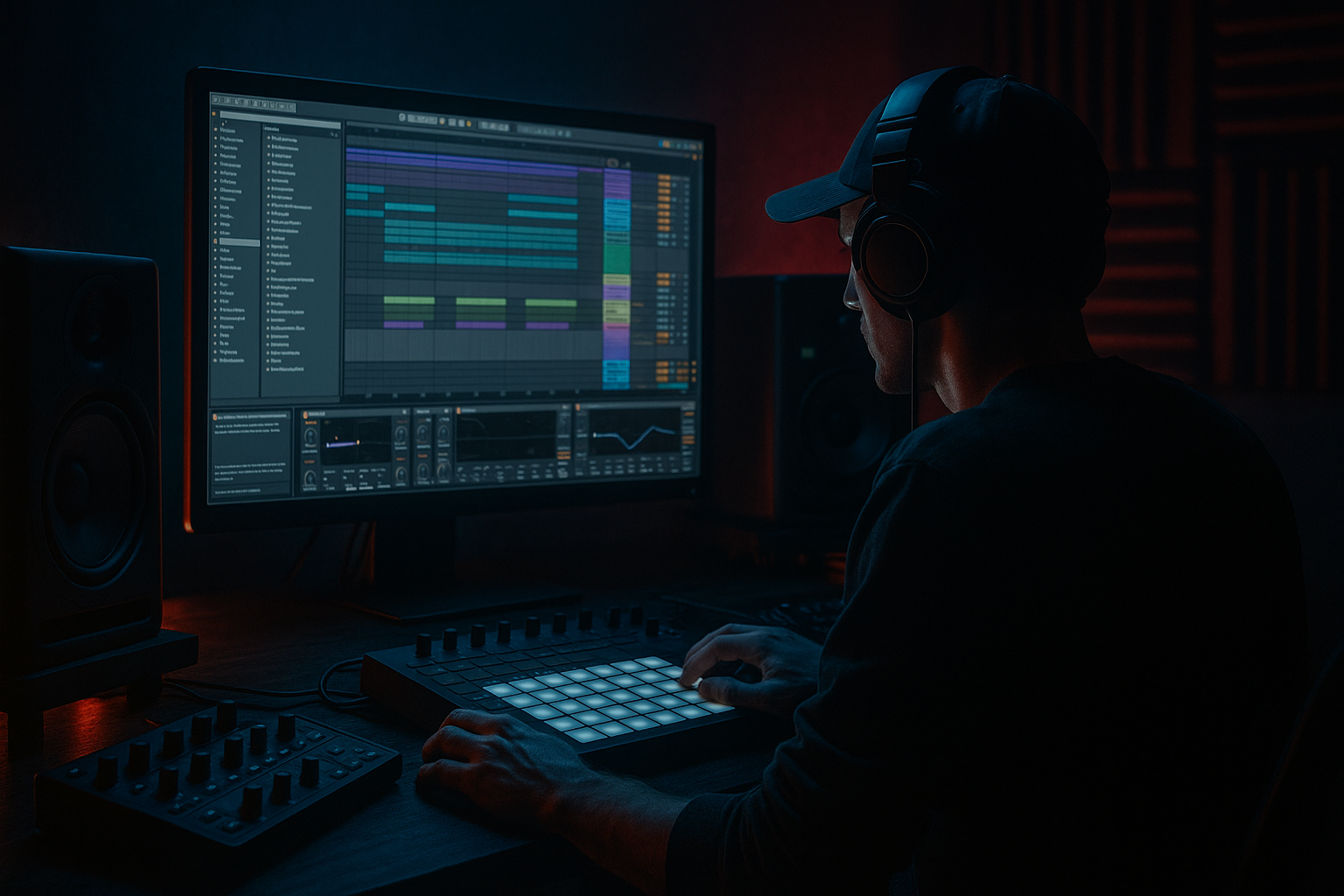
Stretch a chop for oldskool rave pressure in Ableton Live 12 (Advanced) cover image

Narrated lesson audio

The voice track includes the tutorial plus extra teacher commentary.

Open audio file

Main tutorial

Lesson Overview

Stretching a chopped break is one of those oldskool jungle moves that still hits hard in modern DnB when you do it with intention. The goal here is not just “make it longer” — it’s to turn a tiny break slice into a pressure tool: a stretched, gritty, slightly unstable chop that can sit in the intro, tease the drop, or act as a tension layer inside a roller, darkstep, or neuro-leaning arrangement.

In Ableton Live 12, you can do this elegantly with stock tools: Simpler, Warp modes, Resampling, Drum Rack, and some controlled FX. The key is to preserve the character of the break while exposing that time-stretched smear and transient drag that feels very “rave tape” or “dubplate worn in the club.” That texture is gold in DnB because the genre lives on the contrast between precision and chaos: clean sub, controlled drums, and just enough broken-up rhythm to make the loop feel alive.

This lesson focuses on stretching a chop for oldskool rave pressure inside a modern DnB context. You’ll learn how to create a long, characterful break fragment that can function as a hook, a tension builder, or a transition layer — without turning into mush. We’ll keep it practical, Ableton-native, and rooted in real breakbeat workflow 🎛️

What You Will Build

By the end, you’ll have a reusable stretched break chop that sounds like a damaged rave memory: a single slice or small phrase from a classic break, pulled out into a longer phrase with audible warp texture, ghostly transient smear, and rhythmic movement.

Specifically, you’ll build:

  • A 1–2 bar stretched break chop that retains enough transient bite to cut through a DnB mix
  • A second “smear” layer for atmosphere or transition use
  • A mini processing chain for grit, body, and control
  • A simple arrangement move that lets the chop answer the bassline or lead into a drop
  • A version that still works in a modern roller or darker jungle-influenced tune
  • Musically, think of this as the thing that plays before the drop with filtered bass rumble underneath, or a broken-up call-and-response figure after the 16-bar intro. In a more aggressive tune, it can sit behind a Reese stab and reinforce the sense of speed without adding too many new notes.

    Step-by-Step Walkthrough

    1. Choose the right source chop and trim it aggressively

    Start with a break that already has personality: Amen, Think, Funky Drummer-style material, or a dusty one-shot from a loop pack that has room tone and transient snap. For oldskool rave pressure, you want a chop that contains at least one strong transient plus a tail or room tone after it.

    In Arrangement View, find a slice with:

    - a clear hit

    - a bit of decay or cymbal wash

    - no overly clean modern compression

    Drag the sample into Simpler on a new MIDI track. Switch to Classic mode if you want manual start/end control, or Slice mode if you’re building a chopped sequence from several hits. For this technique, start with Classic.

    Suggested starting points:

    - Start Marker: just before the transient

    - End Marker: include about 200–600 ms of tail for a noticeable stretch

    - Warp: On

    - Warp Mode: Complex Pro for smoother harmonic/time stretch, or Beats if you want a more chopped, grainy edge

    Why this works in DnB: the genre rewards texture at the edges of rhythm. A stretched chop makes the groove feel bigger without competing with the kick and sub.

    2. Set the stretch character with Warp mode deliberately

    The main decision here is how “musical” versus “broken” you want the stretch to feel.

    In Simpler:

    - Try Complex Pro if the break includes tonal room resonance or tom content

    - Try Beats if you want the chop to stay punchy and glitchy

    - Use Texture carefully if you want a more smeared, cinematic layer

    Practical settings:

    - Beats mode: Transients between 1–4, Preserve 1/16 or 1/8, Gain to taste

    - Complex Pro: Formants near default, Envelope around 50–80 for less obvious artifacts

    - Texture: Grain Size around 20–50, Flux around 10–30 for gentle movement

    Now lengthen the sample by either:

    - dragging the loop brace to extend the playback region

    - using the Sample Start/End positions so the playhead has more material to stretch through

    - triggering the sample from a MIDI note and letting Simpler’s warp do the long sustain

    If the chop gets too polished, reduce the quality slightly by moving away from Complex Pro and toward Beats or Texture. For oldskool rave pressure, a little aliasing or smearing is often the point.

    3. Turn one chop into a playable phrase with MIDI rhythm

    Open the MIDI clip and program a simple rhythmic phrase that lets the stretched chop breathe. Don’t over-fill it. In DnB, an extended chop often works better when it has space around it.

    Good starting phrase ideas:

    - one hit on beat 1, another on the “and” of 2

    - a syncopated two-hit call-and-response with a bass stab

    - a half-bar hit followed by a filtered repeat

    For advanced feel, use:

    - note lengths of 1/2 bar to 1 bar for longer warp exposure

    - velocity variation between 70–110 to create subtle dynamic changes

    - slight nudging of notes ahead/behind the grid by 5–15 ms for looseness

    If you’re making a roller or jungle hybrid, use the stretched chop as the “phrase marker” and let the actual drum break underneath continue with tighter ghost notes in a separate track. This creates a layered groove: one part smeared and one part crisp.

    4. Resample the stretched chop to lock in the movement

    Once the stretch feels good, resample it. This is where the real pressure appears.

    Create a new audio track and set Audio From to the chop track, then choose Resampling or the exact output if you want precision. Record the stretched chop performance into audio.

    Why resample?

    - it freezes the warp artifacts into audio

    - it lets you edit the waveform like a break, not just a sample

    - you can later chop it again for more rhythmic control

    After recording, zoom in and cut the resampled audio into smaller phrases:

    - one long held stretch

    - a tail-only slice

    - a transient-only slice

    - a reverse or filtered pickup slice

    This is classic DnB workflow: print the interesting accident, then rearrange it with purpose. It’s also how you get that “old tape loop being abused in a warehouse” feeling without losing control of the arrangement.

    5. Shape the chop with a focused stock FX chain

    Keep the chain tight and intentional. A good starting rack on the stretched chop audio track:

    - EQ Eight

    - Saturator

    - Drum Buss

    - Auto Filter

    - Utility

    EQ Eight:

    - high-pass around 120–250 Hz if the chop fights the bass

    - cut a little around 300–500 Hz if it sounds boxy

    - tame harshness around 3–6 kHz with a narrow dip if needed

    Saturator:

    - Drive: 2–6 dB

    - Soft Clip: On

    - Analog Clip if you want a rougher edge

    Drum Buss:

    - Drive: 5–20%

    - Crunch: 5–25%

    - Transients: slightly up if the chop lost too much attack

    - Boom: usually low or off for this specific technique unless you want a huge lower-mid swell

    Auto Filter:

    - use a low-pass sweep from about 300 Hz to 8–12 kHz for transitions

    - add a little resonance, but stop before whistle territory

    Utility:

    - keep Width at 0% if the chop has low-mid content you want centered

    - use Gain trim so the processed chop stays controlled in the mix

    If you want extra movement, put Auto Pan before Saturator at a very slow rate:

    - Rate: 1/4 to 1/1

    - Amount: 10–25%

    This can make the tail feel unstable without becoming seasick.

    6. Build a complementary break layer underneath

    Stretched chops are strongest when they sit on top of a grounded drum foundation. Create a second drum track with a more functional break edit or a programmed kick/snare backbone.

    Options:

    - a tight Amen edit in Slice mode

    - a simple kick/snare pattern with ghost notes

    - an additional top loop with less sustain

    Keep the layers separate:

    - main stretched chop: midrange texture, atmosphere, phrase identity

    - functional break layer: groove, snap, forward motion

    - sub and kick: clean, mono, stable

    Use Group Tracks if needed, and bus the break layers to a drum group. On the drum bus:

    - Glue Compressor with 1–2 dB gain reduction max

    - slow-ish attack, medium release

    - slight saturation from Drum Buss or Saturator

    This keeps the stretched chop exciting while the groove remains danceable. In darker DnB, you need the ear candy, but the kick/snare timing still has to feel brutal and intentional.

    7. Automate the stretch into arrangement tension

    Don’t leave the chop static. In arrangement, the stretch should evolve across 8 or 16 bars.

    Useful automation ideas:

    - automate Warp mode character indirectly by filtering before/after resampling

    - sweep Auto Filter low-pass open during a build

    - increase Saturator Drive into the pre-drop

    - automate a small Wet/Dry on Hybrid Reverb or Echo for space before impact

    - use a reverse version of the chop as a pickup into the next section

    Arrangement example:

    - bars 1–8: filtered stretched chop with sub rumble and sparse hats

    - bars 9–12: chop opens up, more transient edge, bass hints appear

    - bars 13–16: final 1-bar repeat with a low-pass sweep and a snare fill into the drop

    If you’re building a DJ-friendly intro, let the stretched chop appear after 16 bars of drums-only or percussion-only material. That gives selectors something atmospheric to mix against while still hinting at the tune’s identity.

    8. Rework the chop as a call-and-response with bass

    Advanced DnB writing often gets stronger when the chop and bassline interact rhythmically rather than sitting independently. Make the stretched chop answer your bass phrase.

    Example:

    - bass plays a short Reese stab on beat 1

    - stretched chop answers on beat 2.5 with a long smeared tail

    - sub drops out for a half-beat to create space

    - snare lands on 2 and 4 as the anchor

    For the bass:

    - keep sub mono below about 100–120 Hz

    - use a separate mid-bass layer for movement

    - add subtle saturation or vocoder-like movement if needed

    - leave space in the 200–600 Hz zone if the chop is thick there

    A stretched break chop in this context works almost like a vocal stab: it becomes a motif, not just percussion. That’s very effective in rollers and darker halftime-inflected DnB, where repetition and variation are everything.

    Common Mistakes

  • Over-stretching a tiny slice until it turns to mush
  • Fix: include more tail material before stretching, or resample earlier and edit the audio result instead of stretching endlessly inside Simpler.

  • Letting the chop fight the sub and snare
  • Fix: high-pass the chop, or carve a small hole around 200–400 Hz and 2–5 kHz depending on what the bass and snare are doing.

  • Using too much top-end grit
  • Fix: if the chop hisses or splashes too hard, tame it with EQ Eight before saturation, or low-pass it and let the transient come from another layer.

  • Making the rhythm too busy
  • Fix: stretched chops need space. In DnB, clutter kills impact fast. Remove notes before adding processing.

  • Ignoring mono compatibility
  • Fix: check Utility on the chop track. If the stretched sample feels wide and messy, collapse the low-mids to mono and keep width only on the airy top.

    Pro Tips for Darker / Heavier DnB

  • Use resampling twice
  • Stretch once, resample, then chop the resample and warp the new fragments again. This creates layered degradation that sounds deeply underground without needing excessive distortion.

  • Parallel dirt is cleaner than full-chain destruction
  • Put a Return track with Saturator + Echo + Reverb and send only the tail of the chop into it. Keep the dry hit controlled. That gives you menace without mud.

  • Pair the chop with a sub swell, not a full bassline
  • A subtle sine or warped sub note under the stretched phrase can make the whole section feel heavier. Keep it short, mono, and simple.

  • Use tiny filter automation movements
  • A 5–10% open/close move on Auto Filter can make a loop feel alive. In darker DnB, microscopic automation often feels more expensive than huge sweeps.

  • Add rhythmic gating with Auto Pan or Tremolo-style motion
  • Very slow rates, low depth, and careful placement can make the stretched tail pulse against the kick pattern. Keep it subtle.

  • Make the chop respond to snare accents
  • If the snare fills space at the end of a bar, let the chop’s tail bloom there. That contrast gives the drop a more deliberate, weaponized feel.

  • Don’t stereo-spread the wrong content
  • Keep the low end and core transient centered. If you want width, widen the air and decay, not the punch.

    Mini Practice Exercise

    Spend 15 minutes building one reusable stretched break chop for a future tune.

    1. Pick one classic-style break slice with a strong transient and at least half a second of tail.

    2. Load it into Simpler and test two Warp modes: Beats and Complex Pro.

    3. Program a 1-bar MIDI phrase with only 2–3 notes, leaving space between hits.

    4. Resample the result to audio.

    5. Chop the resample into three pieces:

    - attack

    - sustain

    - tail

    6. Process each piece lightly with EQ Eight and Saturator.

    7. Build an 8-bar arrangement where the stretched chop appears only in bars 5–8, with a filter sweep into bar 8.

    8. Export or save the rack as a reusable “rave pressure chop” patch.

    Goal: end with one stretch texture that can be dropped into an intro, build, or breakdown later without further work.


    Recap

  • Stretch the right kind of break chop: one with transient bite and usable tail.
  • Use Simpler, Warp modes, and resampling to turn it into a playable DnB phrase.
  • Shape it with restrained stock FX: EQ Eight, Saturator, Drum Buss, Auto Filter, Utility.
  • Keep the chop in dialogue with the bass and kick/snare groove.
  • Automate it across the arrangement so it feels like a proper pressure tool, not a static loop.
  • In DnB, this technique works because it combines texture, rhythm, and tension while leaving space for the sub and drums to do their job.

Ask GPT about this lesson

Chat with the lesson tutor, get follow-up help, or use quick actions.

Bigup 👽 Ask me anything about this lesson and I’ll answer in context.

Narration script

Show spoken script
Welcome back. In this lesson we’re going to do something very jungle, very oldskool, but still absolutely lethal in modern Drum and Bass. We’re going to stretch a chopped break in Ableton Live 12 so it doesn’t just become longer, but becomes a pressure tool. Something gritty, smeared, slightly unstable, and ready to sit in an intro, a build, or right on the edge of a drop.

The big idea here is simple: don’t treat the chop like a static sample. Treat it like a performance. You want it to lean into the bar, drag a little, breathe a little, and keep that rave tape energy without falling apart into mush.

Start by choosing a break slice with character. A classic Amen, a Think break, Funky Drummer, or even a dusty loop pack hit with a bit of room tone and decay works great. What you want is one strong transient plus a tail. That tail matters. In this technique, the tail is what gets stretched into atmosphere. The transient gives it identity.

Load the slice into Simpler on a new MIDI track. For this first pass, use Classic mode so you can control the start and end points properly. Put the start marker just before the hit, and give it enough end material to stretch through. Usually somewhere around 200 to 600 milliseconds of tail is a really good starting zone. If you chop too tight, the stretch will just sound thin or brittle. If you give it a little more tail, Ableton has something to smear into that old worn-out club texture.

Turn Warp on, and then choose the mode deliberately. This part matters a lot.

If you want the chop to feel smoother and more musical, try Complex Pro. That can be great if the break has tonal room resonance or tom content. If you want it to stay punchier and more broken, use Beats. That one can give you a more granular, chopped edge, which is often perfect for darker jungle pressure. Texture can also be useful if you want something hazy and cinematic, but use it carefully. You’re not trying to wash the sound away. You’re trying to expose that slightly damaged stretch character.

A good way to think about it is this: Complex Pro is the cleaner stretch, Beats is the grittier break, and Texture is the smoky atmosphere version. For oldskool pressure, a little imperfection is usually your friend. If it sounds too polished, back off a bit.

Now, play the chop from MIDI rather than just looping the audio blindly. That’s where you start turning it into a phrase. Keep the MIDI simple. This is one of those cases where less really does hit harder. Try one hit on beat one, then another on the and of two. Or a half-bar hit followed by a shorter response. You want space around the chop so the stretch can breathe.

You can also experiment with note length. Longer notes give the warp more time to expose that smear and drag. Shorter notes give you more percussive control. I’d recommend starting with one-half bar to one bar note lengths, then adjusting by ear until it feels like it’s leaning into the groove rather than sitting on top of it.

Velocity matters too. Even if you’re only using two or three notes, varying velocity a little can make the phrase feel much more alive. Small nudges of five to fifteen milliseconds ahead or behind the grid can also help. This is especially important in DnB, because the groove can become too rigid very quickly if every chopped sound is perfectly aligned.

At this point, solo the chop and listen carefully. Ask yourself: does it still sound like the original break? Does it still have the body in the middle? Remember, for oldskool pressure, the magic often lives in the midrange, not just the top. A lot of the vibe is in that 200 hertz to 2 kilohertz zone where the rasp, body, and room tone all overlap.

Now here’s where it gets really useful: resample it.

Create a new audio track and record the stretched chop performance into audio. This is one of the best moves you can make in Ableton because it freezes the warp behaviour into a waveform you can actually edit like a break. Once it’s printed, zoom in and start cutting it into useful pieces. You might end up with one long held stretch, one tail-only slice, one transient slice, and maybe even a reverse pickup. That’s the kind of workflow that turns a cool idea into a real arrangement tool.

Resampling also helps because some of the character only appears once the machine has done its thing and you commit to audio. That’s where the “damaged rave memory” feeling really starts to show up.

Now let’s shape the sound with a focused FX chain. Don’t overdo it. Keep it tight and intentional.

A really solid starting chain is EQ Eight, Saturator, Drum Buss, Auto Filter, and Utility.

With EQ Eight, start by cleaning up the low end. High-pass somewhere around 120 to 250 hertz if the chop is fighting the kick and sub. If it sounds boxy, make a small cut around 300 to 500 hertz. If there’s harshness, dip a bit around 3 to 6 kilohertz. The goal is not to sterilize the sound. The goal is to make it sit.

Then add Saturator. Just a few dB of drive can do a lot here. Keep Soft Clip on if you want the edge to stay controlled. If you want it rougher, try Analog Clip. Again, we’re not trying to destroy the sample. We’re trying to make the stretch feel like it belongs in a rave system that’s been abused for years.

Drum Buss can add great density. A bit of drive, a little crunch, and maybe a touch of transient emphasis if the chop lost too much attack. Be careful with boom, though. Unless you specifically want a huge lower-mid swell, keep that low or off. The chop should have attitude, not muddy up the whole mix.

Use Auto Filter if you want movement. A low-pass sweep is brilliant for builds and transitions. You can open it gradually from a few hundred hertz up into the 8 to 12 kilohertz range. Add a little resonance if you want some bite, but stop before it gets whistle-heavy. That’s usually too much for this kind of texture.

Finish with Utility to control the image and level. If the chop has low-mid content you want to keep solid, collapse it more toward mono. Keep the core of the sound centered. If you want width, do it on the air and decay, not on the punch.

Now, if you want a little extra movement, you can put Auto Pan before Saturator at a very slow rate. Something like one quarter to one bar with a low amount can make the tail feel a bit unstable without turning it into a wobble effect. Subtlety wins here.

Next, give the stretched chop a proper home by building a second layer underneath it. This is important. The stretched chop should not be doing everything by itself. It’s strongest when it sits on top of a grounded break or drum pattern.

So make another drum track with a more functional groove. That could be a tight Amen edit, a simple kick and snare backbone, or a top loop with less sustain. Keep the layers separate in your mind. The stretched chop is your phrase and atmosphere. The other break layer is your snap and forward motion. Your kick and sub stay clean, mono, and stable.

If you’re bussing the drums together, a little Glue Compressor on the drum group can help. Just a dB or two of gain reduction is enough. You’re not trying to flatten it. You’re just gluing the parts together so the stretched chop feels part of the system.

Now comes the arrangement thinking.

A stretched chop should evolve. Don’t leave it static for eight bars and expect it to keep the energy alive. Automate it across the section. Open the filter a little into the build. Increase the drive slightly before the drop. Add a bit of space with Echo or Hybrid Reverb on the last hit. Even tiny filter moves can make a loop feel expensive and alive.

A really effective arrangement move is to use the chop as a phrase marker. Drop it at the start of every eight bars, then reduce how often it appears as the tune progresses. That creates identity. People start to recognize the sound as part of the track’s character.

You can also use the chop in a call-and-response with the bassline. This is where the whole thing starts sounding advanced.

For example, the bass could hit on beat one with a short Reese stab, and then the stretched chop answers on beat two and a half with a long smeared tail. Maybe the sub drops out for half a beat to make room. Maybe the snare stays locked on two and four to anchor everything. That kind of conversation between chop and bassline is what makes darker DnB feel deliberate instead of crowded.

And if your bassline is sitting low and heavy, remember to leave space in the 200 to 600 hertz zone if the chop is thick there. That range is where clashes happen fast. Clean arrangement choices beat heavy processing every time.

Here’s a very useful advanced variation: make two versions of the same slice. One version should be tighter and more percussive. The other should be longer and smear-heavy. Alternate them every other bar or every second hit. That gives you movement without writing a totally new part.

You can also create a pitch-drift version after resampling. Duplicate the audio, then transpose one copy by just one to three semitones up or down. Keep it subtle. Tiny pitch offsets can make the stretch feel like a tape machine that’s starting to lose confidence. That’s a beautiful kind of grime.

If you want to fake a granular feel, duplicate the stretched chop and offset the copy by a few milliseconds. High-pass it, low-pass it a bit, and maybe add a very short delay. That can create a kind of shimmer and motion without leaving stock Ableton territory.

Another strong move is to turn the stretched tail into a stab. Freeze it with a hard gate, short decay reverb, and a little saturation, and suddenly the same source can work as both atmosphere and rhythmic punctuation. That’s proper useful sound design.

A couple of important teacher notes before you move on.

First, check the chop at three speeds: soloed, against drums, and against bass. A stretch can sound huge on its own and then completely disappear once the sub and kick return. Always judge it in context.

Second, if the texture feels too clean, don’t instantly reach for more distortion. Try a different slice from the same break first. A roomier tail or a less transient-heavy hit can often sound more authentic and dirty than simply piling on more FX.

Third, if the chop loses its identity, layer in a very quiet dry click or a thin transient-only copy. That can help the ear lock onto the original break while the stretched version does the atmospheric work.

For darker or heavier DnB, a really effective trick is to resample twice. Stretch once, resample it, then chop the resample and warp the new fragments again. That layered degradation can sound deeply underground without needing to crush everything with distortion.

Also, remember that parallel dirt is usually cleaner than full-chain destruction. If you want more menace, create a return track with Saturator, Echo, and Reverb, then send only the tail of the chop into it. Keep the dry hit controlled. That way you get space and grime without turning the whole mix to mud.

So, to wrap this up, the workflow is this: choose a break with character, stretch a meaningful slice in Simpler, use Warp mode intentionally, play it as a phrase, resample it, shape it with a focused FX chain, and then place it in the arrangement where it can answer the drums and bass instead of fighting them.

The reason this works so well in Drum and Bass is because it sits right in the middle of the genre’s sweet spot. You get texture, tension, and movement, but you still leave room for the kick and sub to do their job. That contrast between precision and chaos is the whole game.

If you want to really lock this in, do the practice exercise: build one chop, test Beats and Complex Pro, program a simple phrase, resample it, cut it into attack, sustain, and tail, process lightly, and place it into an eight-bar arrangement with a filter sweep into the last bar.

If you can make one break slice feel like a proper rave artifact, you’re not just stretching audio. You’re building identity. And in DnB, that’s the stuff that makes a tune hit hard.

mickeybeam

Go to drumbasscd.com for +100 drum and bass YouTube channels all in one place - tune in!

Generating PDF preview…