Main tutorial
Lesson Overview
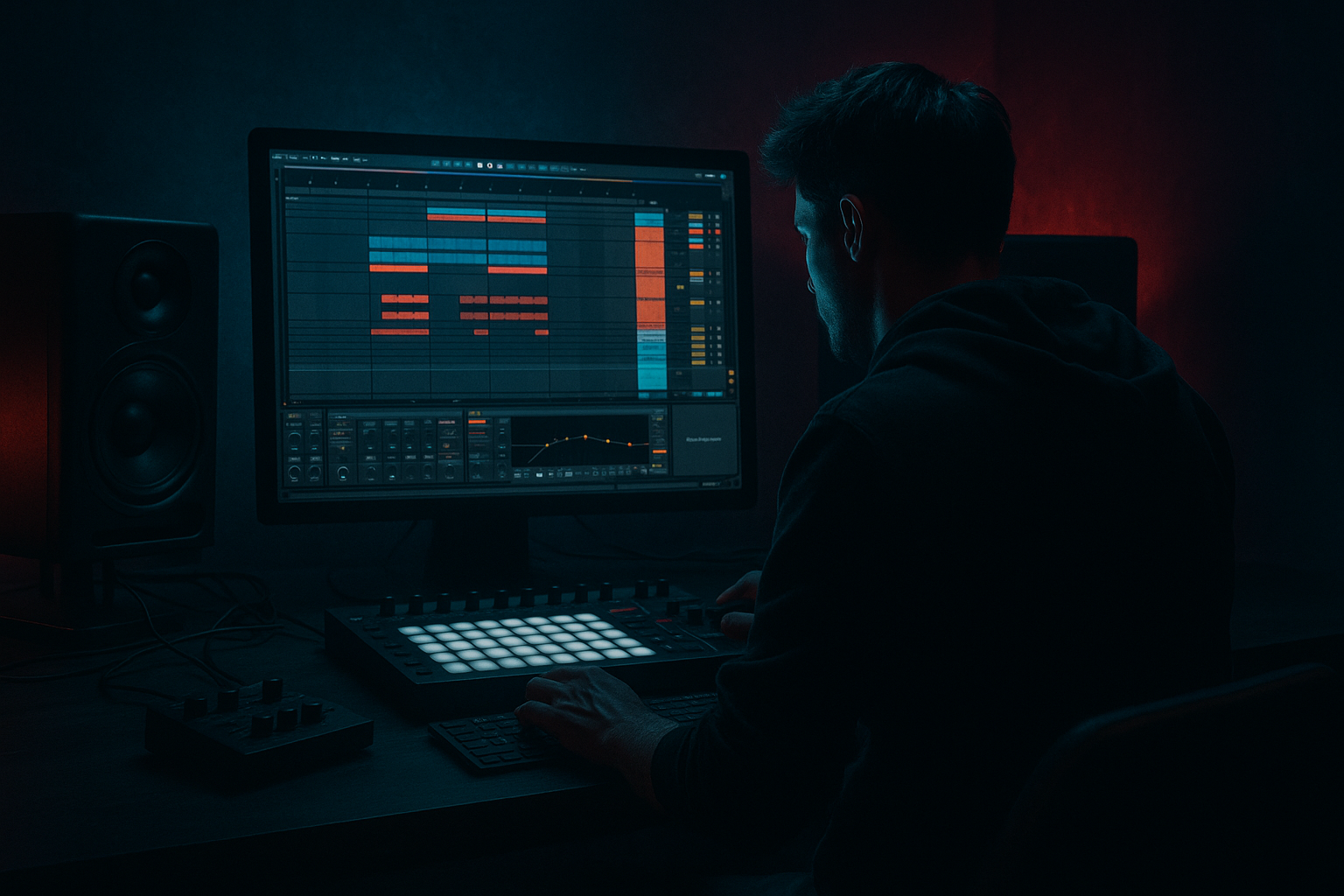
In this lesson, you’ll build a Stepper-style percussion layer workflow in Ableton Live 12 from scratch, designed specifically for oldskool jungle / DnB edits. The focus is not on creating a full drum break from nothing, but on editing, layering, and arranging percussion around a core break so the groove feels alive, gritty, and properly “together” in the mix.
This matters because in DnB, especially jungle-leaning or darker stepper material, the drums are often the emotional engine of the track. A strong break on its own can feel flat if it’s not edited with intention. The real character comes from how you:
- carve space for the kick and sub,
- layer extra percussion for motion,
- use ghost notes and micro-edits for swing,
- and arrange fills and switch-ups so the pattern keeps evolving.
- a core break loop with edited hits,
- a top-layer percussion rack for hats, rides, shakers, and rim accents,
- a ghost-note lane for subtle movement,
- a resampled fill process for quick switch-ups,
- and a drum bus that glues everything without killing the break’s energy.
- intro edits with stripped drums,
- drop variations with extra percussion,
- 16-bar phrase changes,
- and DJ-friendly transitions with fills and tension moments.
- Drum Break Main
- Perc Top Layer
- Ghost Perc
- Fill/Resample
- Drum Bus
- Preserve: Transients
- Transient Loop Mode: 1/16 or 1/8 depending on how sharp the source is
- Gate: around 80–120% if tails are being cut too hard
- Gain: set so the break peaks sensibly, leaving headroom
- Transient slicing for most breaks
- 1/8 if the source is already tightly edited or you want more controlled chop points
- kick-heavy slices
- snare slices
- hat fragments
- ghost or noise hits
- cymbal tails
- Place snare emphasis on 2 and 4
- Use kick fragments to support the main snare push
- Leave space where the bassline will hit
- Add a few small chopped break fragments before snares for forward motion
- Simpler Mode: Classic
- Fade: 2–8 ms to avoid clicks
- Voices: 1 for tight hits, 2–4 if you want occasional overlap
- Transposition: keep most slices at original pitch unless a tone shift adds character
- closed hats
- shuffled hats
- ride fragments
- rimshots
- short metal hits
- tiny shaker loops
- closed hats on the offbeats
- occasional 16th-note hat pushes before snares
- one or two rim accents to answer the main snare
- a light ride or metal tap in the second half of the phrase
- EQ Eight: high-pass around 180–300 Hz so it stays out of the kick/sub zone
- Saturator: Drive around 1–4 dB for extra density
- Compressor or Glue Compressor: light control, 1–3 dB gain reduction
- Utility: reduce width if the hats feel too wide or unfocused
- ghost snare taps
- reversed hat bits
- tiny tom hits
- tick noises
- low-level break fragments
- just before snares,
- after a main snare as a tail response,
- or tucked into the last 1/16 of a bar before the loop restarts.
- Velocity: 15–60 for most ghost hits
- EQ Eight: cut below 200–400 Hz
- Auto Filter: low-pass if the sample has too much bite
- Reverb: very short room, low dry/wet, just enough space to place it in the track
- Main loop
- Variation loop
- Fill loop
- muting one kick fragment
- adding one extra ghost hit
- swapping a hat for a ride accent
- shifting a snare pick-up earlier by a 16th
- removing top percussion for one bar before the drop
- Keep your main break loop on one track
- Keep your percussion layers separate
- Only combine them on the drum bus
- cut a one-bar fill,
- reverse one hit,
- stretch a tiny percussion tail into a transition,
- or slice a snare roll into new MIDI ideas.
- Warp to tighten the resampled audio
- Reverse on selected clips for oldskool movement
- Beat Repeat if you want occasional glitchy fill energy
- Auto Filter automation for sweep-ins
- Echo throws for a single hit before a drop
- a truncated snare roll,
- a reversed hat,
- one open hat flare,
- and a final snare pickup into the next 4-bar section.
- open an Auto Filter on the top percussion during builds
- increase Saturator drive slightly in the second half of a drop
- automate Reverb dry/wet higher on a fill, then pull it back fast
- use Utility gain dips for tension before the snare drop
- automate clip activation so the ghost layer drops out for one bar, then returns
- Intro: stripped break + filtered top percussion
- Build: add hats, ghost hits, and short fills
- Drop 1: full groove
- Drop 2: remove one layer and add more edits
- Outro: progressively strip drums for DJ mix-out
- Making every bar equally busy
- Over-high-passing the break
- Stacking too many transient-heavy layers
- Ignoring velocity variation
- Too much bus compression
- Not arranging fills in phrases
- Letting percussion compete with the bassline
- Use Saturator on a parallel-ish return for the top percussion to add grit without wrecking the main break.
- Try a subtle Drum Buss on ghost percussion with a little Crunch to make tiny hits feel more threatening.
- Put Auto Filter on a hat layer and automate a slow low-pass opening over 8 bars for tension.
- Use Echo throws on one snare or rim hit at the end of a phrase, then cut it abruptly for a nasty stop-start feel.
- If the groove needs more menace, layer one very quiet metallic tick an octave higher and pan it slightly off-center.
- For neuro-leaning darkness, resample a drum fill and pitch one fragment down slightly; short pitch shifts can make fills feel more unstable and underground.
- Keep your sub and kick relationship disciplined: even in a busy edit, the low end should stay clean enough that the bassline lands hard.
- For more oldskool character, leave tiny imperfections in the break timing instead of flattening everything to the grid.
- Use Utility to narrow the low percussion and keep stereo width mostly in the hats and FX layer.
- Start with a clean, warp-locked break and slice it for edit control.
- Build separate layers for main break, top percussion, and ghost hits.
- Use small timing, velocity, and clip edits to create jungle movement.
- Resample fills so your arrangement evolves quickly and naturally.
- Glue the drums on a bus, but keep transients and low-end clarity intact.
- Arrange in phrases so the drum edit supports the bassline and drop structure.
This is especially important in the Edits category, because a convincing DnB drum section is rarely just a loop. It’s usually a chain of decisions: slice, layer, mute, resample, repeat. The goal here is to create a workflow that lets you move fast while still making musical, DJ-friendly, club-ready choices.
You’ll be using Ableton stock tools like Drum Rack, Simplers, Slice to New MIDI Track, EQ Eight, Compressor, Saturator, Drum Buss, Utility, Reverb, Echo, Auto Filter, and Envelope Follower where useful. The result should feel like an authentic stepper/jungle hybrid: punchy, shuffled, slightly ragged in the right places, and ready to support a heavy bassline.
What You Will Build
By the end of the lesson, you’ll have a 4- or 8-bar percussion layer system built around a main jungle break, with:
Musically, this will sound like a stepping oldskool DnB groove: a strong kick/snare foundation, chopped percussion accents, forward-driving hats, and just enough grime to sit under a reese, sub, or rewound bassline.
You’ll also create a workflow that is easy to reuse later for:
Step-by-Step Walkthrough
1) Start with a clean drum edit workspace
Create a new Live set and set your project tempo between 168 and 174 BPM. For oldskool jungle/stepper vibes, 170 BPM is a strong default. Drop a reference tune into Audio Track 1 if you want, and lower it so you can compare energy and drum density later.
Create these tracks:
Load your main break into an Audio Track first. If it’s a classic break, trim the clip so the transient lands cleanly on the grid. Turn Warp on, and use Beats mode for drum breaks. Start with:
This first pass is about feel, not perfection. The important thing is to get the break looping cleanly so you can edit it like a rhythmic instrument.
Why this works in DnB: a stable loop lets you focus on the interaction between the break and the bassline. In jungle and stepper music, groove is often built from layered edits rather than one perfect drum sample.
2) Slice the break into a playable Drum Rack
Once the main break is looping, right-click the clip and choose Slice to New MIDI Track. Use:
Ableton will create a Drum Rack with the break slices mapped across pads. Rename the rack and organize the pads by function:
Now program a 2-bar MIDI clip with a simple stepper foundation:
Aim for a pattern that feels like it’s driving ahead of the grid without sounding rushed. If a slice is too long, shorten it in the Simpler layer or use the pad’s Sample Start and Release controls.
Parameter ideas:
This step matters because a sliced break gives you edit control: you can remove clutter, emphasize snare snaps, and build fills without losing the original jungle DNA.
3) Build the top percussion layer for stepper momentum
Now add a separate Perc Top Layer track using a second Drum Rack. Keep this layer clean and functional: it should support the break, not fight it.
Use stock samples like:
Program a 1- or 2-bar pattern with offbeat hats and subtle syncopation. Try this approach:
Process the layer with:
If the top layer is too static, use MIDI velocity variation or randomize tiny timing offsets by hand. Small human inconsistencies are gold in DnB edits.
Arrangement tip: make the top layer enter subtly in the intro or pre-drop, then open it up in the drop. This creates a strong energy lift without needing a new bassline idea.
4) Add ghost percussion and micro-edits for jungle feel
Create a third MIDI track called Ghost Perc and keep it deliberately quiet. This is where the “oldskool” personality comes from.
Use short:
Place them:
Good starting points:
This is where Edits really start to matter. A jungle groove often feels alive because you hear little “mistakes” and responses in the drum pattern. Those micro-edits create tension and variation without cluttering the main break.
If you want extra movement, draw a subtle clip envelope on track volume and automate tiny rises into fills or transitions.
5) Shape the groove with clip edits and note-level timing
Now zoom in and treat the drums like an arrangement tool, not just a loop. In Ableton Live 12, use the MIDI clip editor to create intentional phrasing changes every 4 or 8 bars.
Make at least three versions of the same drum pattern:
For the variation, try:
Use duplicate and edit rather than over-programming from scratch. That’s the fastest workflow for DnB edits because the track stays coherent while still evolving.
Useful workflow choice:
This makes mix decisions much easier later, especially when the bassline starts competing with drum transients.
Musical context example: in a 16-bar drop, you might run the full groove for bars 1–4, strip the top layer in bars 5–8, add a fill at bar 8, bring the hats back at bar 9, and remove the kick fragment on the last bar before the phrase resets. That kind of phrasing is classic in rollers and darker jungle edits.
6) Use resampling to create fills and transitions
Create your Fill/Resample track and route audio from your drum group or the master output into it for resampling. Record 4 or 8 bars of the current drum groove, then chop the best moments into a new audio clip.
Once you have the resampled audio:
Useful Ableton tools:
This is a huge DnB workflow win because resampling lets you turn accidental groove moments into arranged details. It also keeps the track sounding edited rather than over-sequenced.
Try making a one-bar fill that includes:
That’s enough to make the arrangement feel alive without destroying the original pocket.
7) Group the drums and shape the bus
Now route Drum Break Main, Perc Top Layer, and Ghost Perc into Drum Bus. This is where the whole drum identity gets glued together.
On the Drum Bus, try this stock chain:
1. EQ Eight
- small cut around 250–400 Hz if the break is boxy
- tiny shelf if the hats need air, but be conservative
2. Drum Buss
- Drive: light to moderate, around 5–15%
- Crunch: use sparingly for edge
- Boom: usually low or off if the kick/sub relationship is already strong
3. Compressor or Glue Compressor
- ratio 2:1 or 4:1
- attack around 10–30 ms
- release around 50–150 ms
- aim for only a few dB of gain reduction
4. Utility
- check mono compatibility if needed
If the drums start losing punch, back off the bus processing. The goal is cohesion, not flattening. In darker DnB, the transient punch needs to survive so the bassline has something to lock to.
Why this works in DnB: the drum bus gives you a single point to shape energy, which makes it easier to automate intensity across sections without micro-managing every clip.
8) Automate energy for arrangement and drop design
Now build the arrangement around the drum edit. In stepper/jungle DnB, your drum layers should evolve across 8- or 16-bar phrases so the tune feels purposeful.
Good automation ideas:
A strong pattern is:
Make sure the arrangement leaves room for the bassline to speak. If the drums are too busy in every bar, the track loses impact. In DnB, silence and reduction are part of the groove.
Common Mistakes
Fix: leave at least one repeating bar with less percussion so the loop breathes.
Fix: keep enough body in the break so it still feels like a real jungle sample, not just hats and clicks.
Fix: if the kick/snare start sounding smaller, mute one layer and reintroduce it only where needed.
Fix: vary ghost hits and top percussion velocity so the groove doesn’t sound quantized and sterile.
Fix: back off the compressor and preserve transient punch; DnB drums need attack.
Fix: place edits at 4-, 8-, or 16-bar boundaries so the listener feels direction, not random noise.
Fix: high-pass the top layer, keep midrange under control, and check mono balance.
Pro Tips for Darker / Heavier DnB
Mini Practice Exercise
Spend 10–20 minutes building this:
1. Load a jungle break and slice it to a Drum Rack.
2. Program a 2-bar main loop with snare on 2 and 4.
3. Add a separate top layer with offbeat hats and one rim accent.
4. Create a ghost percussion track with 2–4 barely audible hits.
5. Duplicate the pattern into 4 bars and make one variation by removing one kick fragment and adding one fill.
6. Resample the 4-bar groove and create a 1-bar transition fill.
7. Route all drum layers to a bus and apply light EQ, Drum Buss, and compression.
8. Listen in the context of a simple bass note or sub drone and check whether the drums still drive forward.
Goal: make the groove feel like a real DnB phrase, not a static loop.
Recap
If you can make one loop feel like it’s constantly moving without losing the pocket, you’re already thinking like a proper DnB editor.

