DNB COLLEGE

Drum & Bass Ableton Live 12 Tutorials

LESSON DETAIL

Stack a filtered breakdown in Ableton Live 12 for jungle oldskool DnB vibes (Beginner)

An AI-generated beginner Ableton lesson focused on Stack a filtered breakdown in Ableton Live 12 for jungle oldskool DnB vibes in the Drums area of drum and bass production.

Back to lessons
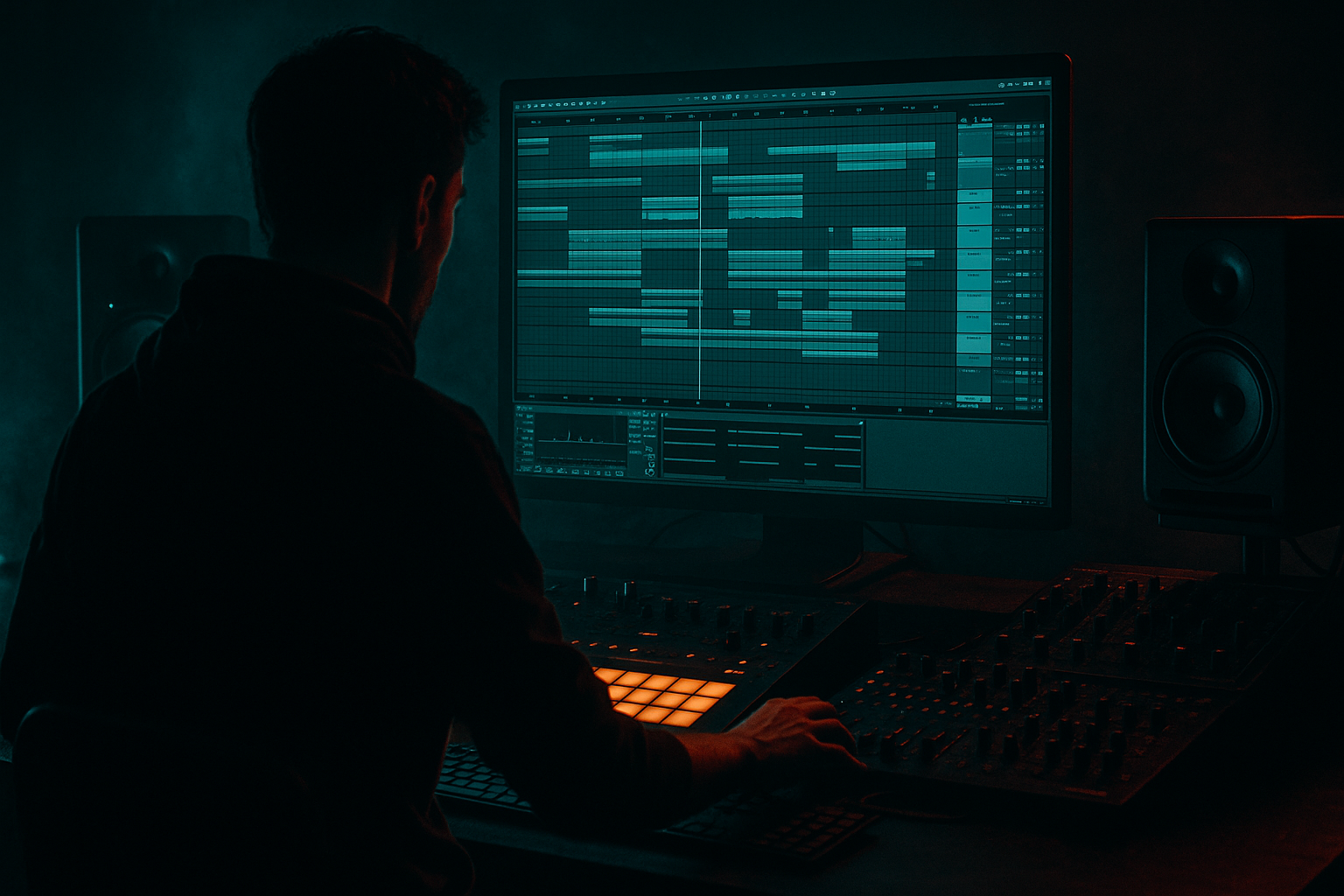
Stack a filtered breakdown in Ableton Live 12 for jungle oldskool DnB vibes (Beginner) cover image

Narrated lesson audio

The voice track includes the tutorial plus extra teacher commentary.

Open audio file

Main tutorial

Lesson Overview

A filtered breakdown is one of the most useful tension tools in oldskool jungle and DnB. It gives the track a breather, keeps the energy moving, and makes the drop hit harder when the drums and bass return. In this lesson, you’ll build a clean, musical breakdown in Ableton Live 12 using only stock devices, with a sound that feels at home in jungle, rollers, and darker DnB.

This technique matters because DnB is all about contrast: pressure and release, weight and space, motion and impact. A filtered breakdown lets you strip the track back without losing identity. You can keep the drums hinted at in the background, let the bass breathe through movement, and create a moment that feels atmospheric but still rhythmic. That is very “DnB”: even when the track is quiet, it should still feel like it’s moving.

We’ll focus on beginner-friendly Ableton workflows, but keep the result authentic:

  • chopped breakbeat energy
  • filtered drum stack
  • sub-bass tension
  • dark atmosphere
  • DJ-friendly arrangement thinking
  • By the end, you’ll know how to build a breakdown that feels like it belongs in a proper jungle or oldskool DnB tune, not just a generic ambient section.

    What You Will Build

    You will build a short breakdown section that sits between two high-energy parts of a DnB tune.

    The result will sound like:

  • a filtered drum loop with the kick and snare still implied
  • a soft sub or bass pulse underneath for tension
  • a delayed pad or noise texture for space
  • automation that opens up slowly toward the next drop
  • a clean transition that keeps the groove alive even while the mix is restrained
  • Musically, think of it like this:

  • 8 bars of drop energy
  • 8 or 16 bars of breakdown
  • the drums get filtered and thinned out
  • a bass note or reese tail carries the low-end mood
  • atmosphere and delay fill the gaps
  • the final bars open up the filter and prepare the next drop
  • This is a classic arrangement move in jungle and DnB: the drums don’t disappear completely, they get transformed.

    Step-by-Step Walkthrough

    1. Start with a simple 8-bar breakdown region

    In Arrangement View, create an 8-bar section after your drop or main groove. For a beginner, keep this section short and clear.

    Use a working template like this:

    - Bars 1–4: filtered drums + atmosphere

    - Bars 5–6: add bass tension or a ghostly note

    - Bars 7–8: open the filter and build toward the next drop

    If you already have a drum loop, duplicate it into the breakdown area. If not, use a basic breakbeat or a chopped Amen-style loop. The point is not to fully rewrite the track — it’s to reshape what you already have.

    Why this works in DnB: the genre relies on phrasing and momentum. A well-placed 8-bar breakdown gives listeners a reset without killing the groove.

    2. Build a drum stack from your breakbeat

    Use your main break or drum loop as the base. If you have a layered drum group, keep the layers in the breakdown but soften them.

    Inside the drum group, try this stock Ableton chain:

    - Drum Bus or Group track

    - EQ Eight

    - Auto Filter

    - Drum Buss

    Start with EQ Eight:

    - high-pass gently around 25–35 Hz to clean sub-rumble

    - cut a little around 200–400 Hz if the break sounds boxy

    - keep the kick/snare character alive

    Then add Auto Filter:

    - choose Low-Pass 24 dB

    - start cutoff around 500–1,200 Hz

    - resonance around 10–20% only

    - automate the cutoff upward over the breakdown

    Add Drum Buss lightly:

    - Drive: 5–15%

    - Crunch: low, around 0–10%

    - Boom: usually off or very subtle in a breakdown

    - Dry/Wet: 20–40%

    You want the drums to feel wrapped in fog, not destroyed. If the break loses all punch, lower the filter less aggressively or keep a parallel unfiltered drum layer quietly underneath.

    3. Make the break feel alive with ghost hits and slices

    Oldskool jungle and DnB often feel exciting because of tiny drum details. Even in a breakdown, you can keep a sense of rhythm using ghost notes and chopped fragments.

    In Ableton, do one of these:

    - duplicate a kick or snare hit into a separate audio track

    - use Slice to New MIDI Track on a breakbeat clip

    - manually place one or two chopped snare tails or hat hits

    Beginner-friendly approach:

    - keep the main break in place

    - mute or reduce some hits in the breakdown

    - leave occasional ghost snares or hat pickups

    - place one reversed break hit before the next section

    Good starting moves:

    - ghost snare volume around -18 to -10 dB

    - hats or percussion tucked way lower than the main break

    - use small timing nudges to make it feel human, not grid-perfect

    If you want an oldskool feel, let one snare echo into silence. That empty space after the snare is part of the vibe.

    4. Add a sub or bass pulse underneath the breakdown

    Even in a breakdown, DnB usually keeps a low-end identity. You do not need a full bassline, but you should keep some pressure below the surface.

    Create a simple bass or sub track using:

    - Operator for a clean sine sub

    - Analog for a slightly rounder tone

    - a resampled bass note if you already have one

    Keep it simple:

    - one or two notes only

    - short MIDI notes

    - leave space between them

    - keep the sub mono

    Suggested settings:

    - Operator sine wave

    - low-pass the bass if needed with EQ Eight

    - if using a reese, reduce it to just a filtered tail in the breakdown

    - keep the bass volume lower than in the drop, often by 3–8 dB

    A good arrangement choice is to use one held bass note under the breakdown and automate the filter on it. For example:

    - start cutoff around 200–500 Hz

    - slowly open toward 1–2 kHz

    - keep the sub fundamental intact below the filter

    Why this works in DnB: the listener still feels the track’s weight, so the breakdown does not sound empty or disconnected from the drop.

    5. Create the main filtered movement with Auto Filter automation

    This is the core of the lesson. Use Auto Filter on your drum group, bass layer, or both.

    For a classic jungle/DnB breakdown, try this:

    - Low-Pass 24 or Low-Pass 12

    - start fairly closed

    - automate the cutoff to open over 8 bars

    - add a little resonance for character, but don’t overdo it

    Starter ranges:

    - cutoff start: 400–800 Hz

    - cutoff end: 6–12 kHz

    - resonance: 5–18%

    - envelope amount: subtle, if used

    A very effective workflow is to automate the drum group and bass separately:

    - drums: slightly more open, so the groove stays readable

    - bass: more filtered, so the low-end tension builds slowly

    If you want movement without complexity, draw a slow upward automation curve on the filter cutoff. Do not make it linear and boring if you can avoid it — try a curve that starts restrained, then opens more rapidly in the final 2 bars.

    This is one of the most reliable DnB transition tools because it sounds musical and practical at the same time.

    6. Add atmosphere with reverb, delay, or a texture layer

    DnB breakdowns often feel cinematic because of space. Use stock effects to make the section breathe.

    A simple chain on a pad, noise, or sampled texture:

    - Reverb

    - Echo

    - EQ Eight

    Suggested starting points:

    - Reverb Size: medium to large

    - Reverb Decay: 2–6 seconds

    - Dry/Wet: 10–30% on inserts, more if used on a send

    - Echo Time: 1/4, 1/8D, or 1/2 for rhythmic space

    - Echo Feedback: 15–35%

    - Echo Filter: roll off some lows and highs so it doesn’t clutter the mix

    Good texture choices for oldskool/jungle:

    - vinyl noise

    - rain or air texture

    - reversed cymbal

    - short ghost pad

    - sampled film or ambient hit

    Keep the atmosphere behind the drums. It should support the breakdown, not cover it. If the reverb clouds the kick/snare memory too much, use EQ Eight after the reverb and cut low mids around 200–500 Hz.

    7. Use arrangement automation to control tension and release

    Now shape the breakdown like a DJ-friendly section, not just a loop.

    A strong beginner arrangement for 8 bars:

    - Bars 1–2: drums heavily filtered, atmosphere comes in

    - Bars 3–4: open the bass slightly, add a ghost hit or fill

    - Bars 5–6: filter opens more, snare presence increases

    - Bars 7–8: most elements become clearer, leading into the drop

    Useful automation ideas:

    - Auto Filter cutoff rising over time

    - reverb dry/wet slightly increasing then dropping before the drop

    - drum group volume dipping slightly at the start, then recovering

    - bass filter opening in the last 2 bars

    - Echo feedback rising briefly for a transition tail

    Keep the last bar a little more active. You can add:

    - a snare fill

    - a reversed break hit

    - a short drum pause

    - an impact on bar 8 beat 4

    That final push helps the drop feel earned.

    8. Check the breakdown in context with the drop

    Always audition the breakdown before and after the drop. In DnB, transitions are judged by how they connect to the energy around them.

    Listen for:

    - does the breakdown feel too empty?

    - do the drums disappear completely?

    - is the bass too loud and cluttering the space?

    - does the drop return feel bigger because of the breakdown?

    A practical workflow:

    - loop the last 2 bars of the drop

    - loop the breakdown

    - loop the first 2 bars of the next drop

    - compare how the energy moves through the filter open

    If the drop feels weak, make the breakdown slightly more stripped back so the return hits harder. If the breakdown feels boring, keep more rhythmic detail in the filtered drums or add a stronger bass pulse.

    Common Mistakes

  • Filtering too much too early
  • Fix: keep some drum character audible for the first few bars. A breakdown should feel reduced, not dead.

  • Letting the low end get muddy
  • Fix: high-pass non-bass elements, keep the sub mono, and avoid stacking too many low-mid textures.

  • Using too much reverb
  • Fix: shorten decay, reduce wet amount, and cut low mids after the reverb.

  • Making the drum loop lose all groove
  • Fix: keep ghost hits, snare tails, or subtle break slices so the rhythm still feels alive.

  • Automating every element in the same way
  • Fix: separate drum and bass filter motion slightly so the breakdown has depth.

  • Forgetting the drop payoff
  • Fix: make sure the final bars of the breakdown open enough to make the next section feel bigger.

    Pro Tips for Darker / Heavier DnB

  • Use a second, quieter filtered drum layer under the main break for thickness. Keep it 6–12 dB lower than the main layer so it just adds body.
  • Add gentle saturation with Saturator on the drum bus:
  • - Drive: 1–4 dB

    - Soft Clip: on if needed

    This can add grit without crushing the dynamics.

  • For darker vibes, try a short, low-passed Echo send on the snare. A small 1/8D delay can create that eerie jungle tail.
  • If you want a more neuro edge, automate the filter on a bass reese or noise layer with tiny rhythmic movements, but keep the breakdown simple enough that the listener can still breathe.
  • Use Utility to keep bass mono and check width:
  • - Width at 0% for sub

    - widen only higher texture layers

  • A great oldskool move is to leave one drum element almost dry while everything else is filtered. For example, keep a slightly present snare crack and filter the rest around it.
  • If the breakdown needs more menace, add a low, filtered tom hit or sampled impact very quietly under the atmosphere.
  • For a roller-style feel, make the breakdown less cinematic and more groove-led: fewer pads, more drum texture, more subtle movement.
  • Mini Practice Exercise

    Spend 10–20 minutes making a mini breakdown using only one breakbeat, one bass sound, and one atmosphere layer.

    1. Duplicate an 8-bar loop into a new section.

    2. Put Auto Filter on the drum group and automate the cutoff from closed to open across 8 bars.

    3. Add a simple sine sub with Operator on one note or two notes only.

    4. Add one texture track: vinyl noise, reversed cymbal, or a pad.

    5. Put Echo on the texture and keep it subtle.

    6. Mute or reduce a few drum hits so the breakdown feels chopped, not static.

    7. Listen from the last 2 bars of the drop into the first 2 bars after the breakdown.

    Goal: make the section feel like it belongs in a jungle or oldskool DnB tune, with clear tension and a strong return to the drop.

    If you want an extra challenge, do a second version where the drums are more aggressive and the filter opens faster — that will show you how much arrangement energy changes with just automation.


    Recap

  • A filtered breakdown is a core DnB arrangement tool for tension and release.
  • Keep the drums present, but softened and reshaped with Auto Filter and EQ Eight.
  • Use ghost hits, chopped breaks, and small fills to preserve jungle-style momentum.
  • Hold onto a simple sub or bass pulse so the section still feels heavy.
  • Add atmosphere with reverb, delay, and texture, but keep it clean.
  • Automate the filter and energy over 8 bars so the next drop feels bigger.
  • In DnB, the best breakdowns do not stop the groove — they transform it.

Ask GPT about this lesson

Chat with the lesson tutor, get follow-up help, or use quick actions.

Bigup 👽 Ask me anything about this lesson and I’ll answer in context.

Narration script

Show spoken script
Welcome back. In this lesson we’re building a filtered breakdown in Ableton Live 12 for jungle and oldskool DnB vibes, and this is one of those moves that instantly makes a track feel more like a real tune and less like a loop.

The big idea is simple: instead of killing the energy before the drop, we reshape it. We keep the drums hinted at, let the bass breathe, add a bit of atmosphere, and use filter movement to create tension. That way, the breakdown still feels alive. It’s quieter, sure, but it’s still moving. And that is a huge part of DnB.

So let’s build this like a beginner-friendly 8-bar breakdown. If you’re already working in Arrangement View, find the section after your main groove or drop and make a new eight-bar space there. You can think of it like this: the first few bars are mostly filtered drums and atmosphere, the middle bars bring in a little bass tension, and the final bars open up toward the next drop.

If you already have a breakbeat loop, great. Duplicate it into the breakdown area. If not, use a basic break or an Amen-style chopped loop. We’re not trying to rewrite the whole track here. We’re just changing the energy of what’s already there.

Now let’s focus on the drums first. This is where the “filtered breakdown” really happens.

Put your break or drum loop inside a drum group if it isn’t already grouped. On that drum group, start with EQ Eight. Use a gentle high-pass around 25 to 35 Hz just to clean out useless sub-rumble. If the break feels boxy, dip a little around 200 to 400 Hz. Don’t overdo it though. You still want the kick and snare character to come through.

Next, add Auto Filter. Choose a low-pass filter, preferably 24 dB if you want a classic smoother roll-off. Start the cutoff fairly low, somewhere around 500 to 1,200 Hz depending on how bright your break is. Keep resonance modest, just enough to give it a little personality. Then automate that cutoff so it slowly opens over the breakdown.

Here’s the vibe: at the start, the drums should sound tucked behind a curtain. By the end, that curtain is pulling back. Don’t make the sweep too dramatic too early. The power is in the gradual reveal.

After that, add Drum Buss lightly. A little Drive can add grit and glue, maybe around 5 to 15 percent. Keep Crunch low if you use it, and don’t push Boom unless you really know it’s helping. In a breakdown, you usually want the drums to feel wrapped in fog, not smashed into dust. If the break starts losing all its punch, ease off the filter a bit or keep a quiet unfiltered layer underneath.

And that brings us to a really important oldskool jungle trick: keep the groove alive with ghost hits and chopped fragments.

A breakdown does not have to mean the drum loop disappears. In fact, it often sounds better when it doesn’t. Try leaving in a few ghost snares, little hat pickups, or chopped break tails. You can do this by duplicating a snare or kick hit onto a separate audio track, slicing the break to MIDI, or just manually placing a few small fragments in the gaps.

A good beginner move is to mute some hits, but not all of them. Let the listener still feel the rhythm. A snare ghost around minus 18 to minus 10 dB can work really well. Tuck hats lower than the main break, and if you want that proper oldskool feel, let a snare echo out into a bit of empty space. That space after the snare is part of the vibe. It gives the track room to breathe.

Now let’s put some weight back under the section with a bass or sub pulse.

Even in a breakdown, DnB usually keeps some low-end identity. You don’t need a full bassline, but you do want that pressure underneath. A simple sine sub in Operator is perfect for this. You could also use Analog if you want something a little rounder, or even a resampled bass note if you already have one in the track.

Keep it simple. One note, maybe two. Short MIDI notes. Leave gaps between them. And keep the sub mono. You want the low end to feel controlled and focused, not wide and messy.

If you want, filter the bass a bit too. Start lower and slowly open it over the breakdown. The trick is to keep the fundamental weight intact while the top movement comes and goes. In other words, the bass should feel like it’s holding back, not vanishing.

That “holding back” feeling is what makes the drop hit harder later.

Now for the main movement: the filter sweep. This is the core of the lesson.

Put Auto Filter on the drum group, and if it makes sense for your track, also put one on the bass layer. For a classic jungle or DnB breakdown, start with a low-pass filter fairly closed. Something like 400 to 800 Hz is a solid starting point. Then automate it opening up across the eight bars until it reaches something much brighter, maybe 6 to 12 kHz by the end.

If you automate the drums and bass separately, you can make the breakdown feel deeper. For example, let the drums open slightly faster so the groove stays readable, while the bass stays more filtered until the final bars. That creates contrast without making the section feel flat.

And here’s a teacher tip: don’t just draw a boring straight line if you can avoid it. Try a curve. Start more restrained, then let the opening become more noticeable in the last two bars. That shape gives the breakdown a sense of progression, which is exactly what you want before the drop.

Now let’s add atmosphere.

This is where the section starts feeling cinematic and spacious. You can use a pad, noise, reversed cymbal, or some kind of textured sample. Put Reverb and Echo on it, then maybe finish with EQ Eight so it stays clean.

A medium to large reverb works well here. You might use a decay of around 2 to 6 seconds, and keep the wet amount fairly subtle on insert, unless it’s on a send. For Echo, try a rhythmic delay like 1/4, 1/8D, or 1/2. Keep feedback in a reasonable range, maybe 15 to 35 percent, and filter out some lows and highs so it doesn’t clutter the mix.

Good texture choices for this style are vinyl noise, air, rain, a short ghost pad, or a reversed cymbal. Keep it behind the drums, not in front of them. If the reverb gets cloudy, use EQ Eight after it and cut some low mids, roughly around 200 to 500 Hz. That keeps the space moody instead of muddy.

Now we shape the full eight-bar arrangement so it feels like a proper DJ-friendly DnB transition.

A strong beginner layout is this: bars one and two are the most filtered, with atmosphere coming in. Bars three and four open the bass a little and maybe add a ghost hit or tiny fill. Bars five and six open the filter more and bring the snare presence forward. Bars seven and eight are the clearest, with maybe a small fill, a reversed hit, or a short pause before the drop.

You can also automate reverb to rise a little and then pull back just before the drop. Or let Echo feedback bloom briefly on the last snare. Even a subtle snare fill on the last bar can make the transition feel much more intentional.

And one more important thing: listen to the breakdown in context. Don’t judge it soloed. In DnB, the transition before and after is where the real energy is decided.

So loop the last couple of bars of the drop, the breakdown itself, and the first couple of bars of the next drop. Ask yourself: does the breakdown feel too empty? Are the drums disappearing completely? Is the bass too loud? Does the drop feel bigger because of what came before it?

If the drop isn’t hitting hard enough, make the breakdown a little more stripped back. If the breakdown feels boring, keep more rhythmic detail in the filtered drums or add a stronger bass pulse. It’s always a balance between tension and recognition.

A really good beginner rule is this: if you can still hum the groove during the breakdown, you probably kept enough rhythmic identity. That’s a great sign.

Let’s quickly talk about a few common mistakes so you can avoid them.

First, filtering too much too early. If you close the filter instantly and remove all the drum character, the breakdown can feel dead instead of dramatic. Keep some life in there.

Second, muddy low end. High-pass non-bass elements, keep the sub mono, and don’t stack too many low-mid textures under the groove.

Third, too much reverb. It’s easy to drown the section in space, but if that happens, shorten the decay, reduce the wet amount, and cut low mids after the reverb.

Fourth, making the drums lose all groove. The magic of jungle and oldskool DnB is that even the quiet parts still feel rhythmic. Ghost hits and chopped fragments help a lot.

Fifth, automating everything exactly the same way. Separate the drum and bass movement a bit so the breakdown feels deeper and more three-dimensional.

Now, if you want to push this a little further, here are a few pro-style variations.

You could try a two-stage filter opening. Start with a very closed low-pass, then halfway through the breakdown switch to a less aggressive filter. That makes the section feel like it’s evolving, not just slowly opening.

You could also do call-and-response chopping, where every second bar has a break fragment or fill answering the space. That works really well for a DJ-friendly feel.

Another great option is a parallel tension layer. Duplicate your drum group, filter the copy heavily, and keep it very low underneath the main drums. It adds thickness without clutter.

You can even reverse a snare, crash, or break hit into the final bar so the drop feels inevitable. That’s a classic move, and it still works because it gives the listener a very clear sense of forward motion.

For a darker vibe, try a lightly distorted filtered bass tail instead of removing the bass completely. That can make the low end feel like it’s holding itself back, which is super effective in heavier DnB.

All right, let’s wrap this into a quick practice challenge.

Take one breakbeat, one bass sound, and one atmosphere layer. Duplicate an eight-bar loop into a new section. Put Auto Filter on the drum group and automate it from closed to open across the eight bars. Add a simple sine sub with Operator on one note or two. Add a texture layer like vinyl noise, a reversed cymbal, or a pad. Put a little Echo on the texture. Then mute or reduce a few drum hits so the breakdown feels chopped and alive.

Finally, listen from the last two bars of the drop into the first two bars after the breakdown. That’s where you’ll hear whether the transition actually works.

If you want an extra challenge, make three versions: one subtle, one dark and roomy, and one with more oldskool pressure and faster filter opening. Compare which one still feels like it’s moving even when it’s stripped back.

So remember the big takeaway: in DnB, a great breakdown does not stop the groove. It transforms it. Keep some rhythm, keep some low-end tension, and use filter movement to guide the listener toward the next drop. That’s how you get that proper jungle and oldskool DnB energy.

mickeybeam

Go to drumbasscd.com for +100 drum and bass YouTube channels all in one place - tune in!

Generating PDF preview…