DNB COLLEGE

Drum & Bass Ableton Live 12 Tutorials

LESSON DETAIL

Soul Pride break roll swing approach for oldskool rave pressure in Ableton Live 12 (Beginner)

An AI-generated beginner Ableton lesson focused on Soul Pride break roll swing approach for oldskool rave pressure in Ableton Live 12 in the Arrangement area of drum and bass production.

Back to lessons
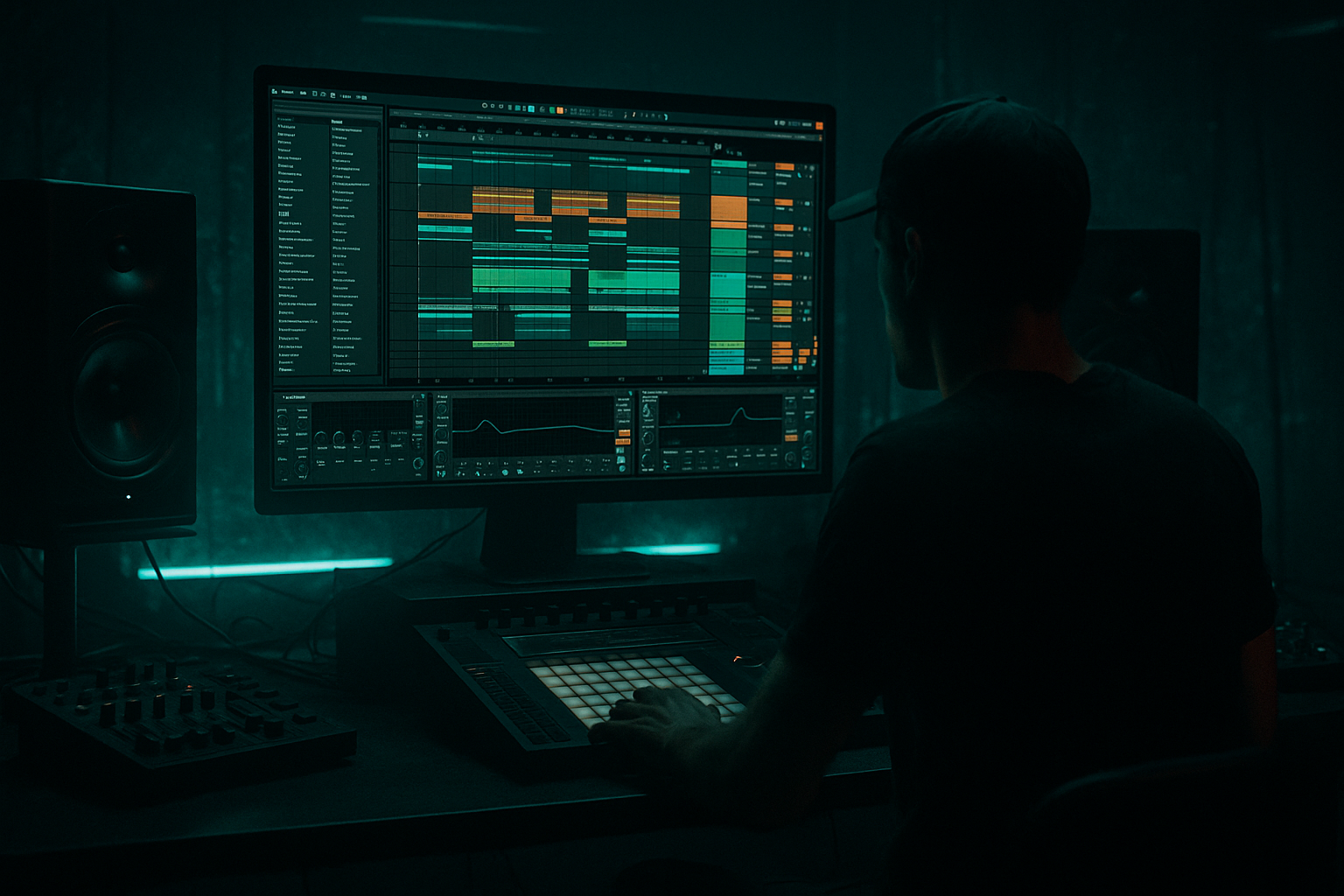
Soul Pride break roll swing approach for oldskool rave pressure in Ableton Live 12 (Beginner) cover image

Narrated lesson audio

The voice track includes the tutorial plus extra teacher commentary.

Open audio file

Main tutorial

Soul Pride Break Roll + Swing Approach (Oldskool Rave Pressure) in Ableton Live 12 🥁⚡

Skill level: Beginner

Category: Arrangement (with practical drum programming + editing)

---

1) Lesson overview

In this lesson you’ll learn a very “oldskool rave” way to make a breakbeat roll and swing like classic jungle/DnB—using the Soul Pride-style break as the vibe reference (tight funk ghosts, little rolls, and shuffled urgency).

We’ll do it the Ableton Live way:

  • Slice a break to MIDI (or manually chop)
  • Build a roll section (fills + pressure)
  • Add swing without losing punch
  • Arrange it into a DnB-ready 16/32-bar structure with variation and energy ramps
  • You’ll end with a loop that feels rolling, “pushed,” and rave-ready—not stiff and grid-locked. 🎛️

    ---

    2) What you will build

    A 32-bar drum arrangement at 170–174 BPM that includes:

  • A main break groove (Soul Pride vibe)
  • A “roll” variation every 4/8 bars
  • Tasteful swing and micro-timing
  • A simple top layer (hat/ride) for modern DnB drive
  • A clean drum bus chain using stock Ableton devices
  • ---

    3) Step-by-step walkthrough

    Step 0 — Session setup (fast + correct)

    1. Set tempo to 172 BPM (good DnB middle ground).

    2. Time signature: 4/4.

    3. Create tracks:

    - Audio Track: `Break Raw`

    - MIDI Track: `Break Slices`

    - Audio Track: `Top Loop` (optional hats/ride)

    - Return A: `Short Verb`

    - Return B: `Dub Delay`

    Workflow tip: Keep the raw break untouched on its own track. You’ll always want a “truth” reference to return to.

    ---

    Step 1 — Get the break behaving (warp + loop cleanly)

    1. Drop your Soul Pride-style break sample into `Break Raw`.

    2. In Clip View:

    - Turn Warp = ON

    - Set Seg. BPM if needed (don’t worry if it’s off at first)

    - Warp Mode:

    - Try Beats for tight punch

    - Or Complex Pro if the break is messy (less punchy though)

    3. Find a clean 1-bar or 2-bar loop:

    - Start at a solid transient (usually kick)

    - Loop 1 bar first (easier), then go 2 bars later

    Goal: It should loop without flamming or drifting.

    ---

    Step 2 — Slice to MIDI (your “break kit” in a Drum Rack) 🔪

    1. Right-click the audio clip → Slice to New MIDI Track

    2. Settings:

    - Slice by: Transients

    - Create one slice per: Transient

    - Preserve: Warp Settings (if available)

    - This creates a Drum Rack on `Break Slices`

    3. Open the MIDI clip that gets created.

    - You’ll see break hits laid out as MIDI notes.

    Why this matters: Now you can rearrange the break like LEGO—rolls, swing, ghost edits—without messy audio cutting.

    ---

    Step 3 — Build the main “rolling” DnB pattern (keep it break-real)

    Start with a 2-bar loop. If your sliced MIDI is messy, simplify:

    1. Duplicate the cleanest 1 bar to 2 bars.

    2. Find:

    - The main snare hit slice (usually on beats 2 and 4 in funk, but DnB often emphasizes beat 2 + 4 at high tempo)

    - The kick slices

    - A few ghost snare slices

    Basic DnB skeleton (2 bars):

  • Snare: strong on beat 2 and beat 4 (in each bar)
  • Kick: place one on 1, and another before/after 3 for movement
  • Ghosts: low-velocity snare slices around the main snare to get the funk
  • Practical tip: Don’t over-program. The roll pressure comes from small repeated motifs, not constant chaos.

    ---

    Step 4 — Add “break roll” pressure (the key move) 🔥

    A “roll” is basically a short, accelerating-feel fill—often using snare ghosts + tiny kick bits.

    Where to place rolls:

  • End of bar 4 (classic)
  • End of bar 8 (bigger)
  • Before drops (bar 15/16, etc.)
  • How to create a roll (beginner-friendly method):

    1. In bar 4 (last half-beat), add 3–6 quick notes using snare/ghost snare slices.

    2. Use 16th notes first. If it’s too straight, use 16th-triplet feel sparingly (DnB loves tension from triplets, but too much gets messy).

    Velocity shaping (this is crucial):

  • First ghost: ~30–45
  • Middle ghosts: ~45–70
  • Final hit (lead-in): ~85–110
  • This makes the roll sound like it’s pulling you into the next bar.

    Micro-length variation:

  • Shorten some ghost notes slightly (note length) to avoid machine-gun tails, especially if slices include room/verb.
  • ---

    Step 5 — Add swing without ruining the break (Groove Pool + subtle quantize) 🕺

    Swing in DnB isn’t “house swing.” It’s subtle, tight, and often applied more to hats/ghosts than main snare hits.

    #### Option A: Groove Pool (recommended for beginners)

    1. Open Groove Pool (left panel).

    2. Load a groove:

    - Start with MPC 16 Swing 55 or MPC 16 Swing 57

    - Or try Ableton’s Swing grooves at 54–58

    3. Drag the groove onto your MIDI clip in `Break Slices`.

    4. Set groove parameters (Clip Groove settings):

    - Timing: 10–25% (keep it subtle)

    - Velocity: 0–15% (optional)

    - Random: 0–5% (tiny humanization)

    5. Hit Commit only when you’re sure.

    Important: If your main snare starts feeling late/weak, reduce Timing or exclude key hits (see Option B).

    #### Option B: Swing only the “tops/ghosts” (more controlled)

    1. Duplicate the MIDI clip.

    2. In the duplicate, delete kick + main snare hits, keeping only hats/ghosts.

    3. Apply groove to this “tops/ghosts” clip only.

    4. Layer it with the “straight backbone” clip (no groove).

    This gives rave shuffle while keeping the drop punchy.

    ---

    Step 6 — Layer a tight top loop for modern roll (optional but huge) 🎚️

    Oldskool breaks can lack consistent high-end at 172 BPM. Layer a simple hat/ride pattern.

    1. Create `Top Loop` MIDI track with a Drum Rack (use a closed hat + ride).

    2. Program:

    - Closed hat: 16ths, but remove a few hits to breathe

    - Ride: 8ths (classic rolling drive)

    3. Add groove (same as before) but slightly stronger:

    - Timing 20–35%

    Mixing tip: High-pass tops with EQ Eight around 250–400 Hz so it doesn’t muddy the break.

    ---

    Step 7 — Clean, punchy drum bus chain (stock devices) 🧼💥

    Group `Break Raw` (if used) + `Break Slices` + `Top Loop` into a Drum Group.

    On the Drum Group add:

    1. EQ Eight

    - HP filter: 25–35 Hz (remove rumble)

    - Small dip: 250–400 Hz if boxy

    - Gentle shelf: 8–10 kHz +1 to +3 dB if dull (optional)

    2. Drum Buss

    - Drive: 5–15%

    - Crunch: 0–10 (watch harshness)

    - Boom: 0–10%, Frequency around 50–60 Hz (careful if you’ll add sub bass later)

    - Transients: +5 to +15 if you want more snap

    3. Glue Compressor

    - Attack: 3 ms

    - Release: Auto

    - Ratio: 2:1

    - Aim for 1–3 dB of gain reduction on peaks

    - Soft Clip: ON (helps rave punch)

    Rule: Don’t “master” your drums here—just make them coherent.

    ---

    Step 8 — Arrangement: turn the loop into oldskool rave pressure (32 bars) 🧱

    Here’s a beginner-friendly structure that feels DnB/jungle:

    Bars 1–8: Intro groove (DJ-friendly)

  • Break only (or break + filtered tops)
  • Add Auto Filter on Drum Group:
  • - Low-pass starting around 6–10 kHz, slowly opening

    Bars 9–16: Build pressure

  • Add tops fully
  • Add a small roll at end of bar 12
  • Add a bigger roll at end of bar 16
  • Optional: send a snare hit to Return B Dub Delay (1/8 or 1/4)
  • Bars 17–24: Drop / main section

  • Full drums, cleanest groove
  • Roll every 4 bars but keep them short (don’t overfill)
  • Bars 25–32: Variation / second phrase

  • Switch one slice: swap a kick or snare ghost
  • Add a “stutter” moment (1 beat):
  • - Duplicate a slice and repeat it 2–4 times quickly

  • Final bar (bar 32): biggest roll into the next section
  • Automation ideas (simple but effective):

  • Drum Buss Drive up slightly (e.g., +2–4%) into drops
  • Reverb send on the last snare before bar 17
  • Filter open during builds
  • ---

    4) Common mistakes ❌

  • Over-swinging everything: If the main snare gets lazy, your drop loses impact. Swing ghosts/tops more than core hits.
  • Rolls too loud: Rolls should lead into the bar, not become the main event. Use velocity shaping.
  • Too many slices firing: A real break has air. Leave gaps.
  • Warp artifacts: If warping sounds crunchy, try different Warp modes or re-check your warp markers.
  • Ignoring arrangement variation: A perfect 2-bar loop can still feel boring. Add changes every 4/8 bars.
  • ---

    5) Pro tips for darker/heavier DnB 🌑🔩

  • Parallel distortion return:
  • - Return C with Saturator (Drive 6–12 dB, Soft Clip ON) + EQ Eight (HP at 200 Hz, slight boost at 2–5 kHz)

    - Send only snare/ghosts for gritty jungle bite.

  • “Tight punch” trick:
  • - Add Transient Shaper style with Drum Buss Transients or Roar (subtle) to make breaks cut through heavy bass.

  • Make it more evil with tuning:
  • - Pitch the entire break down -1 to -3 semitones (Clip Transpose) and compensate with a little high-shelf EQ. Darker instantly.

  • Controlled chaos:
  • - Add Random 2–5% in Groove Pool, but keep the main snare un-randomized (or on the straight clip).

  • Space like early rave:
  • - Use short, bright reverb on snare only: Return A with Hybrid Reverb (Short Plate / 0.6–1.0s, HP at 400–800 Hz).

    ---

    6) Mini practice exercise 🎯

    Do this in 15–20 minutes:

    1. Make a 2-bar break slice groove that feels good without swing.

    2. Create two roll fills:

    - One small at end of bar 2

    - One bigger at end of bar 4

    3. Apply MPC 16 Swing 55:

    - First on the whole clip (Timing 15%)

    - Then try the split method (swing only tops/ghosts)

    4. Arrange 8 bars:

    - Bars 1–4: no rolls

    - Bar 4: big roll into bar 5

    - Bars 5–8: add hats layer + one small roll

    Export an 8-bar audio and listen away from the DAW: does it feel like it’s “leaning forward” without dragging? That’s the sweet spot.

    ---

    7) Recap ✅

  • Slice your break to MIDI so you can program rolls and control swing precisely.
  • Build roll pressure with short bursts, velocity ramps, and tasteful placement (every 4/8 bars).
  • Use Groove Pool gently—DnB swing is tight and functional.
  • Arrange the energy with small variations, automation, and a clean drum bus chain using EQ Eight → Drum Buss → Glue Compressor.
  • Layer a simple top pattern to keep the roll modern and driving, while the break provides the soul.

If you want, tell me your break tempo/original BPM and whether you’re aiming for jungle (rawer) or modern rollers (cleaner)—and I’ll suggest a specific groove % and roll template.


Ask GPT about this lesson

Chat with the lesson tutor, get follow-up help, or use quick actions.

Bigup 👽 Ask me anything about this lesson and I’ll answer in context.

Narration script

Show spoken script
Welcome in. Today we’re going for that oldskool rave pressure drum and bass feel in Ableton Live 12, using a Soul Pride style break as the vibe reference. Think tight funk, ghost notes that chatter, little rolls that pull you forward, and swing that feels urgent without turning your snare into a lazy mess.

We’re staying beginner-friendly, and we’re doing this mainly in the Arrangement view, so by the end you’ll have a proper 32-bar drum arrangement at around 172 BPM that actually evolves and drives, not just a two-bar loop that repeats forever.

Alright, let’s set it up.

Set your tempo to 172 BPM. Time signature 4/4.

Now create a few tracks so you stay organized. Make an audio track called Break Raw. Make a MIDI track called Break Slices. Make an audio or MIDI track called Top Loop for hats and ride, optional but honestly it helps a lot at this tempo. Then make two return tracks: Return A, call it Short Verb, and Return B, call it Dub Delay.

Quick coaching note: keep the raw break untouched on its own track. That’s your truth. Any time you get lost with slicing, warping, or processing, you can always A/B against the raw loop and remember what you liked in the first place.

Now drag your break sample into Break Raw.

In the clip view, turn Warp on. Your first job is not “make it cool.” Your first job is “make it behave.” We want a clean one-bar loop that doesn’t flam, drift, or feel like it’s tripping over the grid.

Set Warp mode to Beats first, because we want punch and clean transients. If the break is messy and Beats is doing ugly clicks or weird stretching, then try Complex Pro, but just know it can soften the punch. For rave breaks, punch is life, so use Complex Pro only if you really need it.

Find the first strong transient, usually a kick at the start of the bar. Set your loop brace to one bar. Play it against the metronome. If it feels like it’s drifting or the end doesn’t land right, adjust warp markers until the loop snaps around perfectly.

Once one bar is clean, you can go two bars later. But earn the two bars. One bar clean is better than two bars sloppy.

Cool. Now we slice it.

Right-click the clip and choose Slice to New MIDI Track. Slice by transients, one slice per transient. If you see an option to preserve warp settings, use it. Hit OK.

Ableton creates a new MIDI track with a Drum Rack, and it should also create a MIDI clip that plays the break back using slices. This is the key move: now you can rearrange the break like Lego. Rolls, swaps, swing control, clean edits, all without a million tiny audio cuts.

Now open that MIDI clip. Zoom in so you can actually see what’s happening.

Here’s the mindset: lock your anchor hits first, then get funky around them.

Your anchor hits are usually the main snare on beats 2 and 4. Often the first kick too. Those are the signposts that tell the listener “this is the groove.” If you swing those too hard or nudge them randomly, the whole drop feels weak.

So first, identify the main snare slice. You’ll see a recurring note that’s clearly the big snare transient from the break. Place it firmly on beat 2 and beat 4 in each bar. If slicing already did that for you, great. If not, move it.

Then find a kick slice. Put a kick on beat 1. Add another kick somewhere around beat 3, either just before or just after, depending on how skippy you want it. For beginner DnB pressure, a simple “one on the one, one around the three” gets you moving fast.

Now the magic: ghost notes. Ghost snares are those quieter little hits that make the break talk. Grab a couple of snare-y slices that are softer, and place them around your main snare. Think little pick-ups, little answers, not a constant machine gun.

Teacher tip: don’t over-program. Oldskool pressure comes from small repeated motifs. If you fill every gap, you don’t get “more energy,” you get blur.

At this point, loop two bars. Listen. You want it to feel like a breakbeat, not like a perfect drum machine pattern. If it’s too rigid, good. We’ll fix that. If it’s already chaotic, simplify it now before you add rolls and swing.

Now we build the roll pressure. This is the key move for that rave “pull into the next bar” feeling.

We’re going to place a roll at the end of bar 4 first, because that’s classic. Later we’ll do bar 8, bar 16, bar 32… but start with bar 4 so it’s obvious and you can learn the sound.

Go to the last half-beat of bar 4. Add a quick run of 3 to 6 notes using snare or ghost snare slices. Start with straight 16th notes. Keep it simple.

Now shape the velocities. This is not optional. Velocity is the difference between “rave roll” and “annoying typewriter.”

Set the first ghost hit in the roll around 30 to 45 velocity. Middle hits around 45 to 70. Then your final lead-in hit, the one that basically throws you into the next bar, bring that up around 85 to 110. You’re creating a ramp. Quiet to loud. Tension to release.

And here’s a secret sauce thing beginners miss: rolls feel better when they have an exit. So either end the roll with one clean snare stamp right on the downbeat… or do the opposite and leave a tiny gap right before the downbeat, like a 1/16 rest, so the next bar slams harder. That tiny breath can make the drop feel twice as big.

Also, shorten note lengths on some ghost hits if the slices have long tails. Otherwise you get that machine-gun smear where every hit overlaps and the groove turns to mush.

Alright. Now swing.

DnB swing is not big house shuffle. It’s subtle, functional, and usually it lives more in hats and ghosts than in your main snare.

Open the Groove Pool. Grab something like MPC 16 Swing 55 or 57. Or any Ableton swing groove around 54 to 58.

Drag the groove onto your MIDI clip.

Now in the clip’s groove settings, start gently. Timing around 10 to 25 percent. Velocity maybe 0 to 15 percent if you want a little dynamic movement. Random, keep tiny, like 0 to 5 percent. We’re not trying to sound drunk. We’re trying to sound alive.

Listen carefully to your main snare. If the snare starts feeling late, floppy, or like it lost its authority, pull the timing amount down.

Now here’s the more controlled method that I recommend if you want guaranteed punch.

Duplicate the MIDI clip. On the first clip, keep only the anchor hits: the main snare and the main kicks. Delete hats and ghosts from that clip. This is your straight backbone.

On the second clip, delete the anchor hits and keep only hats and ghost notes. This is your funk layer.

Now apply the groove only to the funk layer. Leave the backbone straight.

This gives you that rave shuffle and forward motion, but your snare still cracks dead center like it should. That’s the “best of both worlds” method, and it’s extremely common in serious drum programming even if people don’t talk about it.

Extra pressure dial: once your groove is working, select only ghost snares and hats and nudge them slightly earlier. We’re talking tiny. One to five milliseconds earlier. Not a full 16th note, not even close. Just a little negative delay so it leans forward. If it starts sounding frantic, pull it back, or only do it on the second bar of your two-bar phrase, so you get that call-and-response feel without rewriting the pattern.

Now let’s add a top layer, because at 172 BPM oldskool breaks can feel like they don’t have a consistent “engine” in the highs.

On your Top Loop track, load a Drum Rack with a closed hat and a ride. Program closed hats in 16ths, but remove a few hits so it breathes. Then add the ride in 8ths for that classic rolling drive.

Apply the same groove to the tops, but you can push it a bit more here, like 20 to 35 percent timing, because tops can swing more without making the groove feel late.

Mix tip: put EQ Eight on the tops and high-pass around 250 to 400 Hz. You want drive, not mud.

Now we do a simple drum bus chain with stock devices, just to glue it and get that rave snap.

Group your drum tracks. Put Break Slices and Top Loop in a group. If you’re still using Break Raw as a layer, group that too, but be careful: raw break plus sliced break can flam if they’re not perfectly aligned, so either commit to one as the main, or keep the raw super quiet as texture.

On the Drum Group, add EQ Eight. High-pass around 25 to 35 Hz to remove rumble. If it’s boxy, dip a little around 250 to 400 Hz. If it’s dull, a gentle high shelf around 8 to 10 kHz, just one to three dB, but don’t overdo it.

Then add Drum Buss. Drive around 5 to 15 percent. Crunch from 0 to 10, just watch harshness. Boom, be careful because you’ll probably add sub bass later; keep it low, like 0 to 10 percent, and if you use it, aim around 50 to 60 Hz. Transients, try plus 5 to plus 15 if you want more snap.

Then add Glue Compressor. Attack 3 milliseconds, release auto, ratio 2 to 1. You’re aiming for one to three dB of gain reduction on peaks. And turn Soft Clip on for that nice controlled smack.

Rule of thumb: don’t “master” your drums here. Just make them coherent and punchy.

Now arrangement. This is where the oldskool pressure really shows up, because jungle and rave drums are as much about storytelling as they are about the loop.

We’re making 32 bars.

Bars 1 to 8: intro groove. DJ-friendly. Keep it simpler. Maybe break only, or break with filtered tops. Put an Auto Filter on the Drum Group and start with a low-pass around, say, 6 to 10 kHz, then slowly open it across the 8 bars. That opening filter is a classic “here comes the energy” move.

Bars 9 to 16: build pressure. Bring the tops in fully. Add a small roll at the end of bar 12. Then a bigger roll at the end of bar 16 to signpost the drop.

And for that classic dubby rave hint, take one snare hit near the end of a phrase and send it to Dub Delay. Try an eighth note or quarter note delay. Keep it subtle. One tasteful delayed snare is more “rave” than drowning the whole loop.

Bars 17 to 24: main drop section. Cleanest groove, full drums. Keep rolls every 4 bars, but short. Remember: pressure comes from placement and contrast, not constant filling.

Bars 25 to 32: variation, second phrase. Do one simple re-splice: duplicate your main clip, and swap just one ghost snare slice for a different nearby slice from the same break, maybe one that’s tighter or roomier. That tiny change reads as progression without confusing the dancer.

Add one stutter moment somewhere, like a one-beat stutter: duplicate a slice and repeat it two to four times quickly. Then, bar 32, biggest roll into whatever comes next.

Arrangement coaching note: energy ramps don’t have to be filters. You can ramp energy by density. Every 8 bars, add just one extra ghost leading into beat 2, or one extra off-hat, or one delayed snare at the end. Pick one. Don’t stack everything or it turns into noise.

And another classic rave tension trick: mute cuts. Right before bar 17 or bar 33, mute only the tops for half a bar so the break suddenly feels huge when tops come back. Or mute the break for one beat and let the delay or reverb tail fill the gap. Crowd-tease 101.

Now let’s keep you out of the most common mistakes.

Don’t over-swing everything. If the main snare gets lazy, your drop loses impact. Swing ghosts and tops more than the backbone.

Don’t make rolls too loud. Rolls should lead you into the bar, not become the main event. Use velocity shaping, and if you need them to read, give them presence with EQ or saturation rather than raw volume.

Don’t trigger too many slices at once. Real breaks have air. Leave gaps.

If warp sounds crunchy, change warp modes, check warp markers, or consider consolidating a clean loop and slicing that. Cleaner source equals cleaner rolls.

And finally, arrangement matters. A perfect two-bar loop can still be boring. Aim for a change every four or eight bars, even if it’s tiny.

Before we wrap, here’s a quick mini practice you can do in 15 to 20 minutes.

Make a two-bar groove with no swing first. Then create two roll fills: one small at the end of bar 2, one bigger at the end of bar 4. Apply MPC 16 Swing 55 at about 15 percent timing to the whole clip, listen. Then do the split method where only ghosts and tops get the swing, listen again. Arrange eight bars: bars 1 to 4 no rolls, bar 4 big roll into bar 5, bars 5 to 8 add the hat layer and one small roll.

Export that eight bars to audio and listen away from the DAW, quietly. The question is: does it feel like it’s leaning forward without dragging? That’s the sweet spot.

Recap to lock it in. Slice your break to MIDI so you can control rolls, swing, and ghost placement precisely. Keep anchor hits solid, and do your funk around them. Build roll pressure with short bursts, velocity ramps, and smart placement every four or eight bars. Use Groove Pool gently, and consider splitting swing to ghosts and tops for maximum punch. Layer a simple top loop for modern drive, and use a clean drum bus chain: EQ Eight into Drum Buss into Glue.

If you want to take it darker fast, pitch the break down one to three semitones, then add a touch of high shelf to compensate. Instant evil.

And if you tell me whether you’re aiming for raw jungle or cleaner modern rollers, and what the original BPM of your break is, I can suggest a specific groove percentage and a couple roll templates that fit that exact pocket.

mickeybeam

Go to drumbasscd.com for +100 drum and bass YouTube channels all in one place - tune in!

Generating PDF preview…