Main tutorial
Lesson Overview
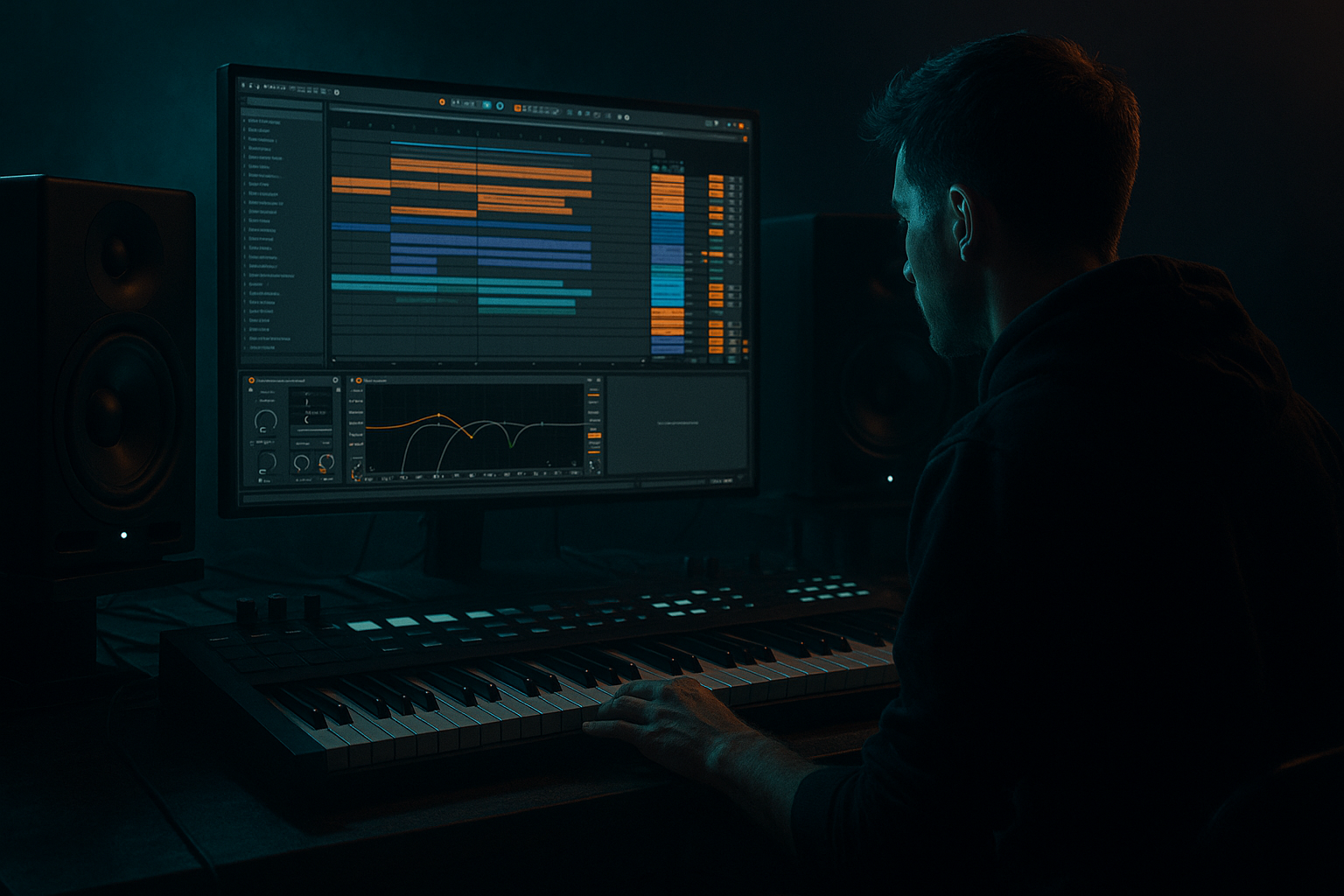
A reese bass is one of the most important sounds in Drum & Bass, but the difference between a plain mid-bass wobble and a proper rolling DnB reese is usually in the edits: the way you slice, shift, and reshape the rhythm around the groove. In this lesson, you’ll learn how to build a reese patch in Ableton Live 12 and then make it feel alive using Groove Pool tricks to add movement, push/pull, and swing without losing the tight, dark pressure DnB needs.
This technique sits right in the heart of a track: usually under the drop bassline, sometimes in the pre-drop build, and often as the main low-mid harmonic layer beneath drums and sub. In rollers, it helps create that hypnotic forward motion. In jungle, it can lock into break edits and make the track breathe. In darker neuro-influenced DnB, it gives you controlled instability and a sense of evolving aggression.
Why this matters: in DnB, groove is not just about drums. If the bassline and edits don’t dance with the break, the track feels stiff. If they do, the whole tune moves with that classic UK energy. Groove Pool lets you humanize and stylize timing, but in a way that stays intentional. That’s the sweet spot: not sloppy, not robotic — just driving and dangerous ⚡
What You Will Build
By the end, you’ll have:
- A layered reese patch made from stock Ableton devices
- A sub layer that stays clean and mono
- A mid reese layer with detune, motion, and stereo width
- A set of MIDI edits that use Groove Pool to create swing, push, and late-hit variation
- A bassline that works in a rollin’ 172–174 BPM DnB context
- An arrangement-ready loop with call-and-response phrasing, drop energy, and space for drum edits
- A 2-bar bass phrase that answers the kick/snare pattern
- A reese that feels like it’s leaning forward on the offbeats
- Controlled movement in the mids, with the sub staying anchored
- Enough rhythmic variation to keep a loop alive for 16 bars without sounding repetitive
- Making the reese too wide in the low end
- Using too much Groove Pool timing
- Randomizing velocity too much on bass MIDI
- Letting the bass fight the snare
- Over-processing the reese before the groove feels right
- Forgetting mono compatibility
- Use slight detune plus saturation instead of massive unison stacks. It stays meaner and tighter.
- Layer a very quiet noise or texture layer under the reese for grit, then low-pass it so it doesn’t become hissy.
- Try tiny late note nudges on a few bass hits after committing groove. A few milliseconds can make the pattern feel more “played.”
- Automate the reese filter so the drop opens gradually over 4 or 8 bars for tension.
- Use sine-to-saw contrast: clean sub, aggressive upper bass. That separation is a classic heavier DnB move.
- If the track is neuro-leaning, resample the bass and make micro-edits: reverse slices, short stutters, and gap fills.
- For rollers, keep groove subtle and let repetition do the work. For darker jump-up or techier material, push the edits harder and make the bass answer the drums more aggressively.
- If the mix gets harsh, cut a little around 2–5 kHz on the reese rather than blindly lowering volume.
- Build the reese as separate sub and mid layers
- Keep the sub mono and clean
- Use Groove Pool to shape timing, not to make the bass sloppy
- Think of the bassline like an edited rhythmic element in DnB
- Resample when you want tighter control over arrangement and micro-edits
- Keep the reese moving, but protect the kick, snare, and low-end clarity
Musically, you’re aiming for something like:
Step-by-Step Walkthrough
1. Set up a clean bass rack with a sub and a reese layer
Start a new MIDI track and load Instrument Rack. Inside, create two chains:
- Sub chain
- Reese chain
For the Sub chain, use:
- Operator with a sine wave
- Or Wavetable with a very clean sine-style oscillator
Suggested settings:
- Oscillator level: keep it simple and stable
- Low-pass filter: basically off or very open if using Wavetable
- Add Saturator after it very lightly if needed, around 1–3 dB of drive
For the Reese chain, use:
- Wavetable or Analog
- Two oscillators slightly detuned
- Saw or square/saw blend for harmonic richness
Reese starter settings:
- Osc 1: saw, unison off or very low
- Osc 2: saw, detuned by 5–12 cents
- Filter: low-pass around 120–250 Hz depending on how much top-mid movement you want
- Detune/phase: small amounts; you want width, not seasick wobble
- Add Chorus-Ensemble or Phaser-Flanger very subtly if the patch feels too static
The goal here is not to make a huge finished bass yet. Build a patch that responds well to editing later.
2. Lock the sub and reese into separate roles
In DnB, the low end needs discipline. Keep your sub chain:
- Mono
- Centered
- Simple note following
On the reese chain:
- Use EQ Eight to high-pass around 80–120 Hz so the sub owns the bottom
- Keep the reese’s stereo behavior mostly in the low-mids and mids, not down in the subs
If using the Instrument Rack, place Utility on the reese chain and set:
- Width: 80–120% depending on how wide the mix can handle
- Bass Mono on if needed, especially if the reese is too blurry in the bottom
Why this works in DnB: your kick and sub need to hit with authority. If the reese is fighting the low end, the whole drop loses punch. Clean separation gives the drum bus room to crack and lets the bassline feel heavier, not weaker.
3. Write a simple 2-bar bassline that leaves space for the drums
Create a MIDI clip at 172–174 BPM and write a short bass phrase that supports a DnB drum loop. Start with a pattern like:
- Bar 1: notes on the “and” of 1, beat 2, and the “and” of 3
- Bar 2: a variation with one longer note and one pickup note into the next bar
Keep the notes in a minor key for darker character. Try root notes and fifths first, then add passing tones once the groove works.
Practical phrasing tip:
- Leave gaps where the snare is strongest
- Let the bass answer the kick pattern instead of masking it
- Use note lengths between 1/8 and 1/2 bar so the reese can breathe
This is where the “edits” mindset begins: you’re not just composing a bassline, you’re editing rhythm against the drums.
4. Use Groove Pool to test different swing feels on the bass clip
Open the Groove Pool in Ableton Live 12 and load a few groove options. Start by testing grooves derived from:
- MPC-style swing
- Humanized drum grooves
- Light shuffle rather than extreme swing
Apply a groove to the MIDI clip and audition it with:
- Timing: 10–30%
- Random: 0–5%
- Velocity: 0–15%
For dark DnB, don’t overdo randomization. The timing shift is the main character. The best groove often makes the bass feel like it’s leaning into the groove without sounding drunk.
Use Commit only after you’re sure, or drag the groove onto the clip to keep it stable. If the bass line starts feeling too late, reduce timing depth. If it feels too grid-like, increase timing slightly and check the drum pocket.
5. Duplicate the bass clip and create edited variations with groove contrast
Make 2–4 versions of the same bass clip across an arrangement or scene. Then apply different groove strengths to each version:
- Main loop: Groove at 15–20%
- Fill version: Groove at 25–35%
- Tighter variation: Groove at 5–10%
- Call-and-response version: slightly later groove on the response notes only
You can also split the MIDI notes:
- Keep the root notes tight
- Apply more groove to the higher notes or pickup notes
- Use clip-specific groove amounts so the phrase evolves naturally
This is a very DnB-friendly edit approach because it mirrors how producers treat break edits: the core pattern stays locked, but the details shift just enough to keep the loop moving.
6. Resample or print the reese for tighter edit control
Once the patch is sounding good, resample it to audio for more editorial control. In Ableton Live, route the bass track to a new audio track and record the output, or freeze/flatten if you want a committed workflow.
Why resample?
- Easier to chop
- Easier to reverse, fade, and rearrange
- Lets you edit transients and groove in a more tactile way
- Makes the bass behave more like an arrangement element than just a synth line
After recording:
- Use Warp if needed, but keep it subtle
- Slice the bass audio on key note changes or rhythmic accents
- Add short fades to avoid clicks
- Nudge certain slices late by a few milliseconds to deepen the groove
This is especially effective in rollers and jungle-influenced tracks, where bass and break edits often interact like one machine.
7. Shape the groove with Drum Rack-style thinking, even if the bass is melodic
Now treat the bass phrase like an edited drum part. Ask:
- Where does the bass hit support the snare?
- Where does it leave room for ghost notes?
- Which notes act like “filler” between drum hits?
If you have a break layered with your drums, try matching bass edits to:
- Snare accents
- Kick pickups
- Break ghost notes
- 1/16 gaps after key drum hits
Try a musical context example:
- In a 16-bar drop, keep bars 1–4 relatively stable
- In bars 5–8, add one extra pickup note at the end of bar 8
- In bars 9–12, increase groove amount slightly
- In bars 13–16, strip back notes for a breakdown cue or switch-up
That kind of arrangement makes the bass feel like it’s reacting to the drums, which is exactly what gives DnB its forward momentum.
8. Add controlled movement with modulation and automation
Once the groove is set, add motion inside the patch:
- Automate filter cutoff on the reese chain
- Automate wavetable position if using Wavetable
- Move chorus depth subtly over 4–8 bars
- Automate Utility width slightly wider in fills, narrower in core sections
Good automation ranges:
- Filter cutoff: sweep from about 150 Hz to 1.5 kHz on the reese layer, not the sub
- Resonance: keep modest, around 10–25%
- Width: move between 80% and 120%
For more intensity, map a Macro to:
- Filter cutoff
- Distortion amount
- Width
- Noise level or detune amount
This is where your reese stops being a static tone and becomes an arrangement tool.
9. Process the reese for mix clarity without killing its attitude
Insert a sensible bass processing chain on the reese chain:
- EQ Eight: cut mud around 200–400 Hz if needed
- Saturator: soft clip or analog clip lightly for density
- Compressor: only if the patch is uneven; avoid flattening the life out of it
- Utility: mono-check and width management
For heavier DnB, consider gentle parallel treatment:
- Send the reese to a return with Amp or Pedal for dirty harmonics
- Blend that return quietly under the clean tone
Keep the sub separate and clean. If the reese starts colliding with the kick, high-pass it a bit higher. If it’s not audible on small speakers, add harmonics rather than boosting the sub.
10. Build a short drop arrangement with edits and contrast
Arrange your loop into a simple drop structure:
- Bars 1–4: main groove, moderate groove depth
- Bars 5–8: add a variation, maybe one missing note and one extra pickup
- Bars 9–12: increase groove on the bass clip, automate filter a little more open
- Bars 13–16: strip to a leaner phrase or add a call-and-response answer
Add a DJ-friendly intro/outro if you’re aiming for full track structure:
- Use filtered bass hints
- Introduce the groove gradually
- Keep the final 8 bars cleaner for mixdown or transitions
For edits, think like an arranger: the bassline should support tension/release across sections, not just loop endlessly.
Common Mistakes
Fix: high-pass the reese layer and keep the sub mono.
Fix: back it down. In DnB, even small shifts are powerful. Try 10–20% before going higher.
Fix: bass dynamics should be controlled. Keep velocity variation minimal unless it’s a deliberate effect.
Fix: move notes out of the snare’s strongest zone or shorten note lengths.
Fix: get the rhythm and note phrasing working first. Tone comes second.
Fix: check with Utility and listen in mono. If the patch collapses badly, reduce stereo width or simplify the chorus.
Pro Tips for Darker / Heavier DnB
Mini Practice Exercise
Spend 15 minutes making one 2-bar reese phrase with groove variation:
1. Build a simple sub + reese Instrument Rack.
2. Write a 2-bar MIDI phrase using only 3–5 notes.
3. Apply one Groove Pool groove at 15% timing.
4. Duplicate the clip twice and change each copy:
- Copy A: tight, minimal groove
- Copy B: medium groove, one note shortened
- Copy C: stronger groove, one pickup note added
5. Resample the best version to audio.
6. Slice the audio into 4–8 pieces and move one slice slightly late.
7. Loop it over a drum break and see if the bass feels like it “sits in” the break better.
Goal: make the same basic riff feel like three different edits without changing the notes much.
Recap
If you get this right, your reese stops sounding like a static synth and starts behaving like a real DnB part: rhythmic, dark, and locked to the drums 🥁

