Main tutorial
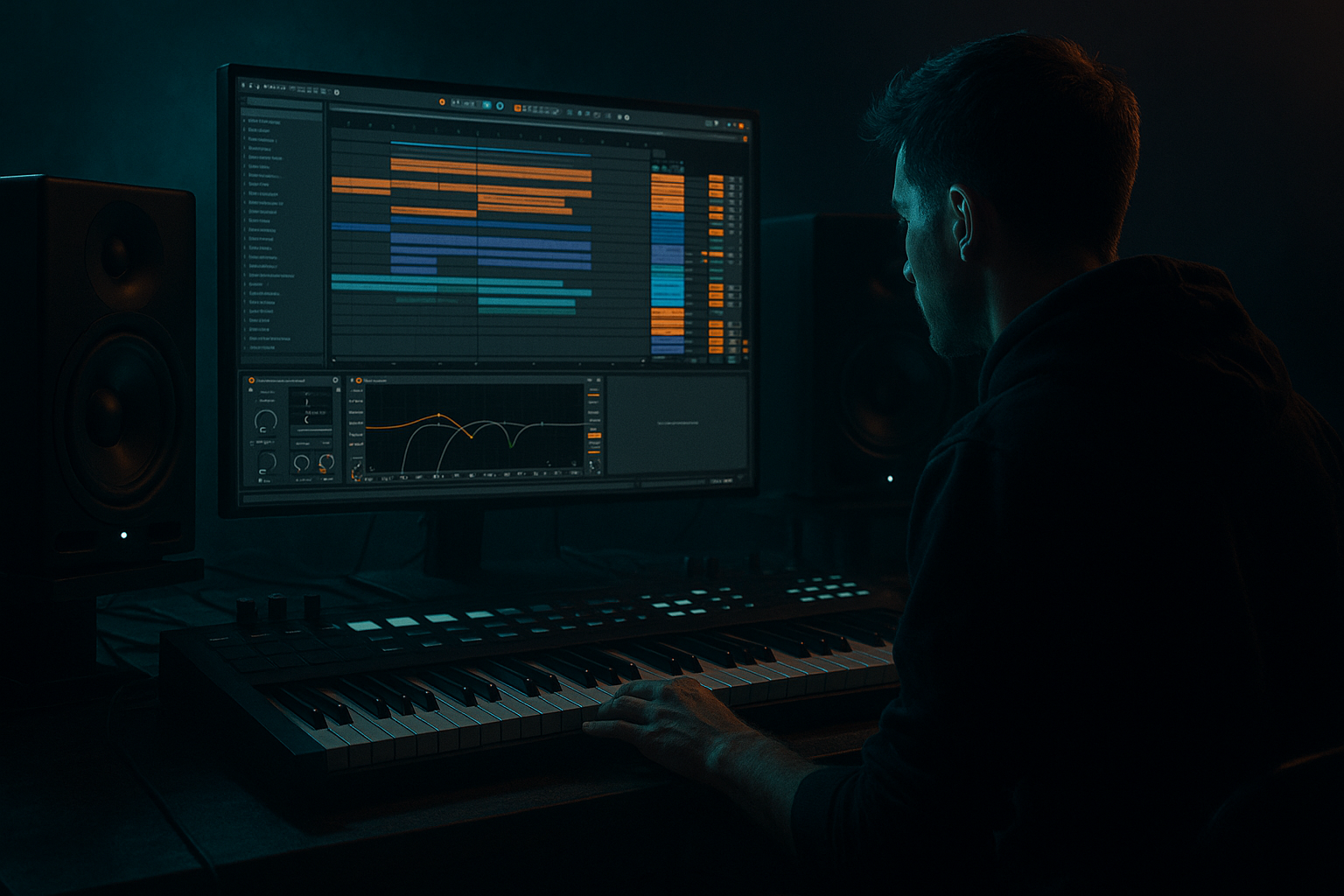
Resample an Amen-style FX chain for heavyweight sub impact in Ableton Live 12
1. Lesson overview
In this lesson, you’ll build a vocal-based Amen-style FX chain and resample it into a heavy, sub-led impact hit you can use in drum and bass, jungle, or rolling bass music. The goal is not just a cool effect — it’s to create a tight, gritty, low-end-friendly impact that can hit hard without muddying the mix. 🔥
This is a very DnB-friendly workflow because it lets you:
- take a short vocal phrase or shout,
- chop, distort, filter, and resample it,
- then turn it into a designed one-shot or bass impact layer,
- all inside Ableton Live 12 using stock devices.
- Amen break energy
- vocal chop attitude
- sub impact weight
- dark, punchy, ready-to-place arrangement utility
- intro impacts,
- drop transitions,
- call-and-response fills,
- tension builders,
- layered sub stabs,
- breakdown-to-drop resets.
- a gritty top transient,
- a midrange bark from the vocal texture,
- a controlled sub thump underneath,
- and a dark, heavyweight DnB character.
- a one-shot hit on the grid,
- a transition effect,
- a layered impact with kick/snare,
- or a bass accent in a drop.
- one word,
- a shout,
- a breathy syllable,
- a chopped phrase with attitude,
- or a gritty spoken line.
- dry or lightly processed,
- rhythmic,
- aggressive or eerie,
- not too melodic,
- not too long.
- MC-style adlibs
- chopped rap shouts
- whispered phrases
- radio-sounding samples
- old-school rave vocal fragments
- Mode: Classic
- Voices: 1
- Trigger: Gate or Trigger, depending on how you want it to play
- Warp: Off for now, unless it needs timing correction
- Clip Gain to balance the input
- Utility to adjust level before distortion
- EQ Eight to remove rumble below 30–40 Hz if needed
- Duplicate the sample on a new MIDI track
- Play only the first syllable or transient
- Use short note lengths
- Add rests between hits for groove
- Slice to New MIDI Track
- Slice by Transient or Warp Marker
- High-pass at 25–35 Hz
- Small cut around 200–400 Hz if it’s boxy
- Gentle boost around 1–3 kHz if the vocal needs presence
- Drive: +3 to +8 dB
- Soft Clip: On
- Curve: Default or slightly aggressive
- Output: compensate so it doesn’t clip too hard
- Analog Clip on,
- or push into harder saturation and then tame it with EQ later.
- transient bite,
- low-end weight,
- character,
- and subtle harmonic aggression.
- Drive: 10–25%
- Boom: try 20–40%
- Freq: set around 50–80 Hz for sub weight
- Damp: adjust to control brightness
- Transient: increase slightly for impact
- Low-pass filter
- Drive: a little on
- Envelope: subtle if the vocal is percussive
- LFO: slow movement if you want evolving tension before the hit
- automate the cutoff quickly,
- or resample while moving the filter manually.
- Attack: 3 ms or 10 ms
- Release: Auto
- Ratio: 2:1 or 4:1
- Threshold: just enough for 1–3 dB gain reduction
- Bit depth slightly reduced
- Sample rate reduction lightly applied
- distortion character,
- compression-style grit,
- midrange nastiness
- Width: 0% if this is going to live in the low end
- Or keep it wider if the sound is more of a top-layer effect
- Bass Mono: use this conceptually by ensuring the low layer is mono later in the resample stage
- Audio From: your FX chain track
- Monitor: In
- the full processed phrase,
- or a single moment where the filter drive/distortion creates the strongest hit.
- freezes the character,
- lets you edit more precisely,
- makes the sound easier to layer,
- and helps you commit to a powerful, unique hit.
- shorten the tail,
- fade the end if needed,
- remove any unwanted hiss or low rumble.
- -3 semitones
- -5 semitones
- -7 semitones
- a sine wave in Operator,
- a sub hit in Wavetable,
- or a simple low sine from Analog if you prefer stock simplicity.
- Operator
- Oscillator A: sine
- Short decay envelope
- No sustain or very little sustain
- Mono playback
- Attack: 0–5 ms
- Decay: 120–250 ms
- Sustain: 0
- Release: short
- EQ Eight to remove muddy build-up
- Glue Compressor for cohesion
- Saturator for unified density
- Utility to check mono compatibility
- EQ cut around 250–400 Hz if cloudy
- gentle shelf reduction above 8–10 kHz if too bright
- 1–2 dB of glue compression
- very subtle saturation
- right before the drop,
- on bar 8 or 16 as a reset,
- under a snare fill,
- at the end of an Amen variation,
- as a response to a main bass phrase.
- Bars 1–8: intro atmosphere
- Bar 8: resampled vocal/sub impact
- Bars 9–16: build with filtered drums
- Bar 17: full drop
- Bar 24: repeat the impact with a variation
- one hit with more top-end grit,
- one hit with more low-end weight,
- one hit with a reverse lead-in.
- clean transient clarity,
- plus dirty harmonic weight.
- fills,
- transitions,
- pre-drop energy.
- short decay,
- low pre-delay,
- filtered highs.
- a ghost snare,
- a chopped Amen ghost note,
- or a low tom.
- Mild EQ
- Light Saturator
- Small Drum Buss drive
- No Redux
- More drive
- Filter movement
- Redux for grit
- Slightly pitched down
- Same vocal FX chain
- Resample
- Layer with Operator sine sub
- Mono low end
- Short decay
- Which version hits hardest in mono?
- Which version feels most usable in a drop?
- Which version cuts through a busy drum loop?
- intro,
- fill,
- drop accent.
- take a vocal sample,
- chop it into a DnB-friendly rhythmic fragment,
- process it with stock Ableton devices,
- resample the chain,
- and build a heavyweight sub impact from it.
- Simpler for source playback
- EQ Eight for cleanup
- Saturator for density
- Drum Buss for punch and low-end character
- Auto Filter for movement
- Glue Compressor for cohesion
- Resample to audio
- Operator for the clean sub layer
- Utility for mono control
- a session template
- a device chain preset
- or a bar-by-bar arrangement example for a DnB drop.
We’ll focus on a chain that feels like:
This is especially useful for:
---
2. What you will build
You’ll create a chain like this:
Vocal sample → chop/tighten → saturate/distort → filter/resonance movement → transient shaping → resample → pitch down / layer with sub → bounce to audio
Final result
A single resampled hit that has:
You can use it as:
---
3. Step-by-step walkthrough
Step 1: Choose the right source vocal
Start with a short vocal phrase, preferably:
Good source traits for DnB:
Best source types
Why this matters
The more percussive the vocal is, the easier it becomes to turn it into an impact that locks with drums.
---
Step 2: Place the vocal into Simpler
Drag the vocal sample into Simpler.
Suggested settings:
If the sample has a messy tail, trim it tightly before processing.
Quick cleanup tips
Use:
---
Step 3: Chop it into a tight rhythmic shape
To make it feel like an Amen-derived effect, you want rhythmic bite, not a long vocal sustain.
Try one of these approaches:
Option A: Manual chopping
Option B: Slice to Drum Rack
Right-click the audio clip and choose:
This is great if the vocal has multiple chunks you can rearrange.
Option C: Resample into a cleaner one-shot first
If the vocal is messy, process it lightly and then resample the clean chopped version before doing the heavy FX chain.
---
Step 4: Build the FX chain before resampling
Now we start shaping the sound into something impact-ready.
Suggested device chain
1. EQ Eight
2. Saturator
3. Drum Buss
4. Auto Filter
5. Glue Compressor
6. Redux or Pedal for extra grit
7. Utility
8. Optional: Echo or Reverb on a send, not usually inline
---
EQ Eight: clean and focus
Use EQ Eight to remove unnecessary junk before distortion.
Suggested moves:
If you want a darker result, keep the midrange controlled rather than hyped.
---
Saturator: add density
Add Saturator after EQ.
Suggested settings:
This thickens the vocal and gives it that more aggressive DnB edge.
For heavier results, try:
---
Drum Buss: DnB-friendly punch
Drum Buss is excellent here because it adds:
Suggested starting point:
Be careful with Boom — too much and the hit becomes blurry. You want weight, not a bloated low end.
---
Auto Filter: movement and focus
Use Auto Filter to create a dramatic sweep or shape the impact.
Try:
For a more classic jungle FX vibe:
That gives a living, animated result instead of a static sample.
---
Glue Compressor: tighten the chain
Add Glue Compressor to glue the processors together.
Suggested settings:
This keeps the impact controlled and cohesive.
---
Redux or Pedal: ugly it up a little
If the sound still feels too clean, add one of these:
#### Redux
Use sparingly. Just enough to add edge and texture.
#### Pedal
Great for:
Try a mild drive setting, then back off the output.
---
Utility: mono control
For sub-heavy impact sounds, use Utility at the end of the chain.
Suggested:
For a heavyweight sub impact, you usually want the low end mono and centered.
---
Step 5: Resample the chain
Now commit the sound to audio. This is where the magic happens.
How to resample in Ableton Live 12
Create a new Audio Track and set:
Arm the track and record the output.
What to record
Record:
If you move the filter cutoff or saturation drive while recording, you get a more animated, one-off result.
Why resample?
Resampling:
This is a key DnB workflow: design first, then edit like audio.
---
Step 6: Turn the resample into a heavyweight impact
Once you have the resampled audio, drag it into a new audio track or Simpler.
Edit the clip
Trim the start tightly so the transient hits immediately.
Then:
Pitch it down
Try pitching the sample down:
For darker DnB, lower pitches often sound more threatening and less playful.
Be careful not to make it too slow or floppy. The hit still needs attack.
---
Step 7: Layer a sub beneath it
This is where the impact becomes heavyweight.
Create a second layer using either:
Sub layer setup
Use:
Suggested envelope:
Tune the sub to the root note of your track or the key center of the drop.
Layering tip
Align the sub transient with the vocal hit transient.
If the resampled vocal hit has a little midrange bark, let the sub speak just under it, not after it.
---
Step 8: Shape the layer bus
Route both the resampled hit and sub layer to a group bus.
On the group, use:
Group processing starting point
This makes the hit feel like one instrument instead of separate elements.
---
Step 9: Place it in the arrangement
This kind of resampled FX impact works best in DnB when it’s used sparingly and intentionally.
Good arrangement placements
Example DnB arrangement move
Try alternating:
That keeps the drop evolving.
---
4. Common mistakes
1. Too much low end before resampling
If you overload the chain with sub before resampling, the result gets muddy fast.
Fix: High-pass gently before distortion and let the final sub be layered separately.
---
2. Overcompressing the chain
Too much compression kills the punch.
Fix: Use light glue compression, not heavy squashing.
---
3. Distorting the sub layer too much
A sub needs purity to hit properly in DnB.
Fix: Keep the sub layer clean. Let the vocal FX provide the grit.
---
4. Leaving the sample too long
Long tails clutter the mix and reduce impact.
Fix: Trim aggressively. DnB impact samples should be short and intentional.
---
5. Forgetting mono compatibility
Widening low-end material can cause phase problems.
Fix: Keep the low layer mono, and check it in Utility or by using a spectrum analyzer.
---
5. Pro tips for darker/heavier DnB
Tip 1: Use a parallel dirt layer
Duplicate the vocal FX chain and process one version with heavy distortion, then blend it quietly under the clean version.
That gives you:
---
Tip 2: Resample with automation movement
Automate filter cutoff, saturation drive, or Drum Buss Boom while recording the resample.
This creates a more organic, “performed” hit, which feels very jungle/DnB.
---
Tip 3: Add a reverse pre-hit
Reverse a short slice of the resampled audio and place it before the main impact.
This is a classic tension tool for:
---
Tip 4: Use a short room reverb, then print it
Send the vocal chain briefly into a small dark room reverb, then resample that return.
Try:
This can create a spooky, claustrophobic atmosphere for darker rollers. 🌑
---
Tip 5: Layer with Amen drum ghost hits
A great DnB trick is to place the impact alongside:
That makes the effect feel rhythmically inside the breakbeat world, not floating on top of it.
---
6. Mini practice exercise
Try this exercise in Ableton Live 12:
Exercise goal
Create three versions of the same vocal FX impact.
Version A: Clean punch
Version B: Dirty midrange weapon
Version C: Heavy sub impact
What to compare
Ask yourself:
Then place each one in a different arrangement context:
---
7. Recap
You’ve now learned how to:
Core chain recap
This workflow is perfect for drum and bass because it turns a simple vocal into a designed, mix-ready impact with attitude, weight, and dark energy. Use it sparingly, print variations, and place the hits where the arrangement needs lift or menace. 💥
If you want, I can also turn this into:

