DNB COLLEGE

Drum & Bass Ableton Live 12 Tutorials

LESSON DETAIL

Rebuild a kick weight using Session View to Arrangement View in Ableton Live 12 for jungle oldskool DnB vibes (Intermediate)

An AI-generated intermediate Ableton lesson focused on Rebuild a kick weight using Session View to Arrangement View in Ableton Live 12 for jungle oldskool DnB vibes in the Edits area of drum and bass production.

Back to lessons
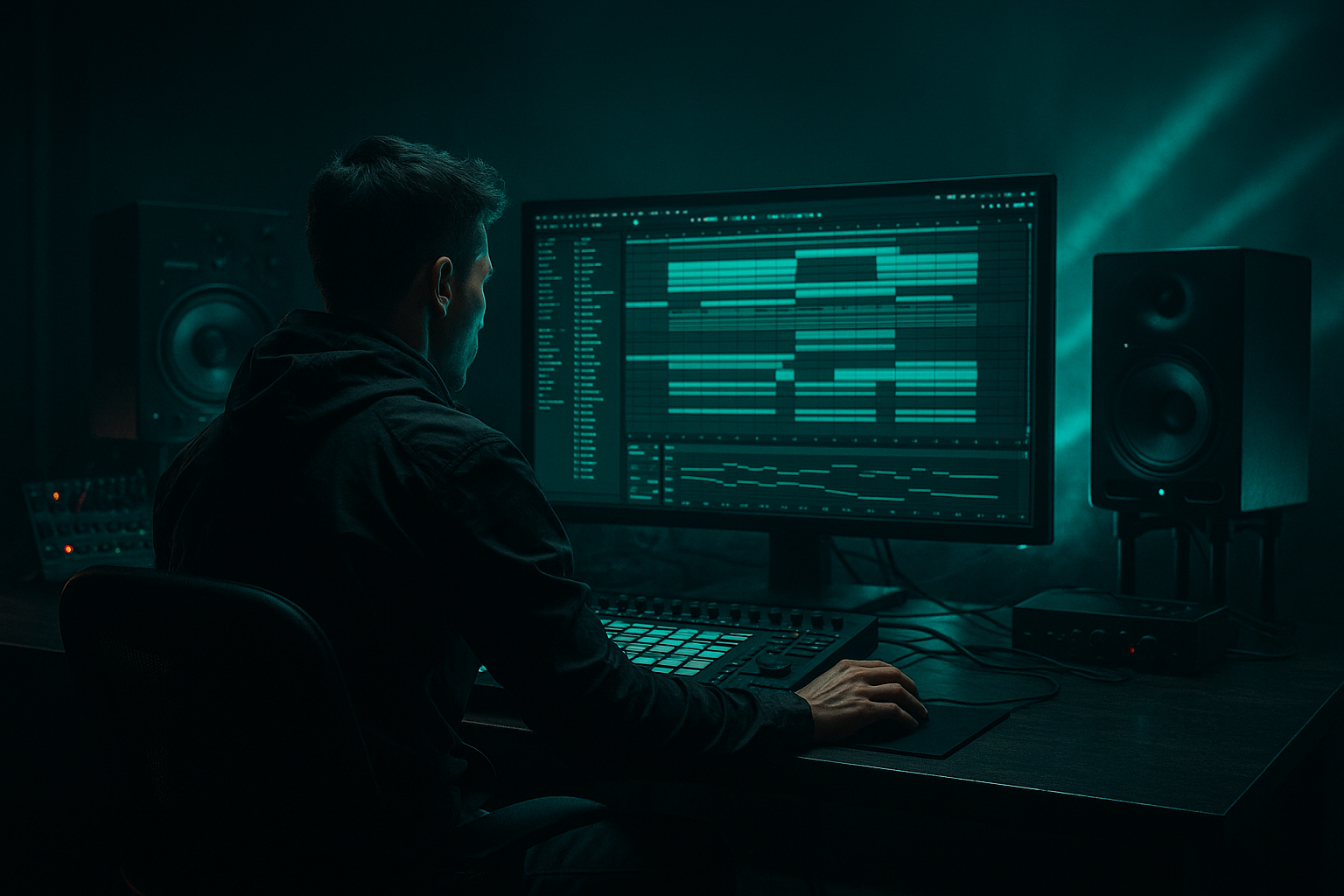
Rebuild a kick weight using Session View to Arrangement View in Ableton Live 12 for jungle oldskool DnB vibes (Intermediate) cover image

Narrated lesson audio

The voice track includes the tutorial plus extra teacher commentary.

Open audio file

Main tutorial

Lesson Overview

In this lesson, you’re going to rebuild the weight of a kick in Ableton Live 12 by using a Session View to Arrangement View workflow, then shaping it into a proper oldskool jungle / DnB edit. The goal isn’t just “make the kick louder.” It’s to make it feel like it has mass, punch, and attitude while still leaving room for the break, sub, and bass movement that define Drum & Bass.

This matters a lot in DnB because the kick often has to survive a busy low end: chopped breaks, rolling subs, reese bass movement, ghost notes, and fast arrangements all competing for space. In oldskool jungle especially, the kick often carries the first-hit impact of the drop while the break provides the motion and texture. If the kick feels weak, the whole groove can collapse. If it’s too heavy, it can swallow the break and ruin the bounce.

We’ll use Ableton’s stock tools to do this properly:

  • Session View for fast iteration and loop-based editing
  • Arrangement View for shaping the final phrase and energy curve
  • Drum Rack, Simpler, EQ Eight, Saturator, Drum Buss, Glue Compressor, Utility, and Auto Filter
  • optional resampling for extra grit and realism
  • This is an Edits lesson, so the focus is on turning raw elements into a tighter, more intentional DnB arrangement — not just sound design in isolation. You’ll learn how to build a kick that feels like it was reconstructed inside the track, not pasted on top of it.

    What You Will Build

    By the end, you’ll have a short but powerful jungle/DnB drop section with:

  • a reconstructed kick layer that has more weight and body
  • a chopped oldskool break supporting the groove
  • a sub bass or low roller that leaves space for the kick transient
  • a transition from Session View loop building into Arrangement View automation
  • a kick that works in a 4–8 bar phrase, suitable for intro tension, drop impact, or a switch-up section
  • a clean low end that still feels dirty, broken, and underground
  • Musically, think of a section where:

  • bar 1–2 = filtered tension and break fragments
  • bar 3–4 = kick weight enters with more body
  • bar 5–8 = full groove with sub and break interaction
  • the drop feels like a classic jungle move: half-built in Session View, then committed in Arrangement View with automation and edits
  • Step-by-Step Walkthrough

    1. Build a focused Session View loop around the kick

    Start in Session View with three tracks:

    - Track 1: Break loop

    - Track 2: Kick layer

    - Track 3: Sub or bass pulse

    For the break, use a chopped amen-style loop or any dusty break with strong snare and kick hits. If needed, put the break into Simpler and slice it manually or use Slice to New MIDI Track for faster edits.

    For the kick layer, load a clean kick sample into Simpler or Drum Rack. Choose something with a short transient and a usable low body, not an overly clicky modern techno kick. For oldskool jungle vibes, you want a kick that can be reshaped, not one that already sounds finished.

    Make a 1-bar clip on the kick track with a single kick on beat 1, then duplicate it into a 2-bar loop. Keep the loop sparse at first. You’re creating room to hear the interaction between kick, break, and sub.

    Practical starting point:

    - Kick clip velocity: 100–127

    - Clip length: 1 or 2 bars

    - Break loop: high-pass lightly around 80–120 Hz if it’s fighting the kick/sub already

    Why this works in DnB: the groove in jungle often comes from contrast — strong anchor hits against chopped rhythmic detail. A kick that’s too busy can blur the break’s syncopation.

    2. Rebuild the kick body with layering, not just gain

    Drag your kick into a Drum Rack and create two lanes:

    - Kick transient layer

    - Kick body layer

    The transient layer can be the original sample or a trimmed version with the click preserved. The body layer should be a second kick sample, a low tom, or even a tuned thump with more low-mid weight. Keep it simple and phase-aware.

    Use Simpler on the body layer and adjust:

    - Start: move slightly forward if the attack is too soft

    - Warp/Loop off for one-shots

    - Fade: short, just enough to avoid clicks

    - Transpose: tune by ear so it reinforces the track key or sits cleanly with the sub

    Good starting ranges:

    - Transient layer: high-passed around 120–180 Hz

    - Body layer: low-passed around 2–5 kHz, depending on click content

    - Body tuning: often somewhere between -3 to +3 semitones, but trust your ears

    If the two layers fight, nudge the start point of one sample by a few milliseconds or invert phase using Utility on one lane. Even small alignment changes can make the kick feel twice as solid.

    3. Use EQ Eight to carve a proper kick pocket

    Put EQ Eight on the kick rack or on the group bus. Shape the layers so each one has a job.

    A useful DnB kick shape:

    - Small boost around 50–80 Hz for weight

    - Cut muddiness around 180–350 Hz

    - Gentle presence boost around 2–4 kHz if the kick needs more definition

    - High-pass the transient-only layer higher than you think if it’s clouding the low end

    Don’t overdo the low boost. In DnB, the kick only feels huge when the sub is controlled. A kick that owns too much 40–60 Hz can make the drop smaller, not bigger.

    If the break has a kick sample inside it, reduce the overlap by either:

    - cutting the break’s low band with EQ Eight

    - or using Auto Filter in high-pass mode during the kick-heavy bars

    This is a classic edits move: you’re not changing the musical idea, you’re editing the frequency relationship so the kick lands with authority.

    4. Add controlled saturation for oldskool weight

    Insert Saturator after EQ Eight on the kick group. This is where the kick starts to feel like it belongs in a classic jungle system.

    Try these settings:

    - Drive: around 2–6 dB

    - Soft Clip: on

    - Curve: default is fine to start

    - Output: trim back so you keep headroom

    If you want more aggressive edge, use Analog Clip mode carefully. If the kick gets too square or thin, back it off and lower the drive. The idea is to bring out harmonics so the kick reads on smaller speakers without losing the low-end hit.

    Optional variation: place Drum Buss after Saturator.

    - Drive: around 5–15%

    - Transient: slightly positive for more punch

    - Boom: use very carefully, often around 0–15%, tuned to the track’s low end

    - Boom frequency: around 50–70 Hz if it helps the kick rather than the sub

    For jungle vibes, a touch of saturation often does more than a huge EQ boost. It gives you that slightly worn, sample-based feeling that suits oldskool edits.

    5. Control the kick’s envelope so it punches, not smears

    Open Simpler or the sample’s envelope controls and shape the decay. In DnB, the kick often needs to be short enough to make room for break detail, but long enough to feel physical.

    Use these general starting points:

    - Attack: 0 ms

    - Decay / Release: short to medium, depending on the sample

    - If there’s tail rumble, shorten it until the kick stops before the sub note gets messy

    If you’re using a sample with too much tail, put Auto Filter after it and use a gentle low-pass or dynamic movement during the arrangement. You can also resample the kick layer once it sounds right, then re-import that audio and trim it like an edit tool.

    This is especially useful in an edit workflow: commit a cleaned-up kick sample, then treat it like a new piece of source material.

    6. Build the sub relationship so the kick feels heavier

    Your kick won’t feel heavy unless the sub leaves it space. In oldskool DnB, the bass isn’t always a huge sustained reese — sometimes it’s a simple sub pulse or a short stab that supports the drum groove.

    Use a Wavetable, Operator, or even a sine in Simpler:

    - Keep it mono with Utility

    - Roll off above 100–150 Hz

    - Sidechain lightly or manually gate around the kick hits

    - Tune the sub notes to sit around the track root or a supportive fifth

    Good starting point:

    - Sub volume: low enough that the kick owns the first impact

    - Sidechain / volume duck: about 1–3 dB if subtle, more if the arrangement is dense

    - Stereo width: 0% on the sub lane

    If the kick is still weak, don’t just turn it up. Instead, reduce the sub envelope length or lower its level on the kick beat. That creates the illusion that the kick got bigger without actually needing more gain.

    7. Move from Session View to Arrangement View and edit the phrase

    Once your loop feels strong in Session View, record it into Arrangement View. This is the point where the lesson becomes an edit, not just a loop.

    In Arrangement View:

    - create a 4-bar intro tension

    - bring in the break first, filtered

    - introduce the kick layer on bar 3 or 4

    - open the sub/bass fully on the drop

    - add a switch-up in bar 7 or 8 for oldskool movement

    Use clip automation or track automation to make the section evolve:

    - Auto Filter cutoff opening from roughly 200 Hz up to full range

    - Saturator drive increased slightly at the drop

    - Utility width on atmospheric layers opening up, while the kick and sub stay mono

    - break level automation to let the kick punch through on key hits

    A strong arrangement example:

    - Bars 1–2: filtered break and atmosphere

    - Bars 3–4: kick layer enters, sub muted or minimal

    - Bars 5–6: full groove, break and sub lock together

    - Bars 7–8: edit fill, reversed cymbal, or a one-bar break chop to reset energy

    This is where Session View helps you test quick ideas, but Arrangement View gives them intentional impact.

    8. Use clip edits to create an oldskool drum conversation

    Now make the kick feel like part of the break, not separate from it. Duplicate the kick clip and create small variations:

    - move one kick slightly earlier for a push

    - remove a kick in bar 4 to create space

    - add a ghost hit before the main kick

    - chop the last kick of the loop into a shorter version for a switch

    In oldskool jungle, that “broken” feeling matters. The kick can answer the break’s snare or fill the gap between chopped drum fragments.

    Try adding:

    - a ghost kick at low velocity around 30–60

    - a reversed slice into the main hit

    - a short break stutter before the drop

    - a one-beat filter dip right before the kick returns

    These edits make the weight feel earned. The listener feels the drop because the arrangement gives it space.

    9. Glue the drums as a group, then check mono and headroom

    Route kick, break, and drum support into a Drum Bus. On that bus, use Glue Compressor lightly:

    - Ratio: 2:1 or 4:1

    - Attack: around 10–30 ms to keep punch

    - Release: Auto or 0.1–0.3 s

    - Aim for only a few dB of gain reduction

    Add Utility on the drum bus and check mono. The kick weight should hold up without any stereo tricks. The low end must stay stable, especially if the track will be played in clubs or on sound systems.

    Keep enough headroom:

    - Avoid clipping the master

    - Leave roughly -6 dB peak headroom during the build

    - Don’t “solve” weight by overcompressing the master

    For DnB, clean headroom lets the kick hit harder when the drop arrives. If everything is already maxed out, the groove has nowhere to go.

    Common Mistakes

  • Boosting the kick instead of rebuilding it
  • - Fix: layer transient + body, then shape with EQ and saturation.

  • Letting the break and kick fight in the same low band
  • - Fix: high-pass the break slightly, or reduce its low mids during kick hits.

  • Too much sub under the kick
  • - Fix: shorten the sub envelope or duck it manually on kick beats.

  • Over-saturating until the kick loses punch
  • - Fix: use lighter drive and trim output. The kick should feel denser, not flatter.

  • Ignoring phase between layers
  • - Fix: nudge sample start points, flip phase with Utility, and listen in mono.

  • Making the loop work but forgetting the arrangement
  • - Fix: move to Arrangement View early and automate energy changes across 4–8 bars.

    Pro Tips for Darker / Heavier DnB

  • Use a very short room or ambiance layer under the kick and break, but keep it filtered so it adds atmosphere, not mud.
  • Try subtle Drum Buss transient enhancement on the kick group for extra snap without needing harsh EQ.
  • If the kick needs more “wooden” weight for oldskool vibes, layer a very quiet low tom or tuned percussion hit under the body layer.
  • For darker rollers, automate the kick group’s Saturator drive up slightly in the second half of the phrase to make the drop feel more unstable.
  • Use Reverb sparingly on fills only — short decay, heavily filtered — so the kick stays dry and close.
  • Resample your finished kick edit and re-cut it in Arrangement View. That often gives a more committed, sample-based feel than endless tweaking.
  • Keep the sub mono and the kick centered. Let the movement happen in the breaks, atmospheres, and upper harmonics.
  • If the track feels too modern, reduce perfect symmetry: leave one bar with a slightly different kick pattern or a tiny break chop. That imperfection is part of the jungle DNA.
  • Mini Practice Exercise

    Spend 15 minutes building a 4-bar kick edit:

    1. Load one break loop, one kick sample, and one sub tone.

    2. Build a simple Session View loop with a kick on bar 1 only.

    3. Layer a second kick body and shape it with EQ Eight and Saturator.

    4. Make the kick and break work together in mono.

    5. Record the loop into Arrangement View.

    6. Automate a filter opening across 4 bars.

    7. Add one edit: a ghost kick, reversed slice, or one-beat drop-out.

    8. Resample the final 4 bars and compare it to the raw loop.

    Goal: make the second version feel heavier, tighter, and more intentional without adding more elements.


    Recap

  • Rebuild kick weight by layering, carving, and saturating, not just turning it up.
  • Use Session View to test the groove fast, then Arrangement View to shape the edit.
  • In jungle and oldskool DnB, the kick must work with the break and sub — not against them.
  • Keep the low end mono, controlled, and spacious enough for the kick to land.
  • The best edits feel like the track is evolving, not looping.

Ask GPT about this lesson

Chat with the lesson tutor, get follow-up help, or use quick actions.

Bigup 👽 Ask me anything about this lesson and I’ll answer in context.

Narration script

Show spoken script
Today we’re rebuilding kick weight in Ableton Live 12 using a Session View to Arrangement View workflow, and we’re shaping it for that jungle, oldskool DnB energy that feels dusty, heavy, and properly alive.

The big idea here is simple: we’re not just making the kick louder. We’re making it feel like it has mass. Like it’s got a front edge, a body, and a place in the groove that the break and sub have to respect. In drum and bass, that matters a lot, because the low end is already busy. You’ve got chopped breaks, rolling subs, bass movement, ghost notes, all fighting for space. If the kick is weak, the whole section can feel flimsy. If it’s too heavy, it bulldozes the break and kills the bounce. So we want that sweet spot where the kick punches through, but the groove still breathes.

Let’s start in Session View, because this is where we can test ideas fast. Set up three tracks: one for the break loop, one for the kick layer, and one for the sub or bass pulse. If you’ve got an amen or some other dusty break, great. If not, use any break with a strong rhythmic personality. You can slice it with Simpler, or use Slice to New MIDI Track if you want to get editing quickly. On the kick track, load a clean kick sample into Simpler or Drum Rack. You want something with a short transient and some usable low body, not a super polished techno kick that already sounds finished. For oldskool jungle, it’s better if the sample has a little room to be rebuilt.

Now make a simple one-bar clip with a kick on beat one. That’s it at first. Keep it sparse. The point is to hear how the kick interacts with the break and the sub, not to impress yourself with complexity. Then duplicate it into a two-bar loop if that helps you hear the phrase better. As a starting point, keep the kick velocity fairly solid, somewhere around 100 to 127, and if the break is already carrying low-end energy, lightly high-pass it around 80 to 120 Hz so it’s not stepping on the kick and sub.

This is where the first teacher note matters: think in roles, not just samples. One layer can be the thud, another can be the knock, and the break supplies the movement. If every layer is trying to be the main event, the low end gets blurry fast. Jungle drum programming is often about contrast. Strong anchor hits against chopped detail. That contrast is what gives the groove its attitude.

Next, we rebuild the kick body by layering, not by just pushing gain. Drop your kick into a Drum Rack and build two lanes if you can: one for the transient, and one for the body. The transient layer can be the original sample or a trimmed version that keeps the attack nice and sharp. The body layer can be another kick, a low tom, or a tuned thump with more low-mid weight. Keep it simple. You’re not designing a futuristic kick from scratch here. You’re reconstructing weight inside the track.

Open Simpler on the body layer and make a few useful adjustments. If the attack feels soft, move the start point slightly forward. Turn warp and loop off for one-shots. Keep the fade short, just enough to avoid clicks. And tune it by ear. Sometimes a tiny transpose move, like a few semitones up or down, makes the layer sit much better with the sub and the key of the tune. There’s no magic number here. Trust the blend. If the layers fight, nudge the start point of one sample by a few milliseconds, or try flipping phase with Utility on one lane. Phase alignment can be the difference between a kick that just exists and a kick that suddenly feels twice as solid.

Now bring in EQ Eight and carve the pocket. On the kick rack or group bus, shape the layers so each one has a job. A small boost around 50 to 80 Hz can help with weight, but don’t get greedy. Cut some muddiness around 180 to 350 Hz if it’s clouding up the body. If the kick needs a bit more definition, a gentle presence boost around 2 to 4 kHz can help the front edge read. And if the transient layer is clouding the low end, high-pass it more aggressively than you think. In drum and bass, the kick only feels huge when the sub is controlled. A kick that hogs too much 40 to 60 Hz can actually make the drop feel smaller, not bigger.

Also watch out for the break’s own kick content. A lot of breaks already have a low hit buried in them, and that can mask your reconstructed kick. If that’s happening, carve the break a little with EQ Eight, or use Auto Filter to gently high-pass the break during the kick-heavy bars. This is a classic edit move. You’re not changing the musical idea. You’re editing the frequency relationship so the kick lands with authority.

Once the EQ is behaving, add controlled saturation. Put Saturator after EQ Eight on the kick group and start lightly. Drive somewhere around 2 to 6 dB is often enough to wake the kick up. Turn Soft Clip on. Trim the output back so you keep headroom. If you want a grittier edge, you can experiment with Analog Clip mode, but be careful. Too much saturation can flatten the kick and make it feel smaller. The goal is density, not just distortion. You want harmonics that help the kick read on smaller speakers while keeping that low-end hit intact.

If you want a bit more muscle, try Drum Buss after the Saturator. A little Drive, a touch of transient enhancement, and just a hint of Boom can work wonders. But be conservative. Boom around 0 to 15 percent is plenty, and only if it’s helping the kick rather than fighting the sub. For oldskool jungle vibes, a little worn-out saturation often sounds more authentic than a huge clean EQ boost. It gives you that sample-based feeling, like the drums were already cut up and lived with before they reached the track.

Now let’s control the envelope. Open Simpler or the sample controls and shape the decay so the kick punches without smearing. Attack should be basically zero. Decay or release should be short to medium, depending on the sample. If there’s a tail rumble that overlaps with the sub, shorten it until the kick stops before the next low-end event gets messy. If the source sample is too long, you can also resample the kick once it sounds right, then re-import that audio and trim it like an edit tool. That’s very much in the spirit of this lesson: commit the useful version and treat it like source material.

Now let’s make the sub relationship do some of the heavy lifting. The kick won’t feel big unless the sub leaves it room. In oldskool DnB, the bass is often more of a pulse or a supportive movement than a giant sustained reese. Use Operator, Wavetable, or even a sine in Simpler. Keep it mono with Utility. Roll off the top somewhere above 100 to 150 Hz. If needed, sidechain it lightly or manually duck it around the kick hits. Even a subtle 1 to 3 dB dip can help. And don’t get stuck thinking the answer is always to turn the kick up. Sometimes the answer is to shorten the sub envelope, or lower the sub on the kick beat, so the kick seems heavier without actually needing more level.

At this point, test everything together. This is important. A kick that sounds massive in solo can fall apart in context. Always audition it with the break, the sub, and the fullest part of the arrangement. That’s where the truth lives. If it’s not hitting there, it’s not really working yet.

Now we move from Session View into Arrangement View. This is the point where the loop becomes an edit. Record your Session View idea into Arrangement View and shape a 4-bar or 8-bar phrase. A nice classic structure could be bars 1 to 2 for filtered tension, bars 3 to 4 for the kick layer entering with more body, bars 5 to 6 for the full groove with break and sub locked together, and bars 7 to 8 for a little switch-up, fill, or turnaround.

Use automation to make the section evolve. Open an Auto Filter cutoff gradually from around 200 Hz to full range. Maybe increase Saturator drive slightly at the drop. Keep the kick and sub mono, but let any atmospheric layers open out a bit with Utility width if that helps the space feel bigger. You can also automate the break level so the kick punches through on key hits. The main thing is that the section should feel like it’s moving, not just looping.

This is where micro-edits really shine. If the groove feels stiff, don’t immediately add more sounds. Try small changes first. Move one hit a few milliseconds. Shorten one note. Remove a kick on one repeat. Add a ghost kick at low velocity before the main hit. Re-trigger the same sample with a slightly different velocity. These tiny edits are often what make a jungle section feel human, sampled, and lived-in. A little imperfection is part of the DNA.

You can also make the kick and break feel like they’re talking to each other. Duplicate the kick clip and vary it from bar to bar. Maybe one bar has a ghost hit before the downbeat. Maybe the last kick of the loop gets chopped shorter for a switch. Maybe there’s a reversed slice leading into the main hit. Maybe the kick drops out for one beat and the break answers with a fill. That call-and-response energy is a huge part of classic jungle. The kick isn’t just sitting on top of the break. It’s in conversation with it.

Once the drum loop feels good, route the kick, break, and support elements into a drum bus. Add Glue Compressor lightly. You’re only looking for a few dB of gain reduction. Ratio around 2 to 1 or 4 to 1, attack around 10 to 30 milliseconds so you keep punch, and release on Auto or a fast setting that breathes musically. Then put Utility on the bus and check mono. The low end should hold up without any stereo tricks. Keep the master with some headroom, ideally around minus 6 dB peak during the build. Don’t try to solve weight by smashing the master. Clean headroom gives the kick somewhere to land when the drop arrives.

A few common mistakes to avoid here. First, don’t just boost the kick and hope for the best. Rebuild it with layers, EQ, and saturation. Second, don’t let the break and kick fight in the same low band. High-pass or carve as needed. Third, don’t overload the sub underneath the kick. That just makes everything softer. Fourth, don’t over-saturate until the kick loses punch. Fifth, always check phase between layers. And finally, don’t make the loop work and forget the arrangement. In this style, arrangement is part of the impact.

If you want darker or heavier flavor, there are some great extra moves. A very short room or ambiance layer can add vibe under the kick and break, as long as it’s filtered and not muddy. A touch of Drum Buss transient enhancement can give more snap without harsh EQ. A quiet low tom layered into the body can give that wooden oldskool weight. You can even automate the Saturator drive slightly higher in the second half of the phrase to make the groove feel more unstable and aggressive. Just keep the sub mono and the kick centered. Let the movement happen elsewhere.

And here’s a strong final tip: when the kick starts sounding big but boring, don’t automatically add more processing. Improve contrast instead. Make the break quieter on the kick hit. Give the downbeat a little more space. Tighten the sub envelope. Sharpen the lead-in to the hit. Often the perception of weight comes from what happens around the kick, not just inside it.

So for practice, try this: build a 4-bar kick edit with one break loop, one kick sample, and one sub tone. Start with a single kick on bar one. Layer a second body hit and shape it with EQ Eight and Saturator. Get it working in mono with the break and sub. Record it into Arrangement View. Automate a filter opening over the 4 bars. Add one edit, like a ghost kick, reversed slice, or a one-beat dropout. Then resample the result and compare it to the raw loop. The goal is to make the second version feel heavier, tighter, and more intentional without adding more elements.

If you want to push further, make three versions: one clean and punchy, one dirty and oldskool, and one that starts filtered and reveals the full kick weight over time. Bounce them out, compare them, and listen for which one hits hardest on small speakers, which one feels most jungle, and which one makes the kick sound biggest without actually being the loudest.

That’s the core of this edit workflow. Session View gets you to the groove fast. Arrangement View turns it into a statement. And in jungle and oldskool DnB, that weight reveal is everything.

mickeybeam

Go to drumbasscd.com for +100 drum and bass YouTube channels all in one place - tune in!

Generating PDF preview…