Main tutorial
Lesson Overview
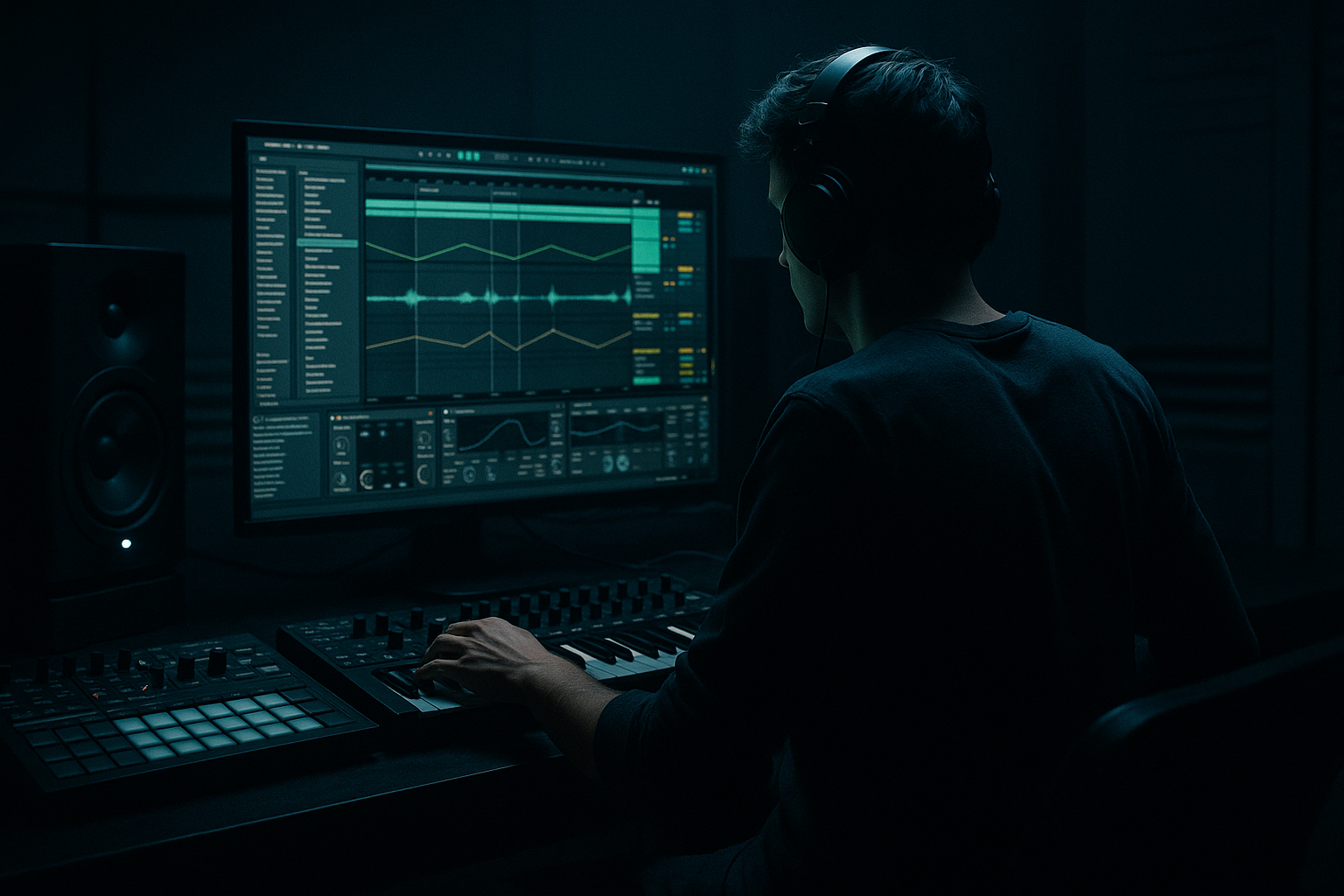
In this lesson, you’ll build a sunrise-set DnB drop with oldskool emotion in Ableton Live 12, with the kind of pull that feels nostalgic, hopeful, and still heavy enough for a proper club system ☀️🔊
The goal is not to make a full track yet — it’s to learn how to create a drop that arrives like a memory: warm pads, a melodic hook, a reese or bass movement that feels restrained at first, then opens up after the drop. This is very common in oldskool-influenced drum & bass, rollers, liquid-leaning jungle, and darker sunrise moments where the DJ wants emotional release without losing dancefloor pressure.
Why this matters in DnB:
- DnB drops often work best when the energy is controlled, not overcrowded.
- The “pull” into the drop comes from tension, filtering, drum anticipation, and low-end restraint.
- Sunrise emotion usually comes from major/minor tension, open harmony, and space around the drums and bass.
- In Ableton Live, you can build this using only stock devices like Drum Rack, Simpler, Operator, Wavetable, Auto Filter, Saturator, Compressor, Reverb, Delay, and Utility.
- A 4 to 8 bar intro riser / pre-drop pull
- A breakbeat-led DnB drop around 172–174 BPM
- A sub and reese-style bass layer that stays controlled and mono
- A simple emotional top-line or chord stab that gives sunrise feeling
- A few FX risers, impacts, and tension automation moves
- A drop that sounds like:
- the tune has been dark and tight,
- the DJ starts mixing out,
- then the new track comes in with a lifted, hopeful chord,
- but the drums still hit with proper weight.
- Making the riser too loud
- Letting the bass and sub both carry too much low end
- Overfilling the drop with too many sounds
- Using a huge reverb on the whole mix
- Ignoring breakbeat groove
- Building the riser with no release
- Use filter automation on the bass, not just the riser
- Add gentle distortion before EQ cleanup
- Keep one “ugly” texture in the background
- Use call-and-response between bass and drums
- Make the emotion darker by reducing brightness, not energy
- Try a short resampled hit before the drop
- Use simple drums, controlled bass, and one emotional melodic element.
- Build the pull with filter automation, risers, reverses, and phrase timing.
- Keep the sub mono and clean.
- Let the breakbeat groove do part of the emotional work.
- In DnB, the best sunrise drops feel open, focused, and powerful rather than busy.
By the end, you’ll have a practical workflow for making a drop that feels like it belongs in a DJ set at dawn — emotional, rolling, and ready to hit without sounding messy.
What You Will Build
You’re going to build a short drop section with:
- a filtered break and pad swelling into
- a sudden open-air release
- then a groove-driven oldskool DnB bassline hitting underneath
Musically, think of a scene where:
A good context example:
If your track sits around 174 BPM in F minor or A minor, the drop might start with a filtered break and pad loop, then open into a two-bar bass phrase that answers the drums, with a brighter chord or piano stab on the back end of the phrase for that sunrise emotion.
Step-by-Step Walkthrough
1. Set up a simple DnB session and reference the vibe
Open a new Ableton Live 12 set and set the tempo to 172–174 BPM. For a sunrise feel, 173 BPM is a great middle ground.
Create these basic tracks:
- Drum Rack for breakbeat drums
- Bass track with Wavetable or Operator
- Pad or chord track
- FX track for risers and impacts
- Optional vocal/textural chop track
Before making sounds, drop in a reference track with a similar emotional DnB feel. Keep it low in volume and compare:
- How long the intro lasts
- How the riser builds
- How much low-end is present before the drop
- Whether the first drop bar feels full or restrained
Why this works in DnB:
DnB arrangements rely heavily on phrasing and energy control. A strong reference helps you avoid overbuilding and gives you a realistic drop length, usually 4, 8, or 16 bars.
2. Build the drum foundation with an oldskool break feel
Drag a classic breakbeat into Simpler or directly into an audio track. If you don’t have a break sample ready, use a short loop from your library and chop it.
In Ableton:
- Put the break into Simpler in Slice mode, or use it as audio and chop with the warp markers.
- Add Drum Buss lightly if you want more glue.
- Use EQ Eight to high-pass the break slightly if the low end is too crowded.
Start with a tight loop:
- Kick/snare pattern should still support the main backbeat
- Add ghost hits or little snare flicks for movement
- Keep the break feeling “played,” not perfectly robotic
Suggested starting settings:
- EQ Eight: high-pass around 120–180 Hz on the break if the sub needs space
- Drum Buss Drive: around 5–15%
- Drum Buss Crunch: very light, just enough to add texture
- Transient: keep modest; too much can make the break spiky and harsh
If the break feels too clean, duplicate it and layer a second quieter break with slightly different tone. One can carry body, the other can carry top-end detail.
3. Write a bass that pulls, not overloads
For this lesson, keep the bass simple and emotional. Use Wavetable or Operator to make a bass that can act like a reese or pulsing low movement.
A beginner-friendly bass approach:
- Use a saw-based patch in Wavetable
- Detune slightly for movement
- Low-pass it so it doesn’t fight the drums
- Add a separate sub layer if needed
Good starting ideas:
- Filter cutoff around 80–200 Hz for the main bass movement
- Resonance low to medium
- Add Saturator after the synth with Drive 2–6 dB
- Keep bass mono with Utility below the crossover area
Create a phrase that answers the drums instead of playing constantly. In DnB, bass often works best with call-and-response:
- Bass hits on one bar
- Breathes on the next
- Leaves space for snare and break accents
For sunrise emotion, let the bassline be slightly restrained in the first part of the drop, then open up later with a small note variation or filter opening.
4. Add a sub layer and keep it disciplined
Make a second MIDI track for the sub. Use Operator with a sine wave, or a simple sub preset.
Keep it simple:
- One note at a time
- Follow the root note of the bassline
- Avoid rapid jumps if you are a beginner
Suggested settings:
- Operator oscillator: sine wave
- Amplitude envelope: fast attack, short release
- Utility on the sub track: set Width to 0% for mono
- Use EQ Eight to low-pass the sub around 80–120 Hz if needed
Check the bass/sub relationship:
- The sub should feel like it is under the track, not floating above it
- If the bassline and sub fight, reduce the bass layer’s low end with EQ
- Leave headroom; don’t push both layers too hard
Why this works in DnB:
Fast tempos create lots of rhythmic information. If your sub is too wide or too loud, the whole drop gets blurry. Clean mono sub keeps the drop punchy and DJ-friendly.
5. Design the sunrise emotion with chords or a top motif
This is where the emotional “pull” happens. Add a simple chord stab, piano-like layer, or pad that enters before the drop and blooms into it.
Use one of these Ableton stock options:
- Wavetable for a soft saw/pad layer
- Analog for warm chord textures
- Electric if you want a dusty, nostalgic key tone
Keep it simple:
- Use a minor key with a hopeful lift, or a chord that moves from minor to a brighter color tone
- Avoid too many notes
- Let one motif repeat so the listener remembers it
Helpful processing:
- Auto Filter automation to open the sound before the drop
- Reverb with a medium decay for atmosphere
- Delay at low mix for width and tail
- EQ Eight to cut low frequencies below 150–250 Hz so it doesn’t muddy the drums
Arrangement idea:
- Bars 1–4 before the drop: pad filtered and distant
- Last bar before drop: filter opens and reverb swells
- First drop bar: chord hits more clearly but not too loudly
This creates the sunrise feeling because the track is moving from distance to clarity.
6. Create a proper riser and pre-drop pull
Since this lesson is in the Risers category, the transition into the drop needs to feel intentional. You can do this entirely in Ableton with stock tools.
Build a riser from:
- White noise in Operator or Wavetable
- A reversed cymbal or reversed crash
- A filtered synth note that rises over time
Make a simple noise riser:
- Load Operator
- Use noise or a bright oscillator source
- Put Auto Filter after it
- Automate the cutoff upward over 4 or 8 bars
- Add Reverb before the filter if you want a longer airy tail
Suggested automation ranges:
- Filter cutoff moving from around 300 Hz to 8–12 kHz
- Reverb dry/wet around 15–30%
- Delay feedback low, around 10–20%, if used
For a stronger pull:
- Reverse a crash or atmospheric hit into the drop
- Automate a short silence or drum cut on the last beat before the drop
- Use a snare roll or ghost snare buildup with increasing velocity
Keep the riser musical. In DnB, the best risers usually support the groove instead of covering everything.
7. Shape the drop with arrangement and tension release
Now arrange the drop so it feels like it lands with purpose.
A beginner-friendly DnB drop structure:
- Bar 1: drums + bass enter, but not everything at full intensity
- Bar 2: add more bass movement or a chord stab
- Bar 3: introduce a fill, extra snare, or opening filter
- Bar 4: release the emotional element more clearly
A sunrise-style drop often works best when the first two bars are a little more restrained, then the phrase opens up. That means:
- Don’t put every sound in at once
- Leave room for the break
- Let one element be the “hero” for each 2-bar block
A useful DJ-minded approach:
- Intro and outro should remain clean enough for mixing
- Drop should not be so dense that it kills groove
- Make the first hit readable on a club system
If you want extra tension, mute the bass for half a bar before the drop, then bring it back in with the drums. That tiny gap can make the drop feel much bigger.
8. Do a quick mix pass so the emotion stays clean
Emotional DnB only works if the mix is tidy. Use Ableton’s stock tools to keep the low end and highs under control.
Basic checks:
- Put Utility on bass and sub tracks to check mono
- Use EQ Eight to carve space between kick, break, sub, and chord layer
- Use Compressor lightly on the drum bus if needed
- Don’t overdo reverb on the bass or drums
Practical mix choices:
- Sub stays centered and clean
- Bass layer gets controlled saturation, not huge stereo width
- Pads and risers can be wide, but low frequencies should be removed
- If the snare feels harsh, reduce a little around 3–6 kHz
A good beginner rule:
- If the drop sounds exciting in mono-ish conditions, it will usually translate better in clubs and headphones
In Ableton, you can also group drums and apply light bus shaping:
- Drum Buss for glue
- Saturator for subtle density
- EQ Eight for tiny corrective cuts
Common Mistakes
- Fix: lower the riser and let automation do the work. A riser should pull the ear, not bury the drop.
- Fix: keep the sub mono and cut low frequencies from the bass layer.
- Fix: remove one element and let the drums breathe. DnB often sounds bigger when it’s cleaner.
- Fix: keep reverb mostly on pads, FX, and selected hits. High-pass reverb returns if needed.
- Fix: nudge ghost notes, adjust velocity, and keep the break feeling alive. The drums are a major part of the emotion.
- Fix: automate a clear drop point, such as a drum stop, snare fill, or bass mute on the last beat.
Pro Tips for Darker / Heavier DnB
A slowly opening bass filter can create tension without needing extra layers.
Try Saturator or Drum Buss for character, then use EQ Eight to control harshness.
A quiet noisy layer, vinyl crackle, or detuned synth can make the drop feel more underground.
Let the bass phrase answer a snare fill or break accent. This is a classic DnB move.
You can keep the drop powerful while making it moodier by filtering the chords and focusing the energy in the mids and low mids.
Bounce a chord or bass stab to audio, reverse it, and tuck it under the riser for a more organic pull.
Mini Practice Exercise
Spend 10–20 minutes making a 4-bar sunrise drop transition:
1. Set the project to 173 BPM.
2. Drag in one breakbeat loop and trim it to 2 bars.
3. Create a bass using Wavetable or Operator and write a simple 2-note phrase.
4. Add a sub layer in Operator with a sine wave.
5. Create one chord pad or stab and filter it with Auto Filter.
6. Make a noise riser with Operator, then automate the filter cutoff upward over 4 bars.
7. Add a reversed crash or reverse reverb-style swell into the drop.
8. Arrange the last bar so the bass briefly drops out before returning.
9. Balance the mix so the sub stays clear and the riser does not overpower the drums.
10. Export a rough 30–40 second loop and listen like a DJ mix transition.
Goal: make the transition feel like tension, lift, and release without overcomplicating the idea.

