DNB COLLEGE

Drum & Bass Ableton Live 12 Tutorials

LESSON DETAIL

Polish an Amen-style break roll for floor-shaking low end in Ableton Live 12 (Intermediate)

An AI-generated intermediate Ableton lesson focused on Polish an Amen-style break roll for floor-shaking low end in Ableton Live 12 in the Ragga Elements area of drum and bass production.

Back to lessons
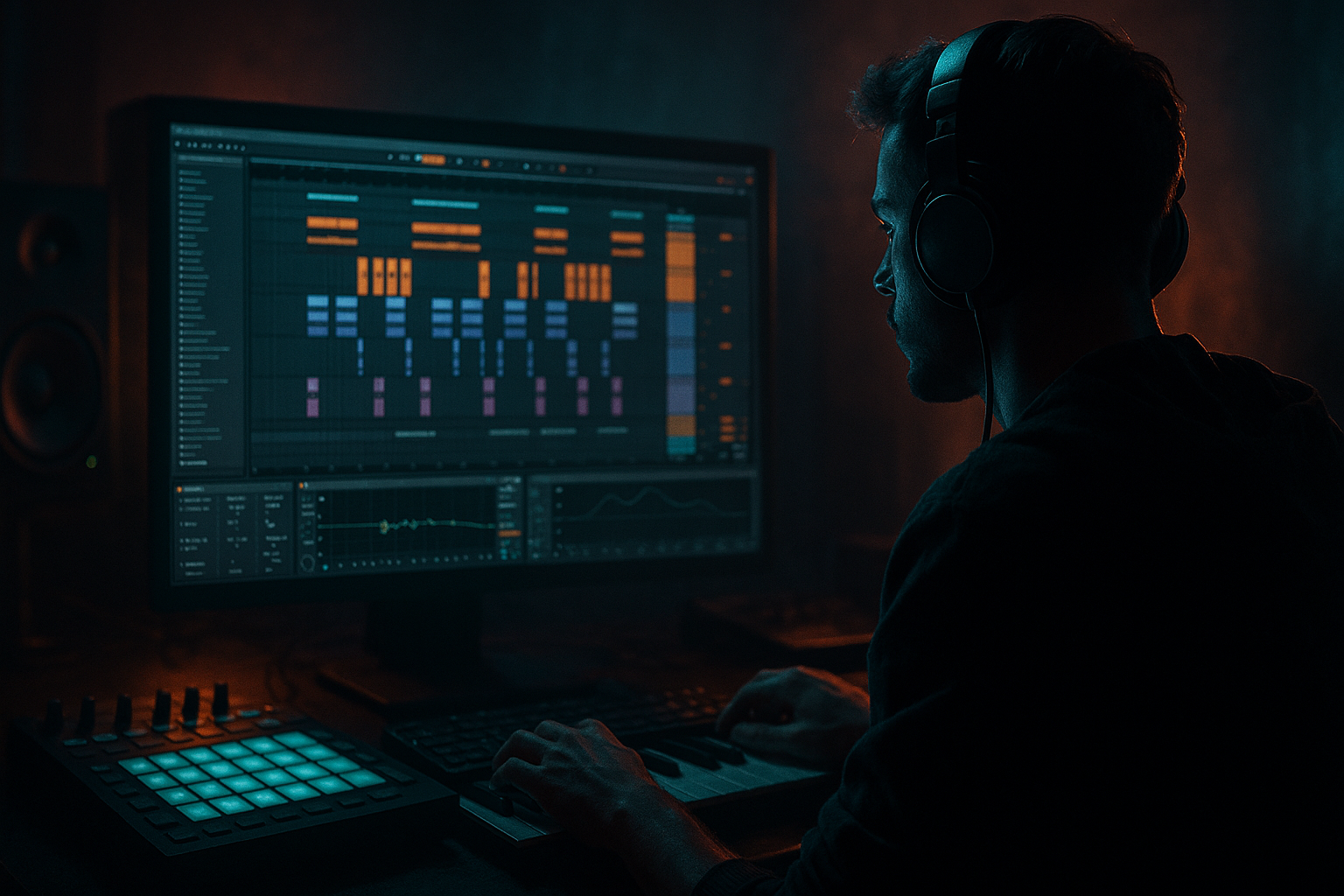
Polish an Amen-style break roll for floor-shaking low end in Ableton Live 12 (Intermediate) cover image

Narrated lesson audio

The voice track includes the tutorial plus extra teacher commentary.

Open audio file

Main tutorial

Polish an Amen-Style Break Roll for Floor‑Shaking Low End (Ableton Live 12)

Category: Ragga Elements • Level: Intermediate • Focus: DnB/Jungle break control + sub translation 🔥

---

1) Lesson overview

In ragga‑leaning drum & bass, the Amen roll is the adrenaline shot—but if it’s not controlled, it eats your sub, smears your groove, and turns the mix into crunchy soup. In this lesson you’ll take an Amen‑style break roll (fast retriggers + edits) and make it hit hard while leaving space for the bass.

You’ll learn a practical, repeatable Ableton Live 12 workflow for:

  • Low‑end cleanup (without killing the vibe)
  • Transient control + density
  • Drum/bass separation using ducking + sidechain + dynamic EQ moves
  • Ragga-style roll placement that actually enhances the drop
  • ---

    2) What you will build

    A polished, mix‑ready Amen roll section that:

  • Sounds aggressive and crisp up top
  • Has tight, controlled low mids
  • Leaves clean sub headroom for a rolling bassline
  • Can be used as a fill into the drop or a mid‑phrase hype moment
  • You’ll end up with:

  • A Break Bus (group) with a clean device chain
  • A Low/Mid/Top split for precise control
  • A sub‑safe arrangement technique for rolls
  • ---

    3) Step‑by‑step walkthrough

    Step 0 — Session setup (so your decisions translate) 🎛️

  • Tempo: 170–176 BPM (try 174).
  • Set Warp Mode for breaks: usually Beats or Complex Pro depending on the source.
  • - For classic Amen edits: Beats mode can be tighter.

    - Start with: Beats → Transients, Preserve 1/16 or 1/8, Envelope ~20–40.

  • Turn on a spectrum reference:
  • - Add Spectrum on your Master (just for visual checks).

    ---

    Step 1 — Prep the Amen roll (timing + cleanliness) 🥁

    1. Drop your Amen loop onto an audio track.

    2. Warp it tightly so the transients align to the grid.

    3. Create your roll:

    - Slice or duplicate a hit cluster (snare/tom burst) into 1/16 → 1/32 stutters.

    - For a ragga vibe, keep it swingy, not robotic—slight offsets help.

    4. Consolidate the roll region: select the edited roll → Cmd/Ctrl + J (Consolidate).

    - This stabilizes warp markers and makes processing predictable.

    Arrangement tip: place the roll at end of bar 8 or 16 as a transition. For proper DnB tension, try last 1/2 bar into the next phrase.

    ---

    Step 2 — Put the break in a group and build a “Break Bus” 🧱

  • Select your Amen track → Cmd/Ctrl + G to Group it. Name it: BREAK BUS.
  • If you’re layering other breaks, put them in the same group.
  • On BREAK BUS, start with this basic chain (in this order):

    1) EQ Eight (cleanup)

    2) Drum Buss (weight + transient shaping)

    3) Glue Compressor (gentle cohesion)

    4) Saturator (harmonics / bite)

    5) Limiter (safety, not loudness)

    You’ll fine-tune these next.

    ---

    Step 3 — Make it sub‑safe: remove useless low end (but keep body) 🧼

    On the Amen track itself (not the group), add EQ Eight:

  • HPF (High‑pass):
  • - Set to 24 dB/oct

    - Start around 80 Hz, adjust by ear (sometimes 70–110 Hz)

  • Low‑mid control:
  • - Add a bell at 200–350 Hz

    - Cut -2 to -5 dB if it sounds boxy or flabby

  • Harshness:
  • - If needed, a small cut around 3–5 kHz (Amen can get spicy)

    Goal: the break should feel powerful from harmonics and punch—not from sub energy that fights your bass.

    ---

    Step 4 — Split the break into Low/Mid/Top for roll control (clean method) ✂️

    This is the key to getting rolls heavy without low-end chaos.

    1. Duplicate the Amen track twice (total 3 tracks).

    2. Name them:

    - Amen LOW

    - Amen MID

    - Amen TOP

    3. On each, use EQ Eight (first device) as a crossover:

    Amen LOW

  • LPF at 180–250 Hz, 24 dB/oct
  • Optional: small bell boost around 120 Hz if you need thump (careful).
  • Amen MID

  • HPF at 180–250 Hz, 24 dB/oct
  • LPF at 4.5–7 kHz, 24 dB/oct
  • This band carries the “roll chatter” and body.
  • Amen TOP

  • HPF at 4.5–7 kHz, 24 dB/oct
  • This is your snap, air, and texture.
  • Group these three into BREAK BUS (or keep them inside it).

    Why this works: you can push the roll energy in MID/TOP while keeping LOW extremely disciplined.

    ---

    Step 5 — Tighten the roll with transient and density control (stock devices) ⚙️

    #### A) On Amen MID: controlled aggression

  • Add Drum Buss
  • - Drive: 5–15% (push until it speaks)

    - Transient: +5 to +20 (more snap for fast rolls)

    - Boom: OFF (usually) or very low (you’ll keep sub elsewhere)

  • Add Saturator after Drum Buss
  • - Mode: Soft Clip ON

    - Drive: 2–6 dB

    - Keep output trimmed so you’re not just getting louder.

    #### B) On Amen TOP: brightness without pain

  • Add Saturator
  • - Drive: 1–4 dB

  • Add EQ Eight
  • - If harsh: dip 7–10 kHz slightly

    - If dull: gentle shelf +1–2 dB above 9 kHz

    #### C) On Amen LOW: keep it tight and short

  • Add Gate (yes!)
  • - Threshold: set so it closes between hits

    - Return: 0–5 ms

    - Hold: 10–30 ms

    - Release: 40–120 ms

    This stops low-end rumble during micro‑stutters.

    ---

    Step 6 — Make space for the bass: sidechain/ducking that feels musical 🦾

    You want the roll to sound huge and keep your bass clean.

    #### Option 1: Sidechain Break Bus from the Kick (classic DnB cleanliness)

    On BREAK BUS:

  • Add Compressor
  • - Enable Sidechain

    - Input: Kick

    - Ratio: 2:1 to 4:1

    - Attack: 2–10 ms

    - Release: 60–140 ms (time it to groove)

    - Aim for 1–3 dB gain reduction

    #### Option 2: Duck the break from the Sub/Bass (for roll clarity)

    If your sub is constant and the roll masks it, invert the approach:

  • Sidechain break from Sub and/or Bass track
  • Smaller GR: 0.5–2 dB, just enough to let sub read.
  • Extra clean trick: sidechain only the Amen LOW track from the sub. Keep MID/TOP more consistent so the roll still feels present.

    ---

    Step 7 — Glue it together on the Break Bus (final polish) 🧷

    On BREAK BUS, dial in:

    #### 1) EQ Eight (bus tone)

  • Tiny cut 250–400 Hz if it stacks up
  • Tiny shelf boost above 8–10 kHz if it needs air (+0.5 to +1.5 dB)
  • #### 2) Glue Compressor (cohesion, not squashing)

  • Attack: 3 ms (or 1 ms if it’s too pokey)
  • Release: Auto or 0.1–0.3 s
  • Ratio: 2:1
  • Aim: 1–2 dB gain reduction on peaks
  • #### 3) Limiter (safety)

  • Don’t smash. Set ceiling -0.3 dB
  • If it’s clamping hard, back off earlier stages.
  • ---

    Step 8 — The roll arrangement move that makes it “ragga” 🎚️

    A polished Amen roll isn’t just processing—it’s placement and automation.

    Try this 2‑bar idea (at 174 BPM):

  • Bar 1: standard break groove
  • Bar 2: introduce the roll only in MID/TOP, while LOW stays restrained
  • Final 1/4 bar: automate one or more:
  • - Auto Filter on TOP (HPF sweep up slightly)

    - Reverb send burst on a single snare hit (then cut it)

    - Delay 1/8 or 1/16 only on a “call” hit (keep it dubby)

    Stock devices for FX:

  • Echo (great for ragga throws)
  • Hybrid Reverb (short rooms or gated vibes)
  • Auto Filter (tight sweeps)
  • Keep the FX mostly above 200 Hz (EQ the returns!) so your low end stays militant.

    ---

    4) Common mistakes

  • Leaving full-spectrum low end in the break → instant sub masking and muddy drops.
  • Over‑compressing the Break Bus → rolls lose punch and become papery.
  • Saturating without output gain matching → you think it’s better because it’s louder.
  • Putting reverb on the whole roll → smears transients; use short bursts on select hits.
  • No band-splitting → you end up “fixing” harshness by dulling the entire break.
  • ---

    5) Pro tips for darker/heavier DnB 🕯️

  • Keep LOW mono:
  • - Add Utility on Amen LOW → Width 0%.

  • Micro‑pitch for menace:
  • - Try pitching the Amen down -1 to -3 semitones, then compensate with EQ/Transient.

  • Parallel dirt (controlled):
  • - Create a return track with Overdrive → Saturator → EQ Eight (HPF 200 Hz).

    - Send MID/TOP into it lightly for gnarly texture without low-end mess.

  • Clip instead of compress for density:
  • - Soft clipping (Saturator Soft Clip) often keeps rolls punchier than heavy compression.

  • Let the bass own 40–90 Hz:
  • - Treat your break like it’s competing for attitude, not sub.

    ---

    6) Mini practice exercise (15 minutes) ⏱️

    1. Load one Amen break and build a 1-bar roll fill at the end of bar 8.

    2. Create the LOW/MID/TOP split with EQ Eight crossovers.

    3. Put a Gate on Amen LOW and tune it so low rumble disappears between hits.

    4. Add Drum Buss + Saturator on MID and try two versions:

    - Version A: Transient +10, Drive moderate

    - Version B: Transient +0, Drive higher + soft clip

    5. Sidechain Amen LOW from your Sub so the sub stays steady under the roll.

    6. Export a quick bounce and check:

    - Does the roll feel hype without the sub wobbling or disappearing?

    ---

    7) Recap ✅

  • You cleaned the break’s low end with EQ Eight and kept sub space sacred.
  • You used a LOW/MID/TOP split to push roll energy where it belongs (MID/TOP), while LOW stays tight.
  • You added punch and density with Drum Buss, Saturator, and light Glue—not overcompression.
  • You protected bass clarity using sidechain ducking, ideally targeting LOW the most.
  • You arranged the roll with automation + selective FX for ragga character without muddying the drop.

If you want, tell me your typical bass style (Reese, sub+mid, wobble, foghorn) and I’ll suggest a specific ducking/crossover plan and a roll placement that complements it.


Ask GPT about this lesson

Chat with the lesson tutor, get follow-up help, or use quick actions.

Bigup 👽 Ask me anything about this lesson and I’ll answer in context.

Narration script

Show spoken script
Title: Polish an Amen-style break roll for floor-shaking low end in Ableton Live 12 (Intermediate)

Alright, let’s get an Amen-style break roll sounding properly rude, without turning your low end into a wrestling match.

Because in ragga-leaning drum and bass, that roll is the adrenaline shot. But if you don’t control it, it eats your sub, smears your groove, and suddenly the drop feels smaller instead of bigger. Today we’re making a roll that sounds aggressive and crisp up top, tight in the low mids, and leaves clean headroom for the bass to own the real low end.

Open Ableton Live 12, and let’s build this in a way you can repeat on any break.

First, quick session setup so your decisions actually translate.

Set your tempo somewhere between 170 and 176. I’ll sit at 174. Drop a Spectrum device on the Master, not because we’re mixing with our eyes, but because it’s a great reality check when you’re carving low end.

Now bring in your Amen loop on an audio track.

For warp mode, you’ve got two common choices. Beats mode tends to stay tighter and more percussive for classic Amen edits, especially if you’re doing fast stutters. Complex Pro can work, but it may soften the transient edge depending on the sample.

So start with Beats mode, set it to Transients, and set Preserve to 1/16 or 1/8. Then pull the envelope somewhere around 20 to 40. The idea is: keep the hits snappy, but don’t turn them into sandpaper.

Now, warp the break properly. Zoom in, find the main transients, and make sure they land on the grid where you want them. If your warp is sloppy, everything else you do is just polishing a moving target.

Next, create the roll.

This is the fun part. Take a small cluster of hits, usually a snare or snare-tom burst, and slice or duplicate it into stutters. Start at 1/16 and push into 1/32 if you want that machine-gun energy. But here’s the ragga trick: don’t make it perfectly robotic. A tiny offset on one or two stutters, like a couple milliseconds late, can add swagger. If it sounds like a typewriter, loosen it slightly.

Once the roll feels right, consolidate the edited roll region. Select it and hit Cmd or Ctrl plus J. That locks it in, stabilizes warp behavior, and makes the processing predictable.

Arrangement-wise, an easy win is placing this roll at the end of an 8-bar or 16-bar phrase. Try the last half bar leading into the next section. That’s prime “hype into the drop” real estate.

Now let’s build the structure that makes this mix-ready.

Select your Amen track and group it. Cmd or Ctrl plus G. Name the group BREAK BUS. If you’re layering other breaks, they’ll live here too, but today we’ll focus on this one roll.

On the BREAK BUS, we’re going to end up with a simple, clean chain: EQ Eight for overall tone, Drum Buss for weight and transient shaping, Glue Compressor for cohesion, Saturator for harmonics, and a Limiter as a safety net. Not loudness. Safety.

Before we do the fancy split, we need the break to be sub-safe.

On the Amen track itself, add EQ Eight. We’re cleaning the low end without killing the vibe.

Turn on a high-pass filter, 24 dB per octave. Start around 80 Hz, and move it by ear. Depending on the break, you might land anywhere from 70 up to 110. The goal is not “make it thin.” The goal is “stop pretending the break gets to live where the sub lives.”

Then, listen for boxy low mids. Add a bell somewhere around 200 to 350 Hz. If it’s flabby, cut two to five dB. Small moves, but they matter.

And if the break gets spicy, a small dip around 3 to 5 kHz can stop the roll from stabbing your face. Don’t overdo it. We still want energy.

Now here’s the main technique: we’re going to split the break into LOW, MID, and TOP.

Duplicate the Amen track twice so you have three copies total. Name them Amen LOW, Amen MID, and Amen TOP.

On each one, EQ Eight is your first device, and we’re using it like a crossover.

On Amen LOW, set a low-pass filter around 180 to 250 Hz, 24 dB per octave. This is disciplined low information only. If you really need a touch of thump, you can try a small boost around 120, but be careful. This is exactly where you can start fighting the bass again.

On Amen MID, set a high-pass at the same crossover point, around 180 to 250, 24 dB per octave. Then set a low-pass around 4.5 to 7 kHz. This mid band is the roll chatter, the body, the “hands moving fast” feeling.

On Amen TOP, set a high-pass around 4.5 to 7 kHz, 24 dB per octave. That’s your snap, air, and texture.

Now route all three into your BREAK BUS group if they’re not already living inside it.

And quick coach note here: whenever you do steep crossovers, you can lose punch around the crossover points because of phase shift. So do a quick reality check before you commit. Put a Utility on the MID track and try phase invert left, then right, briefly. If the low-mid meat disappears or your snare loses impact in a weird way, adjust the crossover frequencies. Sometimes just moving the crossover a bit, or using a gentler 12 dB slope on one side, brings the punch back.

Next: control the roll so it’s dense and fast, without wrecking the low end.

Start with Amen MID, because that’s usually where the roll turns into mush if you don’t shape it.

Add Drum Buss. Set Drive somewhere like 5 to 15 percent. Push until it speaks, but don’t crush it. Then bring up Transients, anywhere from plus 5 to plus 20, to keep the fast retriggers readable. Boom is usually off here, or extremely low, because we’re not building sub from the break.

After Drum Buss, add Saturator. Turn on Soft Clip. Add two to six dB of drive. Then, and this is important: gain match. Trim the output so it’s not simply louder. If you skip this, you’ll think you improved it when you really just turned it up.

While you’re here, aim for the roll to “read” on smaller speakers. That often means a controlled presence area around 1.5 to 3 kHz, not more low end. If your roll only feels big because of low-mid fog, it’s going to disappear on earbuds.

Now Amen TOP.

Add Saturator again, lighter. One to four dB of drive. Then EQ Eight after it if needed. If it’s harsh, dip around 7 to 10 kHz a touch. If it’s dull, a very gentle shelf above 9 kHz, maybe plus one or two dB, can lift the air without making it painful.

Now Amen LOW, and this is where we keep the sub lane clean by controlling sustain, not just EQ.

Add a Gate. Yes, a Gate on a break. This is one of the most effective tricks for rolls.

Set the threshold so it closes between hits. Return very fast, like 0 to 5 milliseconds. Hold around 10 to 30 milliseconds. Release around 40 to 120 milliseconds. You’re basically telling the low band: hit, then get out of the way. This stops low rumble during micro-stutters, and it reduces that “sub wobble” feeling that happens when tails overlap.

Extra coach move: even with the gate, you can also add tiny fades on the audio clip just in the roll region. A fade out of 5 to 20 milliseconds on the LOW band during the stutters can prevent microscopic overlaps that create low-end blur. It’s surgical, but it works.

Now we make space for the bass in a way that feels musical.

Because the roll can sound amazing solo, but the real test is with the sub playing. So turn the bass on. Do your A and B decisions in context. If the bass loses note definition when the roll hits, the fix is usually less sustain in the LOW band, slightly less 200 to 350 in the MID band, or smarter ducking timing. Not “more top end.”

Let’s do ducking.

Option one: sidechain the BREAK BUS from the kick. Classic DnB cleanliness. Put a Compressor on the BREAK BUS, enable Sidechain, choose the kick as input. Ratio two-to-one up to four-to-one. Attack two to ten milliseconds, release around 60 to 140 milliseconds. Time the release to the groove, so it breathes instead of pumping randomly. Aim for one to three dB of gain reduction.

Option two: duck the break from the sub or bass if the roll is masking the bassline. In that case, sidechain from the sub track, but use smaller reduction, like half a dB to two dB. Just enough so the sub stays readable.

And here’s the extra clean trick: sidechain only Amen LOW from the sub. Keep MID and TOP more consistent so the roll still feels present and hype, while the sub lane stays militant and stable.

If you want to get more advanced, you can make the ducking happen only during the roll fill. Automate the compressor on/off, or automate the threshold so it only ducks when that fill arrives. That way the main groove stays full, and the roll politely tucks in only when it needs to.

Another advanced option is using a ghost trigger. You make a MIDI track with a tiny clicky sound, mute the output, and program a pattern that matches your kick or sub rhythm. Use that as the sidechain source so your ducking stays consistent even if the kick pattern changes. Super helpful in arrangement-heavy tracks.

Now we glue everything together on the BREAK BUS for final polish.

Start with EQ Eight on the bus. If the combined break stack is getting thick, do a tiny cut around 250 to 400 Hz. Tiny. Then if it needs air, a small shelf above 8 to 10 kHz, like plus half a dB to plus one and a half.

Then add Glue Compressor. This is cohesion, not punishment. Try attack at 3 milliseconds, or 1 millisecond if it’s too pokey. Release on Auto, or somewhere around 0.1 to 0.3 seconds. Ratio two-to-one. Aim for one to two dB of gain reduction on peaks. If you’re getting more than that, you’re probably flattening the very transients that make the roll exciting.

Then a Limiter at the end as safety. Ceiling at minus 0.3 dB. If it’s clamping hard, don’t “fix it” with more limiter. Go back and reduce earlier stages.

Now, the roll arrangement move that makes it feel ragga.

A polished roll isn’t just processing. It’s placement and automation.

Try this two-bar idea. Bar one is your standard break groove. Bar two, introduce the roll mainly in MID and TOP, while LOW stays restrained. That’s how you keep hype without low-end chaos.

In the final quarter bar, automate something tasteful.

You can do a tight high-pass sweep on the TOP band with Auto Filter, just nudging it upward to create lift. Or do a reverb send burst on a single snare hit, then cut it instantly so it doesn’t smear the whole roll. Echo is amazing for ragga throws: a quick 1/8 or 1/16 delay on a “call” hit, then dry again.

And always EQ your FX returns. Keep them mostly above 200 Hz so your low end stays clean.

Here are a few common mistakes to avoid while you’re working.

If you leave full-spectrum low end in the break, you’ll instantly mask the sub and your drop will feel smaller. If you over-compress the break bus, the roll turns papery and loses punch. If you saturate without gain matching, you’ll fool yourself because louder sounds better. And if you put reverb on the whole roll, you smear the transients and the roll becomes a wash. Do selective hits instead.

Two more pro moves if you want darker, heavier DnB energy.

Keep the LOW band mono. Put Utility on Amen LOW and set Width to zero percent. That keeps the center solid.

And consider a “snare anchor.” Duplicate the main snare hit that your roll is built from, place it right at the start or end of the roll, and keep it cleaner than the rest. That one stable transient helps the ear interpret the chaos as intentional.

Now let’s lock this in with a quick 15-minute practice.

Load one Amen, build a one-bar roll fill at the end of bar 8. Do the LOW, MID, TOP split. Put the Gate on LOW and tune it so the rumble disappears between hits. On MID, try two versions: one with Transient up around plus ten and moderate drive, and another with Transient at zero but higher drive and soft clipping. Sidechain Amen LOW from the sub so the bass stays steady under the roll. Then bounce ten seconds with the sub playing and check: does the roll feel hype without the sub wobbling or disappearing?

Recap so you remember the point of the whole workflow.

You cleaned the break’s low end so the sub lane stays sacred. You used a LOW, MID, TOP split so you can push roll energy where it belongs, in MID and TOP, while LOW stays tight and short. You added punch and density with Drum Buss and Saturator and light glue, not overcompression. You protected bass clarity with ducking, ideally focused on the LOW band. And you arranged the roll with selective automation and FX so it feels ragga, not muddy.

If you tell me what your bass lane is, like pure sub with separate mid, Reese, wobble, foghorn, I can suggest exact crossover points and duck timing that usually translates best for that style.

mickeybeam

Go to drumbasscd.com for +100 drum and bass YouTube channels all in one place - tune in!

Generating PDF preview…