DNB COLLEGE

Drum & Bass Ableton Live 12 Tutorials

LESSON DETAIL

Pirate Signal edit: a ragga cut flip from scratch in Ableton Live 12 (Intermediate)

An AI-generated intermediate Ableton lesson focused on Pirate Signal edit: a ragga cut flip from scratch in Ableton Live 12 in the Workflow area of drum and bass production.

Back to lessons
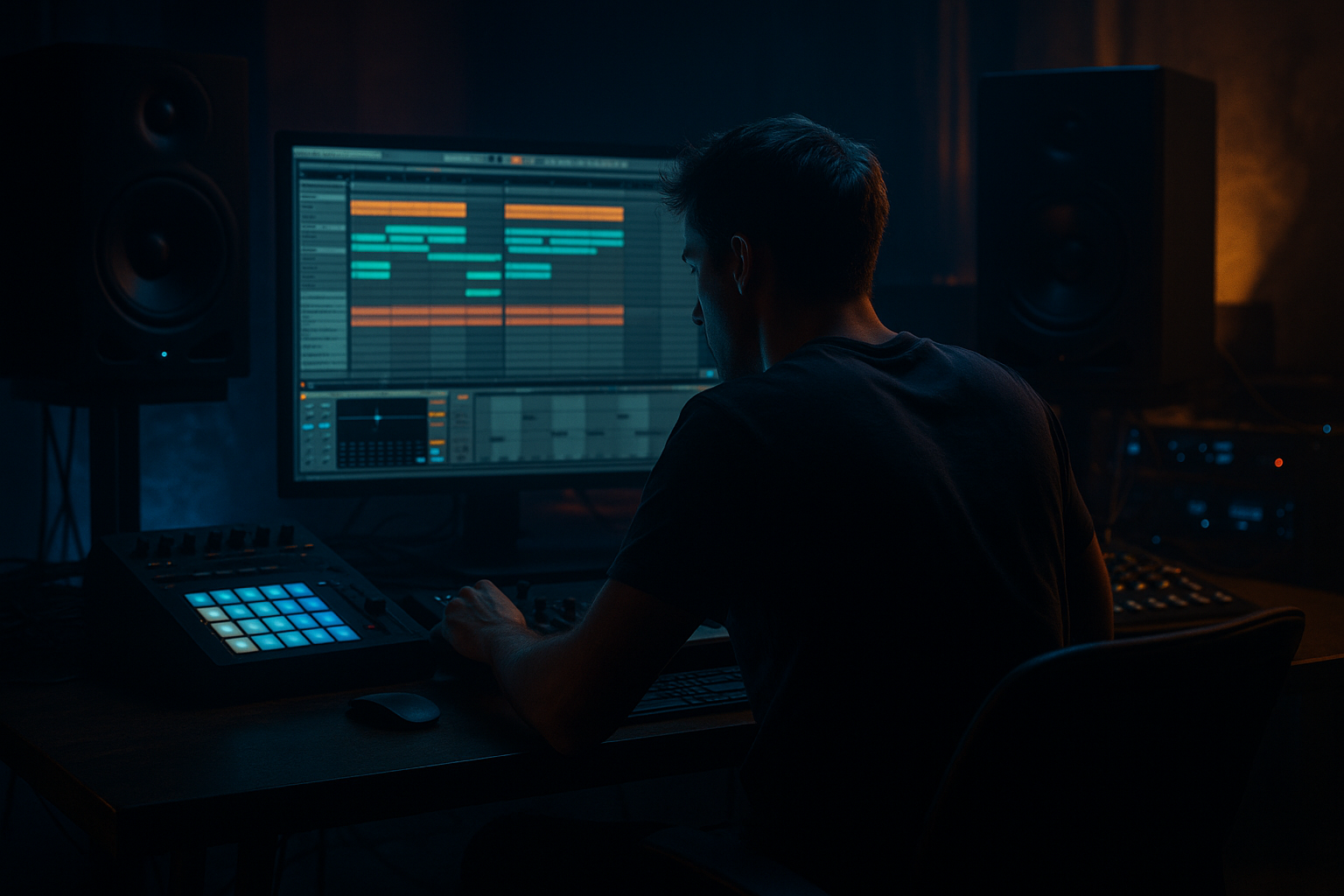
Pirate Signal edit: a ragga cut flip from scratch in Ableton Live 12 (Intermediate) cover image

Narrated lesson audio

The voice track includes the tutorial plus extra teacher commentary.

Open audio file

Main tutorial

Lesson Overview

A “Pirate Signal” edit is a classic DnB/Jungle move: take a ragga vocal or MC-style phrase, chop it into a tight, call-and-response hook, and flip it into a hard, modern arrangement that feels like a weapon in the drop. In this lesson, you’ll build a ragga cut from scratch in Ableton Live 12, then turn it into a bass-music-ready edit that sits naturally in a roller, jungle stepper, or darker dancefloor tune.

Why this matters: ragga edits instantly add identity. They give your track a human front-end before the bassline hits, help DJs and listeners lock onto the groove, and create tension between rough vocal texture and engineered low-end pressure. In DnB, that contrast is gold. A good ragga cut can function as:

  • a hook in the intro,
  • a drop trigger,
  • a breakdown pivot,
  • or a switch-up before the second drop.
  • We’re not just slicing vocals for novelty. We’re building a workflow: source, chop, tune, warp, resample, process, and arrange. The goal is a repeatable Ableton approach you can use on any pirate radio-style vocal, jungle toast, or ragga MC phrase. 🔥

    What You Will Build

    By the end of this lesson, you’ll have a finished ragga cut edit in Ableton Live 12 with:

  • a 2–4 bar chopped vocal hook built from one or two source phrases
  • tight rhythmic stabs that answer the drum groove
  • pitch-shifted throws for tension and movement
  • resampled FX hits, delays, and reverb tails for transitions
  • a gritty, mono-compatible vocal layer that sits over a DnB drop
  • a simple arrangement that works as a DJ-friendly intro into a breakdown or first drop
  • Musically, think:

  • 170–174 BPM
  • one dry, upfront ragga phrase
  • chopped stutters on offbeats and pickups
  • a filtered lead-in before the drop
  • a switch-up after 8 or 16 bars
  • room for bassline and drums to hit without fighting the vocal
  • The final result should sound like something between pirate radio energy and modern rollers precision: raw, rhythmically locked, and easy to drop into a tune without cluttering the mix.

    Step-by-Step Walkthrough

    1. Choose the right source vocal and set your project up for fast decisions

    Start with a short ragga vocal phrase, MC shout, or old-school jungle toast. Keep it simple: one phrase with attitude is better than a full verse. Look for words with strong consonants and vowel tails, because they chop well and survive processing.

    In Live 12:

    - Set tempo to 172 BPM as a solid starting point.

    - Create a new audio track and drag in your vocal.

    - Warp the clip immediately and choose Complex Pro for full phrases, or Beats if the source is already percussive and chopped.

    - Set the loop brace around the best 1–2 bars.

    Workflow tip: rename the clip right away, e.g. `ragga_source_172bpm`, and color-code it. This saves time later when you resample multiple versions.

    Why this works in DnB: the genre often thrives on short, high-impact vocal ideas that can ride over busy drums and bass without muddying the low end. Starting with a compact phrase keeps your arrangement efficient and club-focused.

    2. Find the musical pockets and chop the phrase into playable slices

    Open the clip in the Sample view and listen for syllables with strong rhythm: “pull up,” “signal,” “yuh,” “runnin,” “selector,” “massive,” etc. You want slices that can act almost like drum hits.

    Practical approach:

    - Use the Slice to New MIDI Track workflow if the phrase is rhythmically loose and you want quick performance chops.

    - Slice by transient or warp markers, depending on how clean the vocal is.

    - If you prefer manual control, duplicate the track and split the audio clip directly at useful words.

    If using Simpler:

    - Set mode to Slice

    - Choose transient-based slicing

    - Use Auto or 1/8 release depending on how tight you want the tails

    - Put the slices on a MIDI track so you can play them like an instrument

    If working directly with audio:

    - Cut out 4–8 useful syllables

    - Consolidate each into a clean one-shot clip

    - Nudge timing so the transient lands tightly on the grid

    Good starting slice set:

    - one main call phrase

    - one response phrase

    - one short accent word

    - one tail or shout for transition

    3. Build a call-and-response pattern against the drums

    Now program the vocal rhythm so it feels like part of the drum groove, not a layer floating over it. This is where the “pirate signal” identity starts coming alive.

    Make a 2-bar MIDI pattern if you’re using Simpler slices:

    - Put the main phrase on beat 1 or the “and” of 1.

    - Use response chops on beats 2 and 4, or on offbeats before snare hits.

    - Leave gaps. Ragga edits need air to hit hard.

    Try this rhythmic logic:

    - bar 1: main call + short answer

    - bar 2: repeat with a pitch-up or pitch-down variation

    - final half-bar: a stutter or reverse tail into the next section

    To make it groove with DnB drums:

    - Align slices around the snare and ghost-note pocket.

    - If your break is busy, keep the vocal simpler.

    - If your drums are minimal rollers, you can afford more vocal syncopation.

    Musical context example: if your drop has a filtered reese and Amen-style break, place the ragga call in the space after the snare so the vocal becomes a rhythmic counterline. If your bassline is more neuro/rollers, keep the vocal more staccato and less melodic.

    4. Shape the vocal with stock Ableton processing for grit and focus

    Put the vocal slice track into a clean processing chain. A strong starting chain is:

    - EQ Eight

    - Drum Buss or Saturator

    - Auto Filter

    - Compressor or Glue Compressor

    - optional Echo and Reverb on sends

    Suggested settings:

    - EQ Eight: high-pass around 120–180 Hz to remove rumble; tame harshness around 2.5–5 kHz if needed

    - Saturator: Soft Clip on; drive around 2–6 dB

    - Drum Buss: Drive 5–15%, Crunch lightly, Boom off or very subtle for vocals

    - Auto Filter: automate a low-pass sweep from 8–12 kHz down to 2–4 kHz for intro tension

    - Compressor: ratio around 2:1 to 4:1, fast enough to tighten peaks without flattening the attitude

    Keep the vocal punchy, not over-squeezed. A ragga cut should feel alive and slightly ragged, but still controlled enough to sit on top of a loud DnB mix.

    Workflow move: group the vocal chain into an Audio Effect Rack if you plan to reuse it on future edits. Save it as a preset like `ragga_edit_chain`.

    5. Tune and twist key words for tension, movement, and lift

    Use pitch creatively, not randomly. A few semitone moves can turn a plain cut into a memorable hook.

    In Simpler or clip-based playback:

    - Pitch the main call down -2 to -5 semitones for menace

    - Pitch response chops up +3 to +7 semitones for lift

    - Use short pitch ramps on specific words leading into a drop

    - Keep the phrase intelligible so it still feels like a vocal, not just texture

    Good practice:

    - One phrase stays mostly dry and centered.

    - The reply phrase gets pitch-shifted or filtered.

    - The final chop before the drop gets the most dramatic change.

    Add Simpler’s Glide or slight pitch envelope movement if you want a stretched, tape-like ragga feel. If the vocal is in audio, automate clip transposition in small jumps for a more old-school, chopped pirate-radio vibe.

    Why this works in DnB: pitch contrast creates instant call-and-response, which mirrors how drums and bass often converse in the genre. It also helps the edit avoid sounding repetitive over a 16-bar section.

    6. Resample the best version and turn it into a performance element

    Once the chops feel good, resample them. This is a huge workflow win in Ableton because it turns a messy edit process into a playable audio phrase.

    Do this:

    - Create a new audio track set to Resampling

    - Arm it and record 1–2 passes of your vocal pattern

    - Capture different automation moves: filter sweeps, delay throws, pitch shifts

    - Consolidate the best take into a single audio clip

    After resampling:

    - Trim the clip tightly

    - Fade tiny clicks at the edges

    - Warp if needed, but avoid overprocessing a performance that already feels locked

    Now you can:

    - duplicate the clip for alternate sections

    - reverse individual hits for transitions

    - create one-bar or half-bar variants

    - chop the resample into a new layer with even more control

    This is especially useful for workflow because it freezes decisions. Instead of endlessly tweaking, you commit to a strong version and move on to arranging.

    7. Build the arrangement around phrase length and DJ utility

    For a DnB track, structure matters. A ragga cut should not just repeat endlessly; it should introduce, escalate, and clear space for the drop.

    A practical arrangement shape:

    - 8 bars intro: filtered vocal fragments + drums only

    - 8 bars pre-drop: clearer vocal call, riser, drum fill

    - 16 bars drop 1: full vocal hook on bars 1, 5, 9, 13

    - 8 bars switch-up: dropout with one isolated chop and bass emphasis

    - 16 bars drop 2: variation with extra pitch throws or doubles

    Arrangement idea:

    - Use the main ragga line on the first 4 bars of a drop.

    - Pull it back on bar 5 to let the bassline breathe.

    - Reintroduce a chopped answer on bar 7 or 8 before a fill.

    - Leave the outro relatively clean for DJ mixing.

    Keep your intro/outro DJ-friendly:

    - 16-bar intro with drums, light vocal hints, and filtered textures

    - 16-bar outro with reduced vocal density and clear drum groove

    - Avoid crowding the first beat of every phrase; DJs need mixable space

    8. Glue the edit with transitions, automation, and tiny details

    Now add the finishing motion that makes the edit feel intentional.

    Use stock Ableton tools:

    - Echo on a return track for throw phrases

    - Reverb with short-to-medium decay

    - Auto Filter automation for section changes

    - Utility to tighten stereo width

    - Redux very subtly if you want digital grit

    Suggested automation ideas:

    - automate Echo feedback from 10% to 40% on the last word of a phrase

    - automate reverb dry/wet only on selected final syllables

    - automate Auto Filter cutoff down before the drop, then snap open on impact

    - automate Utility width to 0% on the main vocal for mono focus, then widen selected FX tails only

    Tiny detail that matters:

    - add a reverse reverb swell before the main call

    - use a one-beat drum fill under the final vocal chop

    - layer a small impact or noise hit right on the phrase turnaround

    This is where the edit becomes “save-worthy.” It’s no longer just a sliced vocal; it’s a mini arrangement with lift and payoff.

    Common Mistakes

  • Too many slices, not enough groove
  • Fix: reduce to 3–5 core chops and let the rhythm breathe.

  • Vocal fights the snare or bassline
  • Fix: move slices slightly earlier/later by a few milliseconds, and high-pass the vocal around 120–180 Hz.

  • Over-wet reverb kills the impact
  • Fix: use short throws, automate wet/dry only on selected words, and keep the main phrase mostly dry.

  • Chops sound random instead of intentional
  • Fix: build a call-and-response structure: main phrase, reply, fill, reset.

  • Pitch shifts become cartoonish or muddy
  • Fix: keep most moves within ±5 semitones and preserve one intelligible anchor phrase.

  • No low-end separation
  • Fix: use Utility to mono the vocal core, keep sub-bass clean, and check the mix in mono.

    Pro Tips for Darker / Heavier DnB

  • Use Saturator before compression if the vocal needs more bite without getting noisy. Drive in the 2–5 dB range is often enough.
  • Layer a very quiet distorted duplicate of the vocal 12–24 dB below the main one for grit, then high-pass it aggressively.
  • For a darker roller feel, automate Auto Filter so the vocal opens only on key words, leaving the rest slightly claustrophobic.
  • For heavier neuro-adjacent energy, chop the vocal more tightly and synchronize certain hits with the bass rhythm, almost like a percussive stab.
  • If the vocal is too bright, tame 4–8 kHz with a narrow EQ cut rather than dulling the whole top end.
  • Use Delay with ping-pong sparingly on selected throws only; wide delays can smear the center if overused.
  • Resample a processed phrase and then chop that resample again. Second-generation chops often sound more “finished” and more underground.
  • For extra pirate-radio character, keep one section slightly rawer than the rest. Perfectly polished all the way through can lose attitude.
  • Mini Practice Exercise

    Spend 10–20 minutes making a 2-bar ragga cut that works over a DnB drum loop.

    1. Import a 1–2 bar vocal phrase at 172 BPM.

    2. Slice it into at least 4 playable parts.

    3. Program a 2-bar call-and-response pattern using those slices.

    4. Add EQ Eight and Saturator to the vocal chain.

    5. Automate one Auto Filter sweep and one short Echo throw.

    6. Resample the result onto a new audio track.

    7. Make two variations:

    - one darker and more filtered

    - one more open and aggressive

    8. Test both against a drum and bass loop and keep the one that leaves the strongest space for the drop.

    Limit yourself to one source vocal and one resample pass. The goal is speed and decision-making, not endless tweaking.


    Recap

  • Start with a short, attitude-heavy ragga vocal phrase.
  • Chop it into rhythmic pieces that lock with DnB drums.
  • Build call-and-response phrasing instead of random slicing.
  • Use stock Ableton tools like Simpler, EQ Eight, Saturator, Auto Filter, Echo, Reverb, and Utility.
  • Resample early to freeze a strong performance and speed up arrangement.
  • Keep the vocal dry enough to hit, but use automation for tension and transitions.
  • Arrange it like a real DnB section: intro, build, drop, switch-up, DJ-friendly outro.

Ask GPT about this lesson

Chat with the lesson tutor, get follow-up help, or use quick actions.

Bigup 👽 Ask me anything about this lesson and I’ll answer in context.

Narration script

Show spoken script
Welcome back. In this lesson, we’re building a Pirate Signal edit from scratch in Ableton Live 12, and we’re doing it the way a real DnB workflow should feel: fast, musical, and a little bit dangerous.

The goal here is simple. We’re taking one ragga vocal phrase, chopping it into a tight call-and-response hook, then shaping it into something that can slam into a roller, a jungle stepper, or a darker dancefloor drop. This is not just about slicing vocals for the sake of it. We’re building a reusable method you can bring to any pirate radio style vocal, jungle toast, or ragga MC line.

A ragga cut works so well in drum and bass because it gives the track a human front-end. Before the bassline even lands, the listener already has a voice to lock onto. That contrast between raw vocal attitude and engineered low-end pressure is exactly where the magic lives.

So let’s get into it.

Start by choosing a source vocal with attitude. You want a short phrase, not a full verse. One line with strong consonants and a few nice vowel tails is perfect, because those bits chop cleanly and survive processing. Words like “selector,” “massive,” “pull up,” “signal,” or a good shout-style phrase all work really well.

Set your project tempo to 172 BPM. That’s a solid middle ground for modern DnB, and it gives you enough space to work both the groove and the vocal. Drag the vocal onto a new audio track, warp it right away, and choose Complex Pro if it’s a full phrase. If the source is already pretty percussive, Beats mode can work too. The key is to get the phrase locked to the grid without killing the character.

Right away, rename the clip something useful, like ragga_source_172bpm, and color-code it. That sounds small, but in real workflow terms, it saves you from chaos later when you’ve got multiple resamples and variations flying around.

Now listen for the pockets in the vocal. Don’t think of the phrase as words first. Think of it as rhythm. That’s the big teacher note here: a good vocal edit is basically percussion with language attached. If a chop doesn’t help the groove, it probably doesn’t belong.

Open the clip and identify the syllables or words that hit hardest. You’re looking for things that can act almost like drum hits. Short, sharp bits like the first consonant, or a strong ending vowel, are especially useful. If your vocal is loose, use Slice to New MIDI Track and let Ableton split it up for you. In Simpler, set it to Slice mode, use transient-based slicing, and keep the release tight so the chops don’t blur together.

If you prefer direct audio editing, that works too. Cut out four to eight useful pieces, consolidate them, and nudge the timing so the transients land right on the grid. A tiny timing adjustment can make the whole phrase feel like it’s already dancing with the drums.

At this stage, aim for a small, playable set of chops. You do not need twenty options. In fact, too many slices usually kills the groove. A strong starting set is one main call phrase, one response phrase, one short accent word, and one tail or shout for transitions. That’s enough to build a full identity.

Now let’s make it feel like a proper DnB hook.

Program a two-bar call-and-response pattern. The main phrase can hit on beat one, or just ahead of it if you want that urgent forward push. Then place the response chop on an offbeat, or around the snare space. Leave air between hits. That space is what makes ragga edits hit harder. If everything is busy, nothing feels special.

A good simple structure is this: bar one has the main call and a short answer, bar two repeats the idea but changes one detail, maybe a pitch move or a slightly different rhythm, and the final half-bar ends with a stutter or reverse tail leading into the next section.

This is where you start to hear the pirate radio energy. The vocal isn’t floating on top of the drums anymore. It’s snapping into the groove like another rhythm instrument.

If your drum pattern is busy, keep the vocal tighter and simpler. If your drums are more minimal, you can open up the syncopation a bit more. In a jungle-style break, the vocal should often sit in the gaps after the snare or around the ghost-note pocket. In a more stripped-back roller, you can push the vocal harder into the offbeats because there’s more room.

Now let’s process the vocal so it sounds gritty, focused, and ready for the drop.

A strong stock chain is EQ Eight, Saturator or Drum Buss, Auto Filter, Compressor or Glue Compressor, then delay and reverb on sends. Start with EQ Eight and high-pass the vocal somewhere around 120 to 180 Hz to clear out rumble. If there’s any harshness, tame the 2.5 to 5 kHz zone a little. Don’t overdo it. You want presence, not a dull vocal.

Then add Saturator with Soft Clip on and a few dB of drive. That gives the voice some edge without making it sound broken. Drum Buss can also work if you want a more aggressive, crunchy tone, but keep the Boom minimal or off. For vocals, the goal is punch and bite, not low-end thump.

Use Auto Filter to shape tension. A low-pass sweep can be amazing for the intro and build. Start more open, then narrow it down as you approach the drop. A simple filter move can make a loop feel like a real arrangement.

Then compress lightly. You want the vocal to sit confidently in the mix, but you don’t want to crush the life out of it. Ragga cuts should still feel alive and a little rough around the edges. That roughness is part of the character.

If you find a chain that works, group it into an Audio Effect Rack and save it. This is one of those workflow habits that pays off massively. The more you build reusable vocal chains, the faster your pirate-radio toolkit grows.

Now comes the fun part: pitch.

Use pitch as a contrast tool, not as random decoration. A few semitones can completely change the feeling of the edit. Try dropping the main call down by two to five semitones for menace, then pushing the response up by three to seven semitones for lift. That question-and-answer register split is a great way to create movement without needing a second vocal.

You can also add short pitch ramps on the last word before a drop, or use clip transposition to make the phrase feel more old-school and chopped. Keep it intelligible, though. If every word turns into a texture blob, you lose the hook.

A really useful trick here is to keep one phrase mostly dry and centered, then let the reply phrase get filtered or shifted. That contrast makes the pattern feel intentional. And if you want extra urgency, nudge the important hits a few milliseconds ahead of the beat while letting the tails fall behind it. That forward push helps a ragga cut feel like it’s leaning into the track.

Once the chops are working, resample them. This is huge for workflow.

Create a new audio track set to Resampling, arm it, and record a pass or two of the vocal pattern. While you record, move the filter, throw in some delays, maybe automate a pitch move. Capture the best performance as audio. Then consolidate it into one clean clip.

Why do this? Because resampling freezes a good idea. It turns a fiddly edit into a playable performance. And once it’s audio, you can chop it again, reverse bits, make one-bar or half-bar versions, and build out the arrangement way faster.

After resampling, trim the edges tightly, fade out any clicks, and only warp again if you really need to. If the performance already feels locked, don’t overfix it.

Now we arrange.

Think like a DJ and like a DnB producer at the same time. Your ragga cut needs to introduce, build, hit, switch, and then leave space. A strong shape is eight bars of intro with filtered fragments, eight bars of pre-drop with a clearer vocal call, sixteen bars of drop with the main hook landing on phrase points like bars one, five, nine, and thirteen, then a switch-up where you strip things back and let one isolated chop breathe, followed by a second drop with variation.

That variation matters. If the phrase loops exactly the same way forever, it starts sounding flat. One simple habit helps a lot: change one element every two bars. Maybe a pitch jump. Maybe a reverse tail. Maybe a missing word. Maybe a stutter burst. Tiny changes keep the hook alive.

For DJ utility, keep your intro and outro mix-friendly. Don’t crowd the first beat with too much vocal. Give the DJ room to work. A clean outro with reduced vocal density and a solid drum groove is always useful.

Now let’s add the finishing moves that make the edit feel complete.

Use Echo for throw phrases, but only on selected words. A little feedback automation, like pushing from 10 percent to 40 percent on a final word, can create a huge moment without washing out the whole mix. Reverb should also be selective. Short throws are better than constant wetness, because over-wet vocals can kill impact fast.

Auto Filter automation is your best friend for section changes. Pull the cutoff down before the drop, then open it sharply on impact. That kind of move gives the listener a clear sense of arrival.

Utility is also important. If the main vocal is fighting the center of the mix, keep it mono or narrow the width on the core layer, then let only the FX tails spread out. That keeps the vocal focused and helps the low end stay clean. Always check the mix in mono too. If the hook collapses, you need to simplify the width or the processing.

Here’s a really good advanced move: add a reverse reverb swell before the main call, then hit the vocal clean and dry. That contrast is instant energy. Or create a “signal lost” moment by stripping the drums for one bar and leaving just one filtered chop, then slam back into the full groove. Those little arrangement tricks make a loop feel like a proper track.

If you want more grit, try a lightly distorted duplicate under the main vocal. Keep it quiet, high-passed, and mono. It adds attitude without clutter. And if you want that pirate-radio edge, a tiny bit of Frequency Shifter on a duplicate layer can do wonders. Subtle is the key. A little goes a long way.

Another strong variation is the stutter burst: repeat one word three to five times with decreasing clip gain. That works great as a transition or fake-out before the drop. You can also mute every second chop if the pattern feels too busy. Often, removing notes creates more impact than adding them.

The main mistake to avoid is treating the vocal like a decoration. It should act like part of the rhythm section. If the edit isn’t improving the groove, cut it. If the vocal is fighting the snare or bass, move it a few milliseconds or high-pass it more aggressively. If the pitch shift starts sounding cartoonish, pull it back into the plus or minus five semitone range and keep one strong anchor phrase intelligible.

At this point, you should have a finished Pirate Signal edit that feels raw, locked, and mix-ready. It should work as a hook in the intro, a trigger into the drop, a pivot in the breakdown, or a switch-up before the second drop.

For a quick practice pass, challenge yourself to make a two-bar ragga cut over a DnB loop using just one source vocal. Slice it into at least four playable parts, build a call-and-response pattern, add EQ and Saturator, automate one filter sweep and one short Echo throw, then resample it and make two versions: one darker and more filtered, one more open and aggressive. Keep whichever version leaves the best space for the drums and bass to hit.

And if you want the real lesson in one line, it’s this: think of the vocal edit as rhythmic percussion with language attached. Build groove first, then shape the identity around it.

That’s your Pirate Signal workflow in Ableton Live 12. Fast source selection, tight chopping, controlled processing, smart resampling, and an arrangement that knows when to hit and when to get out of the way. Now go build one, and make it sound like the radio just got hijacked.

mickeybeam

Go to drumbasscd.com for +100 drum and bass YouTube channels all in one place - tune in!

Generating PDF preview…