Main tutorial
Lesson Overview
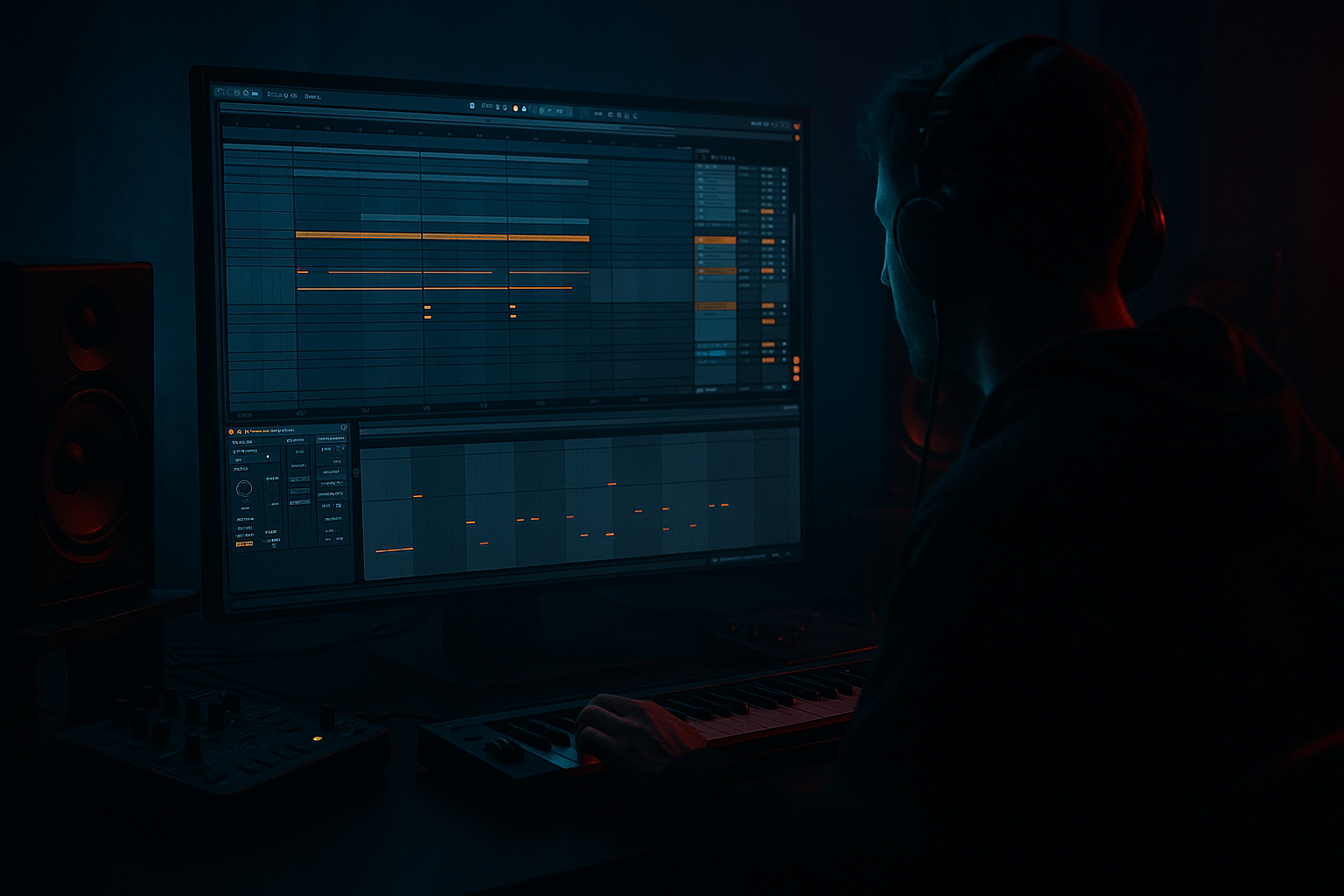
This lesson is about building a low-end pressure amen variation in Ableton Live 12: a bass edit that keeps the original low-end weight, but reshapes the rhythm, note length, and energy so it feels like a new phrase rather than a copied loop. In DnB, this lives right inside the drop or second-drop evolution, usually after the listener has already internalized the main bass motif. The goal is to make the bass feel more urgent, more dangerous, or more playful without sacrificing the sub lock that makes the tune work on a system.
This matters musically because a great DnB drop cannot stay static for too long. Even a strong 1–2 bar bass idea gets predictable if you simply repeat it. Technically, the challenge is to introduce variation while keeping mono-compatible sub weight, clean kick/snare interaction, and DJ-friendly phrasing. If the amen is the drum engine of the track, the low-end pressure variation is the moment where the bass starts talking back to the break instead of just sitting on top of it.
This technique suits rollers, darker jump-up-adjacent pressure, neuro-leaning DnB, jungle-influenced hybrids, and late-drop switch-ups. By the end, you should be able to hear a bass variation that feels like a deliberate arrangement move: same DNA, new attitude, stronger impact. A successful result should feel like the bassline has tilted forward in the groove, with enough movement to stay exciting but enough restraint to still hit hard in a club.
What You Will Build
You will build a 2-bar low-end pressure amen variation in Ableton Live 12 that can sit in a drop, turnaround, or second-drop switch. It will have:
- a solid sub foundation that stays centered and readable
- a mid-bass layer with controlled movement, not random wobble
- an edited rhythmic shape that interacts with the amen rather than fighting it
- a short, punchy phrase that feels like a variation of the main bassline, not a separate song
- enough polish to sit at demo/rough mix level and be close to arrangement-ready
- Use negative space as a weapon. A half-beat of silence before a low bass answer can feel heavier than another stacked hit, especially when the amen keeps moving underneath it.
- For menace, let the upper bass layer decay slightly faster than the sub. That creates a brief “bite then sink” effect that feels grimy without losing foundation.
- A tiny amount of pitch or filter movement on only the attack portion of the bass can make the note feel alive. Keep the motion short so the sub stays stable.
- If the variation needs more weight, try a small octave drop only on the first hit of the phrase, then return to the original register. That gives the listener a low-end anchor without overcrowding the whole bar.
- For a darker neuro-leaning edge, use resampled audio edits with clipped transients and tiny gaps between notes. The edit feels more mechanical and dangerous than a continuous synth line.
- If the break is busy, make the bass less decorative and more physical. The best heavy DnB variations often sound slightly simpler in solo but much bigger in the full drop.
- A very short reverse tail into a downbeat can create anticipation without a big riser. This works especially well before a second-drop reload.
- Keep checking the 200–400 Hz zone. That area is where bass and drum shell often fight. If the line feels thick but unclear, trim there before adding more sub.
- Use only Ableton stock devices
- Use one sub layer and one character layer
- Limit yourself to 4 unique note values or less
- Make exactly one phrase change between bar 1 and bar 2
- Keep the sub mono
- A 2-bar audio or MIDI bass variation that works with an amen loop and could sit in a second drop or turnaround
- Does the bass hit harder in context than in solo?
- Can you still hear the snare clearly?
- Does the phrase feel like it is moving somewhere, not just repeating?
- Does the sub survive mono playback without thinning out?
Sonically, the result should feel dense, tense, and forward-moving. Rhythmically, it should create push-pull with the break, often leaving space on the kick and snare while firing on off-beats, tails, or syncopated pickups. In the track, it should function as a pressure shift: something the listener notices immediately, but which still feels inevitable in context.
Success looks like this: when the amen and bass play together, the bassline should feel like it is hugging the groove rather than blurring it, the sub should stay stable in mono, and the variation should give the drop a clear sense of progression without making the low end collapse.
Step-by-Step Walkthrough
1. Start from the main bass idea, then decide what kind of variation you actually need
Open your existing bass loop or build a new 2-bar bass phrase from the same source as the main section. Keep the same core tone family, but don’t copy the rhythm exactly. In Ableton, duplicate the bass MIDI clip and strip it down to the essential notes: usually the root, a fifth, an octave hit, or a chromatic tension note depending on the track’s harmony.
Now make an intentional A/B decision:
- A: “Pressure” variation — fewer notes, longer sub holds, more negative space, heavier drop-in feel.
- B: “Movement” variation — more note subdivision, more syncopation, stronger rhythmic conversation with the amen.
Choose A if the drum break is already busy and the bass should feel huge and restrained. Choose B if the main bassline is simpler and you need the variation to inject momentum.
Why this works in DnB: bass variations feel most convincing when they’re made against the drums, not in isolation. The amen already contains a lot of internal motion; if the bass also becomes hyperactive everywhere, the drop loses its hierarchy.
2. Map the rhythm against the amen, not just the grid
Put the amen or your edited break into the session and loop 2 bars with the bass. Then place bass notes so they answer the break rather than masking it. In a classic pressure approach, let the bass hit hard after the snare or in the small gaps around ghost notes. Avoid placing important bass transients exactly on the busiest parts of the break unless you want deliberate conflict.
In a typical 174 BPM setup, try these timing behaviors:
- bass note starts a few milliseconds late against the kick for weight
- short notes clipped to 1/16 or 1/8 for impact
- longer notes landing across the offbeat to create drag
- pickup notes entering just before the snare to create anticipation
Use Ableton’s MIDI note nudging or manual note placement to create tiny pocket offsets. You do not want robotic alignment if the aim is pressure.
What to listen for: the bass should seem to “lean” into the break, not sit on top of every drum hit. If the kick disappears, the bass note is probably too early, too long, or too loud in the sub range.
3. Build the low end as two jobs: sub anchor and character layer
Split the bass into a sub layer and a character layer. A practical Ableton stock chain for the sub can be very simple:
- Operator or Wavetable for a clean sine/triangle-based foundation
- EQ Eight to clean anything above the useful low end
- Utility to keep it centered and controlled
For the character layer, use a second instance of the sound or a resampled version through:
- Saturator
- Auto Filter
- EQ Eight
- optional Corpus or Phaser-Flanger if the source supports it
Suggested starting ranges:
- sub layer low-pass around 80–120 Hz if needed to keep it pure
- character layer high-pass around 90–140 Hz to avoid eating the sub
- Saturator Drive around 2–6 dB for controlled bite
- Auto Filter sweep range modest, often somewhere between 150 Hz and 1.5 kHz on the character layer
- Utility width at 0% on the sub, wider only on the upper layer if it stays stable
This separation is not optional if you want a professional DnB result. It lets you vary the texture without sacrificing mono weight.
4. Shape the bass envelope so the variation breathes with the break
In the bass instrument or on the audio clip, shape the note length deliberately. For pressure, you often want a faster attack, medium-short decay, and tightly controlled release. If using Ableton instruments, think in terms of:
- attack near zero for punch
- decay short enough to leave room for snare and ghost notes
- release not so long that the tail smears into the next drum hit
If the bass is MIDI-driven, shorten note lengths in the clip rather than relying on envelope sustain. If it is audio, use clip fades or follow-up editing to trim the tail.
What to listen for: the bass should hit hard but stop cleanly. If the snare feels smaller after the bass enters, the envelope is probably too long or the low-mids are lingering.
5. Add controlled movement with modulation, but keep it believable
For the character layer, use subtle movement rather than constant motion. In Ableton Live 12, that usually means controlled automation or modulation on filters, wavetable position, or distortion amount. If the variation is supposed to feel “pressure-heavy,” movement should be slow enough to feel intentional and aggressive enough to keep the phrase alive.
A useful stock-device chain example:
- Wavetable or Operator
- Saturator
- Auto Filter
- EQ Eight
Another valid chain for more abrasive material:
- Audio resample of the bass
- Simpler in Slice mode for chopped hit design
- Saturator
- EQ Eight
- Utility
Good starting points:
- filter cutoff moves in small arcs, not huge sweeps
- resonance kept moderate; too much resonance can make the low end hollow
- Saturator drive automated subtly, often just 1–3 dB between phrase states
- short automation moves of 1/2 bar or 1 bar feel more DnB than long ambient curves
The reason this works in DnB is that the bass can evolve while the drums stay authoritative. That contrast is what keeps a roller or dark track moving without needing constant new musical material.
6. Edit the variation into a phrase, not just a loop
Now arrange the idea as a 2-bar or 4-bar statement. In DnB, a bass variation becomes much stronger when it has a clear call-and-response shape. For example:
- bar 1: low, sparse, pressure-heavy statement
- bar 2: answer phrase with a tighter rhythm or a higher note
- bar 3–4: repeat the concept but with one changed accent or tail
If you are building a second-drop switch, make bar 4 the payoff. That could mean a sharper octave jump, a brief silence, or a clipped stutter before the snare returns. Use Arrangement View to make sure the variation resolves cleanly into the next section. DJs and club listeners feel phrasing more than they analyze it.
A useful phrasing example: a 2-bar bass variation that hits hard on beat 1, leaves beat 2 mostly open, places a syncopated answer before the second snare, and then uses bar 2 to push into a pickup into the next phrase. That kind of shape creates tension without overcomplicating the low end.
7. Resample the best version and edit the audio for attitude
Once the MIDI or synth version feels close, commit it to audio. In Ableton, resampling is a major advantage here because it lets you edit the bass like a drum loop. After recording the bass to audio, you can:
- trim note tails tighter
- reverse tiny tails for transitions
- chop one-note answers into separate clips
- add fades to avoid clicks
- duplicate a strong hit for emphasis
This is often where the variation becomes believable. A live synth line can sound too smooth; audio editing can give it the aggressive contour that modern DnB needs.
Stop here if the phrase already hits hard in mono with the break. Do not keep adding layers just because the loop feels too simple on its own. In-context simplicity is often the right answer.
8. Process the bass bus for density without losing front-edge punch
Route the sub and character layers to a bass bus and treat them together carefully. A practical bus chain might be:
- EQ Eight
- Saturator
- Compressor or Glue Compressor
- Utility
Keep the bus treatment subtle. Suggested starting points:
- a small EQ dip around 200–350 Hz if the bass is boxy
- gentle saturation, not full distortion overload
- compression only if it improves consistency, often with modest gain reduction
- Utility to verify mono compatibility and control width on the top layer only
If the low end starts feeling smaller after the bus processing, back off the compressor or saturation before you start carving the EQ. Too much bus processing can flatten the transient shape that makes DnB bass feel physical.
9. Check the variation in full drum context and make one hard choice
Loop the bass variation with kick, snare, and the amen edit. Now make a final decision:
- Option 1: the bass is the hero — slightly louder mid-bass, more audible texture, more aggression in the 200 Hz–2 kHz area.
- Option 2: the drums are the hero — reduced bass texture, more sub emphasis, more space for break detail and snare crack.
Both are valid. Choose based on the tune’s role. Neuro-leaning rollers often tolerate more bass texture, while jungle-inflected or break-forward tracks may need the amen to stay more legible.
What to listen for: the snare should still snap through, and the kick should keep its body. If the bass feels huge alone but vague in context, the character layer is probably too wide, too mid-heavy, or too constant.
10. Automate the arrangement so the variation feels like a real payoff
Don’t let the variation just repeat flatly. In Arrangement View, automate one or two meaningful parameters over 4–8 bars:
- filter cutoff opening slightly across the phrase
- Saturator drive increasing into the switch
- a short mute or gap before the next downbeat
- widening the upper layer just before the drop returns, then snapping it back to mono after the impact
For an outro or second-drop evolution, you might strip the bass down for 1 bar, then bring back the full version with a small change in note order or octave. That keeps the DJ-friendly structure intact while making the arrangement feel finished.
Workflow efficiency tip: once the variation works, consolidate or freeze/resample the edited audio before you move on. That prevents endless micro-tweaks and keeps the arrangement moving forward.
Common Mistakes
1. Making the variation too busy
- Why it hurts: the amen already contains lots of transient information. Overwriting it with bass notes every 1/16 destroys groove hierarchy.
- Fix: remove one-third of the notes and re-check the phrase in context. Keep only the hits that clearly improve tension or payoff.
2. Letting the sub layer get stereo or widened
- Why it hurts: low-end stereo spread weakens club translation and can vanish in mono.
- Fix: keep the sub centered with Utility at 0% width, and confine width to the upper layer only.
3. Using too much saturation on the full bass
- Why it hurts: the bass gets exciting in solo but muddy or harsh against drums.
- Fix: split the layers, saturate the character layer more than the sub, and reduce drive until the kick regains definition.
4. Ignoring note length
- Why it hurts: long tails smear the snare and reduce punch, especially in fast DnB phrasing.
- Fix: shorten MIDI notes or trim audio clips so the bass stops before the next drum accent.
5. Designing the variation without a phrase shape
- Why it hurts: if every bar has the same energy, the listener stops feeling arrangement movement.
- Fix: use a 2-bar question-and-answer structure or a 4-bar build/payoff shape.
6. Not checking mono early
- Why it hurts: the bass can sound massive in stereo but collapse on club systems or in summed playback.
- Fix: hit mono checks regularly with Utility and make sure the sub still reads clearly with the drums.
7. Overprocessing the bass bus
- Why it hurts: too much compression or EQ can flatten the impact and remove the live pressure of the line.
- Fix: back off bus processing and restore punch before polishing the tone.
Pro Tips for Darker / Heavier DnB
Mini Practice Exercise
Goal: Build one 2-bar low-end pressure amen variation that fits over a drum break and feels like a real drop edit.
Time box: 15 minutes
Constraints:
Deliverable:
Quick self-check:
Recap
A strong low-end pressure amen variation is about rhythmic editing, sub discipline, and arrangement intention. Build it in layers, shape the phrase against the break, keep the sub centered, and use resampling to turn a good loop into a believable DnB edit. The best result should feel heavy, controlled, and arranged, not merely designed. If the drums still breathe, the low end stays solid in mono, and the variation creates a clear payoff, you’ve got a real club-ready move.

