DNB COLLEGE

Drum & Bass Ableton Live 12 Tutorials

LESSON DETAIL

Low-End Pressure Ableton Live 12 an amen variation blueprint with automation-first workflow (Advanced)

An AI-generated advanced Ableton lesson focused on Low-End Pressure Ableton Live 12 an amen variation blueprint with automation-first workflow in the FX area of drum and bass production.

Back to lessons
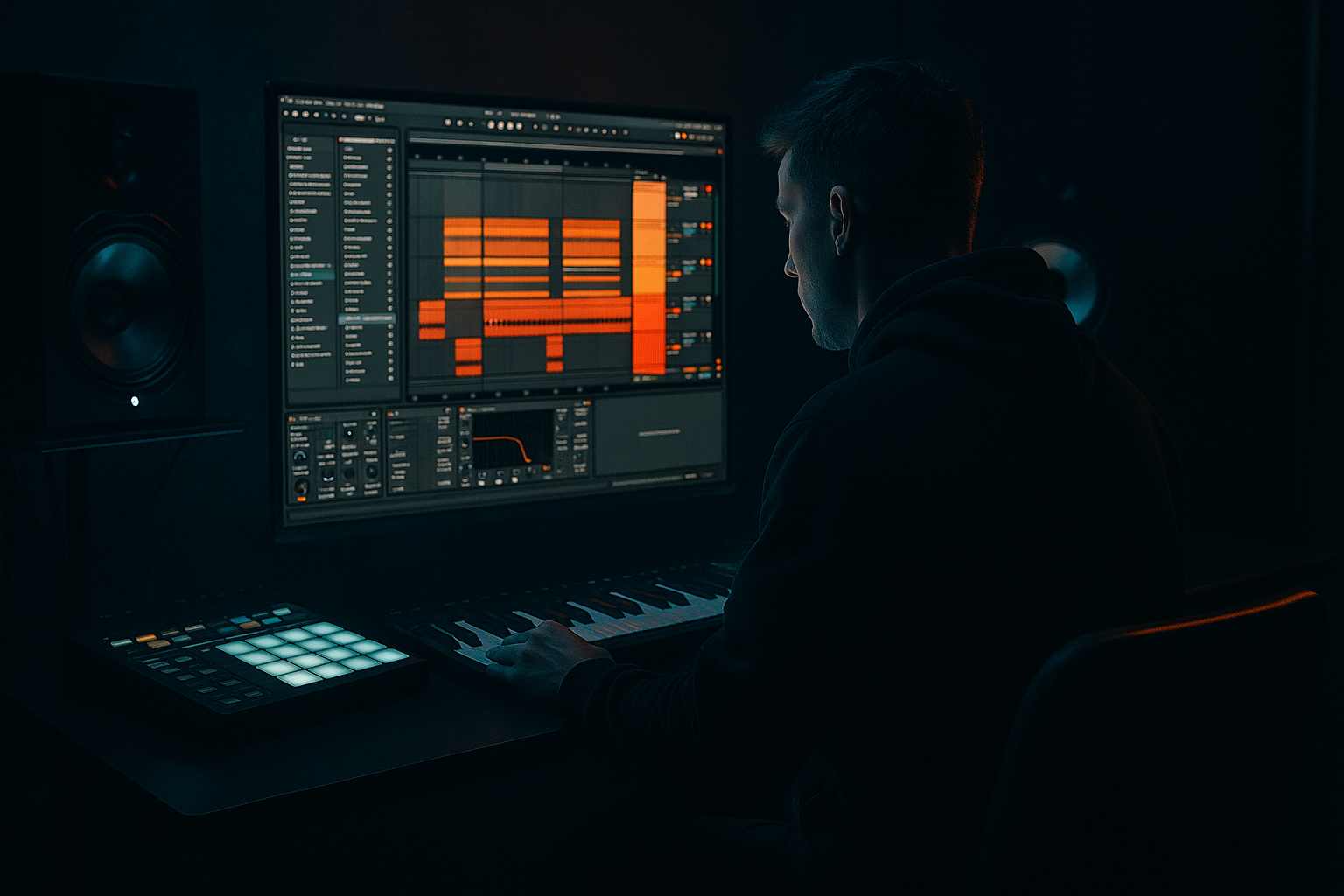
Low-End Pressure Ableton Live 12 an amen variation blueprint with automation-first workflow (Advanced) cover image

Narrated lesson audio

The voice track includes the tutorial plus extra teacher commentary.

Open audio file

Main tutorial

Lesson Overview

In this lesson, you’re building a low-end pressure blueprint for an amen-based DnB variation in Ableton Live 12, using an automation-first workflow. The goal is not just “make the bass bigger” — it’s to create that tight, dangerous, DJ-friendly pressure where the amen break, sub, and reese all feel like they’re part of one living system.

This sits right in the heart of a DnB arrangement: the main drop, second half of the drop, or a switch-up section where you want the energy to evolve without losing the floor. Think rollers with menace, jungle-derived tension, neuro-leaning movement, or darker halftime-adjacent contrast inside a 174 BPM structure.

Why this matters: in advanced DnB, the difference between “heavy” and “flat” is usually automation discipline. The best records don’t rely on static sounds. They use movement in the bass, selective drum emphasis, controlled saturation, and phrase-based FX to make the drop breathe while keeping the low end locked.

---

What You Will Build

You’ll create a 16-bar amen variation blueprint built around:

  • a sub layer that stays mono and stable
  • a midbass / reese layer with controlled movement and stereo discipline
  • an amen loop that evolves through edits, filtering, and transient shaping
  • FX automation for tension, impact, and transitions
  • a drop arrangement that feels like a proper DnB system test moment, not a generic loop
  • Musically, the result should feel like:

  • bars 1–4: foundational pressure, clear groove
  • bars 5–8: added rhythmic activity and bass motion
  • bars 9–12: switch-up with break edits and FX tension
  • bars 13–16: release into a variation that can loop or transition to a new section
  • You’ll end up with a section that can serve as:

  • a main drop loop
  • a second-drop variation
  • a build into a bigger switch
  • or the core of a track demo arrangement
  • ---

    Step-by-Step Walkthrough

    1. Set up the drop grid and phrase logic first

    Open a blank Live Set and set the tempo to 174 BPM. Build a 16-bar arrangement loop immediately so you’re thinking in phrases, not clips. In DnB, especially rollers and jungle, the pressure comes from how the loop turns over.

    Create four groups:

    - DRUMS

    - BASS

    - FX

    - ATMOS

    Put an 8-bar locator at the start of the main idea and another at bar 9 for the switch-up. This matters because the amen variation blueprint depends on controlled evolution, not random variation.

    Add a reference track if you can. Pick something with a similar low-end character and compare:

    - sub level

    - break density

    - stereo width in the mids

    - how much changes every 4 or 8 bars

    Advanced tip: make the loop in the Arrangement view rather than Session at this stage. For this kind of structured DnB pressure, arrangement-first prevents endless loop syndrome.

    2. Build the sub foundation with zero ambiguity

    Create a MIDI track called SUB. Use Operator or Wavetable with a clean sine or near-sine tone. Keep it simple and monophonic.

    Suggested settings:

    - Oscillator: sine

    - Mono enabled

    - Glide/Portamento: very short, around 20–60 ms if you want subtle note connection

    - Filter: mostly open, or low-pass around 120–180 Hz if needed

    - Amp envelope: fast attack, medium-short release so notes don’t smear

    Write a bassline that supports the amen rhythm rather than fighting it. In DnB, the sub often works best with:

    - short notes on strong hits

    - occasional call-and-response gaps

    - movement around the root, fifth, octave, and chromatic approach notes

    Keep the sub fully mono. Use Utility on the sub track and set Width to 0%. If the sub seems weak, don’t widen it — increase note consistency, level balance, or harmonic support in the midbass.

    Why this works in DnB: the kick/snare and sub must act like one engine. If the sub wanders stereo or has too much envelope tail, the drop loses impact and the entire groove feels softer.

    3. Design a reese / midbass layer that can be automated

    Create another MIDI track called BASS MID and build a reese-style layer using Wavetable or Analog. The aim is not “huge constantly wide bass” — it’s a midrange pressure source that can shift shape over the phrase.

    Starting point:

    - two detuned saws or a saw + square blend

    - Unison: 2–4 voices max

    - slight detune only; keep it controlled

    - low-pass filter around 120–300 Hz depending on how much top you want

    - add Saturator after the synth with Drive 2–6 dB

    - use Auto Filter after the Saturator for motion

    Set up automation targets before you write the full bassline:

    - filter cutoff

    - resonance

    - Saturator drive

    - Auto Filter LFO amount if using modulation

    - reverb send only on selected tension notes, not the whole line

    For the bass MIDI, keep the rhythm complementary to the amen:

    - let some notes answer the snare

    - leave holes for the break’s ghost notes

    - use short, punchy notes in the first half of the bar

    - stretch a few notes in the second half to create low-end “pressure holds”

    A strong advanced move: duplicate the bass track and split it into SUB and MID using Audio Effect Rack or separate instrument tracks. That gives you clean control over mono low-end and character midrange independently.

    4. Shape the amen as an editable performance, not a static loop

    Drag in a strong amen break and slice it intelligently. In Ableton Live 12, use Slice to New MIDI Track or manually edit the audio. For advanced DnB work, don’t just loop the same 2-bar break — create a performance version.

    Build a drum rack or audio lane with:

    - kick/snare core from the amen

    - selective ghost notes

    - a few alternate hat hits

    - at least one break fill every 4 or 8 bars

    Use Clip Envelopes or automation for:

    - Auto Filter cutoff on the amen

    - Transient shaping via Drum Buss on the drum group

    - Fade automation for micro-edits

    - occasional reverb send throws on snare hits or break stabs

    Strong parameter starting points:

    - Auto Filter cutoff: automate from around 300 Hz up to 10–14 kHz for transitions

    - Drum Buss Drive: keep subtle, around 5–15%, unless you want heavier crunch

    - Drum Buss Crunch: use in the 5–20% range for edge without destroying transients

    The point is to make the amen feel like it’s being played live against the bass, which is a classic jungle and modern rollers feel. Small variations in the break keep the groove moving while the bass stays authoritative.

    5. Create the low-end pressure bus and glue the rhythm

    Route SUB, BASS MID, and your DRUMS group into a PRESSURE BUS group or return structure, depending on your workflow preference. For advanced mix control, keep the individual tracks intact but process the drum group separately from the bass group.

    On the DRUMS group:

    - Drum Buss for transient firmness

    - EQ Eight to clean rumble below 25–30 Hz if needed

    - gentle compression only if the break needs cohesion

    On the BASS MID:

    - EQ Eight with a low cut around 90–140 Hz to keep the sub lane clear

    - a narrow reduction around any harsh bark zone, often 2.5–5 kHz

    - Saturator or Roar if you want more density and aggression

    If you use Roar, keep it controlled:

    - drive lightly and automate the character by section

    - use it more as a texture enhancer than a constant fuzz layer

    Important: don’t glue the sub and break so hard that they become one blurred mass. In DnB, tightness comes from separation with coordination, not one giant compressed blob.

    6. Automate the bass to evolve every 4 bars

    This is the core of the lesson. Write automation before adding “more sounds.”

    Build a 16-bar automation map:

    - bars 1–4: bass filter slightly closed, minimal movement

    - bars 5–8: open cutoff and increase Saturator drive a touch

    - bars 9–12: add resonance or automated formant-like movement

    - bars 13–16: pull back filter, then hit a final lift or fill

    Automation ideas:

    - Auto Filter cutoff

    - Saturator Drive

    - Utility Width on the midbass only

    - Reverb Dry/Wet on selected bass hits for tension

    - Delay send throws on last notes of a phrase

    - LFO amount if you’re modulating movement in Wavetable

    Concrete ranges:

    - cutoff movement of roughly 20–40% of the dial over a phrase

    - Drive changes of 1–3 dB between sections

    - Width automation on midbass from 0% to 40% max, but only in the mids, never on the sub

    Use automation to make the bass “speak” around the amen. This creates the illusion of more complexity without overcrowding the arrangement.

    7. Add FX transitions that reinforce the groove instead of decorating it

    Create an FX group and keep it functional. The best DnB transitions don’t just sparkle — they drive the next bar forward.

    Add a few of these stock-device chains:

    - Auto Filter on noise or atmosphere

    - Echo with short delay throws for snare endings

    - Reverb for tight atmospheres or reverse-style tension

    - Spectral Time if you want weird freeze-like ambience, used sparingly

    - Utility to mono down certain FX before impact if needed

    Arrangement suggestions:

    - a filtered noise rise from bar 7 to 9

    - a snare reverb throw into bar 8 or 16

    - a low-pass opening on the atmosphere as the bass intensifies

    - a reverse crash or swell before the switch-up

    Keep FX out of the sub zone. If the FX is muddy, high-pass it aggressively. A common DnB move is to let FX live above 200–400 Hz, leaving the bottom clean for the rhythm section.

    8. Program the switch-up as a variation, not a reset

    For bars 9–12 or 13–16, make a variation that changes the pressure while retaining identity. This is where your amen blueprint becomes “arrangement-ready.”

    Try one or more of these advanced variation moves:

    - remove one sub note every 2 bars to create negative space

    - replace one snare hit with a chopped amen fill

    - automate the bass filter to open only on the last beat of the bar

    - add an extra ghost kick or snare pickup

    - swap the reese rhythm for a simpler stab pattern, then reintroduce motion

    This is classic DnB arrangement logic: same world, new angle. You don’t want the listener to feel like the track restarted. You want them to feel the energy shift.

    Musical context example: if your first 8 bars are a direct rollers groove, the second 8 bars can introduce a more jungle-leaning break edit on bar 9 and a heavier midbass movement on bars 11–12, creating the feeling of escalation before the loop resets or drops into a new phrase.

    9. Do a mono and low-end reality check before you print

    Put Utility on your master or monitoring chain and periodically switch to mono. Check:

    - does the sub remain firm?

    - does the kick still punch?

    - does the reese collapse badly?

    - does the amen lose crucial timing cues?

    Use EQ Eight to carve space if needed:

    - remove unnecessary sub-30 Hz rumble

    - keep the bass mid from masking snare body around 180–250 Hz

    - tame harsh upper-mid bite if the amen gets aggressive around 3–6 kHz

    Advanced move: use group track saturation before compression if you want density, but avoid over-compressing the master. DnB punch comes from transient clarity. If you crush the drums too early, the groove loses the “snap” that makes the bass feel bigger.

    ---

    Common Mistakes

  • Making the sub too wide or too busy
  • - Fix: keep sub mono, simplify note lengths, and let the midbass carry movement.

  • Automating too many things at once
  • - Fix: choose 2–4 key automation lanes per section. In DnB, focused automation sounds more intentional than chaos.

  • Over-processing the amen
  • - Fix: preserve transient shape. If the break loses its bite, reduce Drum Buss drive, soften compression, or back off reverb.

  • Letting bass and kick fight in the same band
  • - Fix: carve space with EQ Eight, simplify the note rhythm, and avoid stacking too much low-mid energy.

  • Using FX that clutter the bottom end
  • - Fix: high-pass transitions aggressively and keep impact FX short.

  • Treating the loop like a finished arrangement
  • - Fix: build 4-bar and 8-bar change points early so the track can actually move.

    ---

    Pro Tips for Darker / Heavier DnB

  • Automate the reese’s saturation more than its volume
  • This gives the sense of aggression increasing without wrecking the mix balance.

  • Use subtle pitch movement on midbass layers only
  • A tiny drift or modulated filter on the midbass can create a worn, unstable neuro-jungle texture while the sub stays locked.

  • Let the break answer the bass
  • If the bass hits hard on beat 1, leave the amen’s ghost notes to do the talking in the gaps. That call-and-response is a huge part of dark rollers energy.

  • Use ghost note emphasis with Drum Buss
  • A little transient enhancement on the drum group can make the break feel more active without adding new sounds.

  • Print resampled bass FX
  • If you automate a wild filter sweep or distortion rise, resample it and chop the result into the arrangement. This gives you unique transition material and saves CPU.

  • Keep the atmosphere distant, not smeared
  • Use reverb sends with high-passed returns so the track feels deep and ominous without blurring the low end.

  • For a tougher neuro edge, automate filter resonance narrowly
  • A controlled resonance push on the midbass can create a bit of speaking character, especially when it opens into a fill.

    ---

    Mini Practice Exercise

    Spend 10–20 minutes building a 4-bar amen pressure loop at 174 BPM.

    1. Add a clean sub on one track and a simple reese/midbass on another.

    2. Place an amen break and create at least two edits in the 4 bars.

    3. Add one Automation Lane for the bass filter cutoff.

    4. Add one Automation Lane for either Saturator Drive or Drum Buss Drive.

    5. Make the last beat of bar 4 a transition by automating:

    - a filter sweep

    - a reverb throw

    - or a short delay send

    6. Check in mono and adjust until the sub and break feel locked.

    Goal: by the end, you should hear a clear difference between bar 1 and bar 4 without adding extra layers.

    ---

    Recap

  • Build DnB low-end pressure from automation, separation, and phrase logic
  • Keep the sub mono, stable, and simple
  • Let the midbass/reese provide movement, not the sub
  • Treat the amen as a performance element with edits, ghost notes, and automation
  • Use Ableton stock devices like Wavetable, Operator, Auto Filter, Saturator, Drum Buss, Utility, EQ Eight, Reverb, Echo, and Spectral Time with intention
  • In darker DnB, the best heaviness comes from controlled evolution, not constant maximum energy 🎚️

Ask GPT about this lesson

Chat with the lesson tutor, get follow-up help, or use quick actions.

Bigup 👽 Ask me anything about this lesson and I’ll answer in context.

Narration script

Show spoken script
Welcome back. In this lesson, we’re building a low-end pressure blueprint for an amen-based drum and bass variation in Ableton Live 12, using an automation-first workflow. And just to be clear, this is not about making the bass “bigger” in some generic way. We’re aiming for that tight, dangerous, DJ-friendly pressure where the amen, the sub, and the reese all feel like they’re part of one living machine.

This is the kind of section you hear in a main drop, a second-drop variation, or a switch-up moment where the energy needs to evolve without losing the floor. Think rollers with menace, jungle tension, neuro-leaning movement, or darker halftime-style contrast inside a 174 BPM framework.

The big idea here is simple: in advanced DnB, heaviness comes from automation discipline. Static sounds rarely do the job. The best sections breathe through controlled movement, selective drum emphasis, careful saturation, and phrase-based FX that keep the drop alive without cluttering it up.

So let’s build a 16-bar pressure loop that can function as a drop, a switch, or a core arrangement section.

First, set your tempo to 174 BPM and work in Arrangement View right away. That’s important. We want phrase logic from the start, not endless clip looping. Make a 16-bar loop and place markers or locators at bar 1 and bar 9 so you can think in two halves: the first eight bars as the foundation, and the second eight bars as the variation or switch.

Create four groups: Drums, Bass, FX, and Atmos. That simple structure will keep the low end organized and make your automation easier to manage later.

If you have a reference track, bring one in now. Listen for how the low end behaves, how dense the break is, how wide the mids feel, and how much changes every four or eight bars. That reference isn’t there to copy. It’s there to calibrate your sense of pressure.

Now let’s build the sub. Create a MIDI track called Sub and load Operator or Wavetable. Use a clean sine or near-sine tone. Keep it mono, simple, and stable. That means no stereo widening, no fancy layering at this stage, and no long tails that smear the groove.

Set the synth to mono, and if you want a tiny bit of glide, keep it subtle, something like 20 to 60 milliseconds. That can help notes connect without turning into a blur. Use a fast attack and a medium-short release so the notes stop cleanly.

For the note pattern, think support, not competition. The sub should lock with the kick and snare energy, not fight the amen. Short notes on strong hits work well. Leave some spaces. A little call and response goes a long way. You can move around the root, fifth, octave, and use the occasional chromatic approach note, but keep the line disciplined.

And here’s a very important check: put Utility on the sub and set Width to zero percent. The sub must stay dead center. If it feels weak, don’t widen it. Strengthen the note choices, tighten the rhythm, or add harmonics in the midbass instead.

Next, build the midbass or reese layer. Create another MIDI track called Bass Mid and use Wavetable, Analog, or any similar synth that can give you a controlled detuned texture. You want movement, but not a giant wide smear. This is your pressure source in the midrange.

A good starting point is two detuned saws, or a saw and square blend, with unison kept low, maybe two to four voices max. Keep detune controlled. Then low-pass it somewhere in the 120 to 300 Hz range depending on how much top you want to leave in. After the synth, add Saturator and push it lightly, maybe two to six dB of drive. Then add Auto Filter so you can automate motion across the phrase.

Before you write the full line, decide what you want to automate. The key targets are cutoff, resonance, saturation drive, and possibly filter movement if you’re using Wavetable modulation. Don’t wait until the end to think about automation. In this style, the automation is part of the arrangement.

Write the bass rhythm so it works with the amen. Let some notes answer the snare. Leave holes for ghost notes. Use short, punchy notes in the first half of the bar, and then allow a few notes to stretch in the second half so the low end feels like it’s holding pressure rather than just bouncing.

If you want a more advanced workflow, split the bass into two separate roles: a clean sub layer and a mid layer with movement. You can do that with separate instrument tracks or with an Audio Effect Rack. That separation makes it much easier to keep the bottom clean while still getting aggression in the mids.

Now let’s turn to the amen break. Drag in a strong amen and treat it like a performance element, not a static loop. In Ableton Live 12, you can slice it to a MIDI track or manually edit the audio. Either way, don’t just repeat the same two bars over and over. Build a version that feels played.

Use the core kick and snare from the amen, then add selective ghost notes, a few alternate hats, and at least one break fill every four or eight bars. This is where the groove starts to feel alive. A real DnB section often sounds like the break is reacting to the bass, not sitting on top of it.

Use clip envelopes or automation to shape the amen with Auto Filter, Drum Buss, micro fades, and occasional reverb throws on snare hits or break accents. You don’t need to crush the break. In fact, too much processing can kill the bite. A good starting point is subtle Drum Buss drive, maybe five to fifteen percent, and a little Crunch if you want edge. If the break starts losing its snap, back off.

Think about the amen as a live performer in the mix. The bass hits, the break answers. The break moves, the bass holds. That call-and-response is a huge part of the jungle and dark rollers feel.

Now we need to glue the low end together without turning it into a blur. Keep your tracks separated, but route them thoughtfully. The drums group can have Drum Buss and EQ Eight to clean up rumble below roughly 25 to 30 Hz. Use compression only if the break really needs cohesion. Don’t overdo it.

On the bass mid, use EQ Eight to carve out space below the sub lane, usually somewhere around 90 to 140 Hz depending on your material. If the bass has a harsh bark, tame the 2.5 to 5 kHz region a bit. You can also use Saturator or Roar for density, but be careful. Use them like seasoning, not like a blanket of fuzz.

This is a good moment to remember an important rule: in DnB, separation with coordination is what makes the low end feel powerful. One giant compressed blob usually sounds smaller than clean, disciplined layers working together.

Now comes the core of the lesson: automation-first evolution.

Map out the 16 bars before you start adding extra sounds. For bars 1 to 4, keep the bass filter a little closed and the movement restrained. Let the listener lock into the groove. For bars 5 to 8, open the cutoff a bit and increase saturation slightly. For bars 9 to 12, add resonance or a more vocal, formant-like movement if you want tension. Then for bars 13 to 16, pull the filter back and hit a final lift, fill, or transition.

Automate small, consistent changes instead of massive dramatic sweeps. That’s one of the most important advanced tips here. A few dB of drive, a moderate cutoff move, or a subtle width change on the midbass can completely change the emotional contour of the loop without making it sound cheesy.

And remember, only widen the midbass, never the sub. If you do automate width, keep it modest, maybe zero to forty percent max, and only for the mid layer. The low end has to stay anchored.

Now create the FX section. This is not decoration. FX should push the arrangement forward.

Add a filtered noise rise from bar 7 into bar 9. Do a snare reverb throw into bar 8 or bar 16. Use a reverse crash or swell before the switch-up. You can also use Echo for short throws, Reverb for tension spaces, or Spectral Time if you want something weird and ghostly, but keep it sparing.

A good rule is to keep FX out of the sub zone. If the transition gets muddy, high-pass it aggressively. Let FX live above 200 to 400 Hz so the bottom stays clean and the pressure stays focused.

Now for the variation section, usually bars 9 to 12 or 13 to 16 depending on how you want the loop to turn over. This should be a variation, not a reset. The listener should feel the same world, just from a different angle.

You can remove one sub note every two bars to create negative space. You can swap one snare hit for a chopped amen fill. You can automate the bass filter so it opens only on the last beat of the bar. You can add a ghost kick or a snare pickup. You can simplify the reese rhythm and then bring the motion back later.

That’s the kind of arrangement logic that makes a DnB section feel alive. You’re not just stacking more stuff. You’re controlling energy contours.

A really useful concept here is contrast by restraint. If the drums get busier, let the bass stay simpler for that bar. If the bass gets more animated, let the amen breathe a little. That balance is what keeps the groove hard without becoming messy.

Now do a reality check in mono. Put Utility on your master or monitoring chain and switch to mono periodically. Ask yourself: does the sub stay firm? Does the kick still punch? Does the reese collapse in a bad way? Does the amen still keep its timing cues?

If anything feels cloudy, use EQ Eight to make space. Remove unnecessary sub-rumble below 30 Hz. Make sure the bass mid isn’t masking snare body around 180 to 250 Hz. Tame harshness if the break is biting too hard around 3 to 6 kHz.

And one more advanced tip: listen very quietly for a pass. If the groove and the pressure still read at low volume, the mix is usually doing the right thing. That’s a huge sign that your low end is structured well.

Let’s talk about some common mistakes to avoid.

Don’t make the sub too wide or too busy. Keep it mono and simple.

Don’t automate too many things at once. Choose two to four important automation lanes per section. Focused movement sounds intentional.

Don’t over-process the amen. If it loses transient shape, back off the Drum Buss, reduce compression, or soften the reverb.

Don’t let the kick and bass live in the same band without a plan. Carve space, simplify rhythms, and avoid stacking too much low-mid energy.

And don’t treat the loop like a finished arrangement. Build change points every four and eight bars so the track can actually move.

If you want to push this into darker, heavier territory, automate the reese’s saturation more than its volume. That gives the impression of rising aggression without wrecking the balance. You can also add subtle pitch movement or filter drift on the midbass only, while the sub remains locked. That creates a worn, unstable texture that works really well for neuro-jungle pressure.

Another strong move is to resample your bass automation. If you create a wild filter sweep or a distortion rise, print it to audio and chop it into the arrangement. That gives you custom transition material and saves CPU.

You can also build a return chain with Echo, high-pass EQ, and a little saturation. Send only selected snares, fills, or bass notes to it. That creates a repeatable special effect space without washing the whole track.

Now, if you want to get more advanced with variation, try phrase-stacked automation. Duplicate the same bass automation lane across four bars, then offset the second copy by a beat or half a beat. That creates a rolling pressure wave without writing new notes. It’s subtle, but it hits.

Another great trick is break-hit substitution. Replace only the second snare of a bar with a processed alternate hit. Keep the rest of the break intact so the variation feels deliberate instead of random.

You can also create micro-dropouts. Mute the midbass for a short eighth note or quarter note right before a snare. That little pocket of silence makes the next hit feel much larger.

And if you want a section to feel different without adding more material, use subtraction. Remove a few ghost notes from the drums, reduce the bass density, and pull back the FX. That reduced density can be just as powerful as a bigger build.

Here’s a practical mini exercise to lock this in.

Spend ten to twenty minutes making a four-bar amen pressure loop at 174 BPM. Add one clean sub and one reese or midbass. Put in an amen break and create at least two edits across the four bars. Add one automation lane for bass filter cutoff, and one automation lane for either Saturator Drive or Drum Buss Drive. Then make the last beat of bar 4 feel like a transition with a filter sweep, a reverb throw, or a short delay send. Finally, check it in mono and adjust until the sub and break feel locked.

If you can hear a real difference between bar 1 and bar 4 without adding a bunch of extra layers, you’re doing it right.

So let’s recap the mindset. Build DnB low-end pressure from automation, separation, and phrase logic. Keep the sub mono, stable, and simple. Let the midbass or reese provide the motion. Treat the amen like a performance element with edits, ghost notes, and automation. Use Ableton’s stock devices with intent: Wavetable, Operator, Auto Filter, Saturator, Drum Buss, Utility, EQ Eight, Reverb, Echo, and Spectral Time. And remember, in darker DnB, the best heaviness comes from controlled evolution, not constant maximum energy.

For homework, try building a 32-bar DnB variation sketch at 174 BPM using just one sub sound, one midbass sound, one amen break, and two FX elements max. Every eight bars needs a distinct automation change. At least one bass parameter has to move in each eight-bar block. At least one drum edit has to happen every four bars. And no new sound sources after the first ten minutes.

If you can mute the FX and still hear a strong pressure arc from start to finish, then the arrangement is doing real work.

That’s the blueprint. Tight low end, smart automation, and a break that feels like it’s breathing with the bass. That’s where the real DnB pressure lives.

mickeybeam

Go to drumbasscd.com for +100 drum and bass YouTube channels all in one place - tune in!

Generating PDF preview…
