DNB COLLEGE

Drum & Bass Ableton Live 12 Tutorials

LESSON DETAIL

Junglist: snare snap arrange for floor-shaking low end in Ableton Live 12 for jungle oldskool DnB vibes (Intermediate)

An AI-generated intermediate Ableton lesson focused on Junglist: snare snap arrange for floor-shaking low end in Ableton Live 12 for jungle oldskool DnB vibes in the Breakbeats area of drum and bass production.

Back to lessons
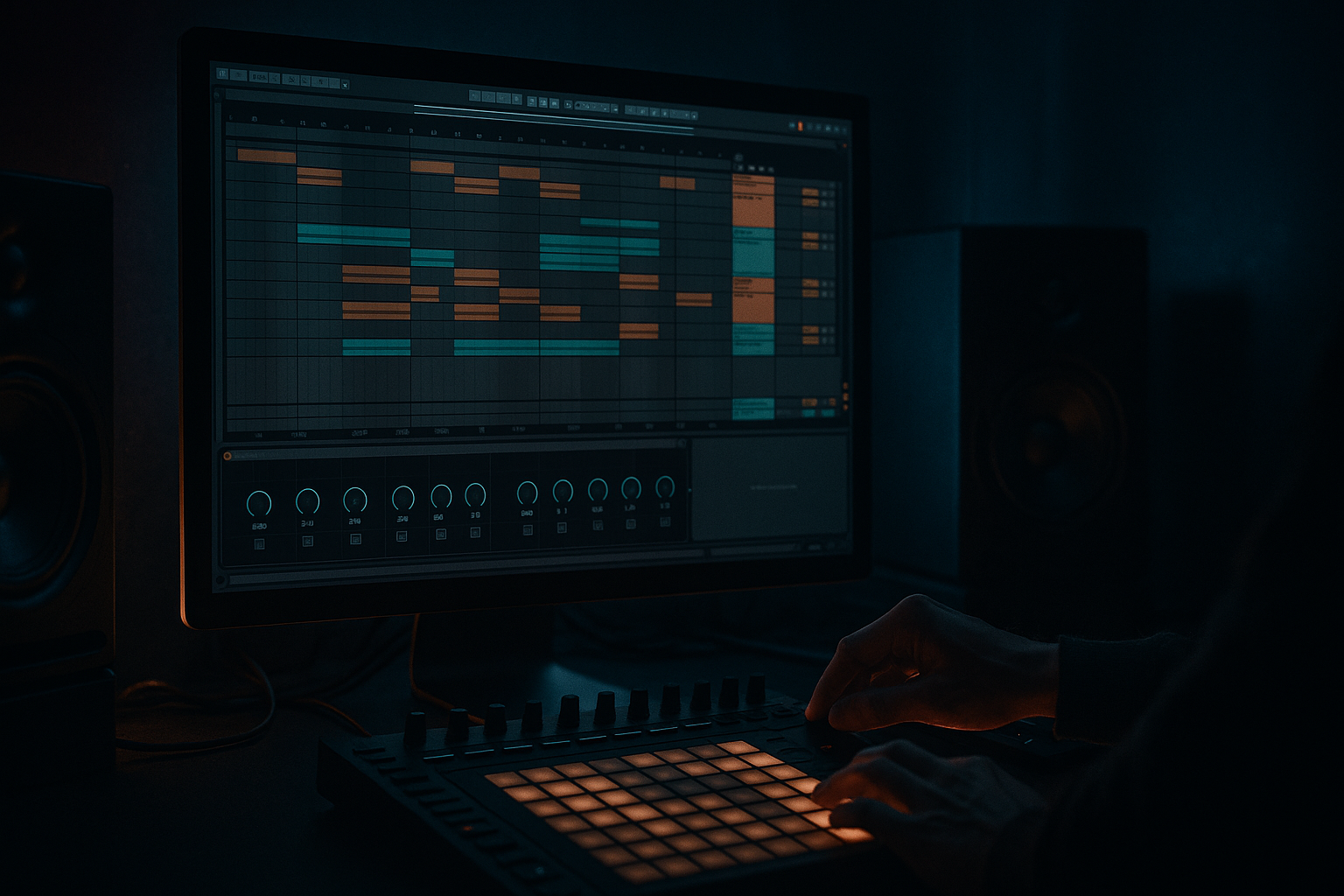
Junglist: snare snap arrange for floor-shaking low end in Ableton Live 12 for jungle oldskool DnB vibes (Intermediate) cover image

Narrated lesson audio

The voice track includes the tutorial plus extra teacher commentary.

Open audio file

Main tutorial

Junglist Snare Snap + Arrangement for Floor‑Shaking Low End (Ableton Live 12) 🥁🔊

Intermediate • Breakbeats • Oldskool Jungle / DnB vibes

---

1. Lesson overview

This lesson is about getting that classic junglist snare “snap” to cut through a huge, rolling low endwithout wrecking your sub. In oldskool jungle, the snare is often bright, fast, and aggressive, while the bass is wide in the mids but rock-solid mono down low. Your job in the arrangement is to make them take turns and support each other.

We’ll do this in Ableton Live 12 using mostly stock devices and a tight workflow:

  • Break + snare layer that hits hard
  • Low-end management (mono sub, controlled dynamics)
  • Arrangement moves that make the drop feel heavier than it actually is
  • ---

    2. What you will build

    You’ll build a drop section (16–32 bars) with:

  • A breakbeat core (Amen / Think / classic style)
  • A layered snare: “body” + “snap” + optional “air”
  • Sub + reese/mid bass that stays floor-shaking
  • A snare-bass relationship using:
  • - Sidechain and/or volume shaping

    - EQ slotting (snare crack vs bass mid bite)

    - Arrangement call/response

    End result: snare snaps on top, bass stays massive underneath—oldskool but modernly clean. ✅

    ---

    3. Step-by-step walkthrough

    Step 0 — Session setup (so jungle timing feels right) ⚙️

    1. Set tempo to 165–172 BPM (try 170 BPM).

    2. Turn Groove Pool into a weapon:

    - Add a groove like MPC 16‑Swing or SP1200‑ish swing (any subtle shuffle).

    - Start at Amount 10–20%, Timing 100%, Velocity 0–10%.

    3. Set your master headroom:

    - Keep peaks around -6 dB while building the drop.

    ---

    Step 1 — Build the break foundation (the “movement”)

    1. Create a Drum Rack track: `BREAK CORE`.

    2. Load a break loop (Amen/Think/whatever jungle classic).

    3. Slice it for control:

    - Right-click loop → Slice to New MIDI Track

    - Slicing preset: Built-in → Slicer or Transient

    4. In the new Drum Rack:

    - Keep the original break for vibe

    - High-pass the break so it doesn’t fight your sub:

    - Add EQ Eight on the break chain

    - HP at 120–180 Hz (12–24 dB/Oct)

    - Optional dip at 200–350 Hz if it’s boxy

    Goal: break provides character and shuffle, not low-end.

    ---

    Step 2 — Create the junglist snare layer (snap + body) 🧨

    Make a separate track: `SNARE BUS` (Drum Rack or Simpler).

    #### A) Choose 2–3 snare layers

  • Snare Body (main hit): a punchy acoustic/snappy snare
  • Snare Snap (top transient): a rimshot, clap tick, or short noise snap
  • (Optional) Snare Air: very short hat/shaker burst for 8–12 kHz presence
  • Pro jungle vibe: one layer can be sampled from the same era (break snare), and one can be a cleaner modern transient.

    #### B) Align and shape transients

    For each layer:

  • Use Simpler (One-Shot)
  • Set Warp OFF (one-shots don’t need warp usually)
  • Zoom in and align the transient so the snap starts exactly with the body
  • Adjust Start by tiny amounts (samples matter)
  • #### C) EQ each layer (slot them like a DJ mix)

    On each chain, add EQ Eight:

    Snare Body

  • HP at 120–180 Hz
  • Boost gently around 180–250 Hz if it needs chest
  • Cut 350–600 Hz if it’s “cardboard”
  • Slight boost 2–4 kHz for crack if needed
  • Snare Snap

  • HP at 700–1,500 Hz (yep, aggressive)
  • Boost 3–6 kHz for bite
  • Optional shelf up 8–10 kHz for brightness
  • Snare Air (optional)

  • HP at 4–6 kHz
  • Focus 8–12 kHz
  • #### D) Add snap “click” without harshness (Saturator + Transient)

    On the SNARE BUS (group them):

    1. Drum Buss

    - Drive: 2–6

    - Crunch: 0–10 (keep subtle)

    - Transients: +5 to +20 (this is the snap lever ⚡)

    - Boom: OFF (don’t add low-end to snare bus)

    2. Saturator (post Drum Buss)

    - Mode: Soft Sine or Analog Clip

    - Drive: 1–4 dB

    - Turn on Soft Clip

    3. Optional Glue Compressor (for “togetherness”)

    - Attack: 3 ms

    - Release: Auto

    - Ratio: 2:1

    - Aim: 1–2 dB gain reduction on snare hits

    Target: snare feels “forward” even when bass is loud.

    ---

    Step 3 — Build floor-shaking low end that survives the snare 💣

    Create two bass tracks (or an Instrument Rack):

  • `SUB` (pure low)
  • `MID BASS` (reese/texture)
  • #### A) SUB track (mono, clean, consistent)

    1. Instrument: Operator

    - Osc A: Sine

    - Volume Env: fast attack, sustain full, release short (tight)

    2. Add Saturator lightly (so it translates on small speakers)

    - Drive 1–2 dB, Soft Clip ON

    3. Add EQ Eight

    - Low-pass around 90–120 Hz (keep it pure)

    4. Make it mono:

    - Utility → Width 0%

    5. Control sub dynamics:

    - Compressor (not Glue, just simple)

    - Ratio 2:1

    - Attack 10–30 ms

    - Release 60–120 ms

    - Only 1–3 dB reduction

    #### B) MID BASS track (character + width)

    1. Instrument: Wavetable (easy reese starting point)

    - Unison: 2–4

    - Slight detune

    2. Add Auto Filter

    - Low-pass 24 dB

    - Map cutoff to a macro (movement)

    3. Add Roar or Saturator

    - Roar: try Tube or Warm styles, keep low end trimmed

    4. Add EQ Eight

    - HP at 120–180 Hz (important!)

    5. Stereo control:

    - Utility → Width 110–150%

    - But keep anything under ~150 Hz mono (use EQ to split duties)

    ---

    Step 4 — Make the snare and bass stop fighting (two reliable methods) 🤝

    #### Method 1: Sidechain the bass from the snare (classic)

    On SUB and MID BASS, add Compressor with Sidechain:

  • Sidechain input: SNARE BUS
  • Ratio: 2:1 to 4:1
  • Attack: 0.3–3 ms (fast enough to make space)
  • Release: 60–140 ms (time it to the groove)
  • Threshold: aim for 1–4 dB gain reduction per snare hit
  • Tip: Don’t overduck the sub. Jungle should feel loud and continuous, not “EDM pumping.”

    #### Method 2: Volume shaping (even cleaner for sub)

    If you want zero pumping artifacts:

  • On the SUB track, automate Clip Gain or use Auto Pan as a tremolo:
  • - Auto Pan: Amount 20–40%, Phase , Shape close to square-ish, Rate synced to match snare placements

    But simplest: draw tiny dips (like 30–80 ms) exactly under snare hits.

    This keeps sub powerful but avoids compressor “breathing.”

    ---

    Step 5 — Arrangement: “snare snap” as an event (oldskool impact) 🏁

    Here’s a proven 32-bar drop template (adapt for your tune):

    #### Bars 1–8: Establish groove

  • Break + bass in
  • Snare is present but not maxed
  • Keep fills minimal (let it roll)
  • #### Bars 9–16: Introduce variation + call/response

  • Add a second break layer (HP’d) every 2 bars
  • Add ghost snare or rim ticks (quiet) before main snare for swing
  • Ghost note trick: put a very quiet snare hit 1/16 before the main snare (like classic break programming). Keep it -15 to -25 dB relative.

    #### Bars 17–24: “Snap upgrade” (energy lift)

  • Automate snare brightness:
  • - Add Auto Filter on SNARE BUS

    - Open from ~8 kHz to fully open over 8 bars (subtle)

  • Add a tiny room reverb only on snare top:
  • - Reverb (or Hybrid Reverb in algo mode)

    - Decay 0.3–0.6s

    - HP in reverb: 600 Hz+

    - Wet 5–12%

    #### Bars 25–32: Peak + exit fill

  • Add a 1-bar break edit (stutter/retrigger)
  • Then a classic stop / tape-down
  • - Use Utility automation to quickly dip master or groups

    - Or automate Delay throw on a snare hit (Ping Pong Delay, HP’d)

    Jungle arrangement principle: the low end should feel unstoppable, while the drums do the talking.

    ---

    Step 6 — Final polish on drum groups (glue without killing snap)

    Group `BREAK CORE` + `SNARE BUS` into `DRUMS`.

    On `DRUMS` group:

    1. EQ Eight

    - Gentle dip 250–400 Hz if muddy

    - Tiny shelf up 8–10 kHz if dull (careful)

    2. Glue Compressor

    - Attack 10 ms (preserves transients)

    - Release Auto

    - Ratio 2:1

    - GR: 1–2 dB

    3. Optional Limiter (only if needed for safety while composing)

    - Don’t slam it; it will kill snap.

    ---

    4. Common mistakes 🚫

  • Leaving break low end in → mud + weak sub. HP your breaks.
  • Snare too wide → feels cool solo, disappears in the mix. Keep snare mostly centered.
  • Over-saturating the snare → harsh 3–6 kHz fatigue. Use EQ dips and moderate drive.
  • Over-sidechaining the sub → EDM pump instead of jungle roll.
  • No transient alignment between layers → flammy, weak hit. Zoom in and align.
  • ---

    5. Pro tips for darker/heavier DnB 🖤

  • Make the snare “crack” live at 2–4 kHz, not only 8–10 kHz. Too much “air” = thin.
  • Add parallel dirt:
  • - Send SNARE BUS to a return with Roar (aggressive) + EQ HP at 1 kHz

    - Blend in quietly for menace

  • Sub discipline:
  • - Everything under 120–150 Hz should be basically mono and uncluttered.

  • Break brutality (but controlled):
  • - On break layer only, try Erosion (Noise mode), very low amount, to add grit.

  • Drop weight trick: remove bass for 1/4 bar before the drop, but leave a tiny filtered rumble or reverb tail—when the full sub returns, it feels massive.
  • ---

    6. Mini practice exercise 🎯

    Goal: build an 8-bar loop that already sounds like a record.

    1. Make a loop with:

    - Break slice pattern

    - Snare layer (body + snap)

    - Sub (sine)

    - Mid bass (reese)

    2. Do these constraints:

    - Breaks HP at 150 Hz

    - Sub LP at 100 Hz, mono

    - Snare Snap HP at 1 kHz

    - Sidechain bass from snare for 2 dB GR

    3. Arrange micro-variation:

    - Bar 4: tiny break fill

    - Bar 8: snare delay throw (HP’d) into loop restart

    Bounce it, listen on quiet volume:

    If the snare still pops and the bass still feels “there,” you’re winning.

    ---

    7. Recap ✅

  • Your snare snap comes from layer choice + transient shaping + correct EQ slots.
  • Your low end stays huge by separating duties:
  • - Breaks = vibe (HP’d)

    - Sub = mono + controlled

    - Mid bass = character + width (HP’d)

  • The real magic is arrangement: snare moments, ghosts, fills, and energy lifts that make the drop feel heavier than the meters say.

If you want, tell me what break you’re using (Amen/Think/etc.) and whether your bass is more sine-sub + reese or wobble/tech, and I’ll suggest an exact 16-bar drum arrangement and a tailored snare chain for that vibe.


Ask GPT about this lesson

Chat with the lesson tutor, get follow-up help, or use quick actions.

Bigup 👽 Ask me anything about this lesson and I’ll answer in context.

Narration script

Show spoken script
Welcome in. Today we’re going for that proper junglist balance: a snare that snaps your face off, sitting on top of a low end that still feels unstoppable. Oldskool jungle and early DnB are basically a magic trick. The drums sound sharp and aggressive, but the sub is still huge and steady. The secret is not “make everything louder.” It’s making the snare and bass take turns, and arranging moments so the drop feels heavier than the meters say.

This is an intermediate Ableton Live 12 session. We’ll stay mostly stock, move fast, and focus on three things: break foundation, snare layering and snap, and low-end management plus arrangement.

First, session setup so the timing feels like jungle. Set your tempo somewhere between 165 and 172 BPM. I like 170 as a home base. Now open your Groove Pool, because this is where the bounce comes from. Grab a subtle swing, something MPC 16-swing-ish or SP1200-ish, and start gentle: amount around 10 to 20 percent, timing at 100, velocity barely any, like 0 to 10 percent. We’re not trying to make it drunk, just alive.

And a quick headroom rule: while you’re building, keep your peaks roughly around minus 6 dB. Jungle gets messy fast if you build into the ceiling.

Now let’s build the movement: your break foundation. Create a Drum Rack track and name it BREAK CORE. Drop in a classic loop, Amen, Think, anything in that zone. Then slice it so you’re not stuck with one repeating audio loop. Right-click, Slice to New MIDI Track. Use transient slicing, or the built-in slicer preset. The point is simple: we want control over hits, little edits, and variation.

Inside that sliced rack, keep the original character, but do not let the break own the low end. Put EQ Eight on the break chain and high-pass it around 120 to 180 Hz. Use a steeper slope if you need it. If it feels boxy, dip a bit around 200 to 350. Your goal is: breaks are vibe, shuffle, and grit. Sub is not their job.

Now the main event: the junglist snare layer. Make a separate track called SNARE BUS. You can use a Drum Rack or just a couple Simplers, whatever’s fastest for you.

We’re going to build two to three layers. Think of it like this.
You need a body: the weight and punch of the snare.
You need a snap: that fast top transient that cuts through bass.
And optionally, an air layer: a super short hat or noise burst that adds presence up high.

A really authentic move is making one layer “from the era,” like a snare hit sampled from a break, and one layer cleaner and modern. That combo gives you old vibe but dependable impact.

Now here’s where intermediate producers actually level up: alignment. Load each layer in Simpler in one-shot mode. Usually, warp off for one-shots. Zoom in until you can see the transient. Your job is to line up the exact start of the snap with the start of the body. Tiny start adjustments matter here. If they’re late or early, you’ll get that flammy, weak hit that never feels confident. Take the time. This is five minutes that saves you an hour of over-processing later.

Let’s EQ slot the layers like a DJ mix. On the body layer with EQ Eight: high-pass around 120 to 180. If you need a little chest, gently lift around 180 to 250. If it’s cardboardy, cut around 350 to 600. And if it needs more crack, a small push around 2 to 4k can be the difference between “nice” and “junglist.”

On the snap layer, go aggressive. High-pass somewhere between 700 and 1500 Hz. Yes, that high. This layer is not allowed to bring low-mid junk. Then boost around 3 to 6k for bite. If you want brightness, a gentle shelf around 8 to 10k, but don’t just crank air and hope for the best.

For the optional air layer, high-pass around 4 to 6k and focus it in the 8 to 12k region. Keep it short. If it rings or hisses too long, it’ll feel like cheap brightness and fight your hats.

Now we shape the bus so it speaks clearly on top of the bass. On the SNARE BUS, add Drum Buss. Drive around 2 to 6. Crunch low, like 0 to 10, subtle. The big knob here is Transients: anywhere from plus 5 up to plus 20 depending on your samples. Boom should be off. We’re not adding low end to the snare bus in jungle. That’s how you steal energy from your sub.

After Drum Buss, put Saturator. Soft Sine or Analog Clip, drive maybe 1 to 4 dB, soft clip on. This is for density and consistency, not for destroying it.

Optional but useful: Glue Compressor on the snare bus, just to make layers feel like one instrument. Try attack at 3 milliseconds, release on auto, ratio 2 to 1, and only 1 to 2 dB of gain reduction on the hits. If you’re doing 5 dB and it sounds smaller, you’re pinching the transient you worked so hard to build.

Quick coach note before we go to bass: treat “sub versus snare” as a timing problem first, not a processing problem. If your snare and sub feel like they’re fighting, try nudging the bass note start a few milliseconds later, like 5 to 15 ms. Jungle often feels heavier when the snare transient arrives first, then the sub lands right after, like a one-two punch. You can do that with track delay, clip start, or just shifting MIDI.

Alright, floor-shaking low end time. We’ll use two tracks: SUB and MID BASS. The sub is your foundation, mono, clean, consistent. The mid bass is texture and character, and that’s where width can happen.

On SUB, load Operator. Oscillator A as a sine. Set the amp envelope tight: fast attack, full sustain, short release. Then add a light Saturator, 1 to 2 dB drive, soft clip on, just to give it a touch of harmonics so it reads on smaller speakers. Add EQ Eight and low-pass around 90 to 120 Hz to keep it pure. Then Utility, width at zero percent. Always. Sub is center.

For dynamics, add a simple Compressor. Ratio 2 to 1, attack around 10 to 30 ms, release 60 to 120 ms, and aim for just 1 to 3 dB of reduction. This is control, not pumping.

Now MID BASS. Use Wavetable for a quick reese foundation. Add a bit of unison, like 2 to 4 voices, slight detune. Then Auto Filter, low-pass 24 dB, and map the cutoff to a macro so you can animate it later. For dirt, Roar or Saturator. If you use Roar, pick a warm style like Tube and keep the low end trimmed. Then EQ Eight: high-pass at 120 to 180 Hz. This is critical. Your mid bass is not allowed to compete with your sub down low.

Stereo: Utility width somewhere around 110 to 150 percent, but only for the mids. Anything under roughly 150 Hz should stay basically mono, which you’re already achieving by high-passing the mid bass and keeping the sub mono.

Now we make snare and bass stop fighting. Two reliable methods.

Method one is classic sidechain compression. On the SUB and MID BASS, put Compressor, enable sidechain, and choose the SNARE BUS as the input. Ratio 2 to 1 up to 4 to 1. Attack fast, around 0.3 to 3 milliseconds. Release 60 to 140 milliseconds, and tune it to the groove. You’re looking for about 1 to 4 dB of gain reduction on each snare hit.

But here’s the jungle rule: do not overduck the sub. If it starts sounding like EDM pumping, you’ve gone too far. Jungle low end should feel like a rolling engine, not like it’s gasping.

Method two is volume shaping, and it’s often cleaner for sub. Instead of compressing, draw tiny dips in the sub level exactly where the snare hits. Think 30 to 80 milliseconds, just a little pocket. You can automate clip gain, or use Auto Pan as a tremolo with phase at 0 degrees and a more square shape, but honestly the simplest is manual dips. This avoids compressor breathing and keeps the sub feeling continuous.

Now arrangement, because this is where the “snap” becomes an event. We’ll sketch a 32-bar drop. You can do 16 too, but 32 is classic for movement.

Bars 1 through 8: establish. Break rolling, bass in, snare present but not pushed to its absolute max yet. Keep fills minimal. Let the groove convince the listener.

Bars 9 through 16: variation and call-and-response. Add a second break layer every couple bars, high-passed so it’s just extra grit and movement. Then add ghost notes. The classic trick: a very quiet ghost snare one sixteenth before the main snare. Keep it really low, like 15 to 25 dB quieter than the main snare. It’s not supposed to sound like “another snare.” It’s supposed to create that push into the hit.

If you want to humanize it further, use two ghost types: a consistent, super-quiet pre-snare ghost, and an occasional post-snare ghost that’s slightly louder but less frequent. That post-snare ghost creates roll without needing more hats.

Bars 17 through 24: snap upgrade. This is where the same pattern suddenly feels more exciting. Put Auto Filter on the SNARE BUS and slowly open the top end over eight bars. Keep it subtle. You’re not doing a huge sweep; you’re creating lift.

Add a tiny room reverb only on the top of the snare. Keep the decay short, like 0.3 to 0.6 seconds. And crucial: do not let the reverb return steal low end. On the reverb return, high-pass aggressively, like 500 to 800 Hz, and if it blooms, notch 250 to 350. The goal is space around the crack, not fog in the low mids.

Bars 25 through 32: peak and exit. Add a one-bar break edit, like a stutter or retrigger. Then do a classic stop or tape-down moment. You can automate Utility for a quick dip on a group, or do a delay throw on one snare hit with Ping Pong Delay, high-passed so it doesn’t smear the low end.

One of my favorite weight tricks: right before the drop, remove the bass for a quarter bar, but leave a tiny filtered rumble or reverb tail. When the full sub returns, it feels like the floor just got bigger.

Now let’s do quick group polish so it glues without killing snap. Group BREAK CORE and SNARE BUS into DRUMS. On DRUMS, EQ Eight: if it’s muddy, gently dip 250 to 400. If it’s dull, a tiny shelf around 8 to 10k, but be careful, because too much top makes jungle feel thin.

Then Glue Compressor on the DRUMS group: attack around 10 milliseconds to preserve transients, release auto, ratio 2 to 1, and only 1 to 2 dB of gain reduction. If your snare suddenly feels quieter and smaller, you’re compressing too fast or too hard.

While you’re working, you can use a limiter as a safety, but don’t slam it. If you kill the transient, you kill the whole genre.

A few common mistakes to avoid as you go.
If you leave low end in the break, you get mud and your sub gets weak. High-pass your breaks.
If your snare is too wide, it’ll sound cool solo and disappear in the mix. Keep the snare mostly centered.
If you over-saturate the snare, especially in 3 to 6k, you get harsh fatigue. Moderate drive, and use cuts to control.
If you over-sidechain the sub, you get that pump. Jungle wants roll.
And if your snare layers aren’t aligned, no plugin will truly fix it. Align first.

Now two quick pro workflow checks that make you faster.

First: mono check early. Put a Utility at the very end of your master chain, keep it off most of the time. Map width to zero percent, and map a gain drop like minus 6 dB. Hit mono, turn it down, and see if the snare still reads. If it loses bite in mono, your snap layer is probably phasey or too wide.

Second: snare-forward calibration at low volume. Turn your speakers way down. If you can hear hats but the snare disappears, you’ve leaned too hard on 8 to 12k and not enough on 2 to 4k. Fix the presence, don’t just boost air.

If you want one advanced move that stays stock: micro-duck the mid bass, not the sub. Keep the sub nearly untouched, maybe manual dips. Then sidechain the MID BASS harder from the snare, like 2 to 6 dB, with a faster release. The snare cuts through, but the sub stays authoritative.

Alright, mini practice exercise to lock this in. Build an eight-bar loop that already sounds like a record.
Break slices, snare layer with body and snap, sine sub, reese mid bass.
High-pass breaks at 150 Hz.
Low-pass sub at 100 Hz and keep it mono.
High-pass snare snap at 1k.
Sidechain the bass from the snare for about 2 dB gain reduction.
Then add micro-variation: bar 4 a tiny break fill, bar 8 a high-passed delay throw on the snare into the loop restart.

Bounce it and listen quietly. If the snare still pops and the bass still feels present, you nailed the core.

Recap to finish.
Snare snap is layer choice, transient alignment, and EQ slotting, plus a touch of transient shaping and saturation.
Low end stays huge by separating jobs: breaks are vibe, sub is mono and controlled, mid bass is character and width.
And the real magic is arrangement: ghost notes, switch-ups, and making the snare feel like an event while the low end stays relentless.

If you tell me what break you’re using, Amen, Think, something else, and whether your bass is sine-sub plus reese or more techy, I can suggest a specific 16-bar drum arrangement and a snare chain that matches that exact vibe.

mickeybeam

Go to drumbasscd.com for +100 drum and bass YouTube channels all in one place - tune in!

Generating PDF preview…