Main tutorial
Lesson Overview
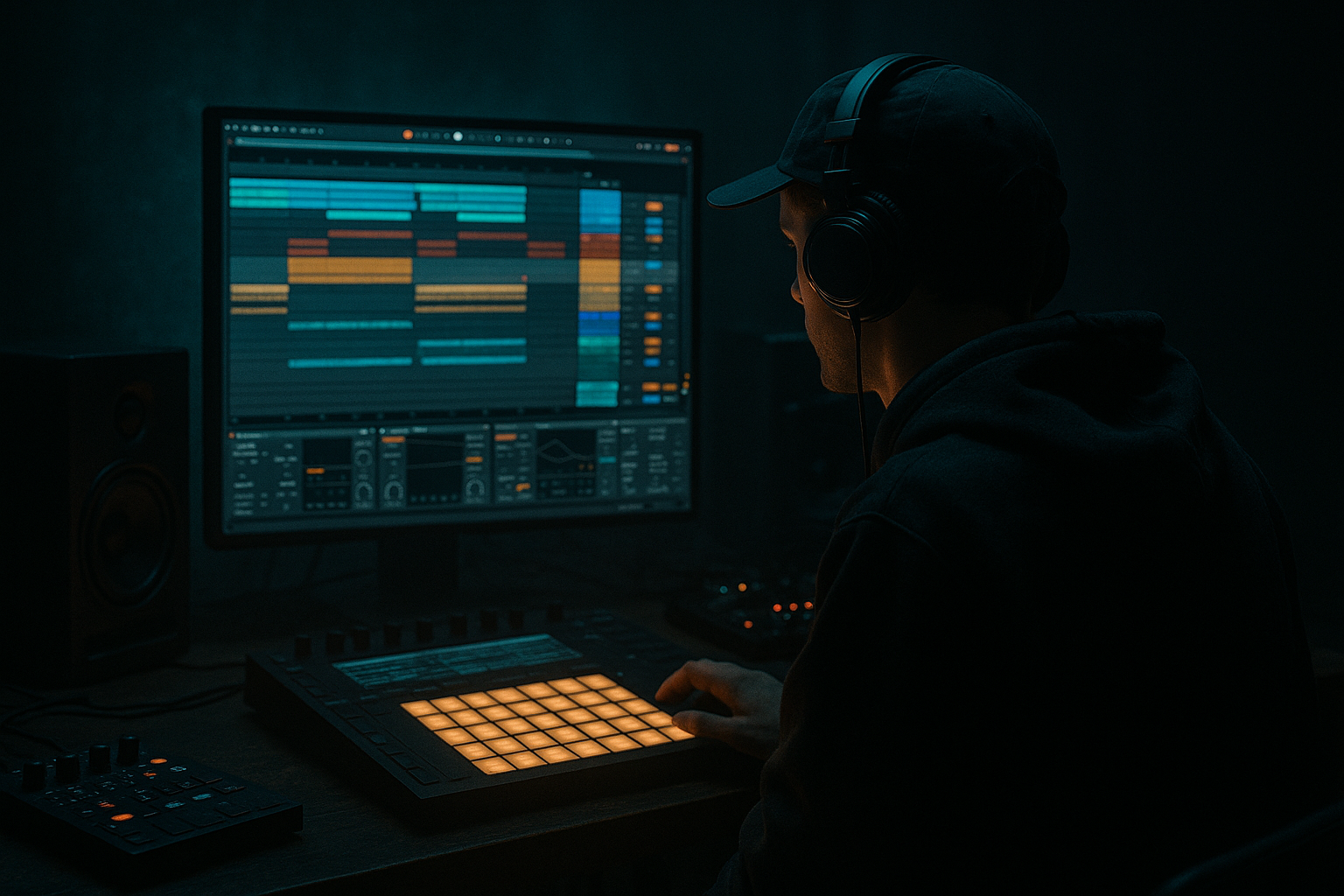
This lesson is about building a Jungle Warfare intro warp session in Ableton Live 12 so you can turn a raw oldskool sample into a pressure-filled DnB intro with that rave-era urgency 🥁🔥
In Drum & Bass, the intro is not just “the start of the track” — it’s where you set the world, establish the tempo feel, and tease the energy before the drop. For jungle, rollers, and darker bass music, a warped sample intro can do a lot of heavy lifting: it can create nostalgia, movement, and tension without needing a full drum pattern or bassline straight away.
The reason this technique matters is simple: sampling is one of the fastest ways to get authentic DnB character. A chopped vocal stab, a rave piano phrase, a jungle horn, a movie quote, or a dusty break loop can instantly give your track a real identity. In Ableton Live, warping lets you lock that sample into the grid while still keeping the human swing and broken energy that makes jungle and DnB feel alive.
This lesson focuses on a beginner-friendly workflow:
- warp a sample cleanly,
- slice and rearrange it into a gritty intro,
- add tension with stock Ableton devices,
- and prep it so it can roll into a bass drop later.
- a warped sample phrase with rhythmic pull,
- a few stuttered chops or reversed hits,
- drum break fragments under the sample for momentum,
- a simple low-end rumble or sub hint to suggest the drop,
- and automation that makes the intro feel like it’s building pressure.
- Bars 1–2: dusty sample atmosphere and first rhythm cue
- Bars 3–4: extra break hits and a rising filter/tension move
- Bars 5–8: more energy, a tease of bass weight, and a clean path into the drop
- an old rave vocal shout,
- a piano stab,
- a horn hit,
- a drum break with character,
- or a short movie/sample phrase.
- a recognizable attack,
- some tonal movement,
- and enough texture to sound interesting when stretched.
- Warp Mode: Complex Pro for vocals, full phrases, or melodic samples
- Warp Mode: Beats for drum breaks and percussive material
- Loop the sample in Clip View
- Trim to the strongest part
- Move the start marker so the phrase begins cleanly on the grid
- Use Transpose if the sample sits badly against your track key
- Try -3 to +3 semitones first
- If you want a darker feel, pitch down -2 to -5 semitones
- If the sample gets too muddy, pull back and keep it near original pitch
- Loop the sample every bar or every 2 bars
- Let it play straight at first
- Then mute or half-time it for contrast
- Slice the sample into 4 to 8 chunks
- Place one call, then one response
- Leave tiny gaps so the groove breathes
- bar 1: full phrase
- bar 2: repeated end hit
- bar 3: reversed tail
- bar 4: filtered version with extra delay
- Beats mode for punchy drum transients
- Preserve transient settings to keep kicks/snares sharp
- keep only a 2-bar loop
- use a break with a strong snare and hat texture
- tuck it under the main sample at low volume
- high-pass the sample track so it doesn’t clash with drums
- leave the break mostly centered and mono-compatible
- use tiny edits to create ghost-note movement
- EQ Eight: high-pass the sample around 120–200 Hz
- Glue Compressor on the break bus if the drums need to feel glued together
- Drum Buss very lightly for extra punch and harmonic grit
- Auto Filter cutoff on the sample or break
- Reverb dry/wet or Echo feedback for the last 1–2 bars
- Bars 1–2: dry and controlled
- Bars 3–4: filter opens slightly
- Bars 5–6: add delay throws or reverb tails
- Bars 7–8: remove low-end from the sample and prepare the drop entry
- break volume up slightly
- a narrow band boost with EQ Eight for presence
- a return track reverb send for a final wash
- Operator for a clean sub sine
- or Analog for a slightly dirtier low-end tone
- one long note every 2 or 4 bars
- low velocity if needed
- filtered or quiet enough that it doesn’t steal the spotlight
- sine-style sub around 50–60 Hz if it fits the key
- keep it mono
- no wide stereo effects on the sub
- 0:00–0:16 sample plus light break texture
- 0:16–0:32 add a second chop or rhythm change
- 0:32–0:48 automate filter opening and bring in bass hint
- 0:48–1:00 strip elements down and land into the drop
- 16 bars is often enough for a strong DnB opener
- 32 bars gives more room for tension and blending
- Sample Group
- Break Group
- Bass Hint Group
- FX/Atmos Group
- leave headroom on the master
- keep the sample slightly above the break if it’s the hook
- keep sub very controlled and mono
- choose a better warp mode
- reduce extreme pitch changes
- use a shorter fragment of the sample
- high-pass the sample
- keep the sub minimal
- let the main low end arrive later
- cut sample lows with EQ Eight
- lower break volume slightly
- use short gaps in the sample pattern so drums breathe
- automate effects only in the last bars
- use short, focused delay times
- keep reverbs dark and controlled
- change something every 2 or 4 bars
- automate filter, mute one element, or add a fill
- Use Saturator on the sample with a little drive to make oldskool material feel more aggressive.
- Put Drum Buss lightly on the break bus to thicken the transient body and add grime.
- For a darker vibe, low-pass the sample slightly and let only the upper mids peek through before the drop.
- Add a very quiet reversed sample hit or reverse reverb-style swell before a transition for tension.
- Keep the sub mono and simple. Heavy DnB feels bigger when the low end is disciplined, not wide.
- If the sample feels too polite, duplicate it and pitch one layer down a little, then mute it under the main layer for weight.
- Use call-and-response between sample chops and break fills to create urgency without overcrowding.
- For neuro-leaning darkness, automate Auto Filter plus a small frequency move in EQ Eight to create evolving texture.
- A tiny bit of Glitch-free repetition works: short repeats, stutters, and end-of-bar mutes are perfect for jungle tension.
- Reference classic jungle: the intro should feel like it’s already moving, even before the drop arrives.
- Warp your sample cleanly in Ableton Live 12 so it locks to DnB tempo.
- Keep the sample phrase short, rhythmic, and easy to loop.
- Layer a break underneath for jungle motion and authenticity.
- Use EQ Eight, Saturator, Auto Filter, Echo, Utility, Drum Buss, and Glue Compressor to shape the intro.
- Automate filter, delay, and reverb for tension.
- Keep the low end controlled so the future drop hits harder.
- Build the intro with clear phrasing so it feels DJ-friendly and ready for a full DnB arrangement.
You’ll end up with something you can place at the front of a track, or use as a building block for a full arrangement.
What You Will Build
By the end, you’ll have a 4- or 8-bar intro loop that feels like an oldskool jungle/rave warm-up section.
Musically, it will include:
Think of it like this:
This is not a full finished tune yet — it’s a premixed intro idea you can reuse in actual DnB arrangements.
Step-by-Step Walkthrough
1. Pick a sample with attitude
Choose a sample that has a strong vibe and a clear rhythmic or melodic identity. For Jungle Warfare energy, good options are:
In Ableton Live 12, drag the sample into an Audio Track. For beginners, keep it simple: choose something under 10 seconds so you can hear results quickly.
A good sample for this lesson should have:
If the sample is too clean, you can dirty it up later. If it’s already dusty, even better.
2. Set the project tempo and warp the sample correctly
Set your Live set to a typical DnB tempo: 170–174 BPM. For this lesson, 172 BPM is a great center point because it works for jungle, rollers, and heavier intro pacing.
Now click the sample and make sure Warp is enabled in the Clip View.
Use these starting points:
Beginner tip: if the sample is a melodic phrase or vocal, set the first strong transient to line up with bar 1 beat 1. If it’s a break, use the first obvious kick or snare transient.
Why this works in DnB: fast tempos make timing errors very obvious. Warping keeps your sample locked to the grid so it can drive the intro without sounding sloppy.
3. Tighten the sample into a loopable phrase
Once warped, decide on a short section to use — usually 1 to 4 bars.
Do this:
Helpful range:
For a jungle intro, you do not need the whole sample. Often the best result comes from a small, repeated fragment that feels hypnotic.
4. Turn the sample into an intro pattern
Now create a MIDI or audio arrangement pattern that feels like a classic DnB buildup.
Two beginner-friendly approaches:
Option A: Repeating phrase
Option B: Chop and answer
If you want oldskool rave pressure, use the sample like a chant or stab pattern:
This call-and-response shape is very DnB-friendly because it creates momentum without overcrowding the intro.
5. Add a break underneath for jungle motion
Now bring in a drum break or break fragment. This is where the jungle element starts to click.
Drag a break into another Audio Track and warp it using:
A beginner-friendly setup:
Try these practical moves:
Useful stock devices:
Why this works in DnB: the break gives the intro forward motion while the sample provides identity. That combination is classic jungle language.
6. Shape the tone with stock Ableton devices
Now make the sample feel like it belongs in a dark DnB world.
A simple intro chain on the sample track:
1. EQ Eight
- high-pass around 120 Hz to clear sub space
- cut harshness around 2.5–5 kHz if the sample bites too hard
2. Saturator
- use a mild drive, around 2–6 dB
- turn on Soft Clip if you want a thicker edge
3. Auto Filter
- low-pass for tension building
- try cutoff moving from 300 Hz up to 8–12 kHz
4. Echo or Delay
- low feedback, short synced time, very subtle mix
- use for atmosphere, not wash overload
If the sample needs movement, automate the filter rather than changing the clip too much. That gives you a cleaner path into the drop.
7. Add tension automation for the intro build
This is where the intro starts to feel like a real arrangement instead of a loop.
Automate at least two things:
A simple 8-bar tension plan:
You can also automate:
For beginner workflow, use Arrangement View and draw automation lanes directly. Keep it simple and visible.
8. Make the intro feel heavier without clutter
If you want more pressure, add a hint of bass presence — not a full drop bass yet, just a suggestion.
Create a new MIDI track and use:
Keep it minimal:
Suggested settings:
If you want a darker edge, duplicate the bass note and add a very quiet Saturator or Drum Buss on a parallel return for harmonics. That helps the low end translate on smaller speakers without getting messy.
9. Arrange the intro like a DJ-friendly DnB opening
Now make the section usable in a real track.
A solid beginner intro layout:
If you are making a DJ-friendly arrangement, keep the intro long enough for mixing:
For oldskool pressure, think “ramp up, tease, then punch through.”
10. Group and balance the intro for clean control
Group your elements:
Then manage the balance:
A good beginner target is to avoid clipping and keep the intro clean enough that the drop later has room to hit harder.
Use Utility on the bass track if you want to check mono or reduce width. For DnB, a clean low end matters more than huge stereo width in the intro.
Common Mistakes
Over-warping the sample
If the sample sounds metallic, smeared, or phasey, you may be stretching it too hard.
Fix:
Too much low end in the intro
Beginners often leave too much bass, which makes the drop feel weaker.
Fix:
Break and sample fighting for space
If the break loses punch or the sample masks the snare, the groove gets blurry.
Fix:
Overdoing reverb and delay
Big washes can make the intro sound cloudy instead of massive.
Fix:
No phrasing
If the intro is just a loop with no change, it won’t feel like a real DnB section.
Fix:
Pro Tips for Darker / Heavier DnB
Mini Practice Exercise
Spend 10–20 minutes making a Jungle Warfare intro from one sample.
1. Choose one short sample: vocal, stab, horn, or break.
2. Warp it to 172 BPM.
3. Trim it to a 1–2 bar loop.
4. Add a drum break underneath at low volume.
5. High-pass the sample with EQ Eight.
6. Add light Saturator drive.
7. Automate Auto Filter cutoff over 4 or 8 bars.
8. Add one delay throw at the end of the phrase.
9. Place a simple sub note on bar 7 or 8.
10. Bounce the loop or keep it in Arrangement View and listen for energy.
Goal: make the intro feel like it could lead into a drop, even if it’s just a rough sketch.

