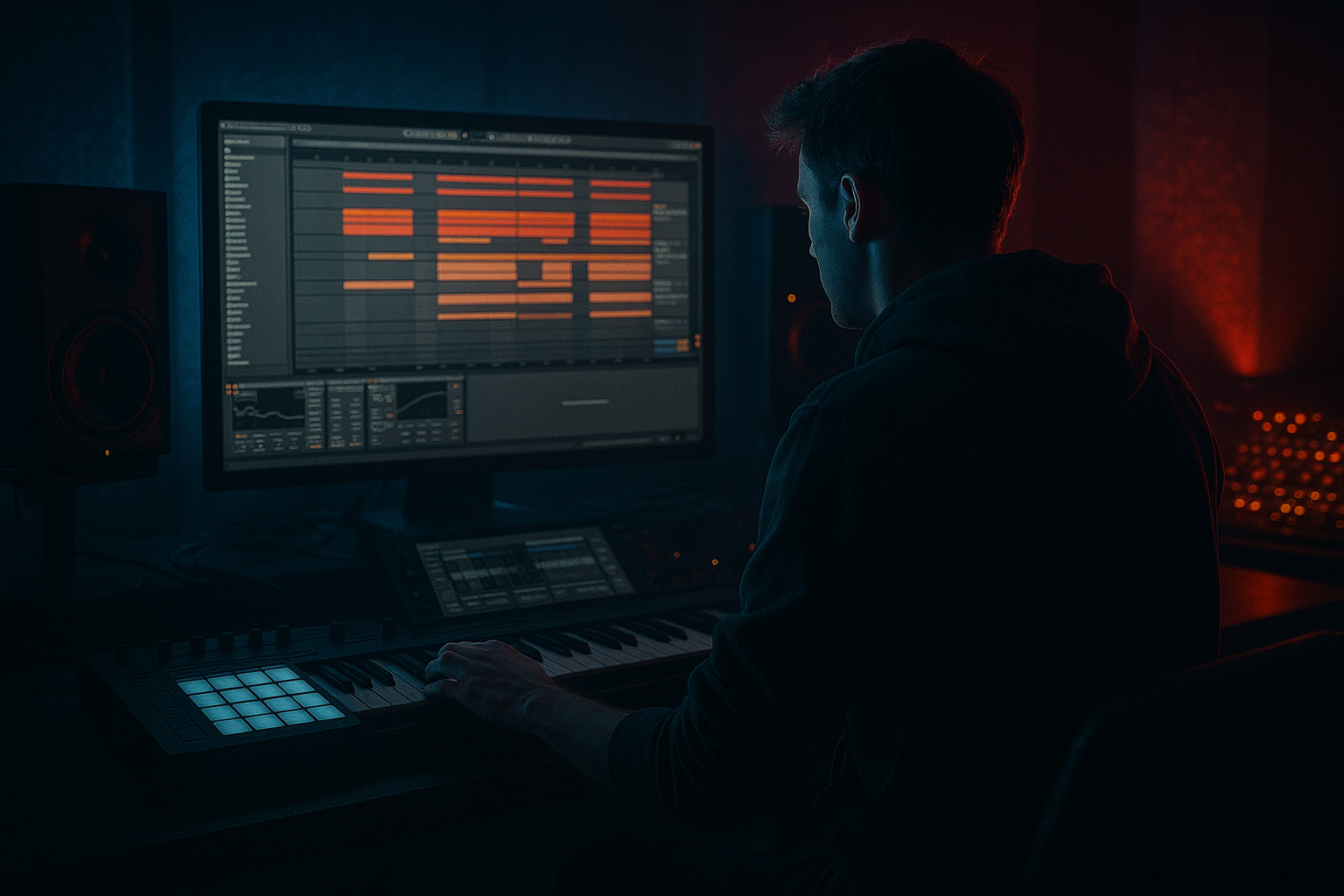
Main tutorial
Lesson Overview
In this lesson, you’ll build a ghost jungle vocal texture that sits behind your drums and bass like a haunted memory: airy, chopped, dusty in the mids, and sharp enough in the transients to cut through a busy Drum & Bass arrangement. This kind of texture is a classic tool in jungle, rollers, darker liquid, and neuro-adjacent DnB because it adds human character without stealing attention from the drop.
In Ableton Live 12, this works especially well when you think in layers:
- Top layer: crisp vocal transients for click, rhythm, and groove
- Mid layer: dusty, degraded vocal body for character and vibe
- Space layer: short ambience or delay for ghostly motion
- short vocal chops with clean transient attack
- a dusty midrange layer that sounds aged, gritty, and sampled
- subtle stereo movement without losing mono compatibility
- groove that locks to the drums instead of sounding pasted on
- automation for filter, reverb, and delay so the texture evolves through the arrangement
- Using a vocal that is too long
- Letting reverb blur the drums
- Putting too much low end in the vocal
- Making the vocal too loud
- Ignoring groove
- Overprocessing the transient layer
- Layer a second vocal octave or formant-style fragment
- Sidechain the vocal lightly to the kick and snare
- Resample your vocal after processing
- Use small pitch moves for tension
- Combine the vocal with break edits
- Keep the top end controlled
- Think call-and-response
- Transient layer = crisp, percussive, rhythm-friendly
- Dusty mid layer = degraded, warm, haunted character
- Space layer = short reverb/delay for movement
Why it matters: in DnB, the groove is everything. A tiny vocal chop can make your breakbeat feel more alive, make the drop feel more “recorded,” and help transitions hit harder. Instead of using a vocal as a front-and-center lead, you’ll use it like a percussive atmosphere that reinforces the bounce of the drums and the tension of the bassline. This is especially effective in 170–175 BPM arrangements where every sound has to earn its place.
What You Will Build
By the end, you’ll have a 16-bar jungle/DnB vocal texture loop that includes:
Think of it as a ghost vocal bed you can drop into intros, builds, half-time breakdowns, or lightly during a rolling section. It should feel like a chopped-up vocal memory riding above your break and underneath your bass.
Step-by-Step Walkthrough
1. Choose the right vocal source and place it on a new audio track
Start with a vocal phrase, spoken word, old acapella, radio-style sample, or any clean vocal fragment you can legally use. For beginner practice, use a short phrase with a few clear consonants like “no time,” “ride the rhythm,” or a breathy one-word hit.
In Ableton Live 12:
- Drag the sample into an Audio Track
- Turn on Warp
- Try Complex Pro for smoother vocal material, or Beats if the sample is already very rhythmic and percussive
- Set the project around 170–174 BPM, a very standard DnB range
Trim the clip so it contains only the best 1–2 seconds. You want something with:
- sharp consonants
- a little breath
- enough midrange body to sound dusty when processed
Why this works in DnB: crisp vocal transients can function like extra percussion. In a fast tempo, the ear grabs onto short attacks more easily than long melodic phrases.
2. Slice the vocal into playable hits
Right-click the vocal clip and use Slice to New MIDI Track. For a beginner, use:
- Transient slicing for rhythmic vocal phrases
- or 1/8 note slicing if the vocal is too smooth and you want more control
This creates a new Drum Rack with each vocal slice on a pad. Now you can trigger the best bits like drum hits.
Focus on:
- consonants: “t,” “k,” “s,” “p,” “sh”
- breath noises
- short vowel fragments
- tiny phrase endings
Put the strongest transient slices on the first half of the bar. In DnB, that gives the vocal a rhythmic role instead of a lead role.
Practical tip: if a slice feels too long, shorten it in the clip view so it behaves more like a hit than a sentence.
3. Build a basic groove pattern that supports the break
Program a simple 1- or 2-bar MIDI pattern for your vocal slices. Don’t overcomplicate it. You want the vocal to answer the drums, not fight them.
A good beginner pattern is:
- one hit on beat 2
- one hit slightly before beat 4
- a couple of offbeat ghost hits between the snare and the next kick
- a breath or tail at the end of the bar
In Ableton’s MIDI editor:
- set the grid to 1/16
- use slight velocity differences so not every hit is identical
- nudge a few notes a tiny bit late for laid-back swing, or slightly early for a tighter, more aggressive feel
If you’re using a breakbeat, let the vocal answer the break’s main accents. For example:
- when the snare lands, place a short vocal chop just after it
- when the kick pattern opens up, use a vocal breath or syllable to fill the gap
This keeps the texture in the groove pocket rather than sounding pasted on top.
4. Shape the transient layer with stock Ableton devices
On the vocal track, add Drum Buss, EQ Eight, and Compressor.
Start with EQ Eight:
- high-pass around 120–180 Hz to keep it out of the sub area
- if the vocal is boxy, reduce 250–500 Hz by about 2–4 dB
- if you need extra presence, add a gentle boost around 2.5–5 kHz
Then use Drum Buss lightly:
- Drive: 5–15%
- Crunch: low, around 0–10%
- Transient: +5 to +20 to sharpen the front edge
- Boom: usually off for this sound, unless you want a very specific low vocal thump
Finish with Compressor if needed:
- Ratio around 2:1
- Attack 10–30 ms
- Release 50–120 ms
This preserves the transient while leveling the body. That’s the sweet spot for crisp DnB vocal textures: the consonant hits stay punchy, but the sample doesn’t poke out too randomly.
5. Create the dusty mid layer with resampling or degradation
Now duplicate the vocal track or use Resampling to print a second version. This layer should sound older, murkier, and more worn-in than the transient layer.
On the dusty layer, use these stock devices:
- Auto Filter
- Saturator
- Redux
- Hybrid Reverb or Reverb
Suggested chain:
- Auto Filter: low-pass around 2–6 kHz depending on how dark you want it
- Saturator: Drive 2–6 dB, Soft Clip on
- Redux: very subtle, reduce bit depth slightly if you want grain
- EQ Eight: cut some harshness around 3–8 kHz if needed
The goal here is not to destroy the vocal. The goal is to make it feel sampled, aged, and slightly obscured.
If you want a cleaner beginner workflow, skip Redux and just use:
- Auto Filter
- Saturator
- EQ Eight
That alone can create a convincing dusty mid texture.
Why this works in DnB: the genre often uses contrast between ultra-clean drum transients and degraded textures. That contrast makes the track feel both modern and underground.
6. Add ghostly space without washing out the groove
Put a return track or an audio effect after the dusty layer using Reverb or Hybrid Reverb.
Good settings for a ghost vocal in DnB:
- Decay: 0.8 to 1.8 seconds
- Pre-delay: 15–35 ms
- Dry/Wet: keep it low if inserted directly, or use a Return track and send subtly
- Low Cut: around 200–400 Hz
- High Cut: around 6–10 kHz
Add Echo if you want a more rhythmic tail:
- 1/8 or 1/8 dotted for jungle-style movement
- feedback around 15–30%
- filter the echo so it sits behind the dry chop
Keep the reverb/delay mostly on the mid layer, not the transient layer. That way, the front edge stays crisp while the tail gives it atmosphere.
Beginner rule: if the vocal starts sounding like a wash of fog, shorten the decay and cut more low end from the reverb return.
7. Lock the groove with Groove Pool and timing nudges
This is a Groove lesson, so don’t skip this part. Drag a groove from Ableton’s Groove Pool onto your MIDI vocal clip, or apply a subtle groove from a drum break if you have one.
Start gentle:
- Groove amount around 10–30%
- Try a swing feel that complements the breakbeat, not one that fights it
Then zoom in and manually adjust a few notes:
- move a breath slightly behind the beat
- pull a consonant hit earlier so it snaps with the snare
- leave a longer tail just after the main kick/snare accents
A useful approach in jungle and rollers is to make the vocal behave almost like a ghost percussion layer. It should feel like it belongs to the same rhythmic family as the hats, ride patterns, and break edits.
If your drums are very busy, keep the vocal pattern simpler. If your drums are sparse, the vocal can be a little more active.
8. Use automation to make it feel like a real arrangement element
A static vocal texture gets old fast. Automate a few simple moves across 16 or 32 bars:
- Auto Filter cutoff: slowly open in the build, then close slightly after the drop
- Reverb send: increase at the end of a phrase, pull back on the next downbeat
- Echo feedback: automate a quick rise before a transition, then cut it
- Track volume: duck the texture under a dense bass phrase, raise it during a breakdown
Arrangement example:
- Bars 1–8: filtered, distant ghost vocal with more space
- Bars 9–16: slightly brighter and more present, but still behind the drums
- Drop 1: keep only the most percussive slices for clarity
- Breakdown: let the dusty mid layer breathe with more reverb and delay
This is a very DnB-friendly way to create tension/release without needing a huge melodic hook.
9. Place it in the mix so it supports the bass and drums
The vocal texture should never steal the sub or collide with the snare.
Check these basics:
- keep everything below 120 Hz out of the vocal layers
- if the vocal feels harsh, notch a little around 4–7 kHz
- if the bass and vocal fight in the mids, carve a small dip in the vocal around 250–600 Hz
- use Utility to keep the vocal relatively narrow if it feels too wide
In a dense DnB drop, the vocal often works best when it is:
- quieter than you think
- darker than you think
- more rhythmic than melodic
Do a quick mono check with Utility or by listening on a mono-compatible system. If the texture collapses completely, reduce stereo widening and rely more on timing and filtering for width.
Common Mistakes
- Fix: slice it down to tiny phrases or single hits. Ghost textures should be fragment-like.
- Fix: shorten decay, raise pre-delay, and high-pass the reverb return.
- Fix: high-pass with EQ Eight and keep the sample out of the sub lane entirely.
- Fix: drop it lower in the mix. In DnB, this kind of sound often works best when felt more than heard.
- Fix: nudge vocal slices to the snare and kick pattern. A vocal texture that isn’t rhythmically connected will feel random.
- Fix: keep the front edge clean. Save the heavier distortion and degradation for the dusty mid layer.
Pro Tips for Darker / Heavier DnB
- Even a tiny lower fragment can make the texture feel more ominous. Keep it filtered and low in the mix.
- Use Compressor with sidechain input from the drum bus. Keep the gain reduction subtle so the groove breathes, not pumps.
- Print the result, then chop it again. Resampling often creates the dusty, accidental feel that works so well in jungle and rollers.
- In Clip View, transpose a slice up or down 1–3 semitones for variation. Don’t overdo it. Tiny moves are usually enough.
- Put a vocal hit right before a break fill or snare roll to make the transition feel more alive.
- If the vocal becomes too bright, use EQ Eight or Auto Filter to tame it. DnB needs crispness, but not brittle harshness.
- Let the vocal answer the bassline. A short vocal chop after a reese phrase can make the whole drop feel more intentional.
Mini Practice Exercise
Set a timer for 15 minutes and build a ghost vocal texture from scratch:
1. Pick a 1–2 second vocal sample.
2. Slice it to a Drum Rack.
3. Program an 8-bar pattern using only 4–6 slices.
4. Add EQ Eight and Drum Buss to create a crisp transient layer.
5. Duplicate the track and make a dusty mid layer with Auto Filter and Saturator.
6. Add a short Reverb or Echo return.
7. Apply a subtle groove amount and manually nudge at least 3 notes.
8. Automate the filter cutoff or reverb send over 8 bars.
9. Play it with a DnB drum loop and bassline.
10. Mute one layer at a time and check whether each layer has a clear job.
Goal: by the end, your vocal should feel like a rhythmic atmosphere, not a main vocal lead.
Recap
The key idea is simple: build your ghost vocal in layers.
Keep the vocal short, groove it to the drums, filter out low end, and automate it so it supports the arrangement. In Drum & Bass, especially jungle and darker rollers, this kind of texture adds identity fast without crowding the mix.

