DNB COLLEGE

Drum & Bass Ableton Live 12 Tutorials

LESSON DETAIL

Formula for amen variation using resampling workflows in Ableton Live 12 (Beginner)

An AI-generated beginner Ableton lesson focused on Formula for amen variation using resampling workflows in Ableton Live 12 in the Arrangement area of drum and bass production.

Back to lessons
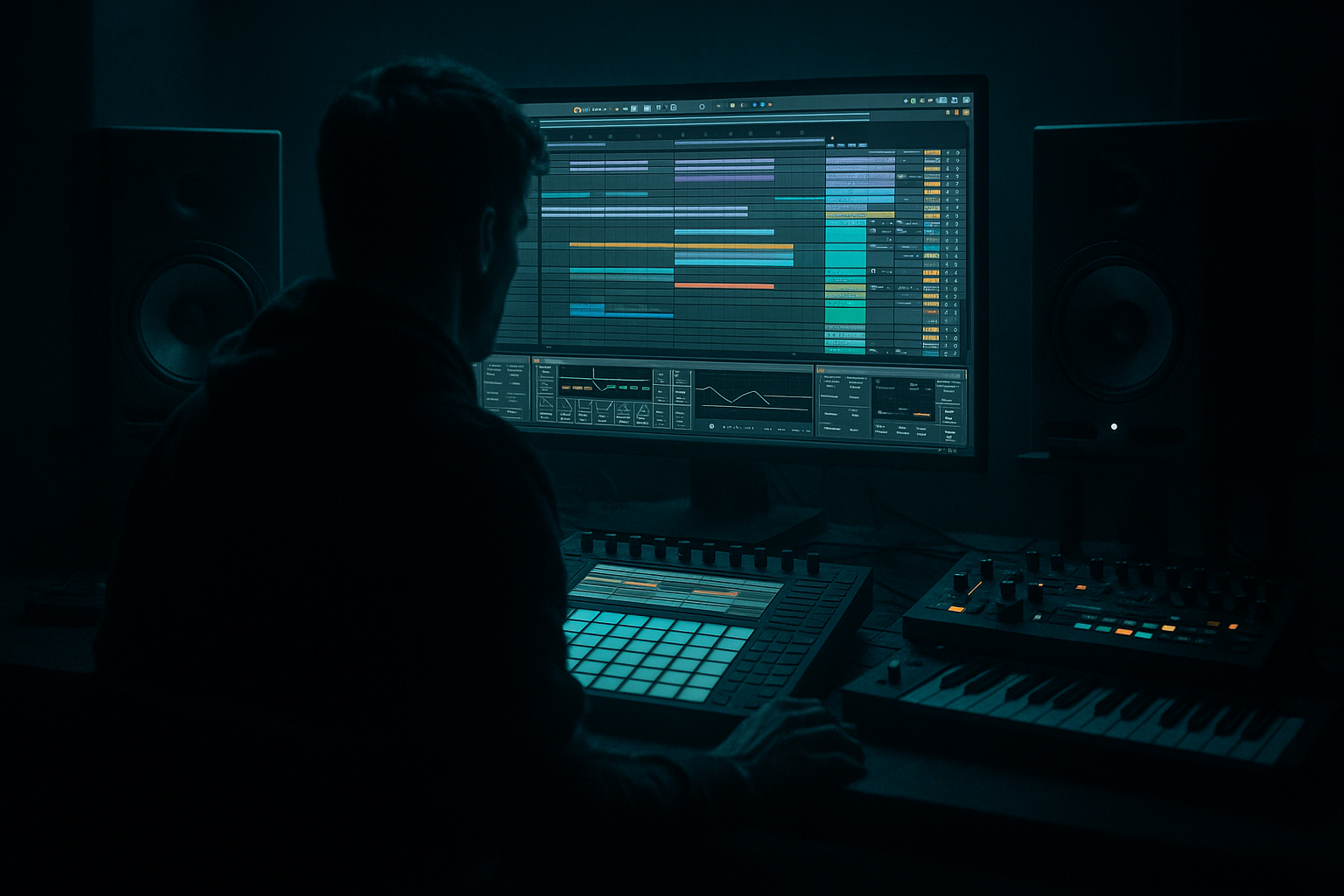
Formula for amen variation using resampling workflows in Ableton Live 12 (Beginner) cover image

Narrated lesson audio

The voice track includes the tutorial plus extra teacher commentary.

Open audio file

Main tutorial

Formula for Amen Variation Using Resampling Workflows in Ableton Live 12

1. Lesson overview

If you want your drum and bass tracks to feel alive, Amen variation is one of the most useful skills you can learn. The goal is not just to loop the Amen break forever — it’s to slice, process, resample, and rearrange it so every 8 or 16 bars feels like it has movement, tension, and forward motion.

In this lesson, you’ll learn a practical resampling workflow in Ableton Live 12 to turn one Amen break into multiple versions you can use across an arrangement. This is a classic jungle/DnB technique: process a break, bounce it to audio, chop it again, and create evolving drum phrases without endlessly tweaking the same loop.

We’ll focus on:

  • Beginner-friendly resampling
  • Arrangement thinking
  • Using Ableton stock devices
  • Making the Amen feel darker, heavier, and more modern 🥁
  • ---

    2. What you will build

    By the end of this tutorial, you will have:

  • One original Amen loop
  • At least 3 resampled variations
  • A short 8-bar arrangement idea with:
  • - intro

    - main groove

    - variation

    - fill/drop transition

  • A simple drum bus chain
  • A workflow you can repeat for other breaks, fills, and percussion
  • You’ll be using:

  • Drum Rack
  • Simpler or Slice to New MIDI Track
  • Resampling audio recording
  • EQ Eight
  • Drum Buss
  • Saturator
  • Utility
  • Optional: Auto Filter, Transient shaping via envelope editing, Reverb/Delay for space
  • ---

    3. Step-by-step walkthrough

    Step 1: Load and prep your Amen break

    Start with a clean project in Ableton Live 12.

    #### Option A: Use an audio clip

    1. Drag your Amen break into an Audio Track.

    2. Set the warp mode to:

    - Beats for percussive breaks

    - Try 1/16 or 1/8 transient preserve settings

    3. Make sure the loop is locked to your project tempo.

    #### Option B: Slice the break to MIDI

    This is better if you want to rearrange hits.

    1. Right-click the Amen clip.

    2. Choose Slice to New MIDI Track.

    3. Use slicing by:

    - Transient for natural drum hit detection

    - Or 1/16 if the break is very clean

    4. Ableton creates a Drum Rack with each slice on pads.

    Why this matters:

    Slicing gives you control. In drum and bass, variation usually comes from re-ordering hits, dropping ghost notes, muting kicks, and reusing fragments in fresh ways.

    ---

    Step 2: Build a basic 2-bar Amen pattern

    Before variation, make a solid base.

    #### If using MIDI slices:

    1. Program a simple 2-bar loop.

    2. Keep the main character of the break:

    - snare backbeat

    - rolling hats

    - a few kicks

    - some original ghost hits

    #### Beginner-friendly formula:

  • Bar 1: original groove with most of the break intact
  • Bar 2: slightly edited groove with one or two hits removed or moved
  • This gives you a recognizable loop that still feels like a performance.

    #### Suggested editing ideas:

  • Remove one kick near the end of bar 2
  • Add a pause before the snare
  • Repeat a hi-hat slice twice for forward motion
  • Cut a snare tail to create a stutter
  • Keep it subtle at this stage. The point is to create a loop that feels like a real drum performance, not a fully quantized pattern.

    ---

    Step 3: Add a drum bus chain

    Route your break to a Drum Group or drum bus so you can process it as one sound.

    #### Simple starter chain:

    1. EQ Eight

    - High-pass around 25–35 Hz

    - Slight cut around 250–400 Hz if muddy

    - Small boost around 3–6 kHz if you need attack

    2. Drum Buss

    - Drive: 5–20%

    - Crunch: small amount if needed

    - Boom: use carefully, especially for darker DnB

    - Transients: increase slightly for punch

    3. Saturator

    - Drive: 2–6 dB

    - Soft Clip: On

    - Use it to thicken the break, not flatten it

    4. Utility

    - Use for gain staging

    - Optional mono low end if needed

    #### Important beginner tip:

    Do not overprocess the break at this stage. You want enough character to resample, but not so much that it becomes lifeless.

    ---

    Step 4: Resample the break

    This is where the magic starts ✨

    #### Method:

    1. Create a new Audio Track.

    2. Set Audio From to:

    - Resampling, or

    - the track/group containing your break

    3. Arm the track.

    4. Record 1–2 bars of your processed Amen.

    Now you have a new audio file of your break after processing.

    #### Why resample?

    Resampling lets you:

  • commit to a sound
  • create a new texture
  • free up CPU
  • make the break feel like it’s been “performed” through gear
  • This is a classic jungle workflow. You’re not just editing a loop — you’re printing a new version of it.

    ---

    Step 5: Chop the resampled audio into a new variation

    Now use the resampled audio as your new source.

    #### Easy workflow:

    1. Drag the recorded audio into a new audio track or back into a Drum Rack.

    2. Slice it again if needed.

    3. Make a second version that changes the rhythm.

    #### Good variation methods:

  • Move a snare one 1/16 late
  • Delete the first kick in bar 2
  • Repeat a tiny hat fragment 2–3 times
  • Reverse one small snare tail for a transition
  • Stutter the last 1/8 note before the drop
  • #### Arrangement rule:

    Use small changes every 2 bars, and bigger changes every 8 bars.

    This keeps the listener engaged without losing the identity of the break.

    ---

    Step 6: Create 3 useful Amen variations

    Here’s a practical “formula” you can follow:

    #### Variation 1: The Base Loop

  • Mostly original Amen
  • Slight EQ and saturation
  • Good for the main groove
  • #### Variation 2: The Pressure Loop

  • Less busy
  • Remove one or two kicks
  • Add more space around the snare
  • Slightly darker with EQ or filter
  • Good for pre-drop tension or verse sections
  • #### Variation 3: The Fill Loop

  • More edits and stutters
  • Reverse hit or snare chop
  • Add one extra kick or fill
  • Good for transitions every 8 or 16 bars
  • ---

    Step 7: Use Ableton tools to make the break evolve

    Here are stock devices and techniques that work really well for Amen variation in DnB.

    #### EQ Eight

    Use it to create contrast between sections:

  • More low-mid in one variation
  • More top-end cut in another
  • Narrow notch to remove harsh cymbal frequencies
  • #### Auto Filter

    Great for transitions:

  • Low-pass the break in an intro
  • Automate cutoff opening into the drop
  • Use resonance lightly for tension
  • #### Beat Repeat

    Useful for fills and glitch moments:

  • Set Interval to 1 Bar or 1/2 Bar
  • Chance: low to medium
  • Grid: 1/16 or 1/32
  • Mix it in briefly before a drop
  • #### Drum Buss

    Excellent for drum glue and aggression:

  • Adds punch and harmonics
  • Great for making a break sit in a heavier DnB mix
  • #### Saturator

    Use for grit and density:

  • Add subtle drive to make the break hit harder
  • Soft Clip helps control peaks
  • #### Reverb

    Use sparingly on fills:

  • Short decay
  • High-pass the reverb if possible
  • Send only a small amount to keep the break sharp
  • ---

    Step 8: Build arrangement from the variations

    Here’s a simple 8-bar DnB arrangement concept using Amen variation:

    #### Bars 1–2: Intro groove

  • Filtered Amen variation
  • Light bass or no bass yet
  • Keep it restrained
  • #### Bars 3–4: Groove established

  • Fuller break
  • Add bassline or sub movement
  • Keep the loop stable
  • #### Bars 5–6: Variation

  • Remove some kick hits
  • Add ghost-note edits
  • Use a small fill at the end of bar 6
  • #### Bars 7–8: Tension / transition

  • Use the fill version
  • Automate a low-pass filter or delay on the last hit
  • Prepare for the next section or drop
  • This creates a natural sense of movement without needing a brand-new drum pattern every few bars.

    ---

    Step 9: Add bass around the break, not against it

    In drum and bass, the break and bassline should work together.

    #### Practical approach:

  • Let the Amen carry the rhythmic identity
  • Make the bassline leave space for the snare
  • Avoid bass notes landing on every drum hit
  • For rolling DnB:

  • Use a steady low-end line
  • Leave room around the 2 and 4 snare hits
  • Use sidechain compression if needed
  • A useful stock device chain for bass:

  • Operator or Wavetable
  • EQ Eight
  • Compressor or Glue Compressor
  • Saturator
  • The point is to make the Amen feel like it’s driving the tune, not fighting the bass.

    ---

    4. Common mistakes

    1. Over-editing the break

    If every hit is chopped and rearranged, the Amen loses its character. Keep some original flow.

    2. Too much processing before resampling

    If you print a break that is already overcompressed and overdistorted, it may sound flat. Leave some headroom.

    3. No contrast between sections

    If all your Amen variations are too similar, the arrangement feels looped. Make one version more open, one darker, one more active.

    4. Ignoring low-end control

    The Amen has a lot of mid and high rhythmic energy, but your kick/sub balance still matters. High-pass the break if needed to keep sub space clean.

    5. Not using automation

    Amen variation becomes much more musical when you automate:

  • filter cutoff
  • drum bus drive
  • reverb sends
  • volume level
  • delay feedback
  • 6. Making fills too busy

    A fill should lead into the next section, not distract from it. One smart chop is often better than a full drum explosion.

    ---

    5. Pro tips for darker/heavier DnB

    If you want your Amen variations to hit harder and sound more sinister, try these techniques:

    Darker processing ideas

  • Reduce top-end brightness with EQ Eight
  • Add light saturation for a grimy edge
  • Use Drum Buss for punch and density
  • Filter the break slightly low-pass in breakdowns
  • Add tiny amounts of room reverb to make it feel murkier
  • Heavier arrangement ideas

  • Use a more sparse break before the drop
  • Bring in the full Amen after a filtered section
  • Duplicate a snare hit subtly for extra impact
  • Add a reverse break slice into the snare transition
  • Jungle/DnB vibe tricks

  • Keep some human swing in the MIDI if you’re reprogramming slices
  • Don’t quantize everything too rigidly
  • Use ghost notes to keep the break breathing
  • Layer the Amen with a clean snare top or rim hit if it needs more bite
  • Resampling strategy for heavy music

    Try printing different “states” of the break:

  • clean
  • saturated
  • filtered
  • reverb tail version
  • distorted fill version
  • Then arrange those states like a scene change in the track.

    ---

    6. Mini practice exercise

    Try this exercise in Ableton Live 12:

    Goal

    Create a 4-bar Amen variation sequence using resampling.

    Steps

    1. Load an Amen break and make a basic 2-bar loop.

    2. Add a simple drum bus chain:

    - EQ Eight

    - Drum Buss

    - Saturator

    3. Resample the loop into a new audio track.

    4. Make three versions:

    - Version A: original loop

    - Version B: remove one kick and add a stutter at the end

    - Version C: filtered version with a short fill

    5. Arrange them like this:

    - Bar 1–2: Version A

    - Bar 3: Version B

    - Bar 4: Version C

    6. Automate an Auto Filter cutoff opening across bar 4.

    Challenge

    Try making the last bar feel like a transition into a drop using only:

  • one reverse slice
  • one snare edit
  • one filter move

If you can do that cleanly, you’re already thinking like a DnB arranger.

---

7. Recap

Here’s the formula:

1. Start with a solid Amen loop

2. Make a simple groove

3. Process lightly with stock Ableton devices

4. Resample the result

5. Chop the resample into a new variation

6. Repeat to create contrast

7. Arrange variations every 2, 4, 8, or 16 bars

8. Use automation to make the break evolve 🎛️

The big idea is this:

Amen variation is not random editing — it’s controlled evolution.

Resampling helps you commit to a sound, create new textures, and build arrangement energy in a very DnB way.

If you practice this workflow a few times, you’ll start hearing your breaks like a producer, not just a loop user.


Ask GPT about this lesson

Chat with the lesson tutor, get follow-up help, or use quick actions.

Bigup 👽 Ask me anything about this lesson and I’ll answer in context.

Narration script

Show spoken script
Welcome to this lesson on Formula for Amen variation using resampling workflows in Ableton Live 12.

If you want your drum and bass tracks to feel alive, the Amen break is one of the best places to start. But the real magic is not just looping it over and over. The magic is in slicing it, processing it, resampling it, and rearranging it so the groove keeps evolving. That is how you get movement, tension, and that classic jungle energy without getting stuck in a boring loop.

In this lesson, we’re going to build a beginner-friendly workflow in Ableton Live 12 using stock tools. By the end, you’ll have one original Amen loop, a few resampled variations, and a simple arrangement idea you can use in your own drum and bass tracks.

Let’s keep this practical and musical. The goal is not to overcomplicate the break. The goal is to make it feel like it’s breathing.

First, load your Amen break into a clean Ableton project.

You have two main options here.

If you want to keep things simple, drag the Amen into an audio track. Set the warp mode to Beats so the transients stay punchy and percussive. You can experiment with transient settings like 1/16 or 1/8 depending on the break, but the main thing is to make sure it locks to your project tempo.

If you want more control, right-click the clip and choose Slice to New MIDI Track. That gives you a Drum Rack with each drum hit split onto pads. This is often the better choice if you want to rearrange the hits, mute certain notes, or build a more custom pattern.

For a beginner, slicing is a huge win because it makes the break editable in a very direct way. In drum and bass, variation often comes from tiny changes. You might remove a kick, shift a snare, repeat a hat, or reuse a little fragment in a new spot. Those small moves make a big difference.

Now let’s build the first version of the groove.

Create a simple two-bar Amen pattern. If you’re using slices, keep the main character of the break in place. You want the snare backbeat, the rolling hats, a few kicks, and some of the little ghost notes that give the break its personality.

A good beginner formula is this: bar one stays mostly original, and bar two gets one or two small edits. Maybe you remove a kick near the end. Maybe you add a tiny pause before the snare. Maybe you repeat a hi-hat slice twice for a little forward motion. Maybe you cut the snare tail to create a quick stutter.

Keep it subtle at this stage. We’re trying to make it feel like a performance, not a fully robotic loop.

Next, let’s process the break a little before we resample it.

Route the break into a drum group or drum bus so you can treat it as one sound. Start with EQ Eight. High-pass around 25 to 35 hertz so the low rumble doesn’t eat up space. If the break feels muddy, make a small cut somewhere around 250 to 400 hertz. If it needs more attack, a little boost around 3 to 6 kilohertz can help.

After that, try Drum Buss. Use a moderate amount of drive, maybe somewhere in the 5 to 20 percent range depending on the source. Add just a bit of crunch if needed. Be careful with the boom control, especially if you want a darker DnB vibe. You can raise the transient amount slightly for more punch.

Then add Saturator. A little drive goes a long way here. You’re not trying to crush the break into dust. You’re trying to give it thickness, grit, and density. Turn Soft Clip on if you want to control peaks a little more cleanly.

Finally, use Utility for gain staging and maybe to keep the low end centered if that helps the mix.

Here’s an important teacher tip: do not overprocess the break before resampling. If you print something that is already too smashed, too distorted, and too flat, you lose the dynamics that make the Amen exciting in the first place. Leave yourself some room.

Now comes the fun part. Resample it.

Create a new audio track and set the input to Resampling, or choose the track or group that contains your processed break. Arm the track and record one or two bars of the loop.

This is where the workflow starts to feel like real production. You are not just tweaking a loop anymore. You are committing to a sound and printing it to audio. That might feel a little scary at first, but it is one of the most powerful habits you can build. It helps you make decisions faster, and it gives the track more personality.

Once you have that resampled audio, use it as your new source.

You can drag it back into a new audio track, or even slice it again into a Drum Rack if you want more control. Now make a second version that changes the rhythm in a noticeable but still musical way.

Try moves like these:
shift a snare a little late
remove the first kick in bar two
repeat a tiny hat fragment two or three times
reverse a small snare tail for a transition
stutter the last eighth note before a drop

The key idea here is contrast. Use small changes every two bars, and bigger changes every eight bars. That gives the listener a sense of motion without losing the identity of the original break.

At this point, it helps to think in terms of three useful Amen states.

First, the base loop. This is your original or near-original break, lightly processed. This is what carries the main groove.

Second, the pressure loop. This one is a little less busy. Maybe you remove a kick or two. Maybe you leave a little more space around the snare. Maybe you darken it slightly with EQ or a low-pass filter. This version is great for building tension before a drop or during a verse section.

Third, the fill loop. This one has more edits, more stutters, and maybe a reverse hit or snare chop. This is your transition tool. Use it at the end of every eight or sixteen bars to push the arrangement forward.

Ableton’s stock devices can take these variations even further.

EQ Eight is great for creating contrast between sections. One version can be a little warmer in the low mids, while another can have more top-end removed. A narrow notch can also help tame a harsh cymbal or splash if it jumps out too much.

Auto Filter is perfect for transitions. You can low-pass the break in the intro, then automate the cutoff to open up as you approach the drop. Keep the resonance light if you want it to stay tasteful.

Beat Repeat can be really useful for fills and glitch moments. Try it briefly before a drop. Keep the interval at one bar or half a bar, and use a small grid like 1/16 or 1/32 for quick rhythmic fragments. You do not need to leave it on all the time. Just a short burst can be enough to create excitement.

Drum Buss adds glue, punch, and attitude. Saturator adds grit and density. Reverb can work too, but use it sparingly. A short decay and a small send amount is usually enough to give a fill some space without washing out the break.

Now let’s think about arrangement.

A really simple eight-bar structure can already feel strong if the Amen variations are doing their job.

Bars one and two can be your intro groove. Keep it filtered and restrained. Maybe no bass yet, or just a very light bass idea.

Bars three and four can bring in the fuller groove. Let the break open up a little more. Add the bassline or sub movement here and keep the rhythm stable.

Bars five and six can introduce variation. Remove a few kick hits. Add some ghost-note edits. Maybe use a small fill at the end of bar six.

Bars seven and eight are your tension or transition section. Bring in the fill version. Automate a low-pass filter or a little delay on the last hit. Get the listener ready for the next section.

That kind of arrangement works because it keeps the break recognizable while still making it feel like it is moving somewhere.

And this is a huge drum and bass lesson: the Amen and the bassline need to work together, not against each other.

Let the Amen carry the rhythmic identity. Let the bassline leave space for the snare. Try not to have bass notes landing on every drum hit. For a rolling DnB feel, leave room around the two and four snare hits. If needed, use sidechain compression so the drums stay clear and punchy.

A simple bass chain could be something like Operator or Wavetable, then EQ Eight, then Compressor or Glue Compressor, then Saturator. Keep it supportive. The break should feel like it is driving the tune, not fighting it.

Here are a few common mistakes to avoid.

Do not over-edit the break until it loses its character. The Amen is famous because of its natural flow. Keep some of that intact.

Do not overprocess before resampling. If the source is already too compressed or too distorted, it may become lifeless.

Do not make all your variations too similar. One should feel open, one should feel darker, and one should feel more active.

Do not ignore low-end control. The break has plenty of mid and high energy, but your sub space still needs to stay clean.

And do not forget automation. Amen variation becomes way more musical when you automate filter cutoff, saturation drive, reverb send, volume, or delay feedback.

If you want a darker, heavier vibe, there are a few easy moves that work really well.

Reduce some of the top-end brightness with EQ Eight.
Add light saturation for a gritty edge.
Use Drum Buss for punch and density.
Filter the break a bit more in breakdowns.
Add a tiny amount of room reverb to make it feel murkier.

You can also make the arrangement feel heavier by starting with a sparse version before the drop, then bringing in the full Amen after a filtered section. A subtle snare layer or a reverse break slice can also make the transition hit harder.

Another smart habit is to think in layers, not just loops. Keep a core Amen version, then create small offshoots that only appear when the arrangement needs energy. That way the track feels intentional, not repetitive.

Here’s a strong beginner exercise.

Load one Amen break and make a basic two-bar loop. Add a simple drum bus chain with EQ Eight, Drum Buss, and Saturator. Resample the loop into a new audio track. Then make three versions: the original loop, a version with one kick removed and a stutter at the end, and a filtered version with a short fill. Arrange them across four bars, then automate an Auto Filter opening on the final bar.

If you can make the last bar feel like a transition into a drop using just one reverse slice, one snare edit, and one filter move, you are already thinking like a real DnB arranger.

So here is the full formula.

Start with a solid Amen loop.
Make a simple groove.
Process it lightly with stock Ableton devices.
Resample the result.
Chop the resample into a new variation.
Repeat to create contrast.
Arrange those variations every two, four, eight, or sixteen bars.
Use automation to make the break evolve.

That is the real power of Amen variation using resampling workflows.

It is not random editing. It is controlled evolution.

And once you start hearing your breaks this way, you stop thinking like someone looping audio and start thinking like a producer building a track. That is where the fun really begins.

mickeybeam

Go to drumbasscd.com for +100 drum and bass YouTube channels all in one place - tune in!

Generating PDF preview…