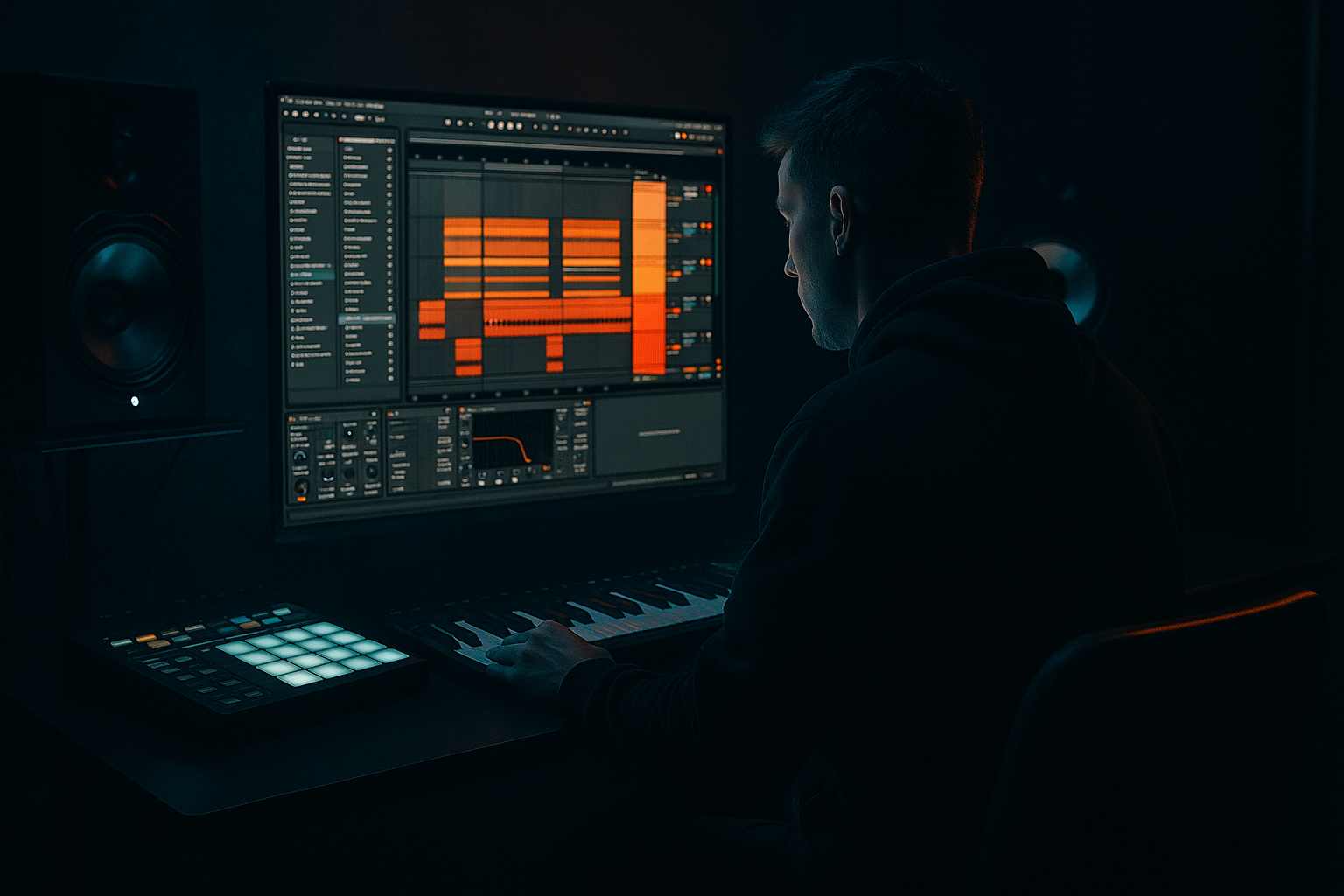
Main tutorial
Lesson Overview
This lesson is about turning a standard reese into a jungle-leaning, oldskool DnB bassline with two things working together:
1. Crisp transients — the front edge of the note hits cleanly, so the bass can punch through a break and lock with the kick/snare.
2. Dusty mids — the middle range has texture, movement, and grime, giving it that worn, early-rave character instead of a shiny modern wobble.
In a real DnB track, this kind of bass usually lives in the main drop, a B section, or a call-and-response groove under break edits. It matters because oldskool jungle and DnB are not just about heavy subs — they are about energy in the midrange, where the bass speaks rhythmically against the drums. If the transient is too soft, the bass feels late. If the mids are too clean, it loses the dusty, sampled attitude that makes it feel authentic.
This technique suits:
- jungle-inspired DnB
- rollers with an oldskool edge
- dark breakbeat DnB
- subtle rave / warehouse bass sections
- tracks where the bass must cut without sounding modern or polished
- tight at the front
- gritty in the mids
- stable in mono
- usable under drums without masking them
- ready to sit in a drop, not just in a sound-design loop
- a short, defined transient
- a slightly dirty midrange body
- a controlled sub foundation
- enough movement to feel alive, but not so much that it smears the groove
- a final sound that can sit as a main bass phrase, a stabby bass motif, or a rolling note pattern
- Let the transient be dry, then dirty the sustain.
- Use midrange dirt as the “identity,” not the sub.
- Resample a good take and make tiny edits.
- Keep width higher up, keep the floor solid below.
- Use contrast in the arrangement.
- Leave one bar of breathing room before a phrase answer.
- If it gets too clean, degrade the harmonics before you crank the volume.
- Use only Wavetable, Saturator, EQ Eight, Auto Filter, and Utility
- Build it on a 2-bar loop
- Keep the sub stable and the width restrained
- Make one version that is cleaner and tighter, then one that is dirtier and wider
- a 2-bar MIDI or audio clip that plays well with a drum loop
- one bounced audio version of the best take
- Does the bass hit immediately?
- Do the mids feel dusty, not fizzy?
- Does it still work when you switch to mono?
- Can you clearly hear where the bass leaves space for the snare?
- a clear transient
- dusty, animated mids
- controlled low-end behavior
- groove that works with the break
- enough restraint to stay mixable
By the end, you should be able to hear a reese that feels:
What You Will Build
You will build a layered reese patch in Ableton Live 12 that has:
The finished result should feel like a bass that hits immediately, then blooms into dusty harmonic content, with the top kept under control so it stays club-safe. In a mix, it should leave space for the break’s snap and the snare’s crack while still sounding like a proper bass identity. If it’s working, you’ll hear the note start with a click or bite, then turn into a thick, slightly worn reese texture that still feels focused.
Step-by-Step Walkthrough
1. Start with a simple MIDI clip and a single note idea
Create a MIDI track and load a stock synth you know well, such as Wavetable. Keep it simple: start with a single sustained note, then add a short two-note phrase or a call-and-response rhythm later. For the first pass, use notes around the root and fifth of the tune, or just one root note if you’re building a looping drop tool.
Why this matters: in DnB, the bass patch is judged by how it works in context. A solo drone can sound huge but fail once the break enters. A simple note pattern lets you hear the transient and mid grit clearly against a drum groove.
Use a short clip length like 1 or 2 bars. That keeps you focused on rhythm and pocket rather than endlessly sound-designing in isolation.
2. Build the core reese using two detuned oscillators
In Wavetable, start with two oscillators using a saw-like source or a similarly harmonically rich waveform. Detune them only slightly. A good beginner-friendly starting zone is a small detune, not an extreme one — think “width and movement,” not “obvious chorus pad.”
Suggested starting points:
- Oscillator 1: saw-type waveform, main octave
- Oscillator 2: saw-type waveform, same octave or one octave down
- Detune: light to moderate
- Unison/spread: modest, not huge
The reason this works in DnB: oldskool reese tones come from beating harmonics — the slight clash between oscillators creates that animated, living midrange. Too much detune and the bass turns fluffy; too little and it becomes static.
What to listen for:
- You want a slow, restless shimmer
- The sound should feel wider and rougher, but not seasick
- If the note sounds like a plain synth bass with no movement, increase detune slightly
A versus B decision point:
- A: tighter, more focused reese — keep detune subtle for a cleaner roller or darker stepper
- B: wider, dirtier reese — open the spread a little more for a raw jungle edge
For a beginner, start with A. You can always make it dirtier later.
3. Add a real transient with a short amp envelope
Now shape the front of the note. In Wavetable’s amp envelope, keep the attack very fast, but not necessarily hard-click instant if it creates ugly digital edges. Aim for a very short attack and a short-to-medium decay depending on whether you want a stab or a held bass.
Good starting ranges:
- Attack: near zero to very short
- Decay: short for a stabby hit, longer for a rolling sustain
- Sustain: moderate if you want body, lower if you want more pluck
- Release: short enough to stay clean between notes
This is where the “crisp transient” begins. In jungle and oldskool DnB, the bass often has a note-front identity — it doesn’t just bloom, it arrives. That arrival has to be audible over breaks.
What to listen for:
- The note should feel like it speaks immediately
- You should hear the attack without it sounding like a clicky mistake
- If the bass disappears behind the drums, the transient is too soft
If it sounds too soft, shorten the decay or reduce sustain. If it becomes too percussive and loses body, lengthen decay slightly.
4. Create dusty mids with saturation, not just volume
Add Saturator after Wavetable. This is one of the most useful stock-device moves for DnB bass. The goal is not loudness for its own sake — it’s to generate harmonic content in the midrange so the bass feels dusty and present on smaller systems.
Good starting moves:
- Drive: moderate, often in the 3–8 dB area as a starting test
- Soft Clip: on if you want a more controlled edge
- Output: trim back so you don’t fool yourself with louder = better
If you want a more aggressive oldskool edge, push the drive higher and listen for a slight hairy breakup in the midrange. If you want a cleaner roller vibe, use less drive and let the reese movement do more of the work.
Why this works in DnB: saturation creates upper harmonics that survive on club systems and laptop speakers. Oldskool jungle bass often has that “worn tape / overdriven sampler” character, and saturation is the stock Ableton way to move toward that feeling.
What to listen for:
- The bass should start sounding more three-dimensional
- The mids should get a dusty rasp, not a fizzy mess
- If the sound turns harsh and tiring, back the drive off and lower the output
5. Split the sound into low control and mid character
This is the first important mix decision. You do not want the entire reese to behave the same way. The low end needs to stay stable, while the midrange can be dirty and moving.
A practical stock-device chain is:
Wavetable → Saturator → EQ Eight
Use EQ Eight to shape the role of the sound:
- Roll off unnecessary sub energy if the synth is fighting your dedicated sub
- Trim some low-mid mud if the patch is boxy
- If the sound is too sharp, ease a little off the high mids rather than killing all brightness
Useful starting zones:
- Low cut on the bass layer only if you have a separate sub: somewhere around 80–120 Hz, depending on the arrangement
- Mud reduction often lives in the 200–400 Hz region
- Harshness often shows up around 2–5 kHz
Important DnB note: if this patch is your main bass layer, don’t over-cut the low end. If you have a separate sub, you can be more aggressive and let the reese live mostly in the mids.
This is the moment to decide whether the patch is:
- a full-range bass with sub included
- or a midrange reese layer with the sub handled separately
For beginner workflow, I strongly recommend the second option if your tune already has a solid kick and sub relationship.
6. Add movement, but keep it restrained
A reese only feels oldskool if it moves. But movement in DnB must be disciplined. You want the mids to pulse and shift without the low end wobbling around.
Use Auto Filter after saturation or after EQ, depending on whether you want the filter acting on the raw or driven tone. A gentle low-pass sweep can add tension, while a band-pass-ish focus can make the mids feel more sampled and gritty.
Good starting ranges:
- Low-pass cutoff moving in a usable midrange zone, often somewhere around 300 Hz to 2 kHz, depending on the phrase
- Resonance: low to moderate
- Envelope amount: subtle, if used
- Automation depth: keep it small and musical
Two valid approaches here:
Option A: static grime
- Keep the filter mostly still
- Use saturation and detune for movement
- Best for heavy rollers or darker, more hypnotic drops
Option B: animated phrase movement
- Automate the filter cutoff over 1 or 2 bars
- Let each repeat feel like it opens and closes slightly
- Best for jungle phrases and call-and-response bass ideas
If you choose Option B, automate in small shapes. Don’t do giant EDM sweeps. The point is not a reveal — it is pressure.
What to listen for:
- The bass should feel like it’s breathing with the rhythm
- If the movement starts stepping on the snare or break accents, reduce the depth
- If the bass feels static even though the patch is good, add a little cutoff motion or envelope shaping
7. Check the sound against the drum loop immediately
This step is non-negotiable. Drop in a break or a tight drum loop and test the bass against it. Oldskool DnB lives or dies by how the bass interacts with the break’s transient language.
Put the bass under:
- a classic break edit
- a snare on 2 and 4
- a kick pattern with some syncopation
Listen for:
- whether the bass transient punches through the break or disappears
- whether the dusty mids occupy the same space as snare crack or hat noise
- whether the groove still feels like it “pushes” rather than smears
If the bass hides behind the drums, increase the transient slightly by shortening the envelope or adding a touch more saturation. If it fights the snare, lower the 2–5 kHz region a little with EQ Eight.
This is where the patch becomes a track element instead of a preset.
8. Resample if the tone is close, then edit the audio for attitude
When the reese is nearly there, commit this to audio if the tone is close. This is a very real workflow move in Ableton: when you have the character, print it and work with the waveform.
Why resample here:
- you can see note shapes clearly
- you can trim tails tightly for jungle phrasing
- you can make tiny edits that feel more sample-based
- you stop endlessly tweaking synth parameters that are already “good enough”
After resampling, use the audio clip to:
- trim note lengths
- nudge a note a few milliseconds earlier or later if needed
- create short gaps before snare hits
- duplicate and vary a bass hit for a second phrase
This is especially useful for oldskool vibes because a printed bass line can feel more like a sampled instrument than a pristine synth.
9. Shape the groove with note length and placement
In oldskool DnB, the rhythm of the bass matters as much as the tone. Use the MIDI editor or audio clip editing to give the bass a talking, syncopated shape.
Try a simple pattern:
- one note on the first beat
- a short pickup before the snare
- a response note after the snare
- a small variation on bar 2
A strong beginner phrasing example:
- Bar 1: hit on beat 1, short answer on the “and” after 2
- Bar 2: repeat the idea but leave a gap before the snare, then add a slightly different ending
This gives you call-and-response energy without needing complex sound design.
Important: don’t make every note the same length. A mixture of short stabs and slightly longer holds creates the oldskool bounce. If everything is long, the bass becomes a slab. If everything is too short, it loses weight.
What to listen for:
- Does the bass leave air for the snare?
- Does it answer the break rather than sit on top of it?
- Does the phrase feel like it belongs in a drop, not a loop demo?
10. Finish with a mono check and a mix reality check
Before you call it done, check the bass in mono compatibility terms. If your reese has too much stereo information in the wrong place, the low end can collapse or the groove can get blurry.
Practical move:
- Keep the sub zone mono and stable
- Let width live mostly in the midrange, not the lowest frequencies
- If the bass sounds huge in stereo but thin in mono, reduce the spread/detune or trim the widest layer
In a DnB mix, a successful reese should feel like:
- solid center energy
- gritty upper body
- no low-end wobble
- clear separation from kick and snare
If needed, use Utility to compare mono behavior. The bass should still feel recognisable and powerful when narrowed. If it falls apart, your width is carrying too much of the sound’s identity.
Stop here if you already have a bass that punches, grinds, and stays readable in the drum context. At this point, adding more devices often makes it worse, not better.
Common Mistakes
1. Making the reese too wide too early
- Why it hurts: the bass sounds impressive soloed but loses punch and mono stability in the drop.
- Fix: reduce detune/spread first, then add width only to the midrange layer if needed.
2. Letting the sub live inside the same dirty patch
- Why it hurts: saturation and detune smear the low end, making the kick-bass relationship vague.
- Fix: high-pass the reese layer more aggressively and use a separate sub if the track needs proper weight.
3. Using too much saturation and turning the mids into fizz
- Why it hurts: the bass becomes tiring and loses the dusty, sample-like quality.
- Fix: lower Saturator drive, trim output, and use EQ Eight to take out harsh upper mids.
4. Making the attack too soft
- Why it hurts: in DnB, the bass needs a front edge to survive against breaks and snare transients.
- Fix: shorten the amp attack/decay, or add a little more transient by increasing note definition and tightening the envelope.
5. Automating huge filter sweeps
- Why it hurts: the movement starts sounding like generic EDM instead of controlled jungle pressure.
- Fix: narrow the automation range and keep it within a musically useful midrange band.
6. Ignoring the break while sound-designing
- Why it hurts: the bass may sound great alone but collide with the groove once drums come in.
- Fix: always test the patch with a drum loop before deciding it’s finished.
7. Leaving note lengths inconsistent by accident
- Why it hurts: the bass groove becomes messy, especially with fast DnB phrasing.
- Fix: tighten note lengths in the MIDI editor or print to audio and trim the clips cleanly.
Pro Tips for Darker / Heavier DnB
A useful trick is to keep the note front relatively clean and let saturation dominate after the first instant. That gives you punch without losing grit.
The sub should support the groove, not define the character. In darker DnB, the ear often locks onto the 150 Hz–2 kHz area for attitude, especially on smaller systems.
Once the tone is there, printing to audio lets you add oldskool character through chopping, trimming, and phrase editing. This often feels more authentic than endlessly modulating a synth.
If the bass has stereo motion, make sure it is mostly in the mid layer. The low end should remain disciplined so the kick still lands with authority.
A heavy reese works harder when the intro is sparse and the first drop has a clear reveal. Then, on the second drop, you can open the filter slightly more or add a higher octave layer for escalation.
Oldskool jungle energy often comes from what you don’t play. A short silence before the next bass statement makes the return feel bigger and more dangerous.
More level is not the same as more vibe. A little more saturation or a slightly rougher oscillator setting often gets you closer to the dusty feel than simply turning it up.
Mini Practice Exercise
Goal: Build one usable oldskool-style reese bass phrase with crisp attack and dusty mids.
Time box: 15 minutes
Constraints:
Deliverable:
Quick self-check:
Recap
A good jungle-leaning reese in Ableton Live 12 is not just “big.” It has:
Build the core tone with detuned oscillators, shape the attack with the envelope, dirty the mids with saturation, control the spectrum with EQ, and test it in context with drums before you commit. If it punches, grinds, and stays readable in mono, you’ve got a real DnB bass tool — not just a sound-design exercise.

