DNB COLLEGE

Drum & Bass Ableton Live 12 Tutorials

LESSON DETAIL

Enei Ableton Live 12 spoken sample blueprint with groove pool tricks (Beginner · Basslines · tutorial)

An AI-generated beginner Ableton lesson focused on Enei Ableton Live 12 spoken sample blueprint with groove pool tricks in the Basslines area of drum and bass production.

Back to lessons
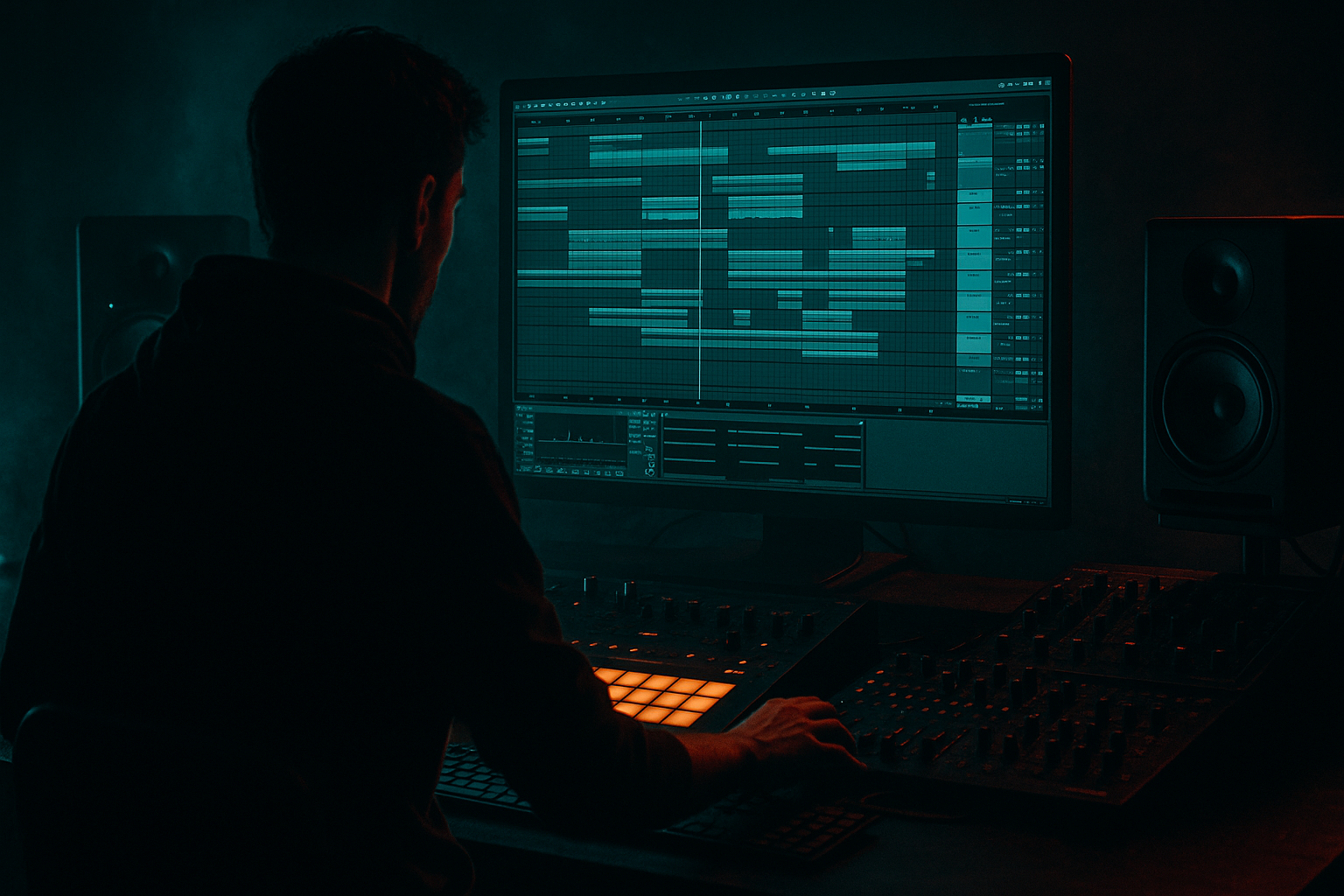
Enei Ableton Live 12 spoken sample blueprint with groove pool tricks (Beginner · Basslines · tutorial) cover image

Narrated lesson audio

The voice track includes the tutorial plus extra teacher commentary.

Open audio file

Main tutorial

1. Lesson Overview

This lesson — "Enei Ableton Live 12 spoken sample blueprint with groove pool tricks" — shows a beginner-friendly, practical blueprint for turning a short spoken sample into a rhythmic, musical element that works with a Drum & Bass bassline in Ableton Live 12. You’ll learn how to clean and chop a spoken sample, map it into Simpler for playable melodic/rhythmic variation, and use Live’s Groove Pool to lock the spoken sample and bassline into a groovy, human-feel pocket. All steps use Ableton stock devices and Live 12 workflows.

2. What You Will Build

  • A playable spoken-sample instrument (Simpler) that can be triggered like a synth.
  • A complementary sub/synth bassline that sits cleanly under the spoken element.
  • A groove-locked loop where the spoken hits and bass hits breathe together using the Groove Pool.
  • Basic processing to make the spoken sample fit the low-end and cut through the mix: EQ, Saturator, Compression, sidechain ducking.
  • 3. Step-by-Step Walkthrough

    Set session basics

    1. Set tempo to 174 BPM (typical Drum & Bass reference), create an Audio track and a MIDI track. Name them "Spoken-Smpl" and "Bass-MIDI".

    2. Drag a short spoken sample (1–4 words, dry recording) into the Audio track. If you don’t have one, record a short phrase directly into Live.

    Prepare the spoken sample

    3. Double-click the Audio clip, enable Warp, and choose Complex (or Complex Pro) warp mode for natural voice timbre. Set clip start/end and trim silence.

    4. Right-click the audio clip and choose “Crop Sample” if needed to free other parts of the file. Play and confirm it’s aligned to bars.

    Make it playable with Simpler

    5. Drag the cropped audio waveform into a MIDI track with Simpler (one-shot / classic or start in Classic mode). In Live 12 Simpler:

    - Set Simpler to Classic mode if you want pitch keyboard playability and envelopes.

    - Reduce the sample start slightly if the phoneme is plosive; use the start marker.

    - In the Pitch/Global section, set Transpose to 0 and use the “Filter” if you want darker tonal color.

    6. Create a 1-bar MIDI clip in the Simpler track. Program rhythmic notes that follow your desired pattern (try 1/16 or 1/8 subdivisions). These notes will become the spoken “stabs” or melodic phrases that interplay with the bass.

    Chop and vocal-slice alternative

    7. If you prefer per-syllable control, use Simpler in Slice mode:

    - Drag the sample into Simpler, switch to Slice mode, choose “Transient” slice method.

    - Play slices across a MIDI keyboard to perform rhythmic variations.

    Design the bassline

    8. On the Bass-MIDI track, load Ableton’s Analog, Wavetable, or Operator (stock synths). Create a deep sub tone:

    - Mono/legato mode, one or two oscillators (sine or low-passed saw), pitch envelope for short slides if needed.

    - Program a simple 2-bar bassline that emphasizes root notes on strong beats and offbeat stabs to complement the spoken hits.

    9. Route EQ and frequency management:

    - Put an EQ Eight on both tracks. On Spoken-Smpl: high-pass at ~120–200 Hz (steep 12-24 dB/oct) to keep sub clear.

    - On Bass-MIDI: low-pass below 5–6 kHz and boost around 60–120 Hz for weight.

    Groove Pool: extract and apply groove

    10. Extract a groove from a drum-break or create one:

    - Drag any break or drum loop into Live as an audio clip. Right-click it and choose “Extract Groove” OR open the Groove Pool (View → Groove Pool) and drag a groove preset from the Browser.

    - The groove will appear in the Groove Pool. Select it and tweak its parameters: Timing, Random, Velocity. For Drum & Bass, set Timing between 20–60 for noticeable swing; add 5–12 Random for humanization.

    11. Apply groove to clips:

    - Select the spoken-sample MIDI clip and, in the Clip view (Launch/Notes box), choose the extracted groove from the Groove dropdown. Do the same for the Bass-MIDI clip.

    - To hear the effect, ensure the “Commit” or “Apply” options are active if you want to render timing into audio later. Live applies groove in real time to MIDI clips automatically.

    12. Groove Pool tricks:

    - Use different groove amounts per clip by dragging the same groove from the pool onto multiple clips and adjusting the Groove Amount in the clip’s Launch box (or adjust Timing slider in the groove pool).

    - Offset timing intentionally: for spoken-sample, increase Timing and slightly increase Velocity to make spoken hits feel pushed or pulled against the bass.

    - Lock the drums to one groove and pull the spoken sample slightly off (reduce groove amount) for a “behind-the-beat” vocal feel typical of Enei grooves.

    Processing to glue spoken sample with bassline

    13. Add Saturator and Compression:

    - Spoken-Smpl: add Saturator (soft clip) to add presence. Lightly compress with Compressor (fast attack, medium release) to control dynamics.

    - Bass-MIDI: put Glue Compressor on the bass bus with sidechain input from a kick/snare audio group to create pumping that leaves room for the spoken hits. Set 3:1 ratio, threshold to taste.

    14. Sidechain/spatial tricks:

    - If the spoken sample clashes with the bass at mid frequencies, use Utility or EQ Eight to dip a narrow band around 300–600 Hz on the spoken sample.

    - For width, add Chorus-Ensemble (subtle) on spoken sample; keep bass mono under ~120 Hz by using Utility > Width 0% below that frequency (use an EQ split or Multiband Dynamics if desired).

    Variation and arrangement-ready clips

    15. Create variations:

    - Duplicate the Simpler MIDI clip and edit notes: remove some hits, change pitch of certain notes to follow the bass root or play a small melodic interval.

    - Use clip automation or the Simplers’ Transpose envelope to create pitch slides — good for little melodic hooks complementary to the bass.

    16. Commit a groove if needed:

    - If you want audio that retains groove timing, select the MIDI clip, right-click → “Freeze Track” then “Flatten” or export the clip as audio. Alternatively, in the Groove Pool choose “Commit” to render timing.

    4. Common Mistakes

  • Keeping low frequencies on the spoken sample: don’t let the spoken sample own sub frequencies. Always HP filter ~120–200 Hz to protect the bass mix.
  • Overdoing timing push: setting the Groove Timing too high makes elements sound broken; start modest (20–40) for DnB.
  • Applying the same groove amount to every clip: this flattens the pocket. Vary groove amount per element (drums, bass, spoken sample) to create depth.
  • Pitching spoken sample into extreme ranges: big transpose values cause strange artifacts — use small intervals or use simpler’s transpose + sample start to preserve intelligibility.
  • Too much saturation on the voice: it can become nasal and conflict with mids. Use parallel saturation if you want to retain clarity.
  • 5. Pro Tips

  • Use subtle pitch movement: transpose the spoken sample up/down by ±1–3 semitones across repeats for musical interest.
  • Extract groove from a breakbeat you like — Enei-style grooves often come from humanized breaks. Apply small Timing/Random values to bass and spoken samples rather than full quantization.
  • Use velocity sensitivity in Simpler: map velocity to sample volume so accents from your MIDI performance interact with groove velocity changes.
  • Create a “call and response”: have the bass play a short stab, then answer with a chopped spoken slice on the off-beat — groove pool timing makes this feel locked.
  • Automate the groove amount over time: reduce groove for a straight feel in drops then increase it for halftime or atmospheric breakdowns.
  • For cleaner integration, duplicate the spoken sample track, low-pass and heavily saturate the duplicate, sidechain it subtly under the bass for body-only presence.
  • 6. Mini Practice Exercise

    Time: 20–30 minutes

    1. Set Live to 174 BPM.

    2. Import a 2-word spoken sample. Crop and Warp in Complex.

    3. Make a Simpler playable patch and program a 2-bar rhythmic pattern.

    4. Create a simple two-note bassline on a stock synth (Analog/Wavetable/Operator).

    5. Extract groove from any short drum loop, set Timing ~30 and Random ~8.

    6. Apply the groove to both the spoken-simpler MIDI clip and the bass clip, but set the spoken clip’s groove amount 10–20% higher than the bass.

    7. HP-filter the spoken track at 150 Hz, add Saturator lightly, and glue-compress the bass with sidechain to a kick group.

    Goal: get a 2-bar loop where the spoken stabs and bassline lock tightly and feel “human” without smearing the sub.

    7. Recap

    In this beginner-friendly "Enei Ableton Live 12 spoken sample blueprint with groove pool tricks" lesson you learned how to:

  • Turn a short spoken sample into a playable Simpler instrument.
  • Use EQ, Saturator, and compression to fit the spoken sample above the sub bass.
  • Extract and apply grooves via the Live 12 Groove Pool to lock spoken samples and basslines into a musical pocket.
  • Use groove amount, timing, and randomization as creative tools to humanize and vary grooves — essential for Drum & Bass basslines and rhythmic spoken hooks.

Use the mini exercise to internalize the flow: sample → Simpler → bass → groove → process → iterate.


Ask GPT about this lesson

Chat with the lesson tutor, get follow-up help, or use quick actions.

Bigup 👽 Ask me anything about this lesson and I’ll answer in context.

Narration script

Show spoken script
Hi — welcome to this beginner-friendly lesson: Enei Ableton Live 12 spoken sample blueprint with Groove Pool tricks. Over the next few minutes I’ll show you a practical, hands-on workflow for turning a short spoken sample into a playable rhythmic element that locks with a Drum & Bass bassline. We’ll use only Ableton Live 12 stock devices and built-in workflows.

First, what you’ll build: a Simpler-based spoken-sample instrument you can play like a synth, a complementary sub/synth bassline, and a groove-locked loop where the spoken hits and the bass breathe together. You’ll also add basic processing — EQ, Saturator, compression and sidechain — so the voice sits above the low end and cuts through the mix.

Let’s get into the step-by-step.

Session basics
Start by setting your tempo to 174 BPM — a typical Drum & Bass reference. Create an audio track and a MIDI track and name them “Spoken-Smpl” and “Bass-MIDI.” Drag a short spoken sample — one to four words, a dry recording — into the audio track. If you don’t have one, record a short phrase directly into Live.

Prepare the spoken sample
Double‑click the audio clip to open Clip View. Enable Warp and choose Complex or Complex Pro mode for the most natural voice timbre. Trim the clip start and end to remove silence. If you’ve trimmed out a section of a larger file, right‑click and choose Crop Sample so the file is isolated. Play it back and make sure it sits aligned to bars.

Make it playable with Simpler
Drag the cropped waveform into a MIDI track with Simpler loaded. In Live 12, set Simpler to Classic mode if you want keyboard pitch playability and envelopes. If the sample has plosive attacks, nudge the sample start forward slightly using the start marker — a 10 to 60 millisecond offset often removes breath pops without killing the attack. Keep Transpose at zero initially and use the filter for darker tonal color if needed.

Create a one-bar MIDI clip on the Simpler track and program rhythmic notes using 1/16 or 1/8 subdivisions. These notes become your spoken “stabs” or melodic phrases that will interplay with the bass.

Chop and vocal-slice alternative
If you prefer per-syllable control, use Simpler’s Slice mode. Drag the sample in, switch to Slice, and choose Transient as the slice method. Play the slices across your MIDI keyboard to perform rhythmic variations.

Design the bassline
On the Bass-MIDI track, load a stock synth — Analog, Wavetable, or Operator. Build a deep sub tone: mono with legato, one or two oscillators using sine or low‑passed saw timbres, and a short pitch envelope if you want small slides. Program a simple two-bar bassline that emphasizes root notes on strong beats and places offbeat stabs to complement the spoken hits.

Routing and EQ
Add EQ Eight to both tracks. On the Spoken-Smpl, high-pass at roughly 120 to 200 Hz with a steep slope — 12 to 24 dB per octave — so the sample doesn’t take over the sub. On the Bass-MIDI, low-pass everything above 5–6 kHz and give a gentle boost around 60 to 120 Hz for weight.

Groove Pool — extract and apply groove
Drag a drum break or loop into Live as an audio clip. Right‑click it and choose Extract Groove, or open the Groove Pool from View → Groove Pool and drag a groove preset from the Browser into the pool. The groove appears in the Groove Pool; tweak Timing, Random, and Velocity. For Drum & Bass, start Timing between 20 and 60 for noticeable swing, and add 5 to 12 Random for humanization.

Apply the groove to clips by selecting your Simpler MIDI clip and the Bass-MIDI clip, and choosing the extracted groove from the Groove dropdown in Clip View. Live applies the groove in real time to MIDI clips. If you want a rendered audio result later, you can later commit the groove, freeze and flatten, or export.

Groove Pool tricks
You don’t have to use the same groove amount on every clip. Drag the same groove onto multiple clips and adjust each clip’s Groove Amount slider, or tweak the Timing and Random directly in the Groove Pool. For creative pocketing: nudge the spoken-sample’s Timing higher and slightly raise its Velocity so the spoken hits feel pushed or pulled against the bass. Lock drums to one groove, keep the bass medium, and try a different amount on the spoken part — pulling it slightly behind the beat can create the Enei-style laid-back vocal feel.

Processing to glue the spoken sample with the bassline
On the spoken track, add a Saturator for soft clipping and extra presence. Use light compression — fast attack, medium release — to tame dynamics. On the bass, use Glue Compressor on the bus and sidechain it from a kick/snare group so the bass pumps and makes room for hits. Suggested glue settings to start: 3:1 ratio, attack around 10 to 30 ms, release 150 to 350 ms — tweak to taste.

If the spoken sample clashes in the mids, dip a narrow band around 300 to 600 Hz with EQ Eight. For width, add a subtle Chorus-Ensemble to the spoken track while keeping sub frequencies mono on the bass. Use Utility or an EQ split to keep energy under about 120 Hz summed to mono.

Variation and committing groove
Duplicate and edit the Simpler MIDI clip to create variations — remove hits, change pitches, add small transpose moves across repeats for interest. Use Simpler’s Transpose envelope for pitch slides and small melodic hooks. If you want a committed audio clip that preserves groove timing, freeze the track and flatten it, or export the clip as audio. You can also use the Groove Pool’s Commit option when you need a permanent timing render.

Common mistakes to avoid
Don’t leave low frequencies on the spoken sample — high-pass at 120–200 Hz to protect the sub. Don’t set Timing too extreme; overly high values make the groove sound broken. Don’t apply the same groove amount to every element — that flattens the pocket. Avoid extreme transposition on the vocal which introduces artifacts; keep intervals small or resample. And be careful with saturation — too much makes the voice nasal; use parallel saturation if you want body without losing clarity.

Pro tips
Use subtle pitch movement: transpose the spoken sample by plus or minus one to three semitones across repeats. Extract grooves from humanized breaks for authentic Enei-style motion. Map velocity to Simpler’s volume and filter so your performance dynamics interact with the groove. Create call-and-response patterns between bass and chopped vocal slices. Automate groove amount across the arrangement — tighten it in drops, loosen it in breakdowns. For body-only presence, duplicate the spoken track, low-pass and saturate the duplicate, and mix it subtly under the dry track.

Mini practice exercise — 20 to 30 minutes
1. Set Live to 174 BPM.
2. Import a two-word spoken sample, crop and Warp in Complex mode.
3. Make a Simpler patch and program a two-bar rhythmic pattern.
4. Create a simple two-note bassline on Analog, Wavetable, or Operator.
5. Extract a groove from any short drum loop, set Timing to about 30 and Random to about 8.
6. Apply the groove to both clips, but set the spoken clip’s groove amount about 10 to 20 percent higher than the bass.
7. High-pass the spoken track at 150 Hz, add light Saturator, and glue-compress the bass with sidechain from a kick group.

Your goal is a two-bar loop where the spoken stabs and bassline lock tightly and feel human without smearing the sub.

Recap
You’ve learned how to turn a short spoken sample into a playable Simpler instrument, how to design a complementary bassline, and how to extract and apply grooves via Live 12’s Groove Pool. You also learned practical processing — HP filtering, Saturator, compression and sidechaining — and how to use groove amount, timing and randomization as creative tools to humanize and vary your loop.

Quick workflow shortcuts and final notes
Use Consolidate after trimming to create a neat sample file. Try Slice to New MIDI Track for fast vocal slicing. Preview grooves in the Groove Pool before applying them. When CPU becomes an issue, freeze and flatten tracks you’re happy with. Think of the Groove Pool as an instrument: audition, layer and automate it. Small timing and velocity tweaks make huge musical differences. The aim is a living pocket where the spoken sample and bass “breathe” together — iterate by listening in context and making micro adjustments.

That’s the blueprint. Take the mini exercise, experiment with groove amounts and small pitch moves, and trust your ears. Good luck — and have fun making those pockets breathe.

mickeybeam

Go to drumbasscd.com for +100 drum and bass YouTube channels all in one place - tune in!

Generating PDF preview…