Main tutorial
Lesson Overview
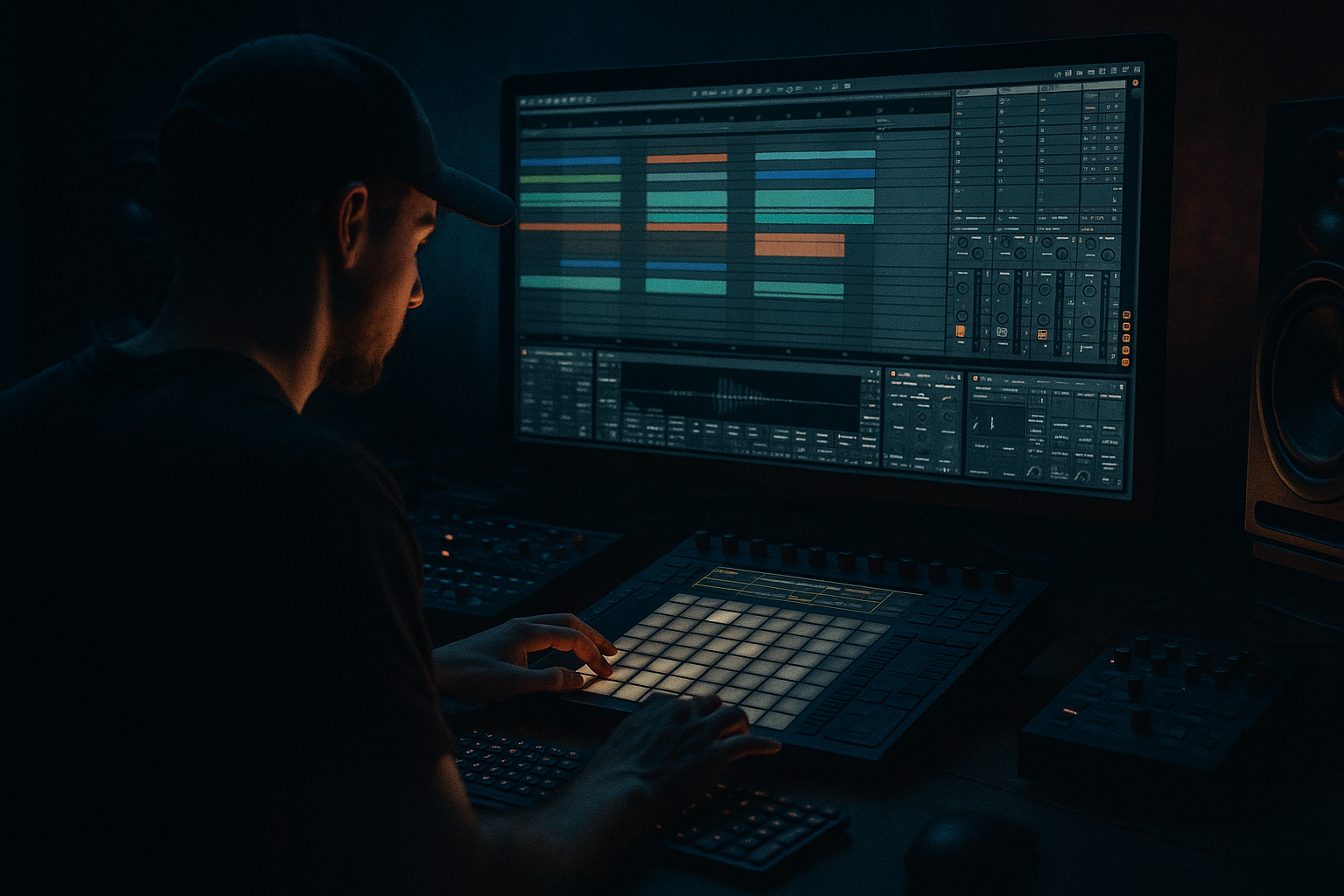
In this lesson, you’ll build a dark, layered drum bus for a 90s-inspired jungle / oldskool DnB vibe inside Ableton Live 12. The goal is not just to make the drums louder — it’s to make them feel like a record: gritty, tense, alive, and ready to sit under a bassline without falling apart.
In DnB, the drum bus is a huge part of the track’s identity. It shapes how the break feels in the drop, how the groove locks with the bass, and how much weight the tune has when the DJ mixes it into the next one. For oldskool and jungle-inspired energy, the drums should feel:
- tight but raw
- layered but not muddy
- dark, punchy, and slightly unstable
- forward-moving with ghost-note detail
- a main breakbeat layer
- a kick layer for weight
- a snare layer for snap and character
- subtle percussion or ghost hits for movement
- a bus processing chain that adds glue, grit, and darkness
- a simple 8-bar groove that feels like it belongs in a 90s jungle / oldskool DnB drop
- a driving 2-step or break-heavy loop
- a snare that cuts through without sounding harsh
- a kick that feels punchy but doesn’t fight the sub
- light breakup and saturation that give the drums attitude
- enough space for a bassline to answer the drums, not compete with them
- Making the drum bus too loud too early
- Over-processing the break
- Too much low end in the drums
- Snare becoming harsh or metallic
- No variation across the loop
- Using too much stereo on the drums
- Compressing until the groove dies
- Use parallel grime
- Keep the kick short and the snare proud
- Automate tiny changes in bus drive
- Let ghost notes do the storytelling
- Use arrangement contrast
- Respect the bass lane
- Reference oldskool records while balancing
- Does the snare hit with authority?
- Does the break still feel alive?
- Is there enough space for a bassline?
- Does the loop feel darker by bar 8 than bar 1?
- Start with a strong breakbeat, then layer kick and snare for impact.
- Use a Drum Group to glue the kit together with subtle EQ, compression, and saturation.
- Keep the drums tight, gritty, and mostly centered so the bass has room.
- Add darkness with controlled distortion, ghost notes, and arrangement variation.
- In DnB, the drum bus is not just mixing — it’s part of the composition.
This matters because in jungle and darker rollers, the drums are often the emotional engine of the track. A strong drum bus can make a simple break loop feel like a full arrangement. It also helps you keep headroom, control transients, and make room for the sub and reese movement later.
You’ll use Ableton stock devices only, with a beginner-friendly workflow that still sounds authentic. We’ll focus on a practical drum-bus chain, break layering, and arrangement decisions that support the composition of a dark DnB tune. 🥁
What You Will Build
By the end, you’ll have a drum bus group made from:
Musically, the result should feel like:
Think of it as the drum foundation for a tune where the bass can do call-and-response, the arrangement can breathe, and the whole drop can feel dark without becoming blurry.
Step-by-Step Walkthrough
1. Set up your drum group like a DnB writer, not just a beat maker
Open a new Ableton Live set and create a Drum Group with separate tracks for:
- Main break
- Kick layer
- Snare layer
- Perc / ghost hits
If you’re working from a sample pack, drag in one classic break sample and place it on the Main break track. Good jungle choices are break-style loops with clear snare hits and ghost notes. You want something that already has movement. The point is not to program every detail from scratch — it’s to shape a groove that feels alive.
For the beginner workflow, keep the first idea simple:
- Loop 2 bars
- Put the break on grid first
- Do not over-edit yet
In DnB, especially oldskool-inspired styles, the break itself often provides the “character layer.” You’ll later reinforce it with a kick or snare, but start with the core rhythm.
2. Choose and edit the break for darkness and groove
Double-click the break clip and open the Clip View. Turn on Warp if needed, and choose a warp mode that keeps drums clean. For breaks, Beats is usually a safe start.
Useful beginner settings:
- Warp mode: Beats
- Transient loop mode: Short or Mid
- Preserve: transients
- Transpose: leave at 0 unless you’re intentionally pitching the break
Now edit the break for a darker vibe:
- Cut out any bright, busy section that distracts from the groove
- Repeat one strong bar if the original loop is too “busy”
- Nudge a few hits slightly off-grid if the break feels too robotic
If you want more oldskool energy, use the Slice to New MIDI Track function on the break. This lets you rearrange the slices inside Drum Rack. Keep it beginner-simple: just duplicate a strong snare slice, add a ghost hit before a main snare, and leave the rest mostly intact.
Why this works in DnB: classic jungle and dark rollers often rely on break manipulation. Tiny edits create swing, tension, and that “people are playing this, not a loop machine” feeling.
3. Layer a kick under the break for impact without killing the groove
Add a separate kick sample or kick layer on its own track. In oldskool DnB, the kick is often not huge and modern-clean — it’s more about thump and placement.
Good beginner kick settings:
- Choose a short, punchy kick
- Tune it roughly to the key of the track if possible
- Keep the kick short enough that it doesn’t blur into the snare
Add EQ Eight to the kick track:
- High-pass only if needed, around 25–30 Hz
- Cut a little mud around 180–300 Hz if it feels boxy
- If it needs more click, add a small boost around 2–4 kHz carefully
Then compare the kick with the break. The kick should reinforce the groove, not replace it. If the break already has strong low-end impact, keep your kick quieter and more supportive.
A solid DnB rule: the kick can be felt more than heard. That leaves room for the bass and keeps the drop from sounding overfilled.
4. Build the snare layer to feel rude, not brittle
Add a snare layer underneath the break or use a separate snare sample on the backbeat. In darker jungle and 90s-inspired DnB, the snare often has a sharp crack, but it should still sound a little dirty and human.
Suggested starting point:
- Place the main snare on beat 2 and 4
- Lower the layer volume until it supports the break rather than sitting on top of it
- Add a second snare or rim layer only if the main snare lacks presence
Put Drum Buss on the snare track or group and try:
- Drive: 5–15%
- Transient: +5 to +20
- Boom: very low or off for now
If the snare feels too clean, add Saturator after it:
- Drive: 2–6 dB
- Soft Clip: On
If the snare is too harsh, use EQ Eight and gently cut around 5–8 kHz. You want the snare to cut, but not stab your ears.
Composition note: in jungle-style writing, snare placement is part of the hook. A strong backbeat can make the listener feel the drop even before the bassline evolves.
5. Create a Drum Bus group and shape the whole kit together
Select your drum tracks and group them into one Drum Group. This is where the track starts to feel like one instrument instead of separate samples.
On the Drum Group, build a simple Ableton stock chain:
- EQ Eight
- Glue Compressor
- Saturator
- Drum Buss
Start gentle. You’re gluing, not crushing.
Example settings:
- EQ Eight: high-pass at 20–30 Hz to clean sub-rumble; small dip around 250–400 Hz if muddy
- Glue Compressor:
- Ratio: 2:1
- Attack: 10 ms
- Release: Auto or 0.3 s
- Gain reduction: about 1–3 dB
- Saturator: Drive 1–4 dB, Soft Clip on
- Drum Buss: Transient +5 to +15, Drive 5–10%
Keep the mix control simple:
- If the drums lose punch, back off compression
- If they sound flat, reduce the amount of bus saturation
- If the low end gets messy, cut some low mids on the group EQ
Why this works in DnB: drum buses in drum and bass are often about cohesion and attitude. The break, kick, and snare need to feel like they came from the same world, especially when bass movement is about to get aggressive.
6. Add controlled grit for oldskool darkness
Now make the drums feel more 90s and underground. The trick is adding grit without turning the whole kit into mush.
Try one of these stock-device approaches:
Option A: Saturator on the drum group
- Drive: 3–6 dB
- Curve mode: default is fine
- Soft Clip: On
Option B: Drum Buss
- Drive: 5–20%
- Boom: very subtle or off
- Transients: slightly up for snappier hits
Option C: Redux on a return track or parallel bus
- Bit Reduction: subtle, not extreme
- Downsample: light amounts only
- Blend in quietly for texture
For beginner safety, keep the main drum bus relatively clean and use parallel grit if you want more edge. In Live, you can create a Return track with Saturator or Redux and send a little of the drum group to it.
Suggested send amount:
- Start around -20 to -12 dB send level
- Blend until the drums feel dirtier, not obviously effected
This is especially useful for jungle and oldskool DnB because the vibe often comes from imperfect texture — that slightly cracked, tape-like, worn-in character.
7. Tighten the groove with timing and velocity, not just effects
Before you add more processing, make the rhythm feel better.
Open the MIDI for any programmed kick, snare, or percussion layers and adjust:
- Velocity: vary ghost notes lower than main hits
- Timing: nudge some ghost notes slightly late or early
- Groove Pool: add a subtle swing if the pattern feels stiff
A good beginner approach:
- Main snare: consistent velocity
- Ghost hits: lower velocity, around 20–60% of main hit strength
- Perc hits: use them sparingly, maybe once every bar or two
Try adding a little swing to the break or percussion, but don’t overdo it. Too much swing can make DnB lose its drive.
If the groove feels stiff, experiment with:
- a few early ghost notes before the snare
- a tiny delay on a rim hit
- a repeated hi-hat pattern that answers the snare
This is composition, not just mixing. In DnB, the groove is often created by the relationship between the break and the programmed layers.
8. Write a simple 8-bar drum arrangement with tension and release
Don’t just loop one bar forever. Even beginner DnB benefits from variation.
Build an 8-bar section like this:
- Bars 1–2: main drum groove, no extra fills
- Bar 3: add a small kick variation or ghost snare
- Bar 4: remove one percussion hit to create space
- Bars 5–6: bring the full groove back
- Bar 7: add a tiny fill or snare drag
- Bar 8: leave space for a bass phrase or transition
In a drop, this kind of arrangement helps the listener feel motion without getting lost. You can automate:
- Drum Buss Drive up slightly in the final 2 bars
- Reverb send on a single snare hit for a transition
- Filter or EQ Eight on the drum group for a brief tension build
Example musical context:
- The first 8 bars of a dark roller drop might keep the drums sparse so the bassline can speak
- The next 8 bars could add a chopped break variation and a tougher snare layer
- A DJ-friendly intro might use only filtered drums and atmospheres before the full low end arrives
This keeps your tune mixable and gives your drop more shape.
9. Leave space for the bassline by checking the low end
In DnB, the drum bus must cooperate with the bass. If the drums are too wide, too long, or too bass-heavy, your sub and reese will lose definition.
On the drum group:
- Keep the deepest sub-range clean with EQ Eight
- Avoid overusing Boom in Drum Buss if the bassline already owns the low end
- Check the group in mono if possible by using Utility and setting width lower or monitoring carefully
Good starter mix choices:
- Drum group volume: leave enough headroom so the master is not clipping
- Kick and snare should read clearly, but not dominate the sub
- If the bassline is dense, reduce drum low mids around 200–350 Hz
If you later add a reese or dark bass, let the drums and bass take turns:
- drums hit cleanly on the backbeat
- bass answers in the gaps
- ghost notes fill the spaces between
That call-and-response relationship is a huge part of classic DnB movement.
Common Mistakes
Fix: lower the group volume and build punch with balance, not just gain.
Fix: keep the break recognizable. Use subtle EQ, compression, and saturation first.
Fix: high-pass lightly at 20–30 Hz, and reduce mud around 200–400 Hz if needed.
Fix: reduce high frequencies, lower saturation, or soften the layer blend.
Fix: add ghost notes, bar-to-bar changes, or remove one element every 4 or 8 bars.
Fix: keep kick and snare centered. Width is safer on hats, atmospheres, and effects.
Fix: aim for light glue, around 1–3 dB of gain reduction on the drum bus.
Pro Tips for Darker / Heavier DnB
Send drums to a return with Saturator or light Redux, then blend very quietly for underground texture.
Dark DnB often feels heavier when the kick is controlled and the snare carries the attitude.
A small lift in Drum Buss Drive during the last 2 bars of a phrase can create lift without needing a huge fill.
Quiet percussion and break details make the groove feel human and vintage.
A stripped 4-bar intro into a fuller 8-bar drop feels more impactful than dropping everything at once.
If you want a deep reese or sub-heavy drop, keep the drum bus tight and avoid unnecessary low-end layering.
Listen for how much snare crack, break grit, and low-end space the classic tunes leave. That’s often the secret.
Mini Practice Exercise
Spend 10–20 minutes making a dark drum bus loop:
1. Load one breakbeat loop into Ableton.
2. Layer one kick and one snare underneath it.
3. Group all drum tracks into a Drum Group.
4. Add EQ Eight, Glue Compressor, and Saturator to the group.
5. Set the compressor for light glue only.
6. Add 2–4 ghost hits or tiny percussion notes.
7. Make an 8-bar loop with one small variation every 2 bars.
8. Solo the drums and then hear them with a simple sub bass note.
Goal: the drums should feel like a real DnB drop foundation, not a generic loop.
Ask yourself:

