Main tutorial
Lesson Overview
This lesson is about building a DJ Sy-style rolling beat and bassline in Ableton Live: a groove that feels relentless, forward-driving, and easy to mix into a proper DnB set. The focus is not on a huge one-shot drop or a complicated neuro monster. It’s on the rolling pocket: drums that keep the floor moving, bass that answers the drums without crowding them, and a loop that can sit inside a track for 16, 32, or 64 bars without losing energy.
This technique lives right in the heart of rollers, dark dancefloor DnB, minimal-to-heavy club DnB, and older DJ Sy-inspired pressure. Musically, it matters because a rolling beat and bassline are what make people keep nodding after the first drop. Technically, it matters because the low end has to stay stable, the groove has to stay readable, and the bass movement has to feel alive without turning into low-end mud.
By the end, you should be able to hear a loop that feels:
- tight and locked to the drums
- weighty in the sub
- slightly gritty or reese-like in the mids
- simple enough to work as a DJ tool
- finished enough to drop into a track without sounding like a sketch
- a clean kick/snare backbone
- shuffled hats or break-driven top movement
- a bassline that alternates between sub weight and midrange movement
- a subtle sense of call-and-response
- enough variation to survive a full eight-bar phrase
- a mix-ready low end that still works in mono
- Let the sub stay boring on purpose. The more menace you want in the midrange, the simpler the sub usually needs to be. A clean sub under a dirty upper layer is often heavier than one distorted sound trying to do everything.
- Use note length like a groove tool. Shorter notes create tension and space; slightly longer notes create weight. In dark rollers, alternating short and medium note lengths often feels better than using one consistent length everywhere.
- Keep the reese movement above the danger zone. If your bass is detuned or moving, make sure the lowest octave stays more stable than the upper octave. This keeps the low end readable while the top layer provides attitude.
- Use tiny filter moves, not dramatic sweeps. A small shift in Auto Filter cutoff can make the bass feel alive without turning the drop into a breakdown.
- Build contrast between the first and second eight bars. For heavier DnB, the first phrase can be restrained, while the second phrase adds a little more grit or a one-note variation. That small escalation is often enough to make the drop feel like it is developing.
- Resample one dirty version and one clean version. Keep both. The clean one gives you mix stability; the dirtier one gives you edge for a later section or call-and-response moment.
- Treat the drum break and bass as one machine. If you use a break underneath, carve the bass rhythm so it complements the ghost notes instead of fighting them. The best dark rollers feel like the drums and bass are interlocking, not stacked separately.
- Use only Ableton stock devices
- Use one bass instrument and one processing chain
- Write no more than 4 unique bass notes
- Keep the sub centered and the mid layer restrained
- a 4-bar loop with kick, snare, hats or a break, and a rolling bassline
- one alternate version of bar 4 with a tiny variation
- one printed audio version of the bass
- Can you hear the snare clearly on 2 and 4?
- Does the bass still feel strong when played in mono?
- Does the loop feel like it rolls forward instead of sitting flat?
- Could this loop sit under a DJ mix without sounding overworked?
A successful result sounds like a bassline that keeps the room moving even when the arrangement is sparse: the drums push, the bass answers, and the whole loop feels inevitable.
What You Will Build
You will build a 4-bar rolling DnB loop with:
The finished result should feel dark, controlled, and dancefloor-focused. The bass should not wash over the drums. It should sit under them like pressure. The rhythm should feel like it wants to keep going, not like it is looping because it has to. If it is working, you will hear the kick and snare clearly, the bass will feel present but not bloated, and the groove will still make sense when you drop the bass to mono.
Step-by-Step Walkthrough
1. Start with a simple drum grid and a clear phrase length
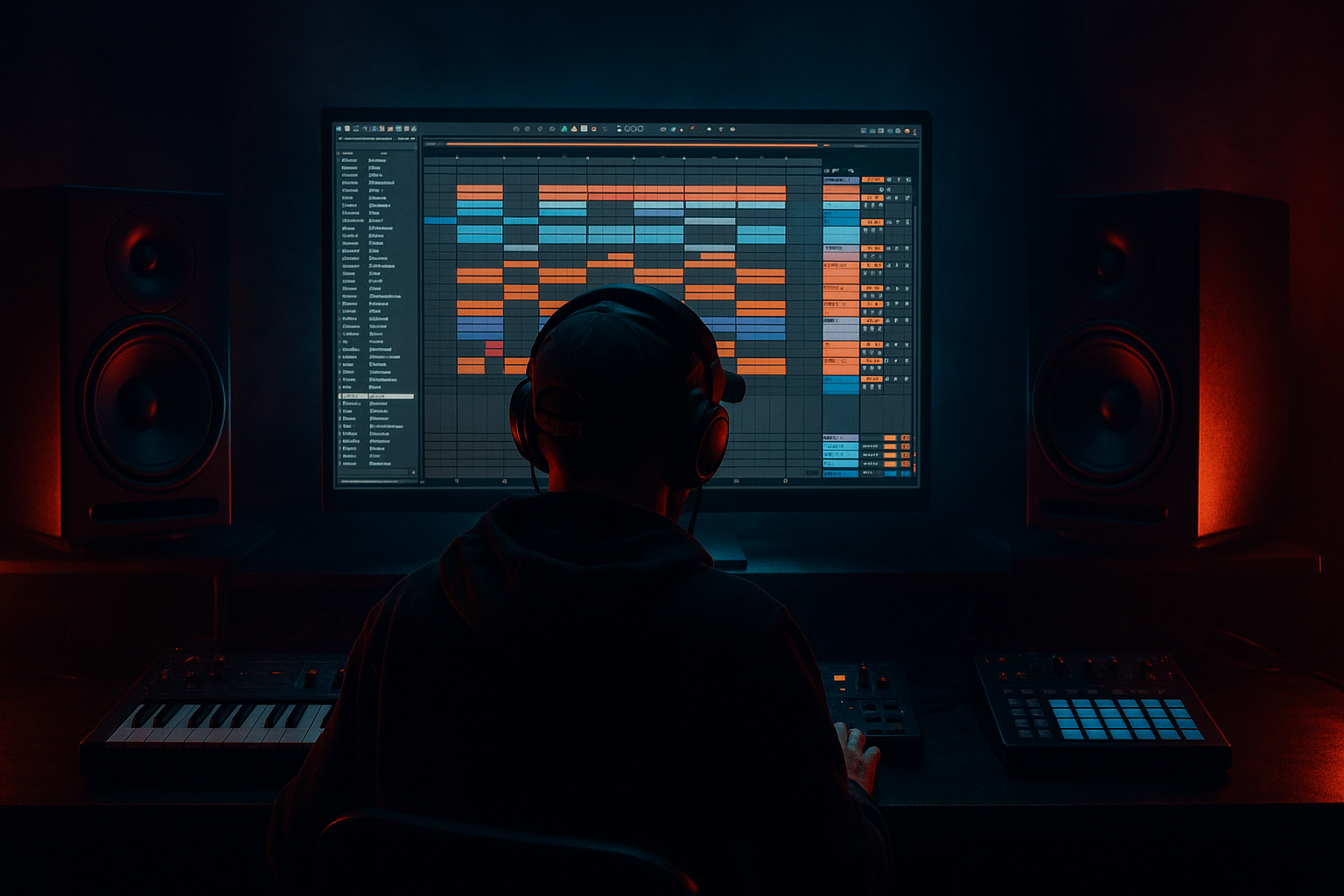
In Ableton Live, set up a fresh MIDI or audio loop around 170–174 BPM if you want the classic DnB pace. Build a 4-bar clip first, not 16 bars. For the drum backbone, place:
- kick on the first beat and light variations after the snare if needed
- snare on 2 and 4 as your anchor
- closed hats or a break layer filling the gaps
If you are using a break, keep it simple at first. Slice a two-bar break into a Drum Rack or warp it into the grid and trim it so the snare still feels dominant. The point is to build a groove that already moves before the bass arrives.
Why this works in DnB: the bassline only feels rolling if the drums are already creating forward motion. DnB is a dialogue between the drum punctuation and the bass phrasing. If the drums are vague, the bassline will sound vague too.
What to listen for: the snare should feel like the track is landing cleanly every 2 beats. The hat motion should create energy between the snares, not compete with them.
2. Make the kick and snare feel like the spine of the loop
Keep the kick and snare hierarchy obvious. Use Ableton’s EQ Eight on the drum bus if needed:
- high-pass anything unnecessary below 25–30 Hz
- lightly boost or preserve kick weight around 50–80 Hz if the sample supports it
- let the snare live with some body around 180–250 Hz
- control harsh snap around 3–6 kHz only if it starts biting too hard
If your kick is too long, shorten the tail with clip envelopes or choose a tighter sample. If the snare is too soft, layer a brighter top on top of a thicker body, but keep the snare centered.
A clean drum spine makes the bassline easier to place later. In dark rollers, the bass is often more convincing when the drums are uncomplicated and confident.
Workflow tip: once the kick/snare balance feels right, freeze and flatten or consolidate the drum loop if you are confident. Committing early keeps you from endlessly nudging drum transients while the bass work needs attention.
3. Build the bassline as two roles: sub and mid movement
Create a new bass instrument lane and think in two layers:
- sub role: pure low-frequency weight
- mid role: movement, growl, or reese texture
For the first pass, use a simple Operator or Wavetable patch:
- sine or triangle-based sub
- optional second layer with saws for mid texture
- keep the attack short
- keep the release controlled so notes do not blur into each other
Write a basic 1- or 2-note pattern first. In rolling DnB, the bassline often works best when it is not too harmonically busy. Start with root notes or a small interval movement, then make the rhythm interesting.
A useful beginner pattern is:
- note on the “and” after 1
- note on 2.3 or 2.4
- note on the “and” after 3
- short answer before bar 4
You are aiming for a bassline that feels like it is leaning forward around the snare, not sitting squarely on top of every beat.
4. Program rhythm first, then pitch
Don’t start by trying to write an “impressive” bass melody. In a DJ Sy-style roller, the rhythm does most of the work. Put the notes in the places where the drum groove leaves space, then decide whether the pitch should change.
Try this simple approach:
- place bass notes after the kick, not directly on top of the snare
- leave small gaps so the bass breathes
- make some notes shorter and some slightly longer
- keep the rhythm consistent enough to be recognizable
For a starter phrase, use a 4-bar idea where:
- bars 1–2 establish the groove
- bar 3 adds a small variation
- bar 4 creates a lead-in back to bar 1
What to listen for: the bass should feel like it is “talking back” to the drums. If every note lands too neatly on the grid, the loop can feel stiff. If the notes are too random, the groove disappears.
5. Shape the bass with Ableton stock devices, but keep the low end disciplined
A practical stock chain for the bass is:
Operator / Wavetable → Saturator → EQ Eight → Compressor
Or, if you want a dirtier texture:
Wavetable → Saturator → Auto Filter → EQ Eight
Suggested starting moves:
- Saturator: drive around 2–6 dB for controlled grit
- Auto Filter: low-pass somewhere around 120–250 Hz if the mid layer is too bright, or use a gentle movement with a slow envelope
- EQ Eight: cut unnecessary low rumble below 25–30 Hz and tame harshness around 2.5–5 kHz if needed
- Compressor: use lightly to steady the bass if note lengths feel uneven
If your bass has a sub and mid layer in one instrument, keep the sub simple and avoid widening it. The sub should stay mono and stable. Any stereo motion should live higher up in the bass texture, not in the deepest octave.
Mix-clarity note: mono compatibility matters a lot here. If the bass sounds big in stereo but weak in mono, you have too much side information in the low end. Keep the sub centered and let the movement happen above it.
6. Choose between A or B depending on the flavour you want
Here is your first real creative decision:
A. Clean roller
- use a smoother sine/triangle sub
- keep the mid layer restrained
- use less drive on Saturator
- aim for a bassline that feels deep, minimal, and DJ-friendly
B. Heavier DJ Sy-style pressure
- use a saw-based mid layer or a detuned reese texture
- add a little more Saturator drive
- use gentle filtering movement for attitude
- aim for a darker, more aggressive rolling energy
Both are valid. The key difference is how much personality the midrange has. For a beginner, the clean roller is easier to mix. The heavier version is more exciting, but it needs tighter control.
If you choose B, be stricter with note lengths and high-pass the texture layer so the low mids do not build up. If the bass starts masking the snare body, reduce the mid layer before touching the sub.
7. Check the groove against the drums before adding more notes
This is the moment to stop and listen in context. Play the full drum loop with the bassline and ask one question: does the bassline make the drums feel more dangerous, or does it step on them?
The bass should support the snare, not fill every hole. If the kick disappears, the bass is too long or too loud. If the snare feels less punchy, the bass may be sitting too much in the same low-mid area.
Helpful checks:
- solo the bass briefly, then bring drums back in
- listen at lower volume
- toggle mono on the bass if you can check it in your mix process
- compare the bass presence against the snare at the drop
What to listen for: the loop should still feel like it rolls even when the bass is reduced in level by a small amount. If the whole thing collapses without the bass blasting, the bassline probably isn’t rhythmically strong enough yet.
8. Add movement with automation, but keep it subtle
Rolling basses usually fail when the movement is too dramatic or too constant. Use automation like seasoning, not like the main dish.
Good beginner moves in Ableton:
- automate Auto Filter cutoff slightly across 4 or 8 bars
- automate Saturator drive up by a small amount for a variation bar
- automate a gentle rise in midrange brightness before a phrase change
- automate note velocity or clip gain to create breathing points
Keep the range modest. A filter sweep from roughly 150 Hz up to 500–800 Hz on the mid layer can create tension, but do not open it so much that the bass turns into a different instrument every bar.
Why this works in DnB: rollers need micro-change, not constant reinvention. Small automation changes keep the floor engaged while preserving the hypnotic loop.
9. Write a 4-bar answer phrase and make the loop breathe
Now create a second 4-bar version. Do not rewrite everything. Change only one or two things:
- shift one bass note
- shorten one note
- add a tiny pickup before bar 4
- remove a note to create space
A classic arrangement move is:
- bars 1–4: main roller
- bars 5–8: same idea with one added variation
- bar 8: short lift or gap to cue the next section
This creates the feeling of forward movement without making the track hard to mix. In DJ-friendly DnB, too much change too early can kill the mixability. A small switch-up is often enough.
Arrangement example: after 16 bars, drop the bass out for half a bar, then bring it back with a small pickup. That tiny break can make the next phrase hit harder than a big flashy fill.
10. Commit the bass to audio if the sound design is fighting you
If you find yourself endlessly tweaking the patch, stop and commit this to audio. Render or resample the bassline once the basic rhythm and tone are working.
Why this helps:
- you can edit note lengths more clearly
- you can reverse small bits if needed
- you can add one-shot textures to the end of notes
- you stop over-processing while trying to fix arrangement issues
After committing, trim the audio so the tails do not blur into the next kick or snare. You can also print a version with more grit and one version with less grit, then choose the one that supports the track best.
Fix-it moment: if the bass sounds too big but loses weight once you lower it, the issue is probably too much midrange and not enough actual sub. Rebuild the patch so the low octave is stronger before adding more distortion.
11. Test the bassline with a real DJ-style context
Put the loop against a simple intro or a stripped-down drum section. A roller needs to survive transitions, not just loop in isolation. Check how it behaves when:
- the drums are reduced for 4 bars
- a riser or tension effect enters
- the bass comes back after a short gap
If the bassline can carry the drop on its own without needing constant fill-ins, you are in a good place. The best rolling basslines feel like part of the arrangement from the start, not a loop waiting for decoration.
Common Mistakes
1. Making the bassline too busy
- Why it hurts: the groove stops rolling and starts sounding fussy.
- Fix: reduce the pattern to fewer notes and keep only one variation every 4 bars.
2. Letting the sub layer get stereo or smeared
- Why it hurts: the low end loses focus and mono playback weakens the bass.
- Fix: keep the deepest bass centered; move width to the mid layer only.
3. Using too much distortion on the whole bass
- Why it hurts: the bass gets aggressive but loses punch and sub clarity.
- Fix: lower Saturator drive, or distort only the mid layer and leave the sub clean.
4. Overlapping bass notes into the snare
- Why it hurts: the snare stops cutting through and the groove feels heavy in a bad way.
- Fix: shorten note lengths in the MIDI clip or trim audio tails so the bass steps out of the snare’s way.
5. Ignoring the kick-bass relationship
- Why it hurts: the low end becomes lumpy and the groove loses definition.
- Fix: move or shorten bass notes that land directly on top of the kick’s strongest low-end moment.
6. Adding movement too early
- Why it hurts: the bassline sounds like a sound-design exercise instead of a roller.
- Fix: establish the rhythm first, then automate a small filter or drive change after the groove is stable.
7. Forgetting the track context
- Why it hurts: a bassline may sound fine solo but collapse once drums, FX, and arrangement enter.
- Fix: check the bass with kick and snare in place, then listen again in a short 8-bar section.
Pro Tips for Darker / Heavier DnB
Mini Practice Exercise
Goal: build a 4-bar DJ Sy-inspired rolling bass loop that locks to drums and survives mono playback.
Time box: 15 minutes.
Constraints:
Deliverable:
Quick self-check:
Recap
A good DJ Sy-style roller is built on drum clarity, bass restraint, and small but deliberate movement. Start with a strong kick/snare spine, make the bassline rhythm first, keep the sub clean, and let the midrange add menace without destroying the groove. Use Ableton stock tools to shape, saturate, filter, and tighten the bass, then test it in context and commit to audio when the patch starts slowing you down. If it sounds like it wants to keep the room moving for 16 bars without begging for attention, you’ve got the right kind of roller.

