Main tutorial
Lesson Overview
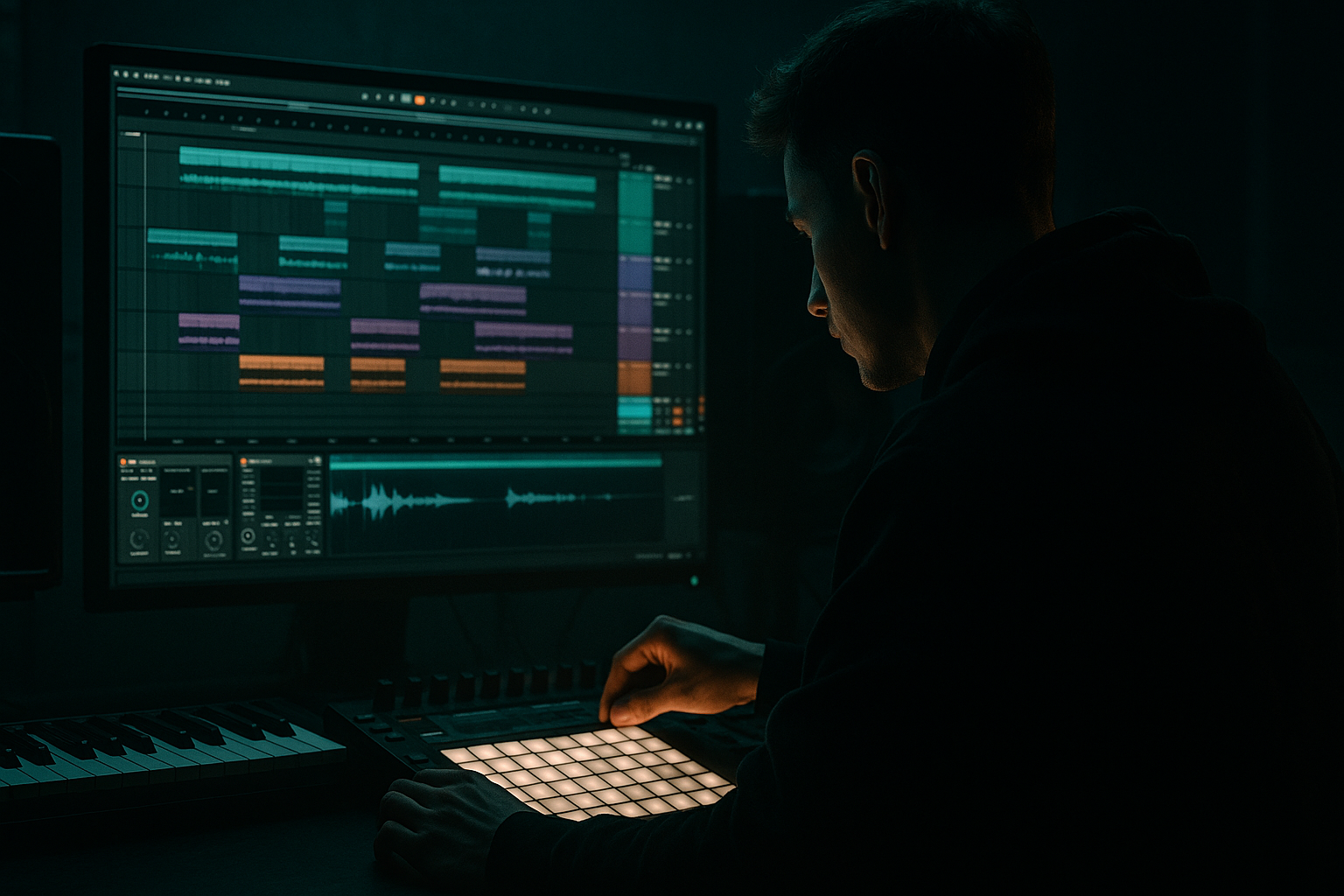
In this lesson, you’ll build a darkside bassline turn for oldskool jungle / darker DnB vibes inside Ableton Live 12, then automate it so it feels like a proper arrangement moment instead of just a loop.
A “bassline turn” is that point where the bass stops simply repeating and starts changing direction: a fill, a pitch movement, a filter sweep, a resampled wobble, or a call-and-response phrase that signals the next section. In Drum & Bass, this matters because bass is not just low-end support — it is part of the storytelling. The turn helps you move from one 8-bar phrase to the next, create tension before a drop, or switch from a straight roller into a nastier jungle variation without losing momentum.
This lesson fits best in the 8-bar transition before a new drop, break return, or switch-up. You’ll learn how to use Ableton stock devices like Operator, Wavetable, Auto Filter, Saturator, Drum Buss, Compressor, EQ Eight, Utility, and resampling to create movement that feels authentic to jungle and dark DnB. The focus is beginner-friendly, but the result will sound properly genre-aware.
Why this technique matters in DnB:
- DnB arrangements rely heavily on phrase changes every 8 or 16 bars
- Darker basslines need motion and contrast so they don’t feel static
- A good bassline turn can make a simple loop feel like a finished track
- Automation gives you tension, release, and energy without needing lots of extra layers
- Starts with a tight sub + reese-style mid bass
- Uses a bass turn in the last 1–2 bars of an 8-bar phrase
- Includes filter automation, pitch movement, and volume shaping
- Drops into a call-and-response arrangement with the drums
- Feels ready for a jungle / roller / darkside DnB track
- Is mixed with enough control to keep the kick, snare, and sub clear
- Bars 1–4: repetitive, hypnotic bass notes under a breakbeat
- Bars 5–6: add variation and a slight filter opening
- Bars 7–8: bassline turn with a fill, pitch dive, or movement burst
- Next section: return with a new drum or break variation
- Making the bassline too busy
- Using huge stereo on the sub
- Over-automating every parameter
- Letting the bass hide the snare
- Making the turn too dramatic too soon
- Ignoring the drums while designing bass
- Use Saturator before Auto Filter to make the filter movement more aggressive without adding too much volume.
- Layer a clean sub with a dirty mid bass in separate tracks. Keep the sub simple and the mid bass more animated.
- Try Drum Buss lightly on the drum group for extra punch and glue. Small amounts go a long way.
- Automate a tiny low-pass close on the final bass note for that “sucked back into the void” darkside feel.
- Add ghost notes in the bassline by placing very quiet MIDI notes before main hits. This can create a more haunted, rolling motion.
- Use a short reverb send on a few upper bass hits only — not the whole bassline. That gives depth without ruining the low end.
- Reference oldskool jungle phrasing: if a section feels too modern and flat, simplify the bass rhythm and make the drum edit do more of the talking.
- Use resampling for attitude: once you like a bass turn, print it to audio and cut it like a break. That can add rawness fast.
- Build your bassline around a simple loop first
- Use Automation to create the turn, especially with Auto Filter, volume, and saturation
- Keep the bass tight, rhythmic, and space-aware
- Let the turn happen over the last 1–2 bars of an 8-bar phrase
- Resample when you want extra weight and easier arrangement control
- Always check the bass against the drums and in mono
---
What You Will Build
By the end, you’ll have a short dark, oldskool-style bass phrase that does the following:
Musically, think of a pattern like this:
The result is not a giant sound-design monster. It’s a practical arrangement-ready bass phrase that feels underground, tense, and very DnB.
---
Step-by-Step Walkthrough
1. Set up a simple DnB loop at the right tempo
Start a new Ableton Live set and set the tempo to 170–174 BPM. That range works well for oldskool jungle and darker DnB. If you want a slightly looser roller feel, 170–172 BPM is safe. If you want more urgency, go toward 174 BPM.
Build a basic loop:
- One breakbeat on an audio or drum rack track
- A kick and snare pattern if you’re not using a full break
- A separate bass MIDI track
Keep the loop at 8 bars so the automation feels like a real arrangement turn. In DnB, 8-bar phrasing is your best friend because it lets you build tension without losing the dancefloor energy.
If you’re using a break, slice it with Simpler or leave it as audio for now. Don’t overcomplicate the drum side yet — the bass turn is the focus.
2. Create a dark bass instrument with stock devices
On a new MIDI track, load Operator or Wavetable. For beginner-friendly oldskool DnB, Operator is a great starting point because it makes sub and tone control very clear.
Try this simple Operator setup:
- Oscillator A: sine wave for the sub
- Oscillator B: saw or square for the mid character
- Keep the sub clean and centered
- Lower the mid oscillator so it supports, not dominates
If you use Wavetable instead:
- Choose a basic saw-type wavetable
- Keep unison low, around 1–2 voices
- Avoid huge stereo spread at this stage
Add Saturator after the synth:
- Drive: 2–6 dB
- Soft Clip: On
- Output: trim so you don’t get fooled by extra loudness
Add EQ Eight after Saturator:
- High-pass only if needed above 25–30 Hz
- Cut any muddy area around 180–300 Hz if the bass clouds the break
- If the mid bark is harsh, gently reduce around 2–5 kHz
Why this works in DnB: you’re separating the sub foundation from the mid character, which is essential when fast drums are busy and the bass has to stay solid.
3. Program a short bass phrase with room for a turn
Draw a simple 2-bar MIDI idea first. Keep it rhythmic and minimal. Jungle and oldskool DnB basslines often work best when they lock to the kick/snare pocket rather than constantly running.
Beginner-friendly phrasing idea:
- Use 2–4 notes per bar
- Leave small gaps so the break can breathe
- Put some notes just before or after the snare to create tension
- Repeat one idea for the first 6 bars, then change the last 2
A good starter pattern is:
- Bar 1–2: same bass note rhythm
- Bar 3–4: one extra pickup note
- Bar 5–6: slightly more movement
- Bar 7–8: bassline turn with a fill or pitch move
Keep notes short at first. In DnB, short bass notes often hit harder than long ones because they leave space for drums and sub clarity. If your bass is too long, it can blur the groove.
4. Shape the bass rhythm with note length and velocity
Go into the MIDI clip and adjust note lengths and velocity. This is a simple but powerful way to make the bass groove with the break.
Try these settings and choices:
- Shorten most notes to around 1/8 to 1/4 beat length if the bass is percussive
- Use slightly longer notes for sustained tension before the turn
- Raise velocity on the notes you want to feel like accents
- Lower velocity on ghostier notes to make the line breathe
If the bass feels too flat, vary the note start positions slightly. A bassline that lands exactly the same way every bar can feel stiff. In jungle and rollers, a tiny bit of push-pull helps the groove feel human and alive.
Important: don’t make the bass rhythm compete with the snare. Leave the snare space clean on beats 2 and 4, or at least make sure the bass doesn’t mask the attack.
5. Build the “turn” using automation on filter and volume
This is the core of the lesson. The turn is usually created by automation over the last 1–2 bars of the phrase.
Add Auto Filter after the synth or after Saturator. Use a low-pass filter to start.
- Frequency start point: around 200–600 Hz if you want it dark
- Resonance: keep modest, around 10–25%
- Drive: use lightly if it adds character
Now automate the filter frequency:
- Bars 1–6: keep it relatively closed
- Bars 7–8: automate it opening up before the change
- On the final hit, either snap it closed again or open sharply depending on the vibe
Also automate Utility or the synth volume for a bass dip or push:
- Pull the bass down slightly on the last note before the turn
- Or raise one final hit by a small amount so the turn punches harder
You can also automate:
- Saturator Drive up slightly during the turn for extra grit
- Wavetable filter cutoff if you’re using Wavetable
- Operator envelope decay for a sharper ending or more tail
Keep it subtle. In dark DnB, the goal is usually controlled menace, not a huge EDM sweep.
6. Add a small pitch or note movement for jungle character
For an oldskool jungle feel, a simple pitch movement can make the turn much more musical and authentic.
Options inside Ableton:
- Automate the transpose in the MIDI clip for one final note
- Use pitch bend on the last note only
- If you resample the bass, you can warp or pitch one hit down slightly for a gritty ending
Beginner-safe idea:
- On the final bar, pitch the last bass note down by 1–3 semitones
- Or create a quick two-note move like root note to a lower note
This works because classic jungle and darker bass music often use small, dramatic pitch gestures rather than huge melodic runs. It gives the ear a clear sense that the phrase is ending and something is about to happen.
7. Resample the bass turn for extra weight and control
Once the automation sounds good, resampling helps you turn the idea into a more “finished” DnB texture.
Create a new audio track and set the input to your bass track, then record the phrase. After recording:
- Trim the best section
- Consolidate it if needed
- Use the audio clip to add one-off effects or edits
Why resampling helps:
- You can create a bass hit that feels more solid
- You can edit the turn like audio, which is great for jungle-style chops
- You can duplicate and rearrange the turn faster than re-programming MIDI
You can also add Warp if needed, but keep it simple. If the turn is already tight, don’t over-edit it.
A nice workflow move: keep the original MIDI bass and the resampled audio version both available. The MIDI gives you control, the audio gives you attitude.
8. Arrange the bassline turn against the drums
Now place the 8-bar phrase into a larger arrangement. A very practical DnB structure is:
- Bars 1–8: intro groove
- Bars 9–16: first drop with the bassline turn in bar 15–16
- Bars 17–24: variation with extra break edits or a new bass response
- Bars 25–32: heavier return or breakdown
For the turn moment, add one or two arrangement supports:
- A drum fill in the last half-bar
- A reverse cymbal or noise rise
- A snare rush or extra ghost percussion
- A short atmospheric hit or reverb tail
In jungle and oldskool DnB, the bass turn often works best when the drums also switch slightly. Even a tiny change in the break, like a kick pickup or extra snare ghost, makes the whole section feel intentional.
Keep the intro and outro DJ-friendly:
- Leave the first 8 or 16 bars relatively stripped
- Avoid putting your biggest bass turn too early
- Save the nastiest movement for the drop or second phrase
9. Balance the low end and check mono
This is where the track starts feeling like a real production, not just an idea.
Use these stock tools:
- Utility on the bass track: set Bass Mono behavior by keeping the low-end centered manually through arrangement choices
- EQ Eight on the bass: keep only the useful low end and mid texture
- Compressor or Drum Buss on the drum group if needed
Practical mix checks:
- Keep bass and kick from fighting in the same low spot
- Make sure the sub is strong but not overblown
- Check the bass in mono to ensure the core movement still works
- Don’t let automation make the bass unexpectedly louder than the drums
If your breakbeat is heavy, reduce bass midrange around 250–400 Hz a little more. That area can get crowded fast in jungle-style arrangements.
---
Common Mistakes
Fix: simplify the rhythm. In DnB, fewer well-placed notes often hit harder than constant movement.
Fix: keep the lowest bass centered and mono-compatible. Wide sub weakens the drop on club systems.
Fix: choose 1–3 main automation moves, like filter cutoff, volume, and saturation. More is not always better.
Fix: carve space with note placement and EQ. The snare needs its moment, especially in jungle and oldskool DnB.
Fix: build tension across 1–2 bars, not all at once. The turn should feel earned.
Fix: always listen to the bass with the breakbeat. DnB bass only makes sense in context.
---
Pro Tips for Darker / Heavier DnB
Why this works in DnB: darker bass music often feels powerful because it balances repetition and change. The loop keeps the dancer locked in, while the turn gives the track a story arc.
---
Mini Practice Exercise
Spend 15 minutes making one 8-bar bassline turn.
1. Set Ableton to 172 BPM.
2. Create one drum loop with a breakbeat or simple kick/snare pattern.
3. Make a bass track with Operator or Wavetable.
4. Write a 2-bar bass idea and repeat it across 8 bars.
5. Automate Auto Filter so it opens slightly in bars 7–8.
6. Add one pitch dip or lower final note in the last bar.
7. Add Saturator with 2–4 dB Drive and compare before/after.
8. Resample the final 2 bars and trim the best moment.
9. Play the loop with the drums and ask: does the turn feel like a transition?
Goal: finish with one bassline phrase that clearly feels like it belongs in a dark jungle / oldskool DnB drop.
---
Recap
If you can make a bassline turn that feels tense, controlled, and danceable, you’ve got one of the most important Darkside DnB arrangement skills locked in 🔥

