Main tutorial
Lesson Overview
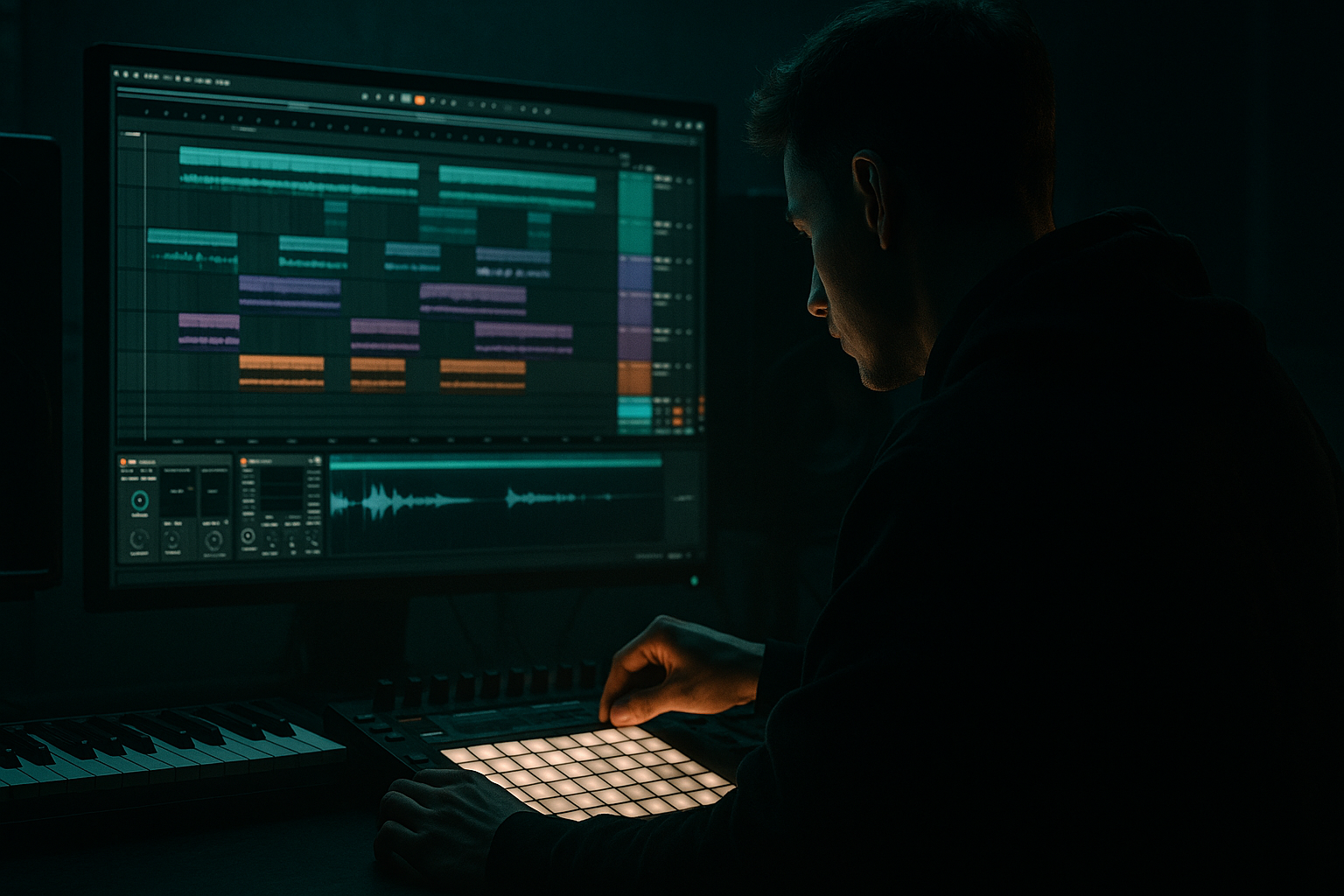
This lesson shows you how to design and arrange a Concrete Echo oldskool DnB swing vibe in Ableton Live 12, with a focus on vocals as a rhythmic, eerie, and musical element. The goal is not to make a polished pop vocal — it’s to turn a short vocal phrase into a jungle-style hook, ghostly texture, and call-and-response device that sits naturally over breakbeats and sub pressure.
In oldskool DnB and jungle, vocals often work like an extra drum instrument: chopped, repeated, delayed, pitched, and pushed into the groove. A concrete echo vocal feels like it was recorded in a tunnel, warehouse, stairwell, or underpass — gritty, spacious, and a little haunted. That character is perfect for darker rollers, 90s-style jungle, and modern break-led DnB with atmosphere.
Why this matters: vocals can instantly make an instrumental feel more memorable. In DnB, they help create identity, tension, and arrangement movement without needing a huge number of sound layers. If you learn how to shape one vocal into rhythm, you can use it to fill intros, transitions, drops, and breakdowns with very little CPU and a lot of vibe.
This is especially useful in Ableton Live because you can quickly warp, slice, automate, resample, and bounce vocal ideas into playable parts. We’ll keep everything beginner-friendly and practical, while still making it feel like a real DnB session. 🎛️
What You Will Build
By the end of this lesson, you will have a short vocal idea turned into a Concrete Echo oldskool DnB swing arrangement with:
- a chopped vocal hook that hits in the drop
- a delayed echo layer that adds movement and space
- a dark reverb tail for tunnel-like atmosphere
- call-and-response phrasing between the vocal and drums
- simple automation that makes the section feel like it evolves
- a vocal chain that stays controlled, clear, and heavy enough for DnB
- intro: filtered vocal atmosphere and echo tails
- build: chopped vocal rhythm rising in energy
- drop: short vocal hits placed between drums
- switch-up: echo-heavy phrase before the next 8-bar section
- Too much reverb, not enough clarity
- Vocals fighting the snare
- Over-editing every chop
- Echo clutter in the low end
- Too much brightness
- Not enough arrangement change
- Ignoring mono compatibility
- Pitch the vocal down 3–7 semitones for a more sinister, warehouse feel.
- Use Echo with slightly modulated repeats to create unstable, ghostly motion.
- Put Saturator before Echo if you want the repeats to inherit dirt; put it after if you want to crush the whole tail more aggressively.
- Use a short delay on one side and a slightly longer one on the other for a wider but still controlled concrete-space effect.
- Keep the sub bass in mono and let the vocal echo live mostly in the mids and highs.
- Use Auto Filter automation on the vocal return to make the echo darken during transitions.
- For a grittier underground feel, resample the vocal, then add Redux very lightly:
- If the vocal feels too clean, layer a very low-volume duplicated track with a darker EQ cut and extra reverb only. That creates depth without making the main vocal muddy.
- In oldskool DnB, vocals work best when they behave like rhythm, texture, and atmosphere.
- Use Ableton stock devices to chop, color, echo, and automate the vocal.
- Keep the vocal out of the sub range and let the drums lead the groove.
- Use send effects, swing, and resampling to create the concrete echo vibe.
- Arrange the vocal in sections so it evolves across the track, not just loops endlessly.
Musically, imagine a 174 BPM jungle/oldskool DnB loop where the vocal says a short phrase like “back it up,” “come again,” or “step inside,” then gets chopped into rhythmic repeats, echoed into the background, and arranged so it answers the breakbeat instead of fighting it.
The final result should feel like:
Step-by-Step Walkthrough
1. Set the project up for oldskool DnB timing
Open Ableton Live and set the tempo to 170–174 BPM. For this lesson, 174 BPM is a great starting point because it sits right in classic jungle territory and works well with swinging vocal chops.
Create a new audio track for the vocal and load a short phrase. Keep it simple — one or two bars is enough. Good vocal material for this style is:
- spoken words
- one-shot ad-libs
- half-sung lines
- chopped samples from your own recording
- short phrases with attitude or tension
If you’re recording yourself, don’t worry about perfect singing. The vibe matters more than polish here. For a beginner-friendly approach, record 4–8 takes and keep the most interesting word endings, breaths, and pauses. Those tiny details are gold in jungle and DnB.
Turn on Warp and make sure the vocal is locked to the grid. If the phrase has a loose feel, try Complex Pro mode for smoother time-stretching. If it’s more percussive and spoken, Beats mode can keep the transients sharper.
Why this works in DnB: the genre is built on tight timing and repeated momentum. Even a vocal needs to lock into the groove so the drums and bass stay driving.
2. Trim the vocal into usable chunks
Duplicate the vocal clip and cut it into 3–6 small phrases or single words. In Ableton, use the clip view and separate the parts into:
- a main phrase
- a short answer phrase
- a single-word hit
- a breath or tail for atmosphere
You’re not trying to keep the whole vocal line intact. For oldskool DnB, the strongest move is often to isolate just the most rhythmic part of the phrase.
Try arranging the chops so they land like drum fills:
- phrase on beat 1
- reply on beat 3
- single-word stab before the snare
- a tail that spills into the next bar
If needed, use Slice to New MIDI Track and choose slicing by transients. This is a great beginner move because it turns the vocal into playable pads or hits. Then you can trigger the slices with MIDI like a drum kit.
Recommended starting point:
- keep slices short, around 1/8 to 1/4 note lengths
- leave tiny gaps between cuts for groove
- don’t over-edit every breath — some looseness sounds more human and more underground
3. Build a simple vocal rhythm with swing
Create a MIDI track with the sliced vocal if you used slicing, or duplicate audio clips manually if not. Now make the vocal part feel like it belongs in a jungle rhythm.
Use Ableton’s Groove Pool and try a swing groove such as MPC 16 Swing or a light shuffle feel. Start subtle:
- Groove Amount: around 20–35%
- if the vocal starts feeling late or lazy, reduce it
Place the vocal hits so they support the break rather than sit exactly on top of every drum hit. A classic approach is:
- vocal hit on the off-beat after the snare
- answer phrase before the next kick
- occasional gap for tension
In oldskool DnB, this “push and pull” is what gives the track swagger. The vocal should feel like it’s dancing around the break, not reading off a grid.
If the rhythm feels too static, use Velocity on MIDI slices to make some hits quieter. This creates a more natural, ghosted feel.
4. Shape the vocal tone with stock Ableton devices
Put a vocal chain on the track using stock devices only. A clean beginner chain could be:
- EQ Eight
- Compressor
- Saturator
- Echo
- Reverb
Start with EQ Eight:
- high-pass around 120–180 Hz to remove low rumble
- cut muddy buildup around 250–500 Hz if needed
- gently reduce harshness around 2.5–5 kHz if the vocal is biting too hard
Then add Compressor:
- ratio around 2:1 to 4:1
- attack around 10–30 ms
- release around 50–120 ms
- aim for light control, not heavy squashing
Add Saturator for grit and presence:
- drive around 2–6 dB
- turn on Soft Clip if the vocal needs a little edge
- keep an ear on harshness, especially on bright phrases
Add Echo for the concrete feel:
- sync to 1/8 or 1/4
- feedback around 20–45%
- filter out some highs with the echo’s built-in tone controls
- add a bit of modulation if you want the repeat to wobble slightly
Then add Reverb:
- decay around 1.2–2.8 seconds
- pre-delay around 15–35 ms
- keep low cut on so the reverb doesn’t clog the sub
- don’t make it too wide or too bright
The combination creates a vocal that feels like it was bounced off walls in a concrete space — hence the name. The vocal stays intelligible enough to matter, but also becomes part of the atmosphere.
5. Create the concrete echo with return tracks
For a more flexible workflow, set up two return tracks:
- Return A: short echo
- Return B: dark reverb
On Return A, use Echo with:
- time: 1/8D or 1/4
- feedback: 25–40%
- filter: roll off some highs above 6–8 kHz
- dry/wet: 100% on the return
On Return B, use Reverb with:
- decay: 2–4 seconds
- pre-delay: 20 ms
- low cut: around 180–250 Hz
- high cut: around 6–10 kHz
Now send selected vocal chops into these returns. This gives you control over which words feel close and which ones vanish into space.
A very practical arrangement move: send only the last word of a phrase into heavier reverb or echo. That creates a natural tail that leads into the next bar.
If you want the echo to feel more “concrete,” place Hybrid Reverb on the return instead of standard Reverb, and keep the tone dark. Use a shorter room-like sound rather than a glossy hall.
6. Pair the vocal with the drums for call-and-response
In DnB, vocals are often strongest when they answer the drum pattern instead of sitting over everything. Load or program a simple breakbeat and keep the groove sparse enough to leave room.
A beginner-friendly arrangement idea:
- main break loop
- vocal hit after the snare
- second vocal reply before the next bar
- short empty gap for the drums to breathe
Try placing the vocal in the spaces between:
- snare hits
- kick pickups
- ghost notes in the break
If your break is busy, use the Arrangement View to carve out little spaces by lowering the vocal level or shortening a phrase. You can also use Utility on the drum bus to narrow the stereo a little and keep the center free for the vocal echo.
Why this works in DnB: the drums already carry a lot of rhythmic information. The vocal becomes more powerful when it acts like another percussion layer, not a lead singer trying to dominate the mix.
7. Automate the mood across 8-bar sections
To make the arrangement feel like a real track, automate the vocal effect levels over time. This is where the idea turns from a loop into a song.
Use automation on:
- Echo send level
- Reverb send level
- EQ Eight high-pass frequency
- Saturator drive
- Filter frequency if you add Auto Filter
A simple 16-bar progression:
- Bars 1–4: filtered vocal atmosphere, low send to echo
- Bars 5–8: more chopped phrases, slightly louder and clearer
- Bars 9–12: drop section with short vocal stabs only
- Bars 13–16: reverb and echo increase for a switch-up or transition
If you want a classic jungle-style intro, start with the vocal heavily filtered using Auto Filter:
- low-pass around 300–800 Hz
- resonance low or moderate
- slowly open it over 4–8 bars
This creates tension and keeps the listener waiting for the beat.
Keep automation moves small but noticeable. DnB arrangement often relies on repeated energy shifts rather than huge dramatic changes.
8. Resample the best vocal moment
Once the vocal chop and effects feel good, resample it. Create a new audio track, set its input to Resampling, and record a pass of the best phrase with effects.
This is one of the easiest ways to get a more “finished” DnB sound because you commit to the texture. Then you can:
- reverse one tail
- cut a new entrance
- repeat one great hit
- pitch a section down for extra darkness
After resampling, you may even find a more musical phrase hidden inside the echo tail. That’s common in jungle production: the resampled texture becomes part of the rhythm.
Keep the resampled clip short and usable. Aim for a phrase that works in:
- intro
- drop
- breakdown
- transition
9. Arrange it like a DnB track, not just a loop
Build a rough arrangement with clear roles:
- Intro: filtered vocal echoes, break teaser, no full bass yet
- Build: chopped vocal rhythm and more drum energy
- Drop: main vocal hook between drum hits
- Switch-up: echo-heavy tail, short drum fill, then back in
A practical structure for a beginner:
- 16-bar intro
- 16-bar drop
- 8-bar switch-up
- 16-bar second drop
Keep the vocal hook strongest in the first drop, then slightly reduce it in the second drop so the arrangement evolves. You can swap one vocal phrase for another or mute one of the repeats.
If you’re making darker rollers, keep the vocal arrangement minimal and use the echo as the main character. If you’re making oldskool jungle, let the chopped vocal be more obvious and rhythmic.
Common Mistakes
Fix: high-pass the vocal and reduce reverb decay. Keep the dry vocal or main chop upfront.
Fix: move vocal hits into gaps, not directly on top of strong drum accents.
Fix: keep some human timing and breath. Too-perfect vocal chopping can sound stiff.
Fix: filter the echo return and remove sub frequencies with EQ Eight.
Fix: reduce 3–8 kHz with EQ or lower the Saturator drive. Harsh vocal echoes can tire the ear fast.
Fix: automate send levels, filter cutoffs, or swap one vocal phrase every 8 bars.
Fix: keep the core vocal and all low-end elements centered. Check with Utility set to mono on the master if needed.
Pro Tips for Darker / Heavier DnB
- downsample subtly
- keep the effect understated
- use it more for texture than obvious lo-fi destruction
Mini Practice Exercise
Spend 10–20 minutes making a four-bar vocal phrase for a jungle/oldskool DnB loop.
1. Find or record a short phrase with attitude.
2. Warp it to 174 BPM.
3. Cut it into 3–5 pieces.
4. Add EQ Eight, Saturator, Echo, and Reverb.
5. Make one chopped rhythm that answers the snare.
6. Automate the echo send so bars 3–4 feel bigger than bars 1–2.
7. Resample the best version and place it into a simple 16-bar arrangement.
Goal: by the end, you should have a vocal that feels like a real DnB hook, not just a sample sitting on top of the beat.
Recap
If you can turn one small vocal phrase into a gritty, swinging, echo-heavy DnB hook, you’ve learned a core jungle production skill that will keep paying off in every track you make.

