DNB COLLEGE

Drum & Bass Ableton Live 12 Tutorials

LESSON DETAIL

Compose oldskool DnB atmosphere for timeless roller momentum in Ableton Live 12 (Intermediate)

An AI-generated intermediate Ableton lesson focused on Compose oldskool DnB atmosphere for timeless roller momentum in Ableton Live 12 in the Drums area of drum and bass production.

Back to lessons
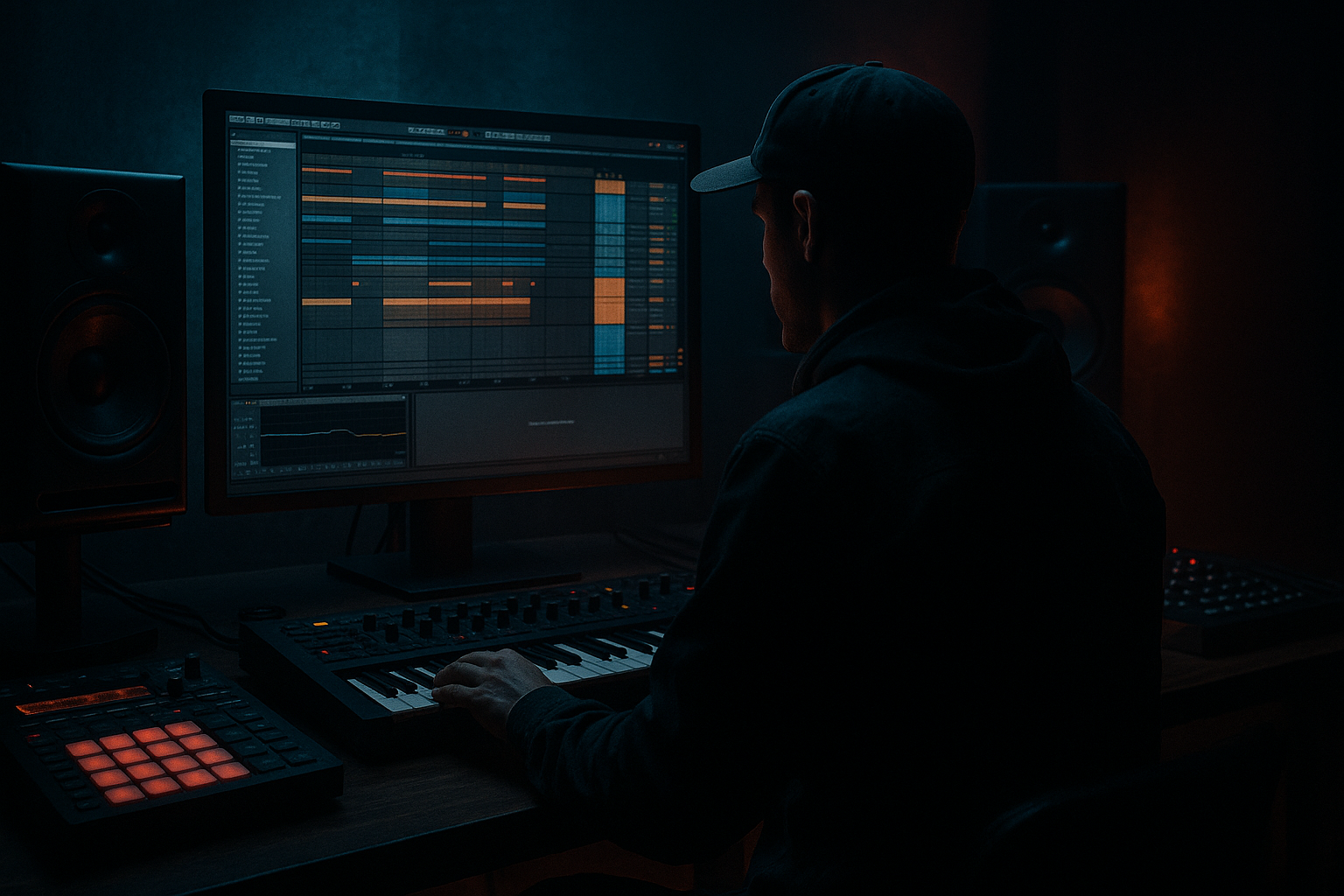
Compose oldskool DnB atmosphere for timeless roller momentum in Ableton Live 12 (Intermediate) cover image

Narrated lesson audio

The voice track includes the tutorial plus extra teacher commentary.

Open audio file

Main tutorial

```markdown

Compose Oldskool DnB Atmosphere for Timeless Roller Momentum (Ableton Live 12) 🥁🌫️

Skill level: Intermediate

Category: Drums (with atmosphere built around the groove)

---

1. Lesson overview

Oldskool/jungle-era rollers feel fast but not rushed because the drums drive momentum while the atmosphere “breathes” around the hits. In this lesson you’ll build atmosphere as part of the drum system—using ghosts, room layers, dubby sends, and movement that locks to the break.

We’ll focus on:

  • Creating air + grit + space that supports a roller
  • Making atmos duck and pulse with drums for constant motion
  • Ableton Live 12 stock workflow: Drum Rack, Simpler, Auto Filter, Echo, Reverb, Gate, Compressor, Glue, Saturator
  • ---

    2. What you will build

    A 32-bar “timeless roller” loop-ready section with:

  • A break-driven drum groove (think classic 2-step / chopped break energy)
  • Ghost-hat and ride motion
  • A wide, moody atmospheric bed that pumps subtly with the drums
  • Dub-style send FX (echo/reverb throws)
  • An arrangement that evolves every 8 bars (the oldskool way)
  • Target vibe: rolling, hypnotic, slightly dusty, club-functional.

    ---

    3. Step-by-step walkthrough

    Step 0 — Set the session up (tempo + routing) ⚙️

    1. Tempo: `172–176 BPM` (start at 174).

    2. Create track groups:

    - DRUMS (Group)

    - ATMOS (Group)

    - FX RETURNS (A/B/C)

    3. Create Return tracks (recommended):

    - Return A: “Dub Echo”

    - Echo:

    - Time: `1/8.` (dotted) or `1/4`

    - Feedback: `25–40%`

    - Filter: HP `250–400 Hz`, LP `6–9 kHz`

    - Mod: `2–5%`

    - Dry/Wet: `15–25%` (Return level controls overall)

    - Saturator (after Echo): Drive `2–5 dB`, Soft Clip ON

    - Return B: “Dark Verb”

    - Reverb:

    - Decay: `3–6 s`

    - Pre-Delay: `15–30 ms`

    - Low Cut: `250–500 Hz`

    - High Cut: `6–10 kHz`

    - Size: `80–120%`

    - EQ Eight after Reverb: notch anything harsh around `2–4 kHz` if needed

    - Return C: “Room/Drum Space”

    - Hybrid Reverb (Algorithmic): small/medium room

    - Decay: `0.6–1.2 s`

    - Low Cut: `200–350 Hz`

    - Early Reflections up a bit (adds realism)

    > Goal: Your atmosphere will live in the returns so it glues to the drums like classic hardware send chains.

    ---

    Step 1 — Build a roller drum core (break + reinforcement) 🥁

    A) Break layer (the movement engine)

    1. Drop a break sample into Simpler (or a Drum Rack pad).

    2. In Simpler:

    - Mode: Slice

    - Slicing: Transient or 1/16 depending on break

    - Sensitivity: adjust until you get clean slices

    3. Program a simple 2-bar pattern:

    - Keep the main kick/snare placement steady

    - Add 1–3 extra ghost slices (little snare/kick fragments) to create that rolling push

    B) Clean kick + snare reinforcement (the punch engine)

    1. Add a Kick (one-shot) and Snare (one-shot) in a Drum Rack.

    2. Pattern (classic roller skeleton):

    - Snare on 2 and 4 (or 5 and 13 in 16ths)

    - Kick on 1, plus one/two offbeat placements depending on your break

    C) Hats/ride glue (the speed illusion)

    1. Closed hat 1/8 pattern, but humanize with velocity:

    - Velocities: alternate `70–95`, occasional dips to `50–60`

    2. Add a ride or “shaker hat” layer at low level:

    - Use Auto Filter on it (see Step 3) for motion

    Drum bus chain (DRUMS Group):

    1. EQ Eight

    - HP at `25–35 Hz` (gentle)

    - Dip muddiness `200–350 Hz` if needed

    2. Glue Compressor

    - Attack: `3–10 ms`

    - Release: `Auto`

    - Ratio: `2:1`

    - Aim for `1–3 dB` gain reduction

    3. Saturator

    - Drive `1–4 dB`

    - Soft Clip ON (for oldskool thickness)

    > You should already feel “forward motion” before adding any pads.

    ---

    Step 2 — Create oldskool atmosphere sources (simple + authentic) 🌫️

    You’ll build atmosphere from three ingredients that were common in jungle/DnB:

    1) Noise/air bed

    2) Resampled reverb tail (classic “ghost room”)

    3) Filtered chord/pad stab (subtle, not trancey)

    #### 2.1 Noise/Air bed (fast + effective)

    1. Create a MIDI track → load Analog (stock).

    2. Init patch, then:

    - Oscillator: turn down; use Noise (if available) or a thin waveform

    - Filter: Lowpass 12/24 dB

    - Cutoff: `1–4 kHz`

    - Resonance: low (`5–15%`)

    3. Add Auto Filter after it:

    - Mode: LP

    - Envelope OFF

    - LFO ON: Rate `1/8` or `1/4`, Amount small (`5–15%`)

    4. Send it to Return B (Dark Verb) moderately.

    Keep this quiet. It’s the “air pressure” behind the drums.

    #### 2.2 Resampled reverb tail from a drum hit (very oldskool) 🎛️

    1. Pick a snare or a rim/perc hit.

    2. Duplicate that track and name it “Snare Tail”.

    3. On “Snare Tail” insert:

    - Reverb (big): Decay `6–10 s`, Pre-delay `20 ms`, Low cut `400 Hz`

    - Gate after Reverb:

    - Threshold: set so only the reverb tail opens

    - Return/Release: `150–350 ms` (tune to tempo)

    - EQ Eight:

    - HP `300–600 Hz`

    - LP `6–10 kHz`

    4. Freeze & Flatten a bar of this tail (or resample to audio).

    5. Reverse it sometimes, or fade it into the snare on key hits (bar transitions).

    This gives you that “warehouse ghost” vibe without relying on big pads.

    #### 2.3 Filtered chord/pad stab (subtle harmony glue) 🎹

    1. Create a MIDI track → load Wavetable (stock) or Operator.

    2. Choose a simple waveform (saw/sine blend).

    3. Make a minor 7 or minor 9 chord stab (classic moody DnB):

    - Example in F: `F - Ab - C - Eb` (Fm7)

    4. Process chain (PAD track):

    - Auto Filter (LP 24 dB): Cutoff `300–1.5kHz`, resonance `10–20%`

    - Chorus-Ensemble (subtle width): Amount low

    - Send to Dub Echo + Dark Verb

    Keep stabs sparse: one stab every 2 bars can be enough.

    ---

    Step 3 — Make atmosphere move with the drums (this is the key) 🔥

    You’re going to create the illusion that the room is reacting to the break.

    #### 3.1 Sidechain the ATMOS group to the snare (or drum bus)

    1. On the ATMOS Group, add Compressor.

    2. Enable Sidechain:

    - Input: Snare track (or DRUMS group if you prefer global pump)

    3. Settings:

    - Ratio: `2:1` to `4:1`

    - Attack: `1–5 ms`

    - Release: `80–180 ms` (tune to groove)

    - Threshold: aim for `2–5 dB` gain reduction on snare hits

    This keeps drums upfront and creates that rolling inhale/exhale.

    #### 3.2 Gate the noise/air using hats (rhythmic texture)

    1. On the Noise/Air track add Gate.

    2. Sidechain (Gate has sidechain in Live):

    - Input: your Closed Hat track

    3. Gate settings:

    - Threshold: so it opens on hat hits

    - Attack: `0.5–2 ms`

    - Hold: `10–30 ms`

    - Release: `40–120 ms`

    Now the atmosphere ticks with your hats—instant “oldskool engine room”.

    #### 3.3 Frequency-slot the atmos so it doesn’t cloud the break

    On the ATMOS group add EQ Eight:

  • HP: `120–250 Hz` (steeper if your mix gets swampy)
  • Small dip around `300–500 Hz` if boxy
  • If harshness: dip `2–4 kHz`
  • Oldskool atmos should feel wide and deep, not “in your face.”

    ---

    Step 4 — Arrangement: evolve every 8 bars (timeless roller logic) 🧱

    Make a 32-bar sketch with clear changes:

    Bars 1–8: Intro groove

  • Break + kick/snare + hats
  • Atmos: noise bed only, low
  • One reverse tail into bar 9
  • Bars 9–16: Main hook enters

  • Add chord stab every 2 bars
  • Increase Dub Echo sends on a few hits (snare or perc)
  • Bars 17–24: Variation

  • Remove kick for 1 bar (bar 17) but keep break ghosts → tension
  • Add a new hat ghost pattern (extra 1/16s at low velocity)
  • Add a short vocal fx chop (optional), filtered + reverb
  • Bars 25–32: Peak + exit cue

  • Bring everything back
  • Do a single echo throw on last snare (send automation up)
  • Kill atmos HP filter slightly (open it a bit) for lift, then close before loop end
  • Automation targets (simple + effective):

  • Auto Filter cutoff on pad/noise (slow moves)
  • Return A (Echo) send on single snare hits
  • Return B (Reverb) send on transitions only
  • Drum Room return level slightly up in peak
  • ---

    Step 5 — Final “glue” for atmosphere-drums relationship 🧩

    On the Master (or a Pre-Master bus), keep it gentle:

  • Glue Compressor: 1–2 dB GR max
  • Limiter: only for safety while writing
  • Oldskool rollers rely on transient clarity. Don’t over-limit while composing.

    ---

    4. Common mistakes 🚫

    1. Atmos too loud → the groove loses punch. If you notice the pad constantly, it’s probably too high.

    2. Too much low-mid reverb (200–500 Hz) → mud city. HP your reverb returns.

    3. Sidechain release too slow → the track feels like it’s “sucking” instead of rolling.

    4. Overly complex harmony → oldskool is often one mood, not constant chord changes.

    5. Wide lows in atmos → phase issues and weak club translation. Keep lows mono/removed.

    ---

    5. Pro tips for darker/heavier DnB 🖤

  • Resample your reverb/echo tails to audio, then distort them:
  • - Audio tail → Saturator (Drive 5–10 dB) → Auto Filter LP → tuck under drums

  • Add “metal air” with Corpus very quietly on a hat bus:
  • - Tune around `200–400 Hz`, mix low (adds gritty presence)

  • Make hats feel meaner:
  • - Hat bus → Drum Buss (Drive low, Crunch 5–15) → EQ Eight (small shelf)

  • For dystopian vibe, use Redux lightly on atmos:
  • - Downsample a touch, then filter it (classic crunchy fog)

  • Keep your darkness dynamic: automate filter cutoff down in breakdowns, up in peaks.
  • ---

    6. Mini practice exercise (15–25 minutes) ⏱️

    1. Build a 2-bar roller drum loop (break + layered kick/snare + hats).

    2. Create one atmosphere source only (noise bed or pad stab).

    3. Make it move using two tools:

    - Sidechain compressor on ATMOS (keyed to snare)

    - Gate on ATMOS (keyed to hats)

    4. Arrange 16 bars with one change every 4 bars:

    - Bar 5: add reverb tail

    - Bar 9: add chord stab

    - Bar 13: automate echo throw on snare

    Export a quick bounce and check: does it still roll if you turn the atmos down 6 dB? If yes, you’ve built it right.

    ---

    7. Recap ✅

  • Roller momentum comes from drums first, atmosphere second—but atmosphere must pulse with the groove.
  • Use returns (Echo/Reverb/Room) like classic dub routing for authentic movement.
  • Build atmos from noise + reverb tails + sparse stabs, then duck/gate them to the drums.
  • Arrange in 8-bar evolutions: small changes keep the loop hypnotic and timeless.

If you want, tell me what break you’re using (Amen-style, Think, Hot Pants, etc.) and I’ll suggest specific slice patterns + ghost placements to match that exact oldskool swing.

```

Ask GPT about this lesson

Chat with the lesson tutor, get follow-up help, or use quick actions.

Bigup 👽 Ask me anything about this lesson and I’ll answer in context.

Narration script

Show spoken script
Title: Compose oldskool DnB atmosphere for timeless roller momentum in Ableton Live 12, intermediate

Alright, let’s build that classic oldskool drum and bass roller feeling where it’s fast, it’s hypnotic, and it never feels rushed. The secret is momentum from the drums, and atmosphere that breathes around the groove like it’s part of the drum kit.

By the end, you’ll have a 32-bar, loop-ready roller section: break-driven movement, reinforced punch, ghost hat and ride motion, a wide moody bed that subtly pumps, and dub-style echo and reverb throws that evolve every eight bars.

Open Ableton Live 12, and set your tempo to 174 BPM. Anywhere from 172 to 176 works, but 174 is a great middle ground.

Now, before we even touch a sound, we’re going to set up routing like a proper old hardware dub setup. Create three groups: one called DRUMS, one called ATMOS, and one called FX RETURNS if you like to keep things visually organized. You don’t have to group the returns, but do create three return tracks.

Return A is Dub Echo. Drop Echo on it. Set the time to dotted eighth, so one eighth dotted, or go quarter note if you want it slower and more obvious. Feedback around 25 to 40 percent. Then filter it: high-pass around 250 to 400 hertz so your low end doesn’t smear, and low-pass around 6 to 9k so it stays dark and vintage. Add a tiny bit of modulation, like 2 to 5 percent, just to stop it feeling static. After Echo, add Saturator. Drive 2 to 5 dB, and turn Soft Clip on. That’s your gritty, reliable dub throw.

Return B is Dark Verb. Add Reverb, or Hybrid Reverb if you prefer, but standard Reverb is totally fine. Go decay around 3 to 6 seconds for a working tail, and later we’ll go bigger for special printed tails. Pre-delay 15 to 30 milliseconds so transients stay readable. Low cut 250 to 500 hertz. High cut 6 to 10k. Keep it dark. After the reverb, put EQ Eight and be ready to notch a little harshness around 2 to 4k if it pokes out.

Return C is Room or Drum Space. Use Hybrid Reverb in algorithmic mode, small to medium room. Decay around 0.6 to 1.2 seconds. Low cut around 200 to 350. Push early reflections up a bit, because that early reflection energy is what makes drums feel like they’re in a physical space, not just washed in reverb.

The goal is simple: your atmosphere mostly lives in these returns, so it glues to the drums and moves like a system.

Now let’s build the roller core. This is drums first, always. If it doesn’t roll with no atmos, it won’t roll with atmos.

Start with a break layer. Drag a break sample into Simpler. Put Simpler in Slice mode. For slicing, try Transient first. If it’s messy, switch to one sixteenth slicing for a more grid-based cut. Adjust sensitivity until the slices make sense.

Now program a simple two-bar pattern. Keep your main kick and snare placements steady. You’re not trying to reinvent the break; you’re trying to harness its internal motion. Then add one to three ghost slices. Little snare fragments, little kick fragments, tiny bits of shuffle. This is where the roller “push” comes from.

Next, reinforce with clean one-shots. Create a Drum Rack with a kick and snare you trust. Keep the snare on two and four. If you think in 16ths, that’s steps 5 and 13. Place your kick on one, and then add one or two offbeats depending on what the break is already implying. Teacher tip here: set your snare level first and treat it like the reference event. In oldskool rollers, the snare is often the anchor. Everything else supports that.

Now hats. Add a closed hat playing straight eighth notes. But don’t leave the velocities flat. Alternate around 70 to 95, and occasionally dip to 50 or 60 so it breathes. Then add a ride or shaker-hat layer quietly. This is the speed illusion. Your brain hears a steady top and thinks “momentum,” even if the main groove is relaxed.

Group these into DRUMS, and put a simple bus chain on the group. EQ Eight first: gentle high-pass around 25 to 35 hertz, just cleaning rumble. If it’s boxy, dip a bit around 200 to 350. Then Glue Compressor: ratio 2 to 1, attack 3 to 10 milliseconds, release on Auto. Aim for one to three dB of gain reduction. Then Saturator with Soft Clip on, drive one to four dB. That gives that thick, slightly dusty density without smashing the transients.

Pause for a second and listen. At this stage, you should already feel forward motion. If you don’t, fix the drum pattern now, because atmosphere can’t rescue a groove that isn’t rolling.

Now we build atmosphere the oldskool way: not a giant cinematic pad, but three practical ingredients that feel like they belong to the break.

First ingredient: a noise or air bed. Create a MIDI track and load Analog. Initialize it, and basically get to noise, or a very thin waveform if your setup differs. Filter it with a lowpass, cutoff roughly 1 to 4k, resonance low, like 5 to 15 percent. Add Auto Filter after that. Keep it lowpass, turn the envelope off, turn the LFO on. Rate one eighth or one quarter, and keep the amount tiny, like 5 to 15 percent. This is not “wow listen to the filter,” it’s just movement.

Now send that noise bed to Return B, Dark Verb, moderately. And keep the track quiet. Think of it like air pressure behind the drums. If you solo it, it might sound boring or even annoying. In context, it’s magic.

Second ingredient: the oldskool ghost room trick, resampled reverb tails from a drum hit. Take a snare or rim or perc hit. Duplicate the track and name it Snare Tail. On Snare Tail, put a big reverb: decay 6 to 10 seconds, pre-delay around 20 ms, low cut around 400 hertz so it doesn’t get swampy. After the reverb, add Gate. Set threshold so it opens only on the tail. Adjust release around 150 to 350 ms and tune it to feel musical at your tempo. Then EQ Eight: high-pass 300 to 600, low-pass 6 to 10k.

Now here’s the important part: freeze and flatten a bar of that tail, or resample it to audio. Once it’s audio, you can reverse it sometimes. You can fade it into key snares at transitions. This is that warehouse ghost vibe that old jungle records had everywhere, because people were printing effects, resampling them, and re-editing them.

Third ingredient: a filtered chord or pad stab. Create a MIDI track and load Wavetable or Operator. Keep it simple. Make a minor 7 or minor 9 chord. For example, in F: F, Ab, C, Eb. Put Auto Filter on it, lowpass 24 dB, cutoff anywhere from 300 hertz up to about 1.5k depending on how dark you want it, resonance 10 to 20 percent. Add Chorus-Ensemble subtly for width. Then send it to Dub Echo and Dark Verb. Keep the stabs sparse. One stab every two bars can be plenty. Oldskool is often one mood, not constant chord changes.

Now comes the key section: making atmosphere move with the drums. This is where it stops being “a pad over drums” and becomes a roller system.

Group your atmos tracks into ATMOS. On the ATMOS group, add Compressor and enable sidechain. Choose the snare track as input, or the DRUMS group if you want global pumping. Ratio 2 to 1 up to 4 to 1. Attack 1 to 5 milliseconds. Release 80 to 180 ms. Adjust threshold so you get about 2 to 5 dB of reduction on snare hits.

And here’s a coach move that makes this feel authentic: lock the room to your snare timing, not your grid. If your break has swing, your ambience should follow that swing. Quick check: temporarily mute the kick, loop one or two bars, and adjust the sidechain release until the ambience returns right before the next snare. Not on top of it. Right before it. That’s the inhale-exhale that makes it roll instead of suck.

Next, gate the noise bed using hats. Put Gate on the noise track. Enable sidechain on the Gate and choose the closed hat track. Set threshold so the gate opens on hat hits. Attack 0.5 to 2 ms. Hold 10 to 30 ms. Release 40 to 120 ms. Now the atmosphere ticks with the hats, and suddenly you’ve got that engine-room chatter that feels like it’s part of the break.

Extra teacher trick: ghosts can be atmos triggers. If your break has little internal ghost hits, you can duplicate the break to a “Ghost Key” track, mute its output, and use it as the sidechain input for your Gate or Compressor. That way, the ambience chatters with the break’s real rhythm, not just a straight hat pattern.

Now clean up the frequency space. On the ATMOS group, add EQ Eight. High-pass around 120 to 250 hertz. Go steeper if it gets swampy. If it’s boxy, dip 300 to 500 a touch. If it’s harsh, dip 2 to 4k. And one more important discipline point: keep wide lows out of your atmos. If you want width, put it on the reverb and chorus returns, not on the entire bed. Width is not the same thing as air.

If you want a club-safe width trick, set EQ Eight to M/S mode on the ATMOS group. On the Side channel, high-pass higher, like 250 to 400. You keep depth and width without low-mid stereo soup.

Now let’s arrange it, because oldskool rollers live on small evolution. Make a 32-bar sketch and commit to changes every eight bars.

Bars 1 to 8: intro groove. Break, kick, snare, hats. Atmos is just the noise bed, low. Add one reverse tail leading into bar 9, like a little inhale into the main section.

Bars 9 to 16: main hook enters. Bring in the chord stab every two bars. And start doing a few dub throws. Instead of drowning everything, pick moments. Maybe one snare in bar 12 gets a little extra Echo send. Maybe a perc gets a touch of Dark Verb.

And here’s a powerful workflow tip: use pre-fader sends for dub throws. In Live, you can switch a send to pre or post. Pre-fader lets you automate massive echo or reverb throws without changing the dry drum level. That’s extremely hardware-ish, and it keeps your groove solid.

Bars 17 to 24: variation. Remove the kick for one bar right at bar 17, but keep the break ghosts running. That creates tension without needing a big fill. Add a new hat ghost pattern, like extra 1/16 notes at low velocity. Optional: add a small vocal FX chop, filtered and sent to reverb, very subtle.

Bars 25 to 32: peak and exit cue. Bring everything back. Do a single echo throw on the last snare by automating the Dub Echo send up just for that hit. Then do a little lift by opening your atmos high-pass or filter slightly, and close it again right before the loop ends so it snaps back into the start cleanly.

Keep your automation targets simple: Auto Filter cutoff on pad or noise for slow motion, Echo send for single hits, Reverb send mainly for transitions, and the Room return slightly higher in the peak.

Optional advanced movement idea if you want the push-pull to get even more “breathing”: do two-stage ducking on the ATMOS group. One compressor keyed to the snare for the main inhale, and a second gentler compressor keyed to the kick with a shorter release. The ambience respects the downbeat weight but still breathes with the backbeat.

Now, final glue. On the master, or a pre-master bus, keep it gentle. Glue Compressor doing one to two dB max. Limiter only as safety while writing. Oldskool rollers rely on transient clarity, so don’t over-limit during composition. You want snap and momentum, not a flattened brick.

Before we wrap, let’s avoid the classic mistakes. If your atmos is too loud, the groove loses punch. A good test is: turn the ATMOS group down 6 dB. If the track still feels like it has space and forward pull, you did it right. If everything collapses, your movement programming needs more work.

Also, watch the low mids in reverb. That 200 to 500 zone will muddy a roller fast, so high-pass your reverb returns. And if your sidechain release is too slow, it’ll feel like the track is sucking instead of rolling. Adjust it until the room returns just before the next snare.

Finally, harmony: don’t overcomplicate it. One mood is the vibe. Sparse stabs, filtered, and tucked.

Mini practice to lock this in: build a two-bar drum loop with break, layered kick and snare, and hats. Create one atmosphere source only, either noise bed or pad stab. Then make it move with two tools: sidechain compression on the ATMOS group keyed to snare, and a gate on the atmos keyed to hats or a ghost-key track. Arrange 16 bars with one change every four bars: bar 5 add a reverb tail, bar 9 add the chord stab, bar 13 automate an echo throw on a snare. Bounce it, then make a second bounce with the ATMOS group down 8 dB. If that quieter version still rolls and still feels like it has a room around it, you’re officially building atmosphere the oldskool way: attached to the break, not sitting on top of it.

That’s the whole philosophy: drums create momentum, and atmosphere pulses with the groove using returns, ducking, gating, and small edits every eight bars. If you tell me what break you’re using, like Amen, Think, Hot Pants, any of those, I can suggest a slice pattern and ghost placements that match that specific swing so your ambience chatter lands perfectly in the pocket.

mickeybeam

Go to drumbasscd.com for +100 drum and bass YouTube channels all in one place - tune in!

Generating PDF preview…
