Main tutorial
Lesson Overview
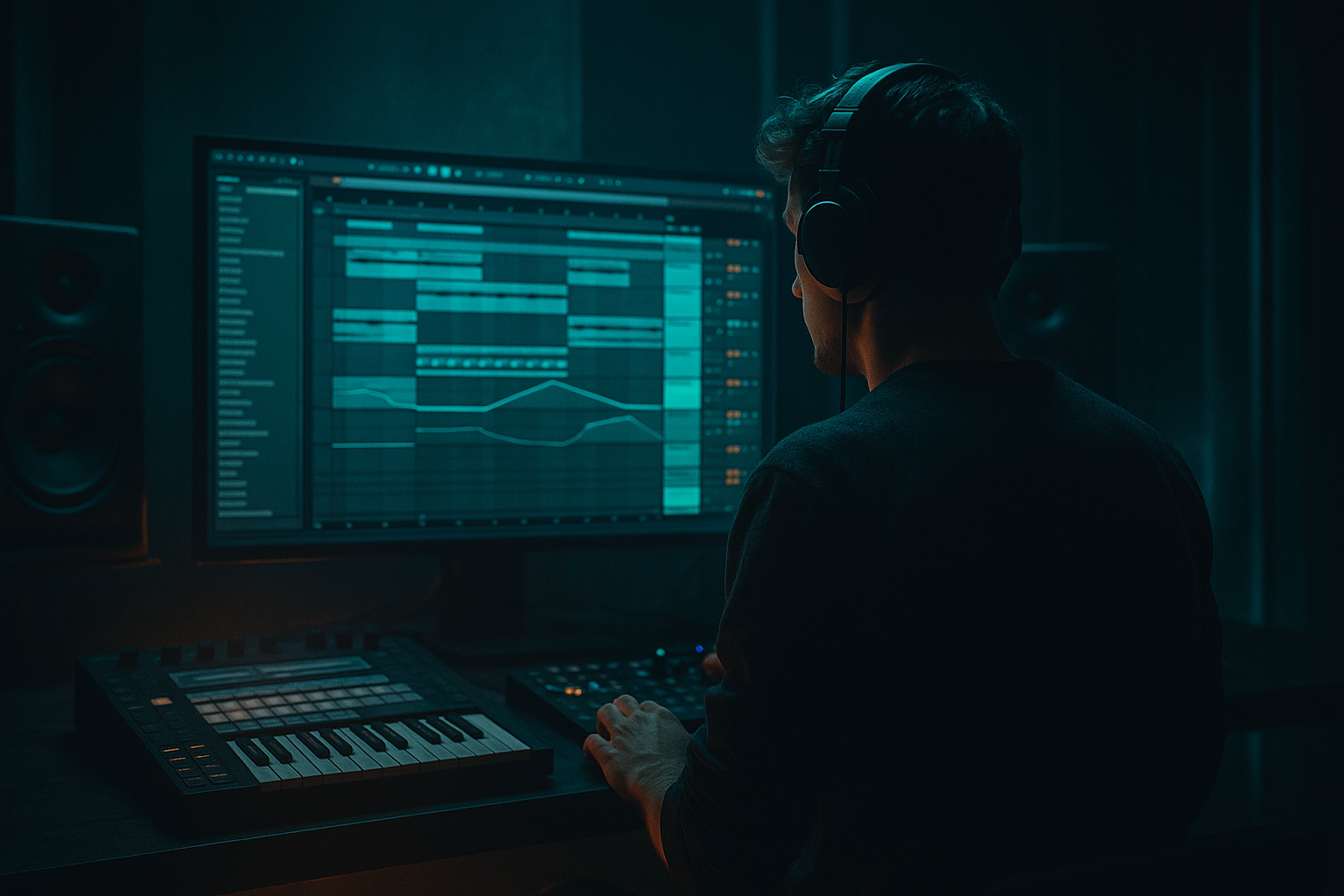
An Amen-style ghost note is one of the most effective ways to add emotion, motion, and human instability to a Drum & Bass drum programming lane without turning the groove into clutter. In a sunrise set context, this matters because the energy isn’t just about impact — it’s about lift, memory, and forward movement. A carefully placed ghost note can make a break feel like it’s breathing, especially when you’re moving from darker tension into something more open, melodic, and reflective.
In Ableton Live 12, this technique sits right at the intersection of drum editing, FX design, and arrangement psychology. You’re not just adding a tiny snare hit. You’re shaping micro-groove, transient energy, and stereo motion so the listener feels a subtle emotional pull. For advanced DnB production, this is a huge deal: the difference between a loop that “works” and a loop that feels alive often comes down to the detail in the cracks between the main hits.
This lesson will show you how to build a ghost note that feels authentic to jungle and roller culture, but tuned for sunrise-set emotion — airy enough to feel hopeful, dirty enough to stay in the lane. We’ll use stock Ableton devices, tight timing choices, resampling logic, and automation ideas that translate directly into a finished arrangement. 🌅
What You Will Build
You’ll build a tight Amen-style ghost note layer that sits underneath or beside a main break and adds emotional lift without sounding pasted on.
Specifically, the result will be:
- A soft, syncopated snare/tick ghost note derived from Amen-inspired break material
- A layered FX chain that gives it faded tape character, transient shape, and slight stereo bloom
- Subtle timing offset and groove swing that makes it feel performed, not drawn in
- A version that can sit in a sunrise set intro, post-drop turnaround, or 8/16-bar emotional switch-up
- Optional automation for filter opening, reverb widening, and send-based delay motion
- A ghost note that supports rollers, liquid-adjacent emotional sections, and darker atmospheric transitions without weakening the punch
- Making the ghost note too loud
- Leaving too much low end in the slice
- Quantizing too hard
- Using too much reverb
- Stacking ghost note and main snare on the same frequency pocket
- Ignoring arrangement context
- Darken the source, then brighten the tail
- Use parallel dirt, not full-time dirt
- Try subtle pitch movement
- Let the note answer the bass movement
- Use mono discipline below the mids
- Resample your processed version
- Blend with break room tone
- An Amen-style ghost note is a small detail with huge emotional power in DnB.
- Build it from a real break slice, then clean, shape, and time it with intention.
- Use Ableton stock FX like EQ Eight, Drum Buss, Saturator, Auto Filter, Echo, Reverb, and Utility to create depth and character.
- Keep it subtle, rhythmically meaningful, and arrangement-aware.
- For sunrise-set emotion, let the ghost note breathe, evolve, and answer the main groove instead of competing with it.
Think of it as a “memory hit” inside the break: not the main snare, not the obvious fill, but that small gesture that makes the loop feel soulful and human.
Step-by-Step Walkthrough
1. Start with a clean Amen foundation and identify the ghost note pocket
Load your main Amen-inspired break onto an audio track in Ableton Live 12 and warp it cleanly so the transient grid stays stable. If the break is already chopped, even better. Your first job is to find the space where a ghost note can speak without fighting the main backbeat.
In most DnB contexts, a useful pocket is:
- Just before beat 2 or beat 4
- The “and” of 2 or the 16th before a snare backbeat
- A late hit that sits under the decay of a main snare
Zoom in and audition a few candidates. You’re looking for a tiny snare buzz, rim-like tick, or soft break fragment with enough transient to read, but not so much that it steals the groove. If your source break doesn’t contain one, chop a tiny slice from a quieter part of the Amen and place it as a ghost note trigger.
Why this works in DnB: the drum-and-bass groove is all about controlled density. A ghost note adds forward momentum while preserving the backbeat authority that keeps the drop driving.
2. Extract the ghost note and clean it with simpler tool choices
Take the chosen slice and consolidate it into its own clip so you can work on it independently. Then route it to a separate audio track or a Drum Rack pad if you want more modular control.
Use Ableton stock devices to clean the source:
- EQ Eight: high-pass at around 180–300 Hz to remove low mud; if it’s too hissy, low-pass somewhere around 8–12 kHz
- Gate: gentle setting if the slice has unwanted tail noise; keep release short so it doesn’t feel chopped
- Utility: reduce gain if the source is spiky; keep headroom for later saturation
Suggested parameter starting points:
- EQ Eight high-pass: 200 Hz, 24 dB/oct
- Gate threshold: enough to shave room noise, with release around 10–30 ms
- Utility gain: -3 to -8 dB depending on source
Keep it small. A ghost note that sounds good soloed is often too loud for the arrangement. The goal is emotional detail, not a second snare.
3. Shape the transient so it reads as a “ghost,” not a second main hit
Add Drum Buss or Saturator depending on how much body you want. For sunrise emotion, the note should be present but soft-edged.
With Drum Buss:
- Drive: 5–15%
- Boom: off or very low, unless you specifically want a low-mid thump
- Transients: slightly negative if the hit is too pokey, or slightly positive if it disappears in the break
- Dampening: use to smooth the top if the slice is scratchy
With Saturator:
- Drive: 1–4 dB
- Soft Clip: On
- Output: compensate so level stays controlled
If the ghost note is too “hard,” reduce the transient with Envelope Shaper? Not available stock in Live, so stay within stock tools: use Drum Buss, Compressor with a gentle attack, or a tiny fade on the clip itself.
Practical move: shorten the clip fade by a few milliseconds if the hit clicks, and give it a tiny fade-in only if needed to avoid harshness. This keeps it emotional instead of clicky.
4. Place it against the groove using micro-timing and groove extraction
Now the advanced part: don’t just grid-place it. Ghost notes in jungle and rollers gain life from tiny timing offsets.
In the clip view:
- Nudge the ghost note a few milliseconds early for urgency, or a few ms late for laid-back soul
- Try offsets of roughly 5–18 ms either direction
- If it sits before a backbeat, slightly early often feels more excited
- If it sits after the backbeat, slightly late can feel more wistful and sunrise-like
Use Ableton’s Groove Pool if your break has a strong swing:
- Extract Groove from the original Amen break
- Apply that groove lightly to the ghost note only, not the full drum group
- Start with timing strength around 30–60% and velocity around 20–40%
That’s a very DnB move: the ghost note can inherit the break’s human feel while staying just outside the loudest elements. It makes the groove breathe without flattening into MIDI quantization.
5. Build an FX chain that creates distance, nostalgia, and motion
This is where the sunrise emotion happens. The ghost note should feel slightly behind the listener or slightly around the kit, not front-and-center.
Add a focused FX chain:
- Auto Filter: low-pass or band-pass to soften the tonal range
- Start cutoff around 2.5–6 kHz if you want it muted
- Slight resonance, around 5–15%, can add a nasal emotional character
- Echo: very subtle, tempo-synced, for a trailing memory
- Time: 1/16 or 1/8 dotted
- Feedback: 8–20%
- Filter the echoes so they don’t clog the top end
- Keep Dry/Wet low, around 5–12%
- Hybrid Reverb or Reverb: short room or small ambience
- Decay: 0.4–1.2 s
- Dry/Wet: 4–10%
- Pre-delay: 10–25 ms if you want the transient to stay readable
If you want a more tape-worn jungle feel, put Redux very lightly before the reverb:
- Downsample subtly, not aggressively
- Use just enough degradation to blur the edge
A smart chain order:
- EQ Eight
- Saturator or Drum Buss
- Auto Filter
- Echo
- Reverb
For heavier DnB, keep the FX on a return track and send only the ghost note into them. That keeps the dry transient disciplined while giving you motion and space on demand.
6. Use automation to make the ghost note evolve across the arrangement
A sunrise-set ghost note should not stay static for 64 bars. Make it change with the arrangement.
Automate these parameters across 8-, 16-, or 32-bar phrases:
- Auto Filter cutoff: open gradually from darker to brighter as the track lifts
- Reverb Dry/Wet: increase slightly in breakdowns or pre-drop tension
- Echo feedback: raise briefly into switch-ups, then drop back
- Utility width on a return: widen only in atmospheric sections, then pull it down for the drop
- Saturator drive: slightly higher in the second half of a phrase for emotional intensity
Example arrangement context:
- Bars 1–8: ghost note filtered heavily, low-passed and tucked back for tension
- Bars 9–16: cutoff opens a little, reverb increases, the note becomes more present
- Bars 17–24: just before the drop, shorten the reverb tail and slightly increase drive for anticipation
- Drop: keep the ghost note dry enough to preserve punch, but let it answer the main snare every 4 or 8 bars
This is classic DnB arrangement thinking: small changes create big emotional impact because the groove is already moving fast.
7. Make the ghost note interact with bass and drum bus processing
The ghost note should complement the bassline, not clutter it. If your bass is a reese or distorted roller, use the ghost note as a counter-texture. If your bass is more melodic and fluid, let the ghost note provide grit and human touch.
Route the ghost note into the same Drum Bus or parallel drum group only if it’s helping the kit feel cohesive. If it starts smearing the snare impact, keep it on its own track and send it to shared ambience instead.
Mixing moves:
- Sidechain the ghost note very lightly to the kick or main snare using Compressor
- Keep it mono or near-mono in the low-mids using Utility
- Check phase if layering multiple break fragments
- Use EQ Eight to carve 250–500 Hz if the note clouds the snare body
- If there’s harshness, dip 3–6 kHz by 1–3 dB with a moderate Q
Pro-level workflow choice: duplicate the ghost note track and treat one copy as dry transient and the other as ambience. Keep the dry copy centered and the ambience copy filtered/wider. Blend them very quietly. This creates emotional depth without sacrificing clarity.
8. Design the note as a call-and-response element with the main break or bass phrase
The best Amen-style ghost notes are not random. They answer something.
In an 8-bar roller phrase, try this:
- Main snare on 2 and 4
- Ghost note just before 2 in bars 2 and 6
- Bass cutoff opens slightly right after the ghost note
- A delayed reverb tail lands under the next kick
Or in a sunrise intro:
- Sparse kick and break pattern
- Ghost note appears every 4 bars as a “memory” of the full drop groove
- High-pass automation slowly opens the ghost note as pads brighten
- When the drop hits, the listener already feels the drum identity, so the transition lands emotionally instead of mechanically
Why this works in DnB: call-and-response is a core part of the genre’s phrasing language. It lets microscopic events carry emotional meaning, especially when the arrangement is moving fast and there’s not much time for harmonic development.
Common Mistakes
Fix: pull it down until you only miss it when muted. Ghost notes should be felt more than heard.
Fix: high-pass aggressively with EQ Eight. Ghost notes rarely need real sub information.
Fix: add micro-offsets or apply groove lightly. Perfect grid placement often kills the human feel.
Fix: keep the tail short and filtered. In DnB, cloudy ambience can wreck snare definition fast.
Fix: carve 250–500 Hz and check the 2–5 kHz zone for harsh overlap.
Fix: if the note feels good alone but weak in the mix, automate it through an 8- or 16-bar phrase so it has a job.
Pro Tips for Darker / Heavier DnB
Filter the dry hit darker, but let the reverb or echo return carry a brighter top. This creates emotional contrast.
Send the ghost note to a parallel return with Saturator or Drum Buss, then blend only a little. Keeps weight without flattening the kit.
If the note is sampled into Simpler, use a tiny pitch envelope or very slight clip transposition for tension. Even 10–25 cents can add unease.
If your bassline opens a filter or changes rhythm, place the ghost note right after that event. The ear reads it as a response.
Keep the ghost note tight in the center and push width into FX returns only. Wide low-mid ghost notes can smear rollers badly.
Once the chain feels right, resample the ghost note and chop the printed audio. You’ll often get a more believable, textured result than endless tweaking.
A tiny amount of the original break ambience under the ghost note can glue it back into the source and make it feel like part of the same performance.
Mini Practice Exercise
Spend 10–20 minutes building three variations of the same ghost note and compare them in context.
1. Pick one Amen-style slice and make a clean ghost note track.
2. Create three versions:
- Version A: dry, high-passed, lightly saturated
- Version B: filtered with short reverb
- Version C: delayed with subtle echo and slightly late timing
3. Place each version before a main snare in different 4-bar loops.
4. Move between them while the full drums and bass play.
5. Decide which version best fits:
- A sunrise intro
- A tense pre-drop
- A heavier roller section
Goal: learn how tiny timing and FX changes completely alter the emotional meaning of the same drum gesture.

