Main tutorial
Lesson Overview
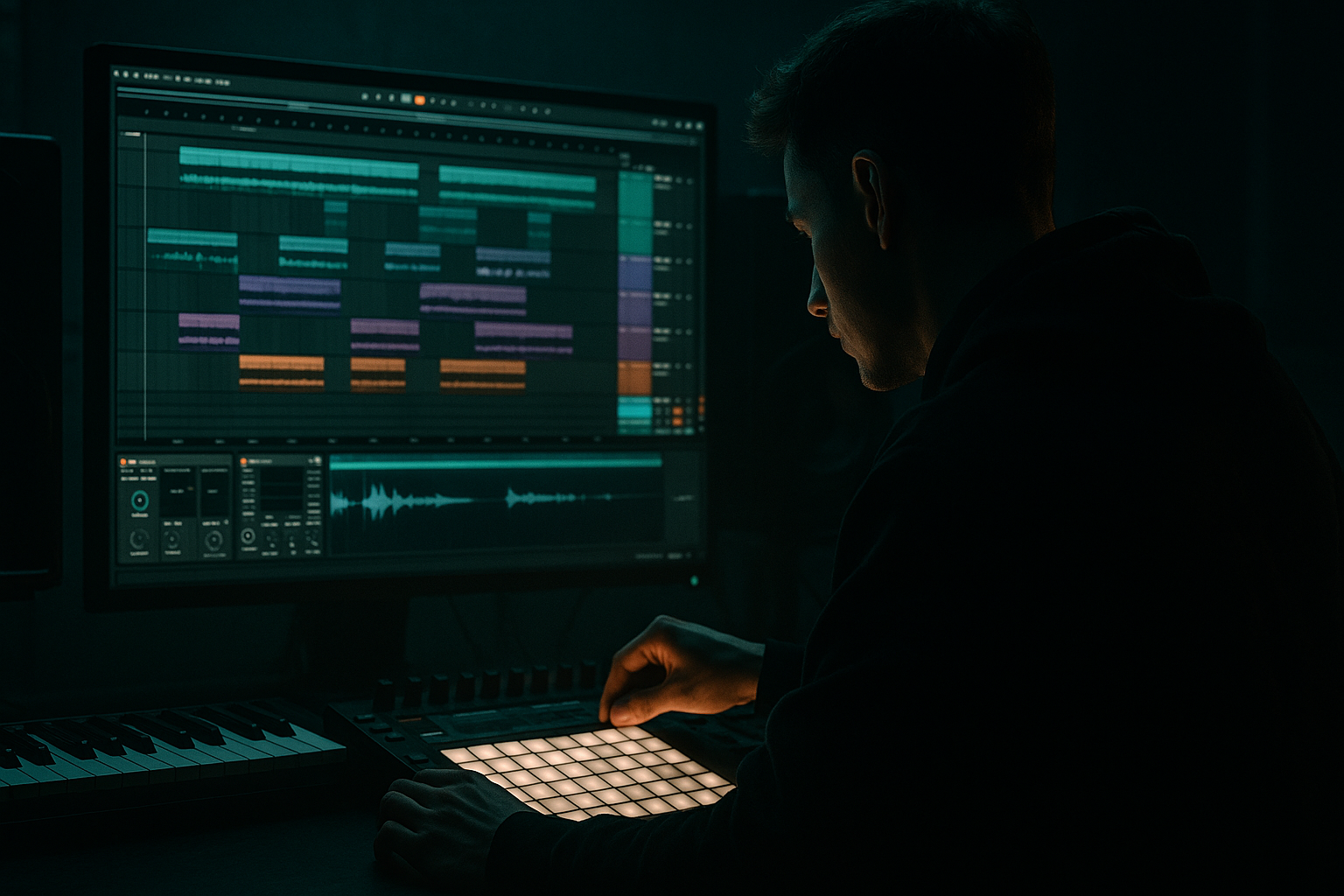
This lesson is about building a dub siren framework shape from scratch in Ableton Live 12 and using it like a real Break Lab edit tool inside a Drum & Bass arrangement.
In DnB, a dub siren is not just a “sound effect.” Used properly, it becomes a tension device, a call-and-response hook, and a way to glue together break edits, fills, and drop transitions. Think of it as a rude, mystical warning signal that can sit above jungle breaks, reinforce a dark rollers groove, or punch through a neuro-style drop without taking over the low end.
Why this matters in DnB: the best edits usually do more than “fill space.” They create forward motion. A siren framework gives you a reusable musical layer that can be reshaped across the intro, build, drop, and switch-up. Instead of dropping random effects, you build a controlled system with:
- a stable tonal center
- automation movement
- filter and pitch modulation
- resampled texture
- room for breaks and bass to stay dominant
- a two-oscillator siren voice with pitch movement and detune
- a filter-driven shape that opens and closes over 1–4 bar phrases
- modulation automation for siren wobble, vibrato, and urgency
- a resampled audio version you can chop into an edit
- a call-and-response version that can answer drums or bass stabs
- a version that works in both:
- an intro texture
- a 1-bar fill before a drop
- a breakdown signal
- a build-layer under break edits
- a repeatable motif across your track
- Making the siren too bright too early
- Letting the siren fight the snare
- Leaving too much low end in the siren
- Using too much vibrato or pitch modulation
- Over-widening the sound
- Resample then degrade slightly
- Use delay for atmosphere, not clutter
- Automate a band-pass sweep for tension
- Pair the siren with break reverses
- Use call-and-response with bass
- Keep the arrangement sparse around the siren moment
- Build the dub siren as a controlled framework, not just a flashy sound.
- Use Wavetable, filter automation, and subtle pitch movement to create the core tone.
- Resample to audio so you can chop, reverse, and arrange the siren like a proper edit element.
- Keep the sub free, the snare clear, and the motion intentional.
- In DnB, the siren works best when it adds tension, identity, and transition energy without cluttering the groove.
This lesson is especially useful if you want your edits to sound intentional and club-ready rather than pasted on. You’ll build something that can live in a DJ-friendly intro, explode into a double-time break switch, and still leave enough headroom for the sub and snare to hit hard. 🔥
What You Will Build
You’ll create a dub siren framework in Ableton Live 12 that works like a modular edit layer for DnB:
- jungle / edit-heavy break sections
- darker rollers / half-time tension moments
- neuro-leaning transitions with controlled aggression
By the end, you’ll have a siren element that can be used as:
Step-by-Step Walkthrough
1. Set up a clean edit-ready return or MIDI track
Create a new MIDI track and name it `Dub Siren FW`. Keep it separate from your drums and bass so you can edit it quickly later. If you already have a break session, place it near your break group so the workflow stays fast.
Insert Wavetable as your main instrument. It’s a strong stock choice for this because it can do clean tonal shapes, unstable motion, and controlled aggression without needing external tools.
Suggested starting point:
- Osc 1: Saw
- Osc 2: Square
- Osc 2 level: lower than Osc 1, around -6 to -12 dB relative balance
- Unison: 2 voices for a slightly wider siren, but don’t overdo it yet
- Voicing: Mono or Legato if you want it to behave like a classic siren line
Set up a MIDI clip with a single held note or a simple two-note phrase. For DnB, a siren often works best when it’s rhythmic but not busy. Try a note around the song’s key center, then test a second note a fifth above for tension.
2. Shape the siren tone with a filter-first mindset
Open the filter section in Wavetable and give the siren that unmistakable “warning signal” contour.
Good starting settings:
- Filter type: Low-pass 24
- Cutoff: around 200 Hz to 1.2 kHz, depending on how bright you want the line
- Resonance: 20% to 45%
- Drive: gentle at first, then increase until the tone gets sharp but not piercing
Why this works in DnB: most drum and bass mixes are crowded in the upper-midrange during breaks and drops. A siren with a moving filter gives you a recognizable midrange identity without needing huge volume. It cuts through the edit while staying controllable.
Automate the cutoff over 1 or 2 bars so the siren “speaks” instead of sitting static. A classic move is:
- start slightly closed
- open on the offbeat
- close again before the snare hit
That shape gives you tension against the break rhythm, which is exactly what makes edits feel alive.
3. Add pitch contour and vibrato for authentic dub movement
The character of a dub siren lives in the movement, not just the waveform.
Use Wavetable’s pitch or modulation controls to create a slight siren rise and wobble:
- Pitch envelope: small upward sweep of +2 to +7 semitones
- Attack: very fast, almost immediate
- Decay: 150 ms to 600 ms
- Vibrato rate: roughly 4 Hz to 7 Hz
- Vibrato depth: subtle, around 5% to 15%
If you use LFOs, assign one to pitch or wavetable position for a wavering, unstable tone. Keep it musical. In DnB, too much pitch chaos can blur the downbeat and fight the break.
Try this phrasing:
- bars 1–2: subtle, almost hidden
- bar 3: more intense pitch rise
- bar 4: strongest movement before the edit lands
That gives you a classic build-and-release shape.
4. Control the motion with stock modulation and clip automation
In Ableton Live 12, use clip envelopes or track automation to shape the siren across the arrangement. This is where it becomes a real edit tool rather than a raw sound.
Automate at least three parameters:
- filter cutoff
- resonance
- vibrato depth or wavetable position
Practical range idea:
- Cutoff: move between 250 Hz and 2.5 kHz
- Resonance: move between 20% and 60%
- Wavetable position: subtle shift through 10% to 35% for motion
Keep the automation curves purposeful:
- sharper ramps for build tension
- softer curves for breakdown atmosphere
- quick dips just before the snare to make the drum hit feel bigger
If you’re building a break edit, sync the siren so it answers the break slice, not constantly fights it. You want it to appear on gaps, pushes, and transitions.
5. Add distortion and saturation for grit without losing shape
A dub siren in DnB usually needs a bit of edge so it can survive alongside crunchy breaks and aggressive bass.
Use one or two stock devices:
- Saturator
- Roar if you want a more modern, heavier color
- Drum Buss can also work if you want punch and density
Try this chain:
- Wavetable
- Saturator
- EQ Eight
- Utility
Good Saturator starting point:
- Drive: 2 dB to 8 dB
- Soft Clip: ON if needed
- Output: compensate so you are not just louder
EQ Eight ideas:
- High-pass around 120 Hz to 200 Hz to avoid fighting the sub
- Small boost around 1.5 kHz to 3 kHz if the siren needs bite
- Cut harshness around 3.5 kHz to 6 kHz if it gets painful
In darker DnB, a siren should feel like it’s tearing through fog, not drilling through your ears. The goal is presence with attitude.
6. Resample the siren into audio for edit flexibility
This is where the lesson becomes a proper Break Lab edit workflow.
Record or resample your siren onto an audio track. Once it’s audio, you can:
- slice it
- reverse it
- pitch it
- gate it
- trim it around drum hits
- layer it under fills and impacts
In Ableton:
- create an audio track named `Siren Resample`
- set its input to resample or route from the MIDI track
- record a few bars of motion
- consolidate the best parts
Now chop the audio into smaller phrases:
- 1-bar sweeps
- half-bar hits
- 1/4-note stabs
- reversed pickups into a snare fill
This is especially powerful in jungle edits because you can place the siren between break slices so it sounds like part of the arrangement, not pasted on top. For rollers, use longer swells and fewer chops for a more hypnotic effect.
7. Build the edit around the break, not the other way around
Load your break loop or break edit onto another track and shape the siren around it. If your break is busy, the siren should leave breathing room.
A practical arrangement example:
- 8-bar intro: siren appears very lightly with filtered ambience
- bars 9–16: break enters with a low siren call every 2 bars
- first drop: siren drops out on the main downbeat, then returns as a response in bars 3–4
- switch-up: siren becomes more active with chopped resamples and pitch rises
If the break has strong snare ghosts and swung hats, put the siren on contrasting rhythmic gaps. That creates the “edit” feeling where each element has a role.
For example, if your break lands hard on the 2 and 4, let the siren phrase start just after the snare, then rise toward the next hit. That gives you tension and avoids masking the transient.
8. Use utility and stereo discipline to keep the low end clean
Even though the siren lives in the mids and highs, it can still mess with mix clarity if you spread it too wide or leave unnecessary low end in place.
Use Utility to:
- check mono compatibility
- reduce width if the siren feels too smeared
- keep it centered enough to sit with the snare and bass
Useful moves:
- Width: 70% to 100% depending on arrangement density
- Bass Mono: not required on the siren itself, but make sure your actual sub is separate
- High-pass the siren before any widening effects
If you’re using a layered bassline or reese underneath, keep the siren focused in the upper mids so the bass and drums remain the foundation. In DnB, that separation is non-negotiable.
Common Mistakes
Fix: start with a closed filter and automate the brightness into the phrase. A siren that begins at full intensity usually feels cheap and leaves nowhere to go.
Fix: offset the siren phrase so it answers the snare instead of sitting on top of it. In breaks, the snare must stay king.
Fix: high-pass it with EQ Eight around 120–200 Hz. The sub should belong to the bassline, not the effect layer.
Fix: keep the motion musical. If the siren sounds seasick, reduce depth and shorten the pitch envelope.
Fix: check mono and keep the siren reasonably focused. Wide effects are great, but not if they smear the impact of the drop.
Pro Tips for Darker / Heavier DnB
Bounce the siren to audio, then add subtle Redux or Saturator drive for a grimier texture. Tiny amounts go a long way.
A Simple Delay or Echo can add haunted space. Keep feedback low:
- Feedback: 10% to 25%
- Filter the delay so the repeats sit behind the drums
A band-pass can make the siren feel more focused and ritualistic in a breakdown. Bring it back to low-pass for the drop.
A reversed siren slice into a snare fill sounds huge in jungle and darkstep-style edits. It makes the transition feel hand-built.
Let the siren hit in the empty spaces between bass phrases. This is especially strong in rollers: bass says one thing, siren answers with menace.
If the siren is the hook, pull back on hats, ride energy, or extra percussion for a beat or two so the listener actually feels it.
Mini Practice Exercise
Spend 10–20 minutes building a usable edit tool:
1. Open a blank Ableton set at your usual DnB tempo, around 172–174 BPM.
2. Create a `Dub Siren FW` MIDI track with Wavetable.
3. Build a simple siren tone using saw/square oscillators, low-pass filtering, and a small pitch envelope.
4. Write a 4-bar MIDI phrase with only 1–2 notes.
5. Automate cutoff, resonance, and vibrato depth across the 4 bars.
6. Resample the result to audio.
7. Slice the audio into 4–6 pieces and arrange them against a break loop.
8. Make one version for an intro, one for a drop fill, and one for a switch-up.
Goal: end with three usable siren edits you could drop into a real DnB tune.

