Main tutorial
Lesson Overview
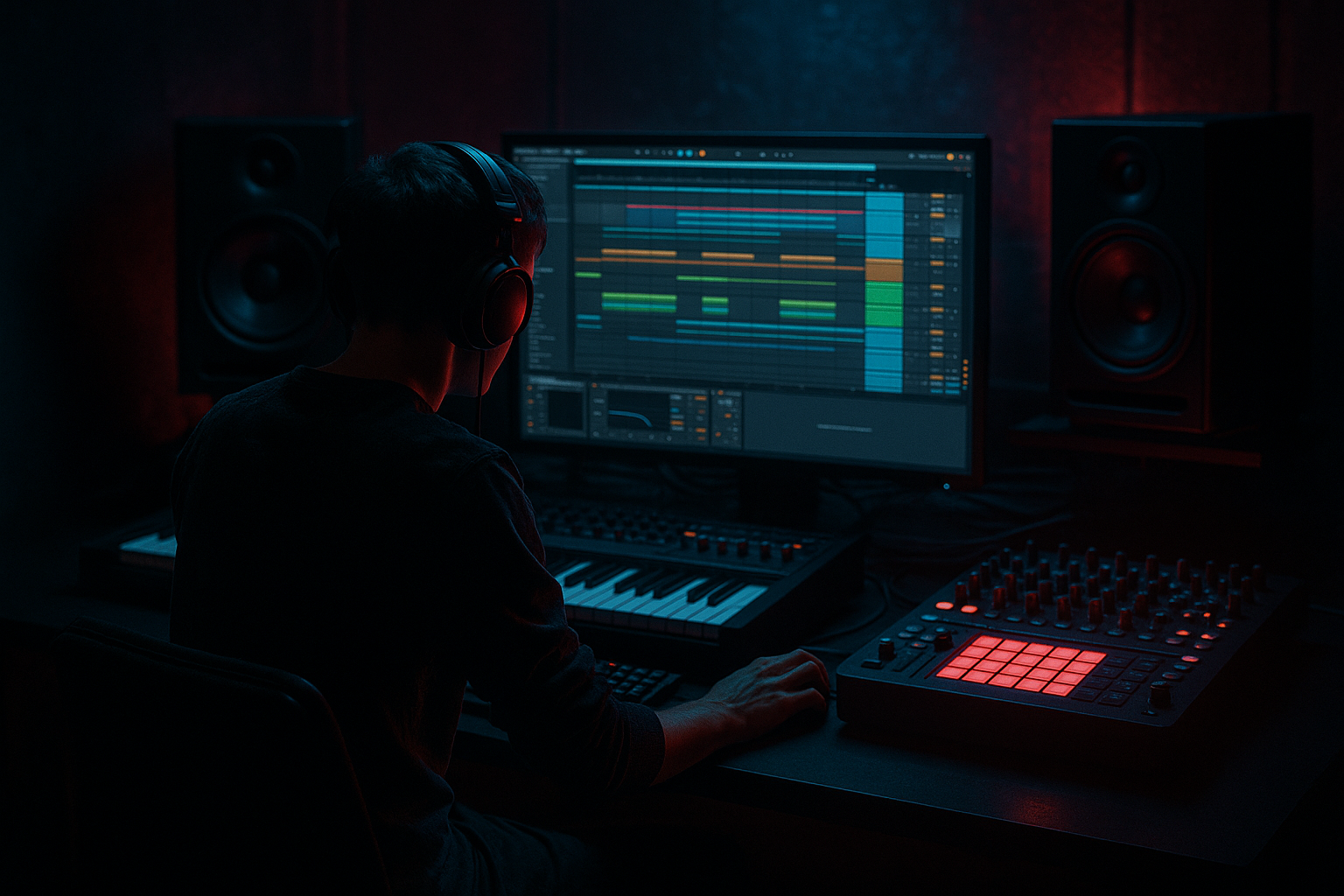
In this lesson you’ll build a jungle/DnB bassline that feels human, alive, and arranged like a real track, not just a loop that repeats mechanically. The goal is to take a solid sub + midbass idea in Ableton Live 12 and turn it into something that grooves with the drums, breathes across phrases, and holds up in a proper drop.
This sits right at the core of modern DnB production: a bassline that can lock to break edits, leave space for ghost notes, respond to drum fills, and evolve over 8/16-bar sections. For jungle and rollers especially, the bassline is often the emotional engine of the track. If it’s too static, the whole tune feels flat. If it’s too random, it fights the drums. The sweet spot is controlled variation: consistent enough to hit hard, human enough to feel alive.
Why this matters in DnB: the genre lives on micro-variation. Small changes in note length, velocity, filter movement, and timing can make the difference between a loop that sounds programmed and a bassline that feels like a performance. In darker DnB, that tension is everything.
You’ll use Ableton stock devices to design the bass, shape the groove, and arrange the line in a way that supports a full track structure: intro, build, drop, switch-up, and outro.
What You Will Build
By the end, you’ll have:
- A jungle-style bassline built from a sub layer and a mid character layer
- Humanized note phrasing with velocity, timing, and length variation
- A bass that interacts with breakbeats, leaving room for snares, ghost notes, and fills
- A call-and-response arrangement across 8- and 16-bar phrases
- Automation for filter, distortion, and movement so the drop evolves instead of looping flat
- A mix-ready bass setup that stays tight in mono, punchy in the low end, and aggressive in the mids without masking the drums
- Writing the bass without the drums
- Making the sub too busy
- Using too much swing on the entire bass
- Over-harmonizing the line
- Ignoring note lengths
- Too much stereo width in the low end
- Leaving no room for drum fills
- Overdistorting everything
- Use layered saturation instead of one huge distortion hit. Try light Saturator on the bass layer, then a touch of Drum Buss on the group for glue.
- Automate Auto Filter resonance carefully to add menace, but keep it below the point where it whistles or dominates the mix.
- Add a very quiet delayed echo on upper bass stabs only, not the sub. A short Echo or Delay setting can create width without low-end smear.
- For neuro-leaning weight, use movement in the mids while the sub stays simple. A clean sub + animated mid layer hits harder than a messy full-range patch.
- Try ghost notes in the bassline, but keep them low in velocity so they feel like punctuation, not clutter.
- In heavy rollers, leave one or two bars almost bare and let the bass return with extra saturation or a stronger octave hit. Contrast makes the drop feel bigger.
- If the bass is fighting the kick, slightly shift the bass note timing earlier or shorten the note length before cutting more EQ.
- For underground character, resample the bass through a gritty phrase, then edit the audio so the roughest moments only appear at transitions.
- Build the bass around the drums, especially the snare pocket.
- Split the sound into sub and character layers for control.
- Use velocity, note length, timing, and groove to humanize the line.
- Keep the sub mono, simple, and solid.
- Arrange in 8/16-bar phrases with gaps, fills, and call-and-response.
- Use automation and resampling to give the bassline movement and tension.
- In DnB, the best basslines feel like tight performance energy with just enough imperfection to sound alive.
Musically, think of a tune that starts with a tense 16-bar intro, then drops into a rolling two-step/jungle hybrid where the bass answers the snare in short phrases, with occasional slides, stabs, and rhythmic gaps that let the break speak.
Step-by-Step Walkthrough
1. Start with the drum groove first, then write the bass around it
In DnB, the bassline usually works best when it’s written against a drum foundation, not in isolation. Load a break or program a classic two-step pattern in Session or Arrangement view, then make sure the kick/snare structure is already feeling right before you write notes.
Practical move in Ableton:
- Put your drum group on a Drum Buss chain or bus track
- Keep the kick/snare pattern simple first: strong snare on 2 and 4, with break chops or ghosted percussion around it
- Use Groove Pool with a subtle swing source if needed, but don’t overdo it yet
Aim for a bassline that responds to the drum pocket. If your snare is hitting hard on the backbeat, the bass should either:
- land just before the snare for push,
- or leave space exactly on the snare for impact.
Why this works in DnB: the genre relies on the bass and drums sharing rhythmic responsibility. A bassline that respects the snare pocket instantly feels more authentic and powerful.
2. Build a two-layer bass rack: sub + character
Create an Instrument Rack or two separate MIDI tracks:
- Sub layer
- Mid/bass character layer
For the sub:
- Use Operator or Wavetable with a sine-style patch
- Keep it clean and mono
- Set a gentle amp envelope: fast attack, short release, no unnecessary modulation
Suggested settings:
- Oscillator/sub level: keep it consistent, no huge jumps
- Filter: open or minimally filtered
- Add Utility after the instrument and set Width to 0% for mono discipline
For the mid layer:
- Use Wavetable, Operator, or even Analog
- Try a saw, square, or detuned hybrid wave for a reese-style tone
- Add Saturator or Overdrive for harmonics
- Finish with Auto Filter or EQ Eight
Good starting settings for the mid layer:
- Saturator Drive: 2 to 6 dB
- Auto Filter cutoff: 120 Hz to 400 Hz depending on brightness
- EQ Eight: high-pass around 90 to 140 Hz to leave space for the sub
Keep the two layers separated so you can control weight and movement independently. That’s huge for rolling and darker bass music.
3. Write a short motif, not a long melody
DnB basslines usually work better as phrases than full melodic sentences. In the MIDI clip, write a motif using 1/8, 1/16, and occasional held notes. Stay close to one tonal center at first, then introduce movement through note choices and octave shifts.
A strong starting shape:
- Root note on the downbeat or just before it
- A short answer note after the snare
- One movement note in the middle of the bar
- A tail note or slide into bar 2
Keep the phrase compact:
- Use 2 to 4 notes per bar initially
- Then vary it every 2 bars
- Introduce a higher answer note in bar 4 or bar 8
Example musical context:
If the track is in F minor, your bassline might sit around F, Eb, C, and occasionally G to create that dark, rolling tension. A common jungle-style move is to keep the root strong but use upper notes sparingly so the line feels unstable and urgent.
Don’t over-write. In DnB, space is part of the groove.
4. Humanize the MIDI with timing, velocity, and note length
This is the heart of the lesson. Humanizing doesn’t mean making things sloppy — it means making the line breathe like a player interacting with the beat.
In Ableton Live 12, use the MIDI Note Editor and adjust:
- Velocity
- Note Length
- Micro-timing
- Occasional start offset changes
Concrete humanizing moves:
- Lower some note velocities by 10–25% on repeat hits
- Shorten a few notes to around 40–70% of their default length
- Push one or two notes slightly ahead of the grid for urgency, but keep the main snare-related hits tight
- Leave some notes slightly longer when you want a more legato, sliding feel
A useful rule:
- Short notes = tension and bounce
- Longer notes = weight and sustain
Use velocity to create phrasing, not just loudness. For example:
- Root notes: 95–110 velocity
- Passing notes: 70–90 velocity
- Call-and-response notes: somewhere in between depending on where the drums are busy
If your MIDI clip is too grid-perfect, it will sound sterile. If it’s too loose, the sub loses authority. Aim for a performance feel that still locks to the drum grid.
5. Use Groove Pool to introduce swing without wrecking the low end
Groove is essential in jungle and rollers, but bass groove should be applied carefully. Open Groove Pool and audition a subtle swing from a break or MPC-style groove. Then apply it lightly to the bass clip.
Good starting points:
- Groove Amount: 10–35%
- Timing: subtle
- Random: very low or off
- Velocity influence: moderate if it helps the line breathe
If the bassline starts to feel late against the kick/snare, reduce the groove amount. You want the bass to dance around the drums, not drag behind them.
A smart technique:
- Apply more groove to the mid layer
- Keep the sub layer more rigid
This preserves low-end solidity while letting the character layer feel human and syncopated.
In darker DnB, this is especially effective because the sub stays authoritative while the mids move with menace.
6. Shape the bass with envelope and filter movement
The bassline should evolve across the bar, not just across the arrangement. Use envelopes and automation to make the sound speak differently on different notes.
On the mid layer, try:
- Auto Filter with an envelope follower feel through automation
- Device Ramp or clip envelopes for opening/closing the filter
- Saturator drive automation on accent notes
- Redux lightly for grit on specific phrases
Suggested movement ideas:
- Open the filter slightly on the last note of every 2-bar phrase
- Automate Saturator drive from 3 dB to 7 dB into a drop
- Increase cutoff from 180 Hz to 600 Hz over 4 bars for a build
- Automate resonance carefully, staying moderate so it doesn’t whistle
If you’re using Wavetable, add subtle movement:
- Unison off or very light for low-end clarity
- Modulate wavetable position slightly
- Keep modulation depth modest so the bass remains focused
This creates the sense that the bassline is “speaking” rather than looping.
7. Arrange the bassline in 8- and 16-bar phrasing
Once the loop works, arrange it like a track. In DnB, arrangement is often about variation by phrase, not dramatic chord changes.
A strong arrangement framework:
- Bars 1–8: main drop idea
- Bars 9–16: variation with one extra note, a gap, or a fill
- Bars 17–24: reduce density or switch rhythmic placement
- Bars 25–32: bring back the main motif with more energy
Practical arrangement moves:
- Remove the bass for 1 beat before a snare fill
- Add a higher octave note at the end of a 16-bar phrase
- Leave one bar with only sub and drums for contrast
- Use a bass stop or half-bar rest before the next section
In jungle, a classic move is to let the break fill the space while the bass drops out briefly, then slam the motif back in. That tension/release is part of the genre’s DNA.
Make sure your intro and outro are DJ-friendly:
- Strip bass in the intro
- Reintroduce low end gradually
- Keep outro cleaner so DJs can mix out
8. Tighten the low end with mix discipline
A humanized bassline only works if the low end stays controlled. Route your sub and mid layers to a Bass Group, then shape the group carefully.
On the bass group:
- Use EQ Eight to remove unnecessary low-mid mud, often around 200–400 Hz if needed
- Keep the sub centered in mono
- Use Utility to check mono compatibility
- If the bass gets too thick, reduce some low mids in the character layer rather than cutting the sub
Mix priorities:
- Sub owns the lowest octave
- Mid layer provides audibility on smaller systems
- Drums still hit hard above the bass
Watch headroom. DnB can get loud fast, so don’t let the bass stack eat your mix. Leave room for the kick transient and snare crack.
A useful workflow:
- Solo bass + drums
- Lower the bass until the kick/snare punch is clear
- Bring back the full mix and check if the bass still feels present
If it sounds massive soloed but weak with drums, it’s probably too wide, too busy, or too harmonically crowded.
9. Add switch-ups with call-and-response and drum interaction
A great jungle bassline often answers the drums. Use the space after the snare or break chop to place a short bass response.
Ideas to try:
- Bass hit on beat 1, answer after beat 2
- Alternate a low root note with a higher stab every 2 bars
- Leave bar 4 open for a drum fill, then return with a heavier note
- Add a little pitch drop or glide on the final note of a phrase
If you want extra movement, duplicate the bass clip and make a variation:
- Version A: main groove
- Version B: added syncopation
- Version C: stripped-down roller section
- Version D: one-bar fill with more distortion
That gives you a fast arrangement toolkit without rebuilding from scratch.
10. Resample the best moments for character and control
Once the bassline feels good, bounce or resample sections to audio. This is a powerful DnB workflow because it lets you commit to the groove and manipulate the audio like a performance.
In Ableton:
- Freeze/Flatten or resample to a new audio track
- Chop the best notes or phrases
- Reverse a tail for tension
- Add a tiny bit of Fade on audio clips to avoid clicks
- Process the audio with Saturator, EQ Eight, or Drum Buss
Good uses of resampling:
- Emphasize a gritty phrase in the drop
- Create a variation with different note lengths
- Print a distorted fill before a switch
- Make the bass feel more “played” and less synthetic
This is especially effective for darker or heavier DnB because audio editing can introduce a raw, urgent edge that MIDI alone doesn’t always deliver.
Common Mistakes
- Fix: build against the snare and break first so the rhythm actually fits the track.
- Fix: keep the sub simple, focused, and mostly monophonic. Let the mid layer do the dancing.
- Fix: apply groove subtly, and keep the sub tighter than the mids.
- Fix: DnB bass often works best with restrained note choice. One strong motif beats a busy scale run.
- Fix: shorter notes can create bounce and space; longer notes create weight. Use both intentionally.
- Fix: mono the sub with Utility and keep low frequencies centered.
- Fix: carve gaps into 4- and 8-bar phrases so the break can breathe.
- Fix: distort the character layer more than the sub. Keep clarity in the lowest octave.
Pro Tips for Darker / Heavier DnB
Mini Practice Exercise
Set a timer for 15 minutes and do this:
1. Build a 2-bar drum loop with a strong snare and a simple break chop.
2. Create a sub + mid bass using only stock Ableton devices.
3. Write a 4-note bass motif that repeats but changes one detail every bar.
4. Humanize it by changing:
- 3 note velocities
- 2 note lengths
- 1 note timing placement slightly
5. Apply subtle groove from the Groove Pool at 10–20%.
6. Automate one filter opening over 4 bars.
7. Duplicate the loop into an 8-bar arrangement and create one call-and-response variation.
8. Check the bass in mono and adjust the sub or Utility width if needed.
Goal: by the end, your loop should feel like a real DnB phrase, not a static MIDI pattern.

